Hoi An after dark divides neatly into two zones: tourists photographing reflections in the Thu Bon River, and locals quietly eating well two streets over. This guide is about the second zone.
What You're Actually Walking Into
The official night market runs along Nguyen Hoang Street on An Hoi peninsula, roughly 400 meters of stalls that open around 5 PM and wind down by 11. Most of what's sold here is lanterns, magnets, and linen trousers. The food stalls are real, though, and if you know which ones to stop at, a full dinner costs under 80,000 VND.
The smarter move is to treat the peninsula market as a starting point, then drift east toward Bach Dang Street and the side lanes off Tran Phu, where the cooking is less performative and the queues are longer because people who live here are in them.
White Rose Dumplings — One Stall, One Family
Hoi An (호이안 / 会安 / ホイアン)'s "banh bao vac" — the steamed shrimp dumplings everyone calls white rose — are famously produced by a single family and distributed to restaurants across town. At the night market you can find vendors selling them, but the texture and freshness vary. The more reliable option is to walk five minutes to the White Rose Restaurant on Le Loi Street, the source operation itself, where a plate of eight dumplings runs around 50,000 VND. They arrive translucent, faintly sweet from the shrimp paste, with a bowl of fish sauce and fried shallots on the side. Don't skip the shallots.
Banh Xeo — the Version Worth Eating
The "banh xeo" in Hoi An is smaller and crispier than the Saigon version — closer in diameter to a large taco than a dinner plate. The batter is poured thin into a wok of hot oil, folded over a filling of shrimp, pork, and bean sprouts, and handed to you in a piece of rice paper with a stack of mustard greens and herbs. You wrap it yourself, dip it in nuoc cham, eat it immediately.
Along the night market strip you'll find several stalls doing this. Look for the one with the oldest wok and the shortest gap between orders — high turnover means the oil stays clean and hot. A single banh xeo (반세오 / 越南煎饼 / バインセオ) is around 20,000–25,000 VND. Order two.

Photo by Pragyan Bezbaruah on Pexels
Che Bap — the Dessert Queue Worth Joining
On the An Hoi peninsula, near the far end of the market where foot traffic thins, there are usually two or three women selling "che bap" — sweet corn pudding made with glutinous rice, coconut milk, and a pinch of salt that cuts the sweetness just enough. It's served warm or at room temperature in a small bowl for 10,000–15,000 VND. This is not a tourist invention. Locals eat it as a late-afternoon snack and after dinner. If you see a queue of older Vietnamese women, join it without thinking.
Where the Locals Actually Eat
The real night eating in Hoi An happens on Tran Cao Van Street and in the lanes between Hai Ba Trung and Hoang Dieu — a 10-minute walk from the main market, away from the lantern glow. This is where you find plastic-stool spots serving "cao lau", the town's most distinctive noodle dish: thick chewy noodles, sliced pork, crackling, and a small amount of broth that barely covers the bowl. The noodles are made with water drawn from local wells and lye ash from a specific island in the Thu Bon — at least according to every vendor, and plausibly true given how different the texture is from any other noodle in Vietnam. Expect to pay 35,000–45,000 VND for a bowl.
For a full sit-down dinner that costs almost nothing, the com ga (chicken rice) spots on Phan Chu Trinh Street are the local standard. A plate of shredded chicken over turmeric-tinted rice with a bowl of broth comes in at around 40,000 VND. These places fill up between 6 and 8 PM and are usually done serving by 9.

Photo by Vietnam Hidden Light on Pexels
Drinking Around the Market
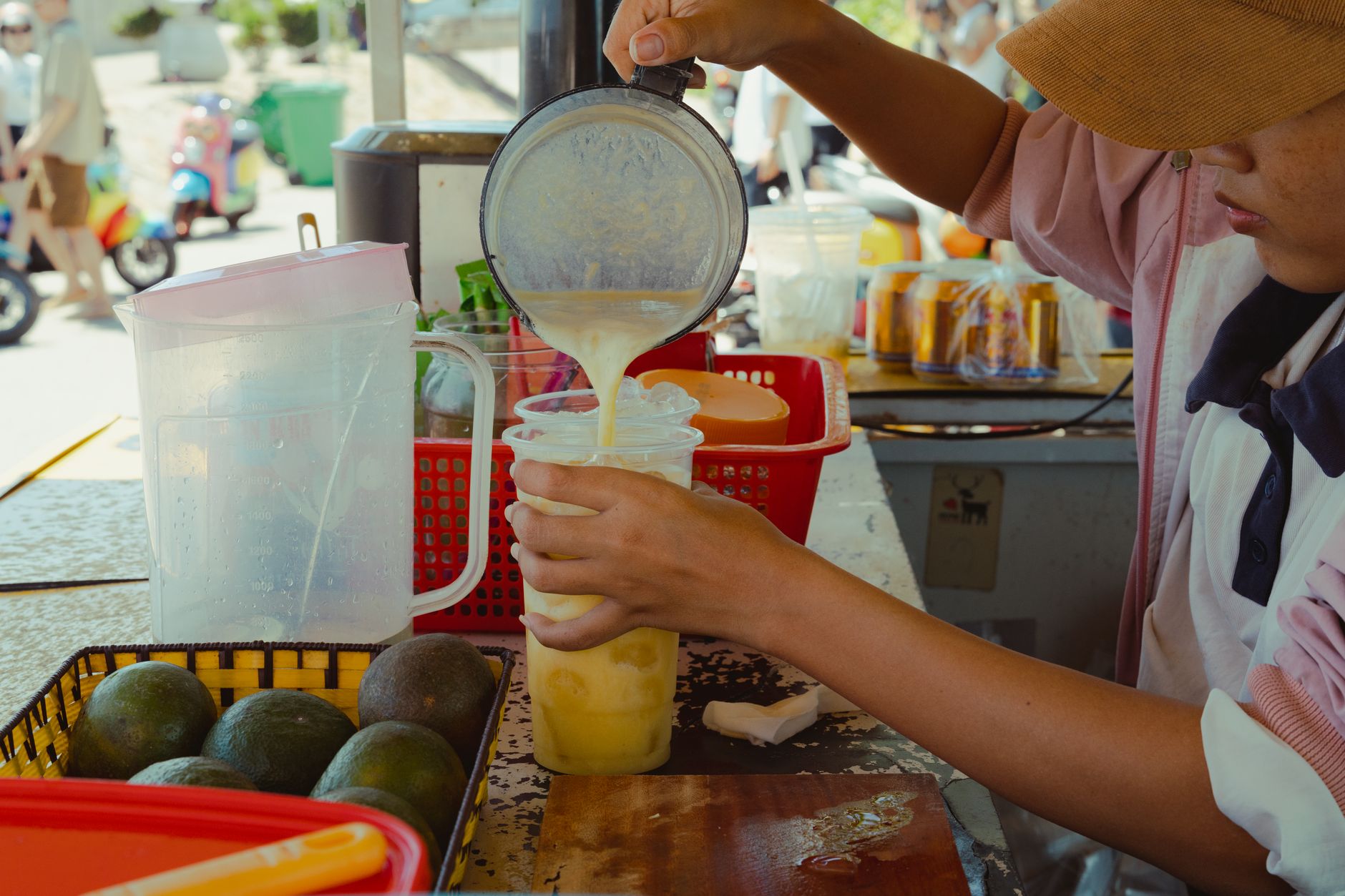
Hoi An is not a great beer city — most of the riverside bars charge Da Nang prices for Saigon-quality pours. The better call is a "ca phe sua da" from one of the small coffee shops tucked into the old town streets: strong drip coffee over a glass of ice and condensed milk, usually 20,000–25,000 VND, and almost always better than anything you'd get from a tourist-facing cafe. A few vendors in the market also sell fresh sugarcane juice pressed to order for 15,000 VND. It goes well with the banh xeo.
Navigating the Market Without Getting Stuck
The An Hoi peninsula gets genuinely congested between 7 and 9 PM on weekends. Motorbikes park halfway onto the walking path, tour groups stop in formation to photograph the same lanterns, and the souvenir stalls create a funnel effect. If you want the food without the crowd friction, go early — arrive by 5:30 PM, eat while it's still light, and leave before the post-dinner surge.
Hoi An's old town is a UNESCO World Heritage area and the streets are largely pedestrianized at night, so you won't be competing with traffic inside the core, but the bridge connecting the peninsula to Bach Dang gets slow. Cross it on foot and head directly for the food.
Practical Notes
Bring small bills — 10,000 and 20,000 VND notes are useful here and vendors don't always have change for 200,000. Most stalls are cash only. The market runs every night of the year, rain included, though heavy rain in October and November (the flood season) occasionally shuts down the lower-lying stalls near the river.
Last updated · May 29, 2026 · independently researched, never sponsored.