The tourist restaurants along Tran Phu are fine. You already know about them because every travel site has told you twice. What they haven't told you is that some of the most satisfying food in Hoi An costs under 30,000 VND and is served by a woman who has been making the same three dishes since before you were born.
Why the No-Name Places Are Better
Hoi An (호이안 / 会安 / ホイアン)'s old quarter is dense with restaurants calibrated to foreign wallets and foreign palates. That's not a criticism — it's just economics. But the cooking that locals actually eat happens in the gaps: the alley off Bach Dang that dead-ends at a plastic-stool breakfast spot, the woman at the edge of Hoi An Central Market who sells only "cao lau" and starts packing up by 10am, the corner of An Hoi island where a family grills "nem chua" over charcoal on a folding table.
These places don't advertise. Most have no name at all — regulars just say "the pork lady by the bridge" or "the corner banh place." They survive entirely on repeat local customers, which is exactly the quality signal you want.
How to Find Them
Walk the market edges, not the market center
Hoi An Central Market on Tran Quy Cap is well-documented. The food court upstairs gets tourists; the real action is at the perimeter. Walk the outer ring of stalls on the riverside side, especially between 6am and 9am. You'll find women selling "banh cuon" — steamed rice rolls with minced pork and wood ear mushroom — from a single pot. No sign, no menu, no price posted. Sit down, hold up one or two fingers for portions, pay what she asks. It'll be between 15,000 and 25,000 VND.
Follow the motorbikes at breakfast
If there are four motorbikes parked outside a doorway with no other indication that food is being served, food is being served. This is especially reliable in the streets north of the old quarter — Nguyen Truong To, Le Loi — between 6:30am and 8:30am. Knock or lean in. If someone gestures you inside, sit down. Point at what the person next to you is eating.
Learn two phrases
"Cho toi mot to" (give me one bowl) and "the nay la gi?" (what is this?) will take you further than any map. People respond warmly to someone making a genuine attempt rather than pointing at a laminated picture.
Ask your accommodation staff — specifically
Don't ask "where's a good local restaurant." Ask: "Where do you eat breakfast before work?" or "Who makes the best "banh mi" near here for locals?" Staff at smaller guesthouses in the An Hoi and Cam Chau areas tend to give you an actual answer rather than a referral to their cousin's restaurant.

Photo by Theodore Nguyen on Pexels
What to Look For
Cao lau
Hoi An's signature noodle dish — thick chewy noodles, sliced pork, crispy crackers, a small amount of broth used more as seasoning than soup. The tourist versions are consistent. The market-edge versions, made by the same hands for decades, have a depth that's harder to explain than to eat. Look for it at breakfast and early lunch only; most serious cao lau (까오러우 / 高楼面 / カオラウ) cooks are done by noon.
Banh mi at the non-famous carts
The queue outside Phuong's is long for a reason, but there are a dozen other banh mi carts in Hoi An making excellent sandwiches with zero wait. The carts near Cam Nam bridge and along Nguyen Duy Hieu are a start. A good banh mi here should cost 15,000–25,000 VND. If it's 50,000 VND, you've wandered back into tourist territory.
White rose dumplings from the source
"Banh bao vac" — the translucent shrimp dumplings shaped like a flower that locals call white rose — are technically controlled by one family that supplies most of Hoi An. But smaller operations buy from the same supplier and serve them at card tables in their front rooms. The dumpling is the dumpling; what changes is how much you pay and whether someone is performing the experience at you.
Che alley sweets
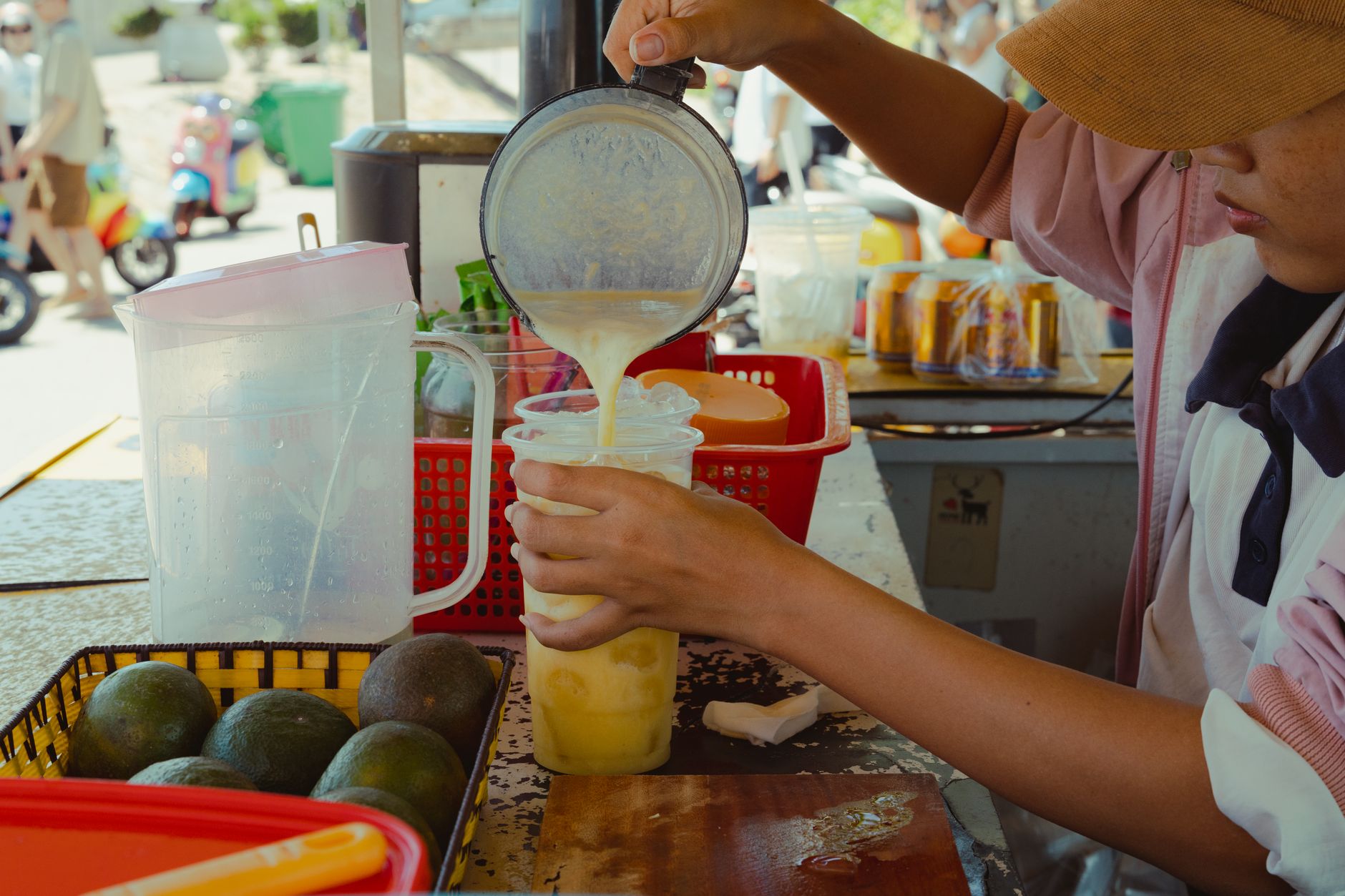
"Che" — sweet bean and coconut dessert soups — are sold by women carrying shoulder baskets through the old quarter in the late afternoon, and from small stands on the An Hoi island peninsula after dark. The basket sellers often have four or five varieties. Point, nod, pay about 10,000–15,000 VND per cup. It is genuinely one of the better things you can do with 15,000 VND anywhere in Vietnam.

Photo by FOX ^.ᆽ.^= ∫ on Pexels
What to Expect (and Accept)
No English. Possibly no menu at all. Seating that is a plastic stool at ankle height. Food arriving in under four minutes because there are only three things on offer and the cook has made them ten thousand times.
You may also get it wrong occasionally — you'll sit somewhere and the food will be mediocre. That happens. The floor is still higher than the average tourist-facing restaurant because the cook has no marketing budget and no margin for bad word of mouth.
Don't photograph the cook without asking. Don't linger past the point where other people need the stool. Pay promptly. Come back the next morning and they'll probably remember you.
Practical Notes
Bring small bills — 10,000 and 20,000 VND notes. Most of these stalls can't comfortably break a 500,000. The best window for alley eating is 6:30am–9:30am; a second wave runs 11am–1pm for lunch. By evening, the no-name spots have largely given way to the lit-up restaurants targeting the walking-street crowd.
Last updated · May 29, 2026 · independently researched, never sponsored.