What it is
Khu Luu Niem Bac Ho (Ho Chi Minh (호치민 / 胡志明 / ホーチミン) Memorial Area) sits in Binh Minh commune, Hung Yen province, about 60 km southeast of Hanoi. The site marks the location where Ho Chi Minh stayed and worked during periods in 1945–1946, using the Red River Delta countryside as a base. The memorial complex was established in 1990 and expanded in 2010, covering roughly 5 hectares of gardens, exhibition halls, and reconstructed traditional houses.
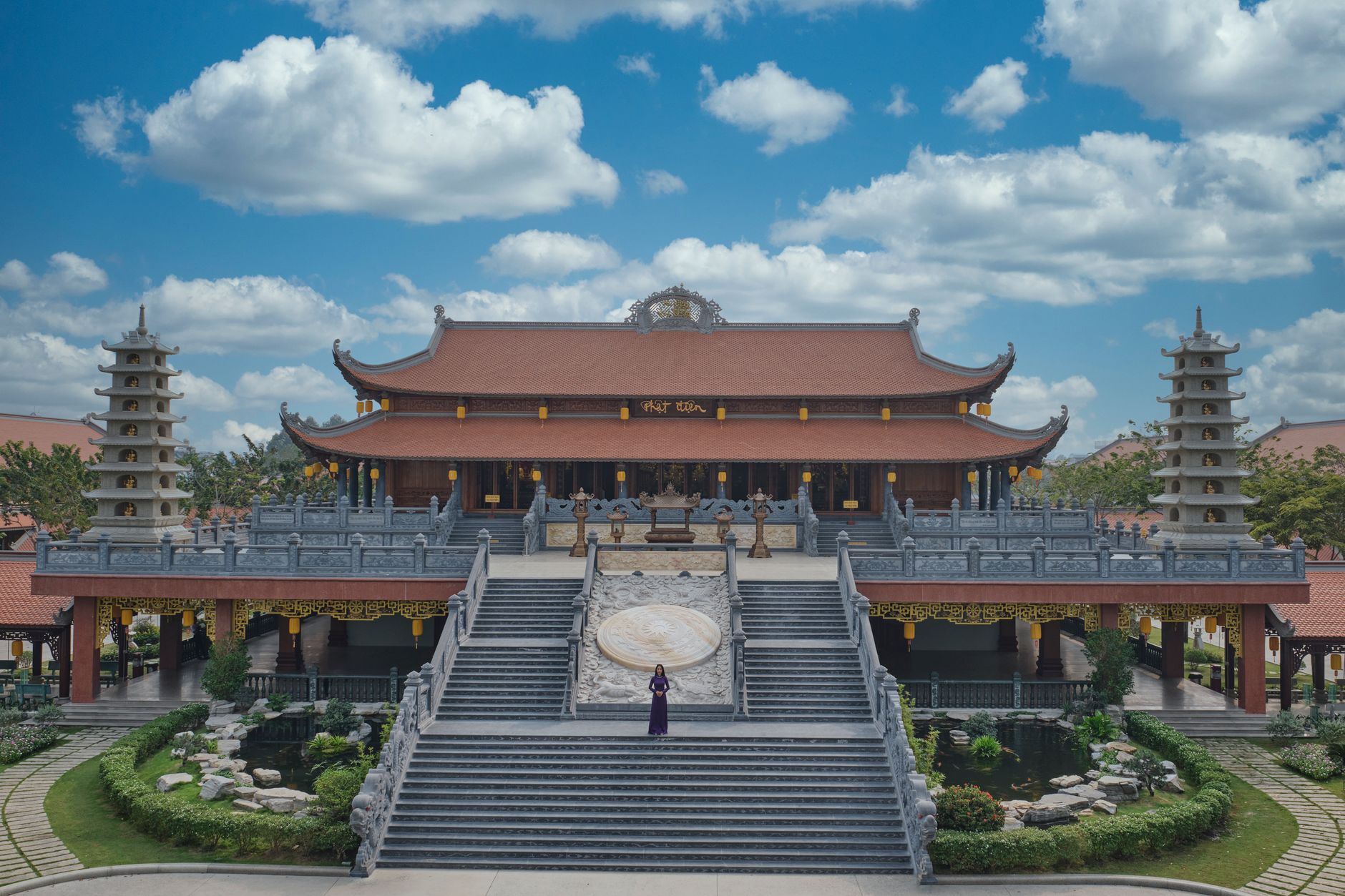
This isn't a grand marble monument. It's a quiet, landscaped park anchored by a modest northern Vietnamese house — wooden pillars, tiled roof, packed-earth courtyard. The scale feels human rather than monumental, which is what makes it interesting as a stop rather than a formal pilgrimage site.
Why travelers go
Most foreign visitors end up here as part of a day trip from Hanoi (하노이 / 河内 / ハノイ) that also loops through Hung Yen's old town and longan orchards. The draw is less about history lectures and more about the setting: the grounds are genuinely peaceful, shaded by old banyan and longan trees, with lotus ponds that bloom from May through July. It's a good excuse to get out of Hanoi into the flat delta landscape without committing to a multi-day trip.
For anyone interested in mid-20th-century Vietnamese architecture, the reconstructed stilt houses and the original brick-and-timber structure offer a look at rural northern building styles that are disappearing fast.
Best time to visit
The sweet spot is May to July, when the lotus ponds are in full bloom and longan season starts. Mornings are cooler, and the light is soft through the tree canopy. Avoid national holidays — especially around September 2 (National Day) and May 19 (Ho Chi Minh's birthday) — unless you enjoy crowds of school groups and organized delegations.
Winter months (December–February) are grey and damp in this part of the delta, though you'll have the grounds almost to yourself.
How to get there from Hanoi
Hung Yen city is the nearest urban hub, about 15 km from the memorial.
From Hanoi to Hung Yen city:
- Bus: Catch a bus from Giap Bat or Nuoc Ngam station heading to Hung Yen. Tickets run 50,000–70,000 VND, journey time around 1.5 hours depending on traffic through the southern Hanoi sprawl.
- Motorbike/car: Take National Road 5 (QL5) east then cut south via QL39. About 60 km total, roughly 1 hour 15 minutes without heavy traffic.
From Hung Yen city to the memorial:
- A Grab bike costs around 40,000–60,000 VND. Local xe om (motorbike taxi) drivers at Hung Yen bus station know the site — agree on 50,000 VND before you get on.
- If you're on your own motorbike, follow QL39 south toward Binh Minh. The site is signposted from the main road.

Photo by VINVIVU ® on Pexels
What to do
1. Walk the main exhibition hall
The central building houses photographs, documents, and personal items from Ho Chi Minh's time in the area. Signage is mostly in Vietnamese, but the visual materials — maps, period photographs of the delta, handwritten letters — are interesting regardless of language. Allow 20–30 minutes.
2. Visit the reconstructed traditional house
The highlight for architecture nerds. A three-bay northern Vietnamese house with ironwood columns, laterite foundations, and a tiled roof in the traditional "double slope" style. The interior is sparse: a wooden bed, a desk, an oil lamp. It's meant to evoke austerity, but it also happens to be a well-preserved example of rural Red River Delta construction.
3. Walk the lotus ponds and gardens
The grounds are landscaped but not over-manicured. Gravel paths loop around lotus ponds, through longan groves, and past clusters of bamboo. In summer, the lotus flowers are thick — this is the same variety used to make "lotus tea" in the northern tradition. The whole circuit takes about 30–40 minutes at a relaxed pace.
4. Check the stele pavilion and banyan tree
A large banyan tree near the entrance is supposedly several hundred years old. Next to it, a stone stele records the site's history. It's a good spot to sit in the shade and watch local families picnicking.
5. Combine with Hung Yen old town
Don't just come for the memorial alone. Hung Yen's old quarter along the Red River has crumbling French-colonial shophouses, a 17th-century communal hall (Dinh Xa), and a couple of small pagodas that see zero tourists. It's 15 minutes away and makes the trip feel complete.
Where to eat nearby
Hung Yen province doesn't have a flashy food scene, but two things are worth seeking:
- "Banh cuon" Hung Yen style — thinner and more delicate than the Hanoi version, often served with fried shallots and a slightly sweeter dipping sauce. Look for stalls along the road into Hung Yen city, especially on Nguyen Van Linh street. A plate runs 25,000–35,000 VND.
- Longan desserts and dried longan — Hung Yen is Vietnam's most famous longan-growing region. From June to August, fresh longan is everywhere. Outside season, dried longan ("long nhan") and longan-stuffed sticky rice ("xoi nhan") appear at market stalls. Pho Hien old market area is the best spot.
For a sit-down meal, small com binh dan (everyday rice) shops near the bus station serve decent plates for 35,000–50,000 VND.
Where to stay
Hung Yen isn't a tourist town, so accommodation is basic but functional:
- Budget: Local nha nghi (guesthouses) along QL39 or near the bus station. Expect 200,000–350,000 VND/night for a clean room with air-con, hot water, and wifi.
- Mid-range: A handful of mini-hotels in Hung Yen city center offer slightly better mattresses and breakfast for 400,000–600,000 VND/night. Try searching along Hai Ba Trung street.
- Day-trip option: Most visitors just return to Hanoi the same day, which is the practical choice unless you're combining with other delta stops like Ninh Binh or Hai Duong.

Photo by Valeria Drozdova on Pexels
Practical tips locals would tell you
- The memorial closes for lunch (11:30–13:30). Arrive either early morning (7:30–8:00) or early afternoon (13:30–14:00) to avoid overlap with school tour buses.
- Dress modestly — shoulders and knees covered. This is enforced informally by staff at the exhibition hall entrance.
- Entry is free. There's no ticket booth. A small donation box sits inside the main hall.
- Bring mosquito repellent if visiting in summer. The lotus ponds breed them enthusiastically.
- The site has limited English signage. Download Google Translate's Vietnamese offline pack before you go if you want to read exhibit labels.
Common mistakes to avoid
- Coming on a holiday weekend and spending your visit behind 200 schoolchildren in matching red scarves. Weekday mornings are quiet.
- Skipping Hung Yen old town — the memorial alone is a 45-minute visit. Without the old quarter and a food stop, the trip feels thin for the travel time.
- Not bringing cash — there are no ATMs at the site and no card readers at nearby food stalls. Bring at least 200,000 VND in small bills.
Practical notes
Khu Luu Niem Bac Ho works best as one piece of a Hung Yen day trip from Hanoi — memorial, old town, banh cuon, longan orchards. On its own it's a peaceful hour, but bundled with the surrounding area, it fills a satisfying day in the delta without the tourist infrastructure (or crowds) of Ninh Binh.
Last updated · May 29, 2026 · independently researched, never sponsored.