Eating low-FODMAP in Vietnam (베트남 / 越南 / ベトナム) is doable, but you need to go in with clear eyes. Garlic and shallots are foundational to Vietnamese cooking — not a garnish, not optional — and the kitchen staff often won't know they're there because they've always been there. That said, several dishes are naturally low-FODMAP or easily modified, and street food culture actually works in your favor more than you'd expect.
The core problem: garlic and shallots are everywhere
Vietnamese cooks use shallots (hanh kho) and garlic (toi) the way French cooks use butter — as a base fat for frying, a finishing oil drizzled over rice and noodles, a pickling agent, a broth flavoring. Even dishes that taste clean and light often start with a shallot-infused oil.
The green tops of spring onions (scallions) are low-FODMAP in small amounts; the white bulb is not. In Vietnam, both parts typically land in the bowl. When asking for modifications, focus on three specific things: no fried shallots (hanh phi), no garlic (khong toi), and spring onion greens only (hanh la, khong hanh cu).
You won't always win. But asking specifically by ingredient name — rather than a broad "no onion" — gets you further.
Dishes that are naturally safer
Pho
"Pho" is one of the better bets on a low-FODMAP trip to Vietnam. The broth in a traditional Northern-style pho is built from beef bones, charred ginger, star anise, cinnamon, and cloves — no onion in the base itself, though the broth is typically finished with a fried shallot oil drizzle. Ask for no hanh phi and no hanh cu (raw white onion slices that come standard in Saigon-style pho). The rice noodles are fine. The fresh herbs on the side — Thai basil, bean sprouts, lime — are all safe.
A bowl at a street stall runs 40,000–70,000 VND.
Banh mi
"Banh mi" is trickier. The baguette itself is fine, but most fillings include garlic-marinated pork or pate seasoned with garlic. A safer build: ask for banh mi trung (egg banh mi) and skip the pate. The pickled daikon and carrot (do chua) that come standard are low-FODMAP in reasonable portions. Cucumber and coriander are fine.
Goi cuon
"Goi cuon" (fresh rice paper rolls) filled with shrimp and herbs are mostly safe — the herbs inside are typically mint and coriander, both low-FODMAP. The dipping sauce is where it gets complicated: hoisin contains wheat and fructose, and the peanut dipping sauce is often made with garlic. Ask for plain nuoc cham (fish sauce, lime, chili, sugar, water) instead, which is low-FODMAP in the small portions typically served.
Com tam
"Com tam" (broken rice) with grilled pork is a reasonable choice if you can confirm the marinade. The broken rice itself is fine. Request bo nuoc mam (fish sauce dressing) on the side so you can control the amount, and ask if the meat is marinated with garlic (usually it is). At formal sit-down restaurants you can get this adjusted; at street stalls, less likely.
Banh xeo
"Banh xeo" (sizzling crepe) made with rice flour and turmeric is usually garlic-free in the batter, though the filling — shrimp, pork, bean sprouts — is often cooked in garlic oil. Safer to eat at a dedicated banh xeo restaurant where you can watch the cooking and ask.

Photo by FOX ^.ᆽ.^= ∫ on Pexels
Drinks that work
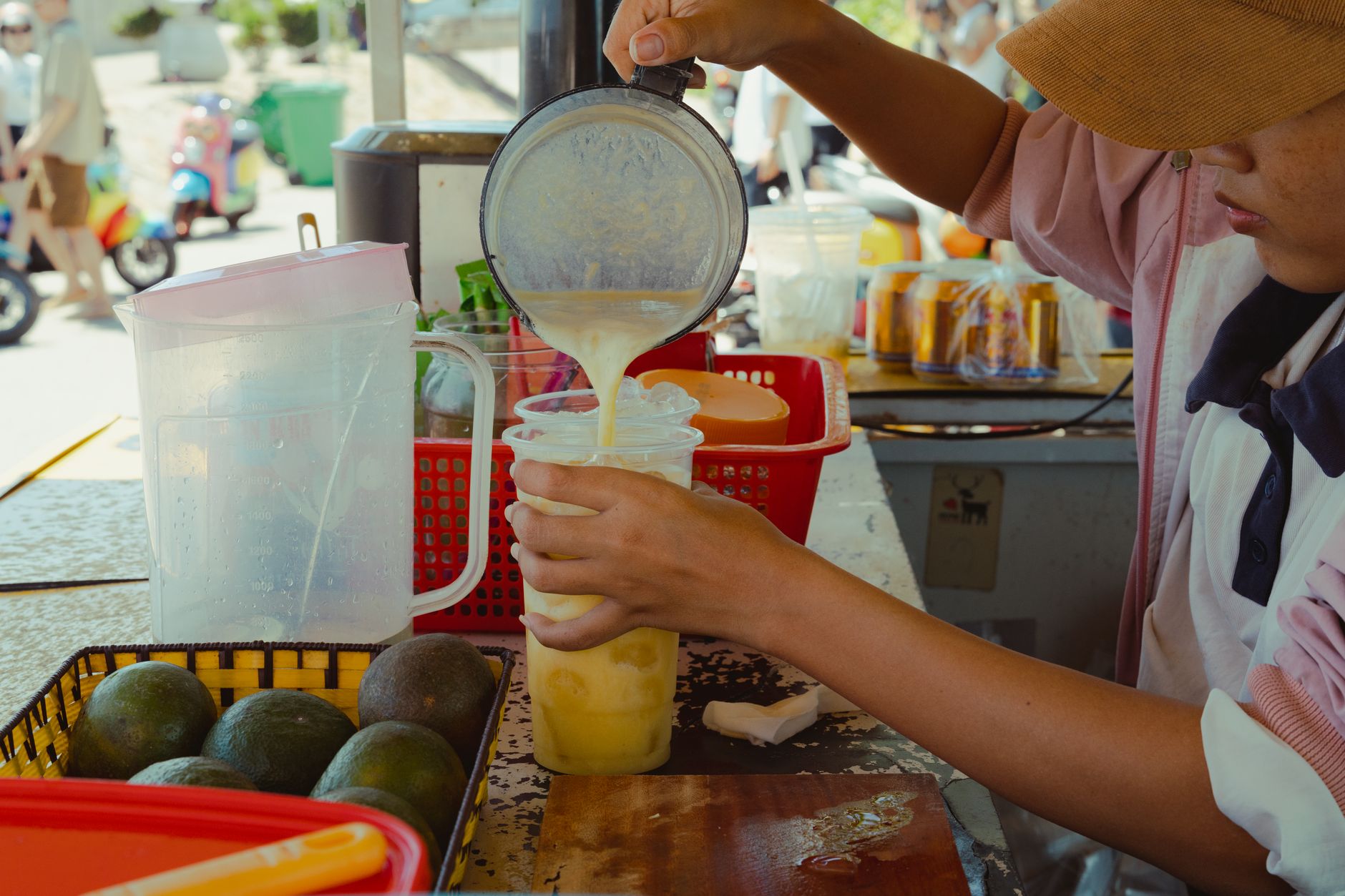
Vietnam is actually excellent for low-FODMAP drinking. "Ca phe sua da (연유커피 / 越南冰咖啡 / ベトナムアイスコーヒー)" (iced milk coffee) works if you tolerate lactose or swap for black; "egg coffee" in Hanoi uses egg yolk and condensed milk — fine for most FODMAP protocols in small amounts. Plain drip Vietnamese coffee is naturally FODMAP-free. Fresh coconut water, fresh-squeezed juices, and "lotus tea" served in hotels and tea houses are all safe.
"Bia hoi" — draft beer sold fresh at roadside stalls — is low-FODMAP in standard portions.
Where modifications are realistic
Tourist-oriented restaurants in Hanoi's Old Quarter, Hoi An, and Saigon's District 1 are your best bet. Staff speak enough English to understand ingredient-level requests, and the kitchen is used to accommodating dietary needs for foreign guests.
Upscale Vietnamese restaurants across all cities (expect 200,000–500,000 VND per dish) have trained chefs who can genuinely modify a dish. These are worth the price if your gut is struggling.
Street food stalls are hit-or-miss. If the cook is doing one dish all day — pho, banh mi, bun cha — they know every ingredient and may be able to leave something out. If it's a multi-dish stall with sauces pre-made in bulk, asking for modifications is unlikely to succeed.
Central Vietnam (Hue, Da Nang, Hoi An) is the most garlic-heavy region. Dishes like "bun bo Hue" and "mi quang" are intensely flavored with garlic-based pastes and shrimp paste (mam ruoc). They're worth eating once for the experience, but plan accordingly.

Photo by Pragyan Bezbaruah on Pexels
A note on fermented and processed ingredients
Nuoc mam (fish sauce) is used in almost every dish and is low-FODMAP. Mam tom (shrimp paste), common in Hanoi and central Vietnam, is higher-risk — skip it where you can. Soy sauce (xi dau) appears in southern Vietnamese cooking and marinades; standard soy sauce contains wheat, so it's a double concern for the FODMAP-sensitive.
Practical notes
Carry a printed or phone-saved card in Vietnamese that says: "Toi khong an toi va hanh tay. Neu co the, xin dung them hanh phi hoac hanh cu" (I don't eat garlic or onion. If possible, please omit fried shallots and raw onion). Google Translate handles the spoken version reasonably well. Expect some confusion, expect some misses — Vietnam is not a cuisine built around dietary customization — but with targeted ordering and the right dishes, you can eat very well here without spending the whole trip in your hotel room.
Last updated · May 29, 2026 · independently researched, never sponsored.