Moc Bai is the most-used land border crossing between Vietnam (베트남 / 越南 / ベトナム) and Cambodia, sitting about 70 km northwest of Saigon in Tay Ninh province. If you're heading overland to Phnom Penh — or just curious about life at a Vietnamese frontier town — here's what you actually need to know.
What Moc Bai is and a bit of background
Moc Bai (full name: Cua Khau Quoc Te Moc Bai) is an international border gate in Ben Cau district, Tay Ninh. On the Cambodian side, the corresponding checkpoint is Bavet. The crossing has operated for decades, but infrastructure got a serious upgrade in the 2010s — concrete buildings, marked lanes, air conditioning in the immigration hall. It handles both passenger and cargo traffic and is by far the busiest overland route between Saigon (사이공 / 西贡 / サイゴン) and Phnom Penh.
A quick admin note: Tay Ninh province recently merged with Long An under Vietnam's provincial consolidation plan. For travelers, nothing changes at the border itself. Signage and maps may take a while to catch up, but Moc Bai is still exactly where it's always been.
Why travelers go
Most people pass through Moc Bai for one reason: it's the fastest land route from Saigon to Phnom Penh. The full trip is around 230 km and takes roughly six hours by bus, border formalities included. It's cheaper than flying, and some travelers prefer seeing the landscape shift from Vietnamese rice paddies to Cambodian sugar palms.
A smaller number of visitors come to Moc Bai for the border-town atmosphere — the duty-free shops, the wholesale markets selling goods from both countries, and the general buzz of a commercial crossing point. It's not a destination in the resort sense, but it has its own energy.
Best time to visit
Tay Ninh is hot year-round, but the dry season (November through April) makes the trip more comfortable. Roads are better, waits at the border tend to be shorter, and you won't be standing in a queue during a tropical downpour. Avoid major holidays — especially Tet and Khmer New Year (mid-April) — when the crossing gets genuinely packed and processing slows to a crawl. Weekday mornings are the smoothest window; aim to arrive at the gate before 9 AM.
How to get there from Saigon
Moc Bai is about 70 km from central Saigon. You have a few options:
Bus
The most common choice. Companies like Kumho Samco and Phuong Trang (FUTA) run direct buses from the Mien Tay or An Suong bus stations to the Moc Bai border area. Tickets cost 70,000–120,000 VND one way, and the ride takes about two hours depending on traffic getting out of the city. If you're going all the way to Phnom Penh, cross-border bus operators (Mekong Express, Giant Ibis, Sorya) pick up in Saigon's backpacker district around Pham Ngu Lao and handle the border stop as part of the route — expect to pay 250,000–350,000 VND for the full Saigon-to-Phnom Penh ticket.
Private car or motorbike
A Grab car from Saigon to Moc Bai runs roughly 700,000–900,000 VND. Driving yourself on a motorbike is straightforward — take QL22 (National Route 22) northwest through Cu Chi and Trang Bang. The road is flat, mostly four lanes, and well-signed. Budget two hours without heavy traffic.

Photo by Thịnh La on Pexels
What to do around Moc Bai
Moc Bai itself is a border checkpoint, not a sightseeing hub. But if you're spending time in the area, a few things are worth your attention.
Browse the duty-free zone
The Moc Bai duty-free complex sells imported alcohol, cigarettes, cosmetics, and electronics at prices noticeably below Saigon retail. Quality varies — inspect everything before buying. The complex is right next to the immigration building.
Visit Tay Ninh town and the Cao Dai Holy See
Tay Ninh town is about 40 km east of Moc Bai, and its main draw is the Cao Dai Great Temple — headquarters of the Cao Dai religion. The noon prayer ceremony (held daily at 12:00) is open to respectful visitors. The architecture is genuinely unlike anything else in Vietnam: a riot of color mixing Catholic cathedral structure with Buddhist, Taoist, and Confucian iconography. No entrance fee.
Hike Nui Ba Den (Black Lady Mountain)
About 15 km north of Tay Ninh town, Nui Ba Den rises 986 meters above the dead-flat surrounding plain. A cable car runs to the top (around 200,000 VND round trip), or you can hike the roughly 1,500 stone steps in two to three hours. The summit has pagodas, cool air, and views that stretch to Cambodia on clear days. Go early morning to beat the heat.
Walk through Trang Bang town
On the drive between Saigon and Moc Bai, Trang Bang is the place to stop. It's a small town, but it's the birthplace of a dish you should know about — more on that below.
Check out the border markets
Small markets on both the Vietnamese and Cambodian sides sell everything from dried fish to phone cases. Prices are negotiable. These aren't tourist markets — they serve locals doing cross-border trade — which makes them more interesting to wander.
Where to eat nearby
Banh canh Trang Bang
This is the dish that puts Trang Bang on the map. "Banh canh" here means thick tapioca-and-rice-flour noodles in a pork-bone broth, topped with sliced pork leg, gio lua (pork roll), and herbs. The texture of the noodles — slippery, chewy, slightly translucent — is completely different from pho or bun. Stalls line the main road through Trang Bang town; a bowl runs 40,000–55,000 VND. Quan Banh Canh Ba Beo is a reliable local pick.
Banh trang phoi suong
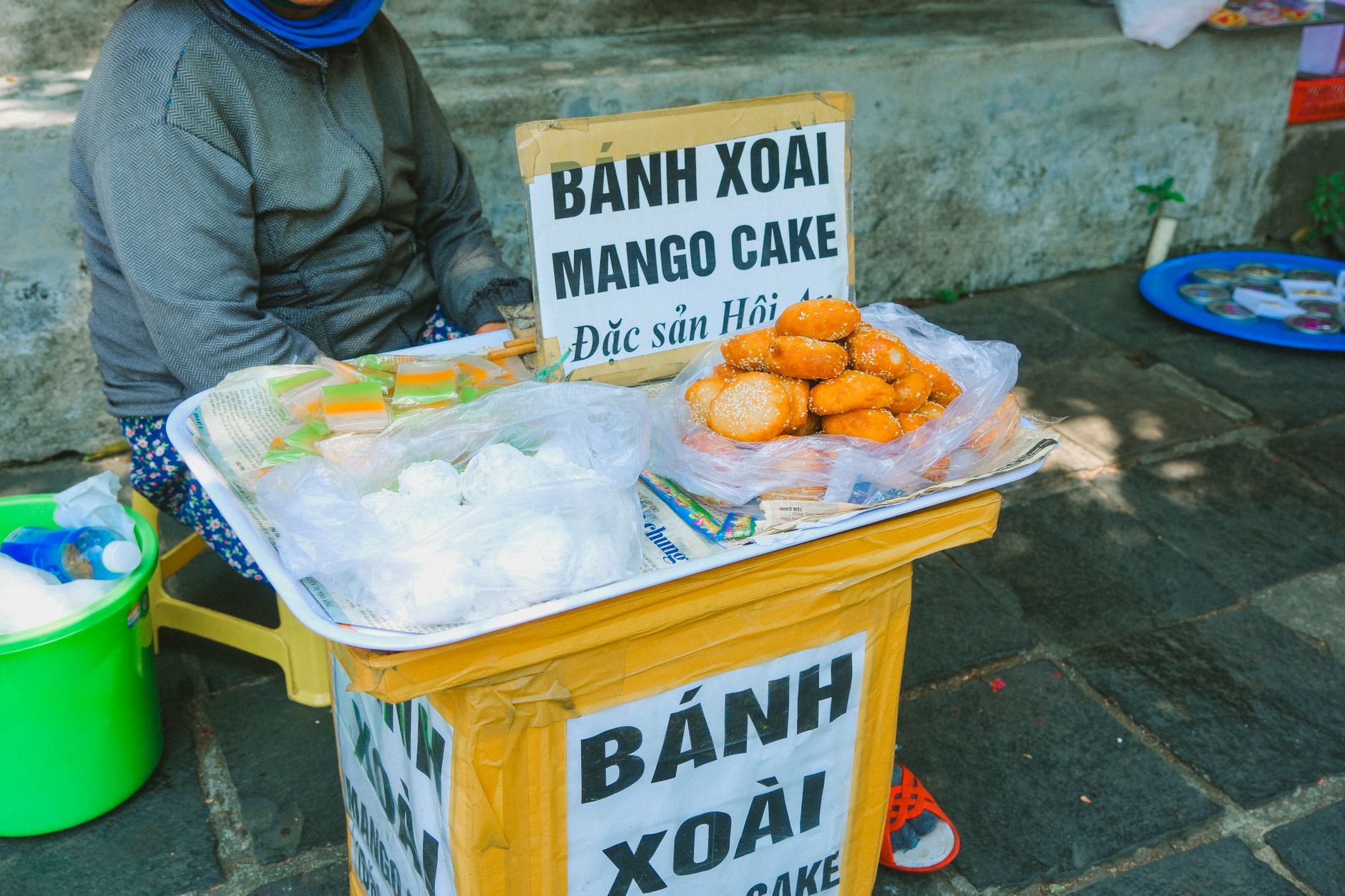
Trang Bang is also famous for its rice paper — specifically "banh trang phoi suong," thin sheets dried under morning dew that come out soft and slightly chewy rather than crisp. You'll see them at roadside vendors. Wrap them around grilled pork, herbs, and dipping sauce. A plate with pork and all the fixings costs around 50,000–70,000 VND.
Where to stay
Most travelers don't overnight at Moc Bai — they're passing through. But if you need a bed:
- Budget (300,000–500,000 VND/night): Basic nha nghi (guesthouses) in Ben Cau district and along QL22 near the border. Clean enough, air-conditioned, minimal English spoken.
- Mid-range (600,000–1,000,000 VND/night): Hotels in Tay Ninh town, 40 km east, offer better rooms and more food options. Vinpearl Hotel Tay Ninh and Sunrise Hotel are decent choices.
- Saigon: If your bus arrives late, just stay in Saigon and leave early the next morning. The backpacker strip around Pham Ngu Lao in District 1 has beds from 150,000 VND (dorm) to 800,000 VND (private room with air-con).

Photo by Haneul Trac on Pexels
Practical tips locals would tell you
- Bring USD for Cambodia. The Cambodian side at Bavet deals in US dollars. ATMs exist but aren't always reliable. Carry crisp, undamaged bills — torn notes get rejected.
- Get your Cambodia e-visa beforehand. You can get a visa on arrival at Bavet, but the e-visa (about $36 USD, processed in 3 business days online) saves 30–60 minutes of queuing.
- Photocopy your passport. Vietnamese immigration occasionally asks for a copy. Have two on hand.
- Carry small VND notes. You'll encounter "service fees" and porters who expect tips. Having 10,000 and 20,000 VND notes avoids overpaying.
- Fill your water bottle before the border. The immigration hall has no water fountain, and the wait can stretch past an hour on busy days.
Common mistakes to avoid
- Paying inflated "border fees" without questioning them. The official Vietnam exit stamp is free. Cambodia charges $30 USD for a tourist visa on arrival. If anyone asks for additional "processing fees" or "health check fees" beyond official rates, push back politely or ask to see a receipt.
- Arriving after 3 PM. The border officially closes at 10 PM, but staffing thins out late afternoon. Aim for a morning crossing.
- Skipping Trang Bang. Rushing straight through to the border means missing some of the best "banh canh" in southern Vietnam. Budget an extra 30 minutes for a bowl.
Practical notes
Moc Bai is a transit point, not a vacation — but it doesn't have to be a chore. Time it right, eat well in Trang Bang, and keep your documents organized. The crossing itself is routine if you arrive prepared and early.
Last updated · May 29, 2026 · independently researched, never sponsored.