
Meo Vac is a small district town in the far northeast of Vietnam (베트남 / 越南 / ベトナム), perched on the Dong Van Karst Plateau at roughly 1,000 meters elevation. For most travelers, it's the emotional high point of the Ha Giang loop — the place where the road gets narrow, the valleys get deep, and the tourist crowds thin out. If you're planning a trip north, this is one of the places worth building your schedule around.
A quick note on geography
Meo Vac has historically been part of Ha Giang province. Under Vietnam's planned administrative reorganization, the area falls under the expanded Tuyen Quang province. For practical travel purposes, you'll still see Ha Giang on most maps, road signs, and booking platforms. Don't let the naming confuse you — the roads, the scenery, and the town itself haven't changed.
Why travelers go
Meo Vac is where the Ha Giang (하장 / 河江 / ハーザン) loop shifts from impressive to genuinely remote. The stretch between Dong Van and Meo Vac — specifically the Ma Pi Leng Pass — is the single most talked-about road segment in northern Vietnam, and for good reason. The Nho Que River cuts a gorge several hundred meters below the road, and you ride along a cliff face with almost no guardrail. It's not comfortable. It's not relaxing. But it's the kind of landscape that stays with you.
Beyond the pass, Meo Vac town itself is quieter than Dong Van. The Sunday market draws Hmong, Lo Lo, and Giay communities from surrounding villages, and it still functions as an actual market rather than a photo opportunity. People come to buy livestock, fabric, and tobacco. You're welcome to walk through, but this is their weekly errand run, not a performance.
Best time to visit
September to November is the sweet spot. Rice terraces around Meo Vac are green or golden depending on the harvest cycle, skies are mostly clear, and the roads are dry enough to ride safely. October is peak season — expect more riders on the loop.
December to February brings cold fog that can cut visibility on Ma Pi Leng to almost nothing. Temperatures drop to 5–8°C at night. Beautiful if you like moody landscapes, but pack layers and accept that you might not see the gorge at all.
March to May gets you buckwheat flower season (mostly late October–November for bloom, but spring has its own wildflowers) and warming temperatures. Roads are good.
June to August is rainy season. Landslides are real. Sections of road between Dong Van and Meo Vac can close for hours or days. Only go if you're flexible with time and comfortable riding in mud.
How to get there
Meo Vac is approximately 150 km from Ha Giang city, which is the gateway hub.
Ha Giang city to Meo Vac by motorbike: 5–6 hours via Yen Minh and Dong Van. This is the standard loop route. Most riders do Ha Giang → Yen Minh → Dong Van on day one, then Dong Van → Meo Vac on day two.
By local bus: There's a daily bus from Ha Giang bus station to Meo Vac, departing early morning (usually around 5:30–6:00 AM). Takes 6–7 hours. Ticket is roughly 150,000–180,000 VND. It's not luxurious.
Getting to Ha Giang city: Overnight sleeper buses run from Hanoi's My Dinh bus station. The ride is 6–7 hours. Tickets run 250,000–350,000 VND depending on the operator. Grouptour and Hung Thanh are two commonly used companies.
Renting a motorbike or hiring an easy rider: Most people rent semi-automatic bikes (Honda Wave, Blade) in Ha Giang city for 150,000–250,000 VND per day. If you're not confident on mountain roads, hire a local driver — typically 350,000–500,000 VND per day including the bike, and your driver knows the road blind.

Photo by Quang Nguyen Vinh on Pexels
What to do
Ride the Ma Pi Leng Pass
The 20 km stretch from Dong Van to Meo Vac is the reason most people come. Start early to beat tour groups. There are several pullover spots along the cliff road. The Nho Que River viewpoint about halfway through is where everyone stops — a concrete platform with a clear sightline down to the turquoise river below.
Take a boat on the Nho Que River
From the base of the gorge (accessible via a steep road down from the pass), boats run short trips on the Nho Que River. About 100,000–150,000 VND per person for a 30-minute ride. The water is an opaque green, the canyon walls rise steeply on both sides. It's quieter than you'd expect.
Visit the Meo Vac Sunday market
Genuinely worth timing your trip around. Hmong families come in from villages across the plateau. You'll see horses tied to posts, piles of cardamom, hand-embroidered fabric sold by the meter, and men drinking "ruou ngo" (corn wine) by mid-morning. Arrive before 8 AM for the full scene — it winds down by noon.
Walk to Lung Khuy Cave
About 15 km from Meo Vac town, this cave doesn't get heavy traffic. Entry is around 20,000 VND. The interior has some decent stalactite formations and it's cool inside — a good break if you've been riding in heat.
Drive toward Bao Lac
The road south from Meo Vac to Bao Lac is less traveled than the main loop and passes through some of the most rural scenery in the north. If you have an extra day, this detour connects you back to Ha Giang via a different route.
Where to eat
Meo Vac town has a handful of local rice-and-noodle shops along the main road. Look for "thang co" — a Hmong organ stew made with horse meat, tripe, and herbs, simmered for hours. It's an acquired taste and genuinely local. A bowl runs about 30,000–40,000 VND. "Men men" is another Hmong staple — steamed corn flour eaten as a starchy side. Simple, filling, and hard to find outside the plateau.
For something more familiar, most guesthouses serve "pho" or "com binh dan" (everyday rice plates) for 35,000–50,000 VND.
Where to stay
Meo Vac has basic guesthouses and a growing number of homestays.
- Budget: Local guesthouses ("nha nghi") run 150,000–250,000 VND per night. Expect a hard bed, hot water that works most of the time, and thin walls.
- Mid-range: Newer homestays with better bedding and mountain views go for 400,000–700,000 VND. Meo Vac Lodge and a few newer spots on the ridge above town fall in this range.
- There is no luxury option. If you need reliable hot water and strong Wi-Fi, adjust expectations.
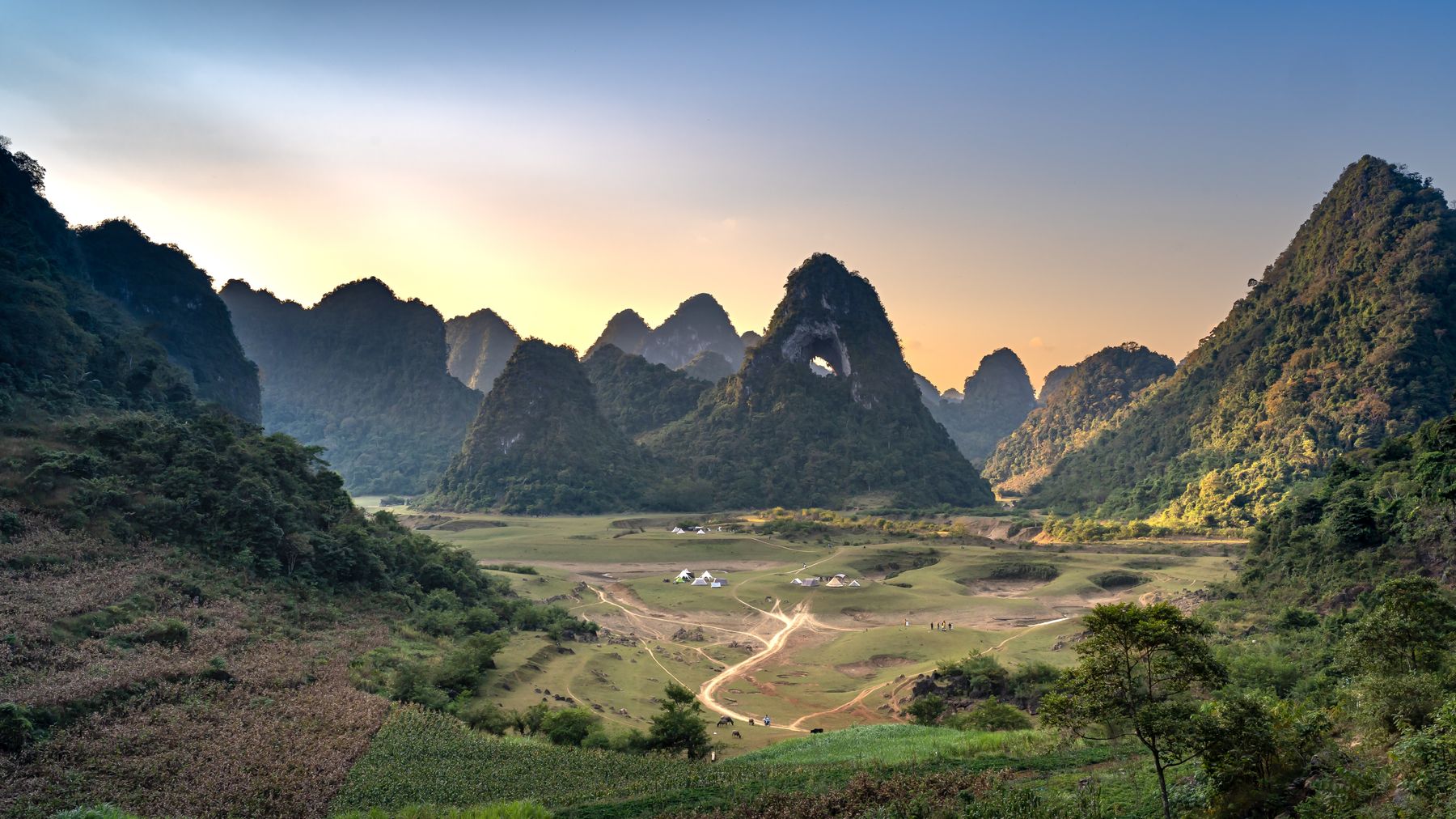
Photo by Quang Nguyen Vinh on Pexels
Practical tips
- Cash only. There's one ATM in Meo Vac town (Agribank) and it sometimes runs dry on weekends. Withdraw in Ha Giang city before you start the loop.
- Fuel up in Dong Van. Petrol stations in Meo Vac exist but can have irregular hours. Don't ride the pass on a quarter tank.
- Carry rain gear even in dry season. Weather shifts fast at altitude.
- Phone signal is patchy between Dong Van and Meo Vac. Download offline maps (Maps.me or Google Maps offline) before you leave Ha Giang.
Common mistakes
- Rushing the loop. Plenty of riders try to do the entire Ha Giang loop in two days. Meo Vac deserves at least one full night — you lose nothing by slowing down and gain the Sunday market if your timing works.
- Skipping the Nho Que boat. The viewpoint from Ma Pi Leng is great, but being on the river at the bottom of the gorge is a different experience entirely.
- Riding without a license. Vietnamese traffic police do check on the Ha Giang loop, especially near Yen Minh. If you don't have a valid Vietnamese or international driving permit (IDP) with motorcycle endorsement, hiring a driver saves you the 800,000–1,500,000 VND fine.
Practical notes
Meo Vac rewards the kind of traveler who doesn't need things to be convenient. The town is small, the food is simple, and the infrastructure is basic — but the plateau landscape and the Hmong market culture make it one of the more honest travel experiences left in northern Vietnam. Give it time.
Last updated · May 26, 2026 · independently researched, never sponsored.





