
What it is
Na Hang - Lam Binh Nature Reserve sits about 150 km north of Tuyen Quang city, covering roughly 45,000 hectares of limestone karst, primary forest, and the jade-colored reservoir created by the Na Hang hydropower dam. Since the 2025 merger of Tuyen Quang and Ha Giang provinces, the reserve now falls within a much larger administrative unit — but on the ground, nothing has changed. The same Tay and Dao villages line the lakeshore, the same Tonkin snub-nosed langurs swing through the canopy (one of fewer than 200 left), and the same quiet pervades a place that still doesn't appear on most backpacker itineraries.
The reserve was formally established in 1994 to protect its primate population and old-growth subtropical forest. The dam, completed in 2009, flooded part of the valley and created the scenic lake system visitors see today — a trade-off locals still have opinions about, but one that inadvertently produced some of the most photogenic boat journeys in northern Vietnam (베트남 / 越南 / ベトナム).
Why travelers go
People come here for the stillness. If you've done Ha Long Bay and found it crowded, or ridden the Ha Giang loop and craved something slower, Na Hang - Lam Binh fills that gap. The landscape looks like Ninh Binh (닌빈 / 宁平 / ニンビン)'s karsts got transplanted into deep jungle and surrounded by water instead of rice paddies.
Specifics worth knowing:
- The boat ride through the reservoir passes sheer limestone walls 200-300 m high, waterfalls that only flow in the wet season, and submerged forest remnants poking above the surface.
- Lam Binh district has homestays in Tay stilt-house villages where you're likely the only foreigner that week.
- The forest trails — particularly around Pac Ban and Tat Ma waterfall — are genuinely uncrowded. No ticket queues, no selfie stick vendors.
Best time to visit
September through November gives you the clearest skies, cooler temperatures (18-25°C), and the lake at its fullest after monsoon rains. The waterfalls peak in September-October. December through February is dry and cold — mornings can drop to 8-10°C and mist blankets the lake until midday, which is either magical or frustrating depending on your photography patience.
Avoid March-April: the reservoir drops significantly, exposing muddy banks, and haze from agricultural burning reduces visibility. May-August is hot, humid, and rainy — passable but not ideal for boat trips.
How to get there
From Hanoi, it's roughly 280 km — about 5.5-6 hours by motorbike or private car via QL2 north through Tuyen Quang city, then QL279 west toward Na Hang town.
By bus: Catch a Tuyen Quang-bound bus from My Dinh station (120,000-150,000 VND, 3 hours), then transfer to a local bus or "xe khach" to Na Hang town (another 2-2.5 hours, around 80,000 VND). Buses to Na Hang leave from Tuyen Quang bus station roughly every hour until 3 PM.
By motorbike: The most flexible option. Roads are paved the entire way, though the final 50 km from Chiem Hoa to Na Hang twists through mountain passes — beautiful but slow. Budget a full day if you want to stop.
By car/private driver: Hanoi agencies quote 2,500,000-3,500,000 VND round-trip for a two-day booking. Worth it if you're splitting costs.

Photo by HONG SON on Pexels
What to do
Boat trip on the reservoir
The main draw. Hire a boat at Na Hang pier (400,000-600,000 VND for a 3-4 hour loop, fits 6-8 people). The route passes Pac Ban area, several caves accessible only by water, and — if water levels allow — the flooded temple ruins near the dam. Bring sunscreen and a hat; there's limited shade on the smaller boats.
Tat Ma and Khuoi Nhi waterfalls
Tat Ma is a 50 m cascade about 8 km from Na Hang town, reachable by motorbike plus a 20-minute forest walk. Khuoi Nhi, deeper in Lam Binh district, requires a longer trek but rewards with a multi-tiered fall and swimming hole. No entrance fee for either — just park your bike at the trailhead and follow the path.
Village homestays in Lam Binh
Thon Nang hamlet and Khuoi Pac village both host visitors in traditional Tay stilt houses. Expect home-cooked meals featuring "thang co" (a sour highland hotpot), bamboo-tube rice, grilled stream fish, and local rice wine served with more enthusiasm than you might want. Rates: 250,000-400,000 VND per person including dinner and breakfast.
Primate spotting
The Tonkin snub-nosed langur is the reserve's flagship species. Sightings aren't guaranteed — you'll need a local ranger guide (arrange through the Na Hang Forest Protection station, around 500,000 VND/day) and an early-morning start. Even without primates, the forest birding is excellent.
Where to eat
Na Hang town has a handful of "com binh dan" (everyday rice) shops along the main road near the market. Try the grilled pork with sticky rice at the cluster of stalls by the bridge — 40,000-60,000 VND per plate. For something more memorable, eat at your homestay: the Tay kitchen tradition here emphasizes fermented bamboo shoots, wild greens, and freshwater fish from the reservoir.
Don't expect pho or banh mi shops on every corner outside of town — pack snacks if you're heading deep into Lam Binh for the day.
Where to stay
Na Hang town has basic guesthouses ("nha nghi") from 200,000-350,000 VND/night — clean enough, hot water, no frills. The better experience is staying in Lam Binh homestays (mentioned above).
For something mid-range, Na Hang Eco Lodge on the lakeshore offers rooms with reservoir views for 600,000-900,000 VND. It's the closest thing to a proper hotel in the area.
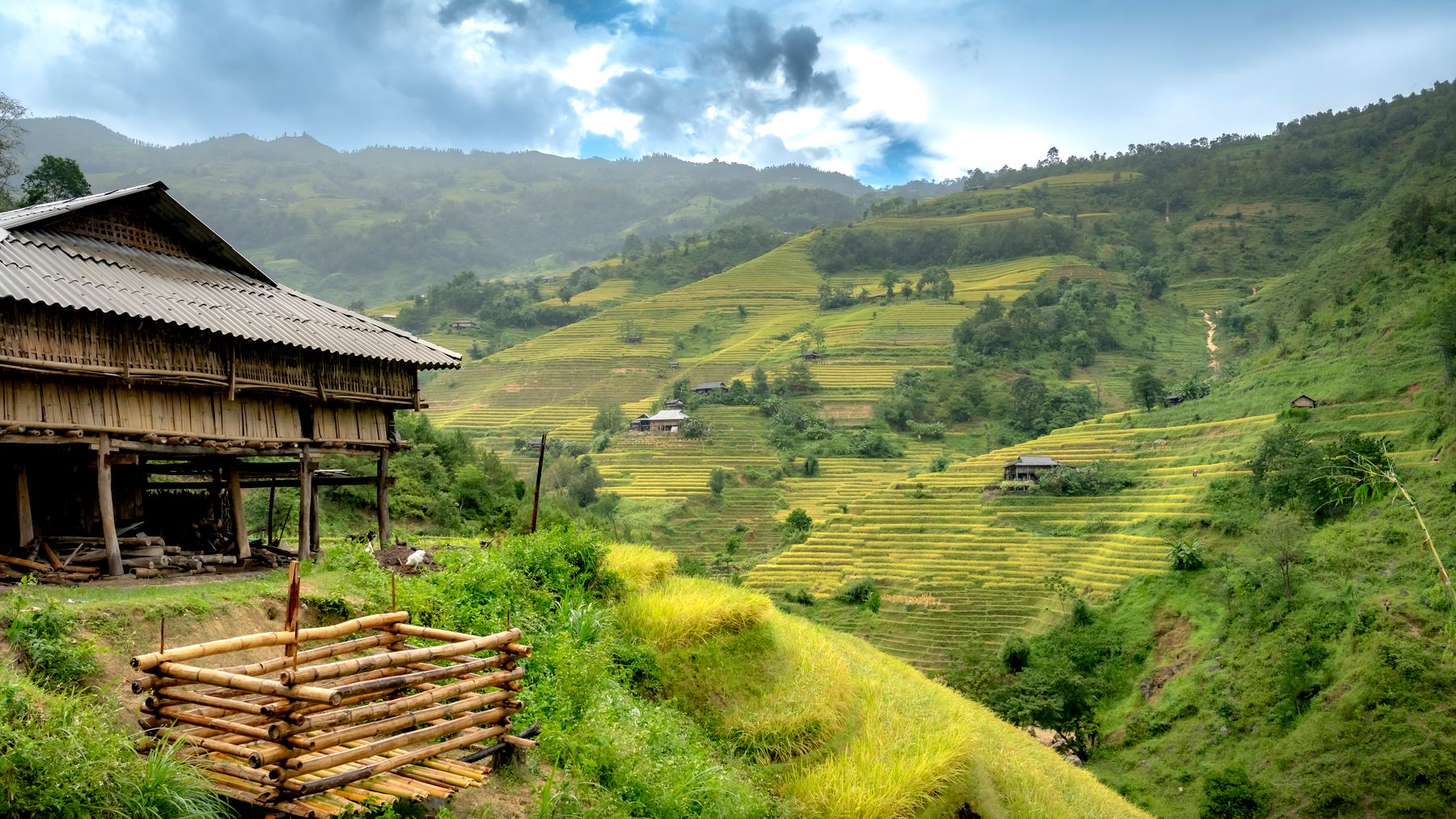
Photo by Quang Nguyen Vinh on Pexels
Practical tips
- Cash only. No ATMs in Lam Binh district. Na Hang town has one Agribank ATM near the market — withdraw enough for your whole stay.
- Phone signal is patchy once you're on the lake or in the forest. Viettel has the best coverage here.
- Leeches are real in wet season. Tuck your pants into your socks or wear gaiters on forest trails.
- Fuel up in Na Hang town. There's no reliable petrol between Chiem Hoa and Lam Binh.
Common mistakes
- Coming just for the day. The 6-hour drive from Hanoi makes a day trip miserable. Two nights minimum lets you do the boat, a waterfall, and a village stay without rushing.
- Arriving without a plan for boats. Showing up at the pier solo means paying full boat price yourself. If budget matters, find other travelers at your guesthouse the night before and split costs.
- Skipping Lam Binh entirely. Most visitors only do Na Hang town and the reservoir. Lam Binh's villages and waterfalls are the quieter, more rewarding half of the reserve — allocate at least one full day there.
Practical notes
Na Hang - Lam Binh doesn't require permits for general tourism areas, but entering core forest zones for primate research or deep trekking needs ranger coordination. The reserve is still developing its tourism infrastructure — that's precisely what makes it worth visiting now, before the tour buses arrive.
Last updated · May 29, 2026 · independently researched, never sponsored.





