
Most rice paper you encounter at a Vietnamese table is stiff, translucent, and needs a quick dip in warm water before it rolls without cracking. The version from Trang Bang district in Tay Ninh province works differently. It comes soft and faintly damp straight off the shelf — pliable enough to fold around a handful of grilled pork, herbs, and pickled vegetables without a single crack.
That texture is the point. And it comes from one specific production method that nobody outside this district has quite replicated at scale.
Why Trang Bang Rice Paper Is Different
"Banh trang phoi suong" translates roughly as rice paper dried in the dew — and that is a literal description, not a marketing phrase. After the sheets are steamed on cloth-covered frames, producers in Trang Bang carry them outside in the late evening and leave them on bamboo racks in open fields overnight. The district sits close to the Vam Co Dong River, and the night air here is reliably humid. By morning, the rice paper has absorbed just enough ambient moisture to stay soft and slightly tacky rather than drying brittle.
The rice itself matters too. Local producers use a variety called gao bong — a short-grain, slightly glutinous rice grown in Tay Ninh — which gives the sheets a chewier, more elastic base compared to standard long-grain rice paper. The batter is typically thinned with a small proportion of tapioca starch, which adds stretch without making the sheet gummy.
The result is a sheet that behaves less like dried pasta and more like a fresh crepe: cooperative, forgiving, and with enough structural integrity to hold a full roll without tearing.
What You Roll in It
The classic pairing is "banh trang cuon thit heo" — sliced boiled or grilled pork belly wrapped with raw herbs, thin rice vermicelli, sliced cucumber, and pickled mustard greens. The roll is dipped into a fermented shrimp sauce called mam nem, sharpened with chili and lime, or sometimes a thinned hoisin-based dip with crushed peanuts.
In Trang Bang itself, the dish is served as a full meal at roadside restaurants along National Highway 22 (the road from Saigon (사이공 / 西贡 / サイゴン) toward the Cambodian border), roughly 60 km northwest of Ho Chi Minh City. Tables are low plastic affairs set up under corrugated awnings. A full order for two — pork, herbs, noodles, sauce, and a stack of rice paper — runs around 120,000 to 180,000 VND depending on the cut of meat and how much you pile on.
The rice paper itself is what makes the dish coherent. A dry sheet would crack when you apply pressure mid-roll. An over-soaked sheet turns slippery and falls apart. The phoi suong version sits in neither failure mode — it grips without sticking and rolls cleanly.
Outside of this specific preparation, locals also use the sheets as a base for grilling: brushed with a thin layer of egg yolk, dried shrimp paste, or scallion oil, then set briefly over charcoal. That version — sometimes called banh trang nuong, though distinct from the Da Lat version of the same name — is a common afternoon snack around the Trang Bang market area.

Photo by FOX ^.ᆽ.^= ∫ on Pexels
Where to Buy It
If you are in Trang Bang, the production villages around Thanh Phuoc and Gia Binh communes are the primary source. Village households sell direct; a bundle of 20 to 25 sheets costs around 20,000 to 35,000 VND depending on thickness and grade. The market at Trang Bang town center also carries them, packaged in plastic bags, from early morning.
In Ho Chi Minh City (호치민시 / 胡志明市 / ホーチミン市), you can find authentic Trang Bang rice paper at a handful of dry goods shops in Binh Tay Market area and at some specialty food retailers in District 1 and District 3. Look for packaging that specifically states "Trang Bang" and "phoi suong" — generic rice paper sold under similar-looking labels will not behave the same way. A bag of 20 sheets at Saigon dry goods stores typically runs 30,000 to 50,000 VND.
Some producers now sell directly via social media and ship within Vietnam, which has made it easier to get authentic product without the two-hour round trip from Saigon.
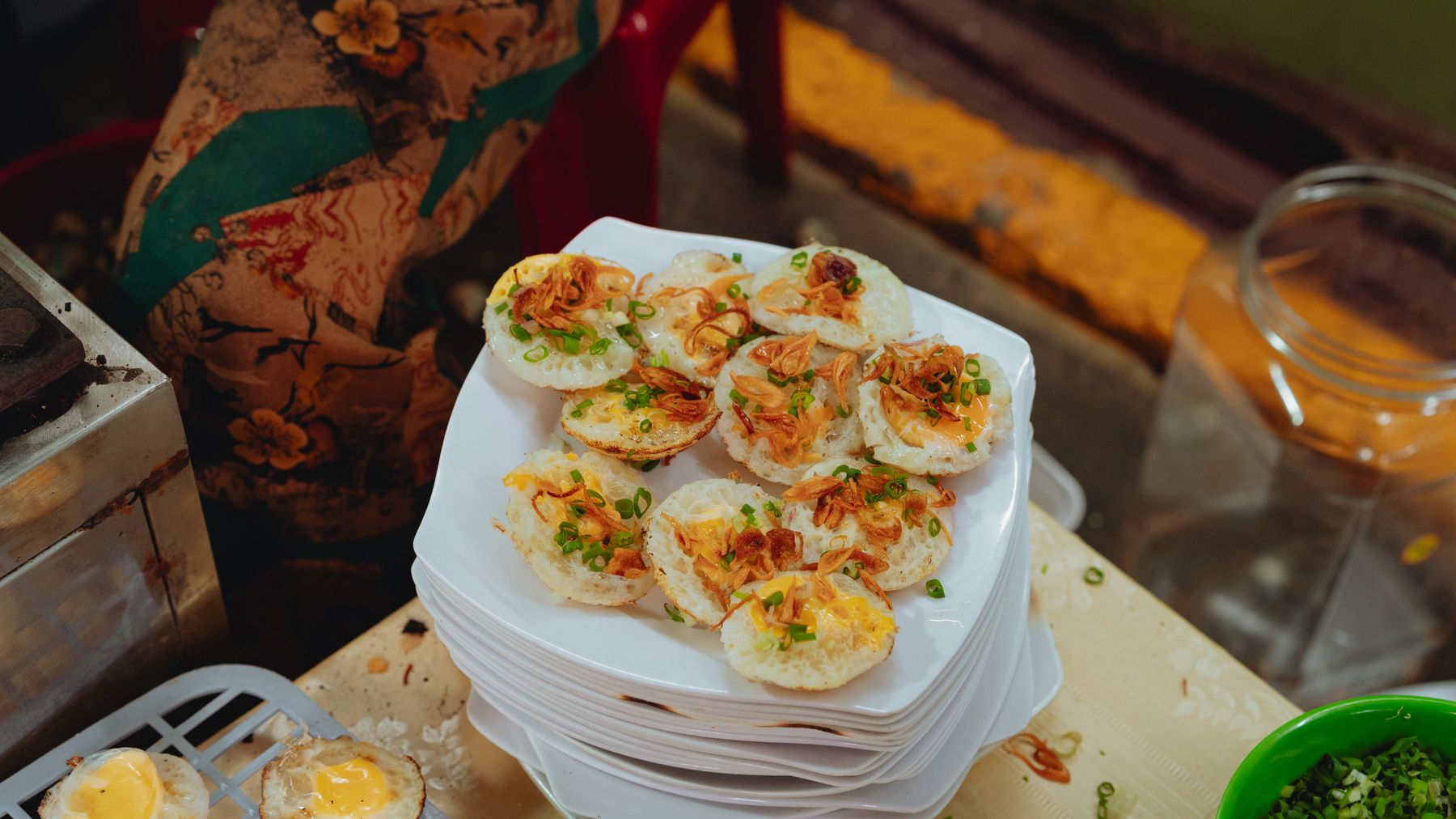
Photo by Theodore Nguyen on Pexels
Shelf Life and Storage
Because the sheets retain moisture, they do not keep as long as standard dried rice paper. At room temperature in a sealed bag, expect three to five days before the edges begin to stiffen and the sheets lose their cooperative texture. In a cool, dry environment — or a lower shelf of the refrigerator — they hold well for up to two weeks, though they may need five to ten minutes at room temperature before rolling.
Do not freeze them. The moisture content turns to ice crystals and ruptures the starch matrix; sheets thawed from frozen crack like the ordinary kind.
If you are buying as a gift or souvenir, factor the transit time into your purchase. Buying on the last day of a Tay Ninh trip and heading straight to the airport works fine. Buying on day two of a ten-day itinerary does not.
Practical Notes
Trang Bang is a straightforward day trip or half-day detour from Saigon — grab a bus from Mien Tay station toward Tay Ninh city and get off at Trang Bang, or hire a car for around 600,000 to 800,000 VND return. If you are already heading to Tay Ninh to visit the Cao Dai Holy See temple (about 30 km further northwest), Trang Bang is a natural lunch stop on the way back. The rice paper and the pork rolls are reason enough to stop — you do not need another excuse.
Last updated · May 29, 2026 · independently researched, never sponsored.






