
What it is
My Khe Beach in Quang Ngai is not the My Khe you're thinking of. The famous one sits in Da Nang, packed with resorts and surf schools. This one — about 130 km south along the coast — is a different animal entirely: a roughly 7-km crescent of pale sand backed by casuarina trees and fishing villages, with almost no tourist infrastructure to speak of. It sits in Tinh Khe commune, about 13 km northeast of Quang Ngai city center.
The beach has been known to locals for generations as a weekend escape. There's no boardwalk, no beach clubs, no cocktail bars. That's the draw. You get a wide, clean shoreline, shallow warm water, and a handful of seafood shacks run by families who've been cooking the day's catch for decades.
Historically, this stretch of coast carries weight. The area around Tinh Khe commune is associated with wartime events that shaped how the world understood the conflict in Vietnam. Today, it's simply a quiet coastal community where people fish, farm, and go about their lives.
Why travelers go
Most don't — and that's the honest answer. My Khe Quang Ngai barely registers on the backpacker circuit or the resort crowd's radar. The people who end up here are typically passing through on the north-south route between Da Nang (다낭 / 岘港 / ダナン) and Quy Nhon, or they're exploring Quang Ngai province specifically. What they find is a beach with genuine solitude on weekdays, decent swimming conditions from April through September, and seafood prices that make Da Nang look expensive.
If you want a day or two of doing very little — swimming, eating grilled fish, reading a book under a tree — this is a solid stop. If you want nightlife or water sports, keep driving.
Best time to visit
The dry season runs from April to September, with June through August being the warmest months. Water temperatures hover around 28-30°C and the sea stays calm enough for comfortable swimming. Mornings are best — the light is good, the sand hasn't baked yet, and local fishermen are hauling in their catch.
Avoid October through January. The central coast gets hammered by rain and occasional storms during this window. The beach erodes, the water turns murky, and most of the seafood stalls scale back or close. February and March are transitional — you might get lucky with a few clear days, but it's unpredictable.
How to get there
The nearest major hub is Da Nang, about 130 km north.
- By train: Take the Reunification Express from Da Nang to Quang Ngai station. The trip takes roughly 2.5-3 hours and costs around 80,000-150,000 VND depending on seat class. From Quang Ngai station, grab a taxi or motorbike (xe om) to the beach — about 13 km, 15-20 minutes, around 80,000-100,000 VND by taxi.
- By bus: Regular buses run from Da Nang's central bus station to Quang Ngai, taking about 3 hours and costing 100,000-130,000 VND.
- By motorbike: The coastal stretch of the QL1A or the parallel inland roads make for a straightforward ride. Budget 2.5-3 hours from Da Nang, more if you stop in towns like Tam Ky along the way.
If you're coming from Quy Nhon to the south, it's about 170 km — roughly 3.5 hours by bus or 3 hours by motorbike.
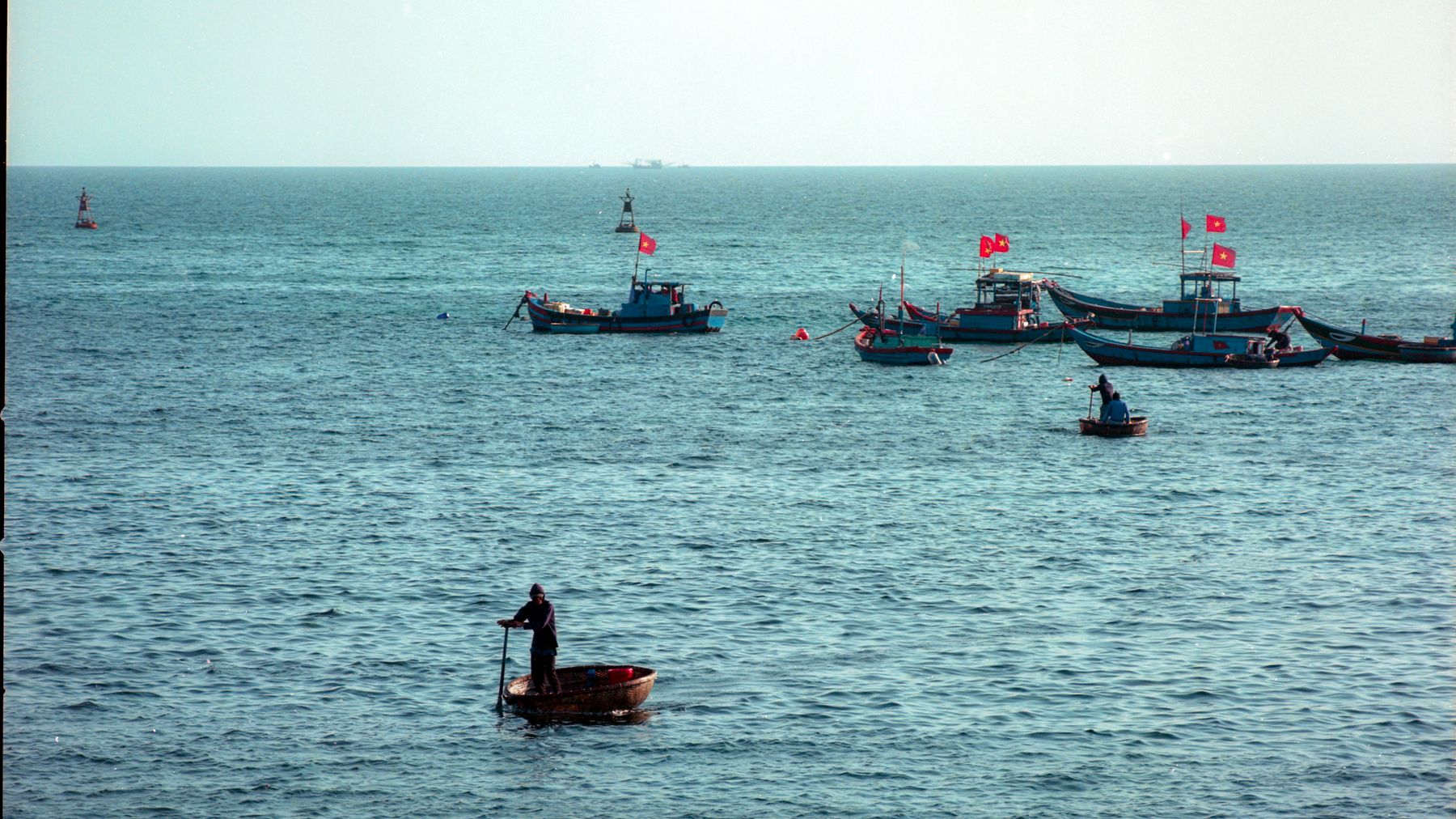
Photo by Q. Hưng Phạm on Pexels
What to do
Swim and sit
The water is shallow for a good distance out, which makes it comfortable for wading and swimming without worrying about strong currents (during dry season). The northern end of the beach is typically quieter than the sections closer to the village.
Walk the fishing village
The small settlement behind the beach operates on its own rhythm. Early morning — around 5:30-6:00 AM — is when the round basket boats ("thung chai") come in with the night's haul. Nobody minds if you watch, but stay out of the way. It's a working port, not a photo op.
Visit Son My memorial
The Son My Memorial Site is located in the same commune, about 2 km inland from the beach. It's a sobering, well-maintained site that documents the events of March 1968. Entry is free. Allow about an hour.
Rent a motorbike and explore the coast
The roads running parallel to the beach connect several smaller coves and rocky headlands. Riding south toward Sa Huynh (about 60 km) takes you past salt fields and quieter fishing hamlets. The road condition is decent but not pristine — watch for sand patches.
Try the local market
Quang Ngai city's central market (Cho Quang Ngai) is worth a morning visit for food supplies and local snacks. Pick up "don" — a Quang Ngai specialty of thin rice noodles with shrimp and pork, topped with crispy rice crackers. It's specific to this province and hard to find elsewhere.
Where to eat nearby
Seafood is the obvious move. Small family-run restaurants line the road approaching the beach. Point at whatever looks fresh in the styrofoam coolers — grilled squid, steamed clams, garlic butter prawns — and expect to pay 150,000-300,000 VND for a full spread for two people including rice and drinks.
Two dishes worth seeking out in Quang Ngai specifically:
- "Don" — the signature Quang Ngai noodle dish. Thin, delicate rice vermicelli served with shrimp, pork, herbs, and a light broth. Topped with crispy broken rice crackers that give it texture. Find it at shops around the central market for 25,000-35,000 VND a bowl.
- "Ram" — deep-fried spring rolls made with whole shrimp wrapped in rice paper, often served alongside don. Crispy, salty, and good with cold beer. Similar in concept to "cha gio" but with a distinctly central Vietnamese approach.
Where to stay
Accommodation options near My Khe Beach itself are limited. There are a few guesthouses ("nha nghi") within a couple kilometers of the beach charging 200,000-400,000 VND per night. Don't expect much beyond a clean room, air conditioning, and hot water.
For more comfort, stay in Quang Ngai city center, where you'll find mid-range hotels in the 400,000-800,000 VND range with proper amenities, Wi-Fi, and breakfast. The beach is a quick 15-20 minute ride from town.
There are no resorts or international-chain hotels here. That's unlikely to change soon.

Photo by Long Bà Mùi on Pexels
Practical tips locals would tell you
- Bring your own sunscreen and water. There's no beachside convenience store. The nearest shop is back toward the village.
- Cash only. Card payment doesn't exist out here. ATMs are in Quang Ngai city.
- Jellyfish appear occasionally in the warmer months (July-August). Ask locals before swimming — they'll tell you honestly.
- Vietnamese coffee is easy to find in Quang Ngai city but not at the beach. Get your caffeine fix before heading out.
- Language barrier is real. Very little English spoken in this area. Having Google Translate downloaded offline helps. Basic Vietnamese phrases go a long way.
Common mistakes to avoid
- Confusing it with My Khe Da Nang. Double-check your map pin. Booking a taxi to "My Khe Beach" in this part of Vietnam can land you in the wrong place if you're not specific.
- Showing up in rainy season. October through January is genuinely unpleasant here. The beach loses its appeal fast when it's grey and windy.
- Expecting resort-level facilities. There are no loungers for rent, no umbrellas, no lifeguards. Bring what you need and swim with common sense.
- Rushing through. Quang Ngai rewards a slower pace. One night minimum, two if you want to explore the coast south toward Sa Huynh or make a day trip to the Ly Son islands (a 30-minute speedboat from Sa Ky port, about 20 km from Quang Ngai city).
Practical notes
My Khe Beach Quang Ngai works best as a one or two-night stop on a longer central Vietnam itinerary — between Da Nang or Hoi An to the north and Quy Nhon to the south. It's not a destination you'd fly across the country for, but if you're already on the road and want a beach without the crowd, it delivers exactly that.
Last updated · May 26, 2026 · independently researched, never sponsored.





