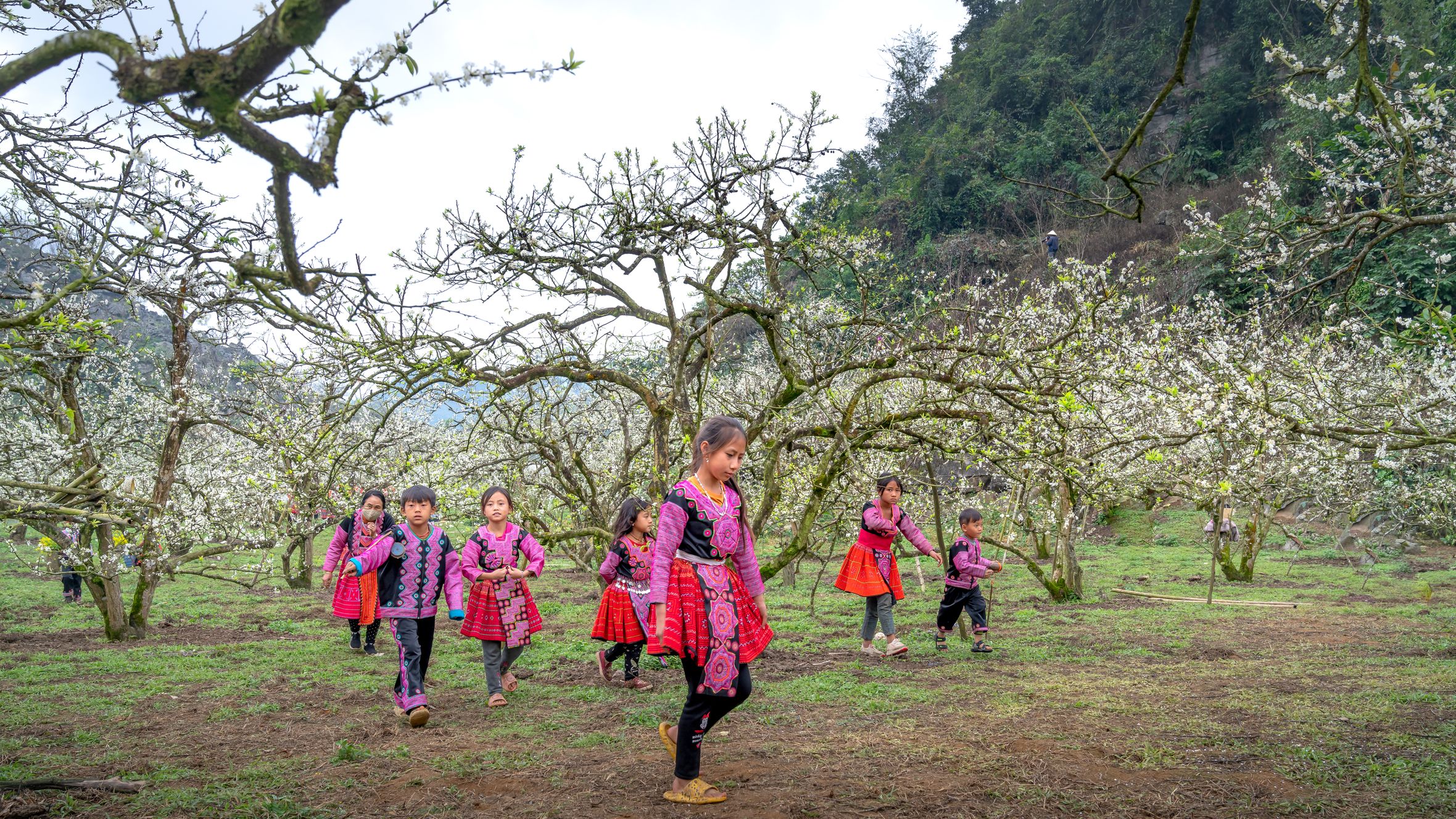
Na Ka is a narrow valley in Moc Chau district, Son La province, where ethnic Mong families have grown plum trees for generations. It sits at roughly 1,050 meters elevation, about 6 km off National Road 6. The valley isn't large — maybe 100 hectares of plum orchards spread across hillsides — but during bloom season it becomes one of the most photographed spots in northern Vietnam (베트남 / 越南 / ベトナム).
What it is
Na Ka (sometimes written Na Ka – Moc Chau) is specifically a plum-growing hamlet in Ta Nang commune. The trees here are a local variety producing small, tart plums that villagers sell fresh or preserve with salt and sugar. The orchards have been here for decades, but the valley only became a travel destination around 2015 when photos of the white blossom season started circulating on Vietnamese social media. Since then, a loose tourism infrastructure has grown up — homestays, parking areas, a few noodle stalls — but it's still fundamentally a farming community.
Why travelers go
Two reasons, depending on the month. In late January through mid-February, the plum trees bloom white. The hillsides look like they've been dusted with snow, and the contrast against red soil and dark wood Mong houses makes for genuinely good photographs. In late May through June, the fruit ripens — deep purple plums hanging heavy on branches — and you can pick and buy directly from farmers at around 30,000–50,000 VND per kilogram.
Beyond the seasonal draw, Na Ka offers a quiet counterpoint to the tea plantations that dominate Moc Chau tourism. It's less developed, less crowded outside peak weekends, and gives you a reason to interact with Mong families who are happy to talk about their orchards if you show genuine interest.
Best time to visit
For blossoms: Late January to early February. This overlaps with Tet in many years, which means roads to Moc Chau will be busy. If you can go the week before Tet or the week after the holiday rush, you'll have the valley more to yourself. The bloom lasts roughly 2–3 weeks depending on weather — cold snaps can delay it, warm spells accelerate it.
For fruit: Late May to mid-June. Fewer tourists, greener landscape, and you can eat plums straight off the branch. The trade-off is occasional afternoon rain and muddier trails.
Avoid: March–April (nothing blooming, fruit not ripe, valley looks unremarkable) and November–December (bare branches, cold fog, limited visibility).
How to get there
From Hanoi, you're looking at roughly 200 km to Moc Chau town, then another 20 km to Na Ka.
By motorbike: The classic route is QL6 through Hoa Binh and Mai Chau, climbing over Thung Khe pass. Budget 5–6 hours if you ride at a comfortable pace. This is genuinely enjoyable riding — the section past Mai Chau through limestone karst is worth the trip alone.
By bus: Buses from My Dinh station (Hanoi (하노이 / 河内 / ハノイ)) to Moc Chau run frequently, costing 150,000–200,000 VND for a one-way ticket, taking about 4.5 hours. From Moc Chau town, you'll need a motorbike taxi ("xe om") or rented scooter to reach Na Ka — roughly 20 minutes on decent road.
Renting a scooter in Moc Chau: Available from most homestays and a few rental shops near the town center. Expect 120,000–180,000 VND per day for a Honda Wave or similar semi-automatic.

Photo by Vietnam Hidden Light on Pexels
What to do
Walk the orchard trails
There's no formal entrance or ticket — you walk into the orchards along dirt paths between family plots. Some households have put up small fences and charge 10,000–20,000 VND as a photography fee during blossom season. This is reasonable; it's their land and their trees. Budget 1–2 hours for a proper wander.
Visit a Mong household
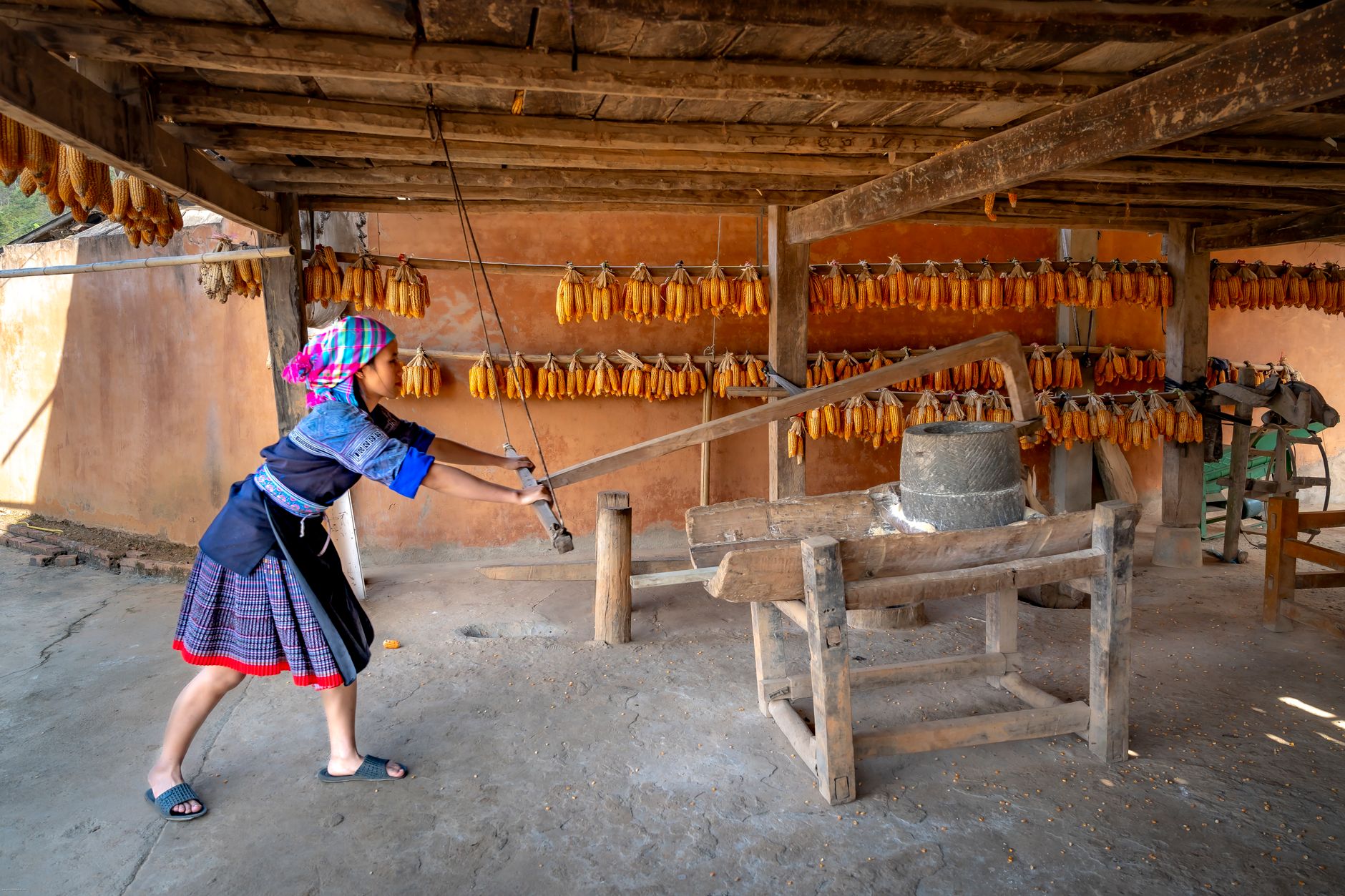
Several families welcome visitors and will show you how they process preserved plums ("man muoi") or distill plum wine ("ruou man"). No hard sell — a bottle of plum wine usually goes for 80,000–120,000 VND and honestly makes a better souvenir than anything you'll find in a Hanoi gift shop.
Ride to Dai Yem waterfall
About 15 km from Na Ka, this wide waterfall is worth combining into a half-day loop. Entrance fee is 40,000 VND. It's touristy but photogenic, especially after rain.
Catch sunrise over the valley
If you stay overnight in Na Ka itself, walk uphill to the ridge on the east side around 5:30–6:00 AM. Mist pools in the valley below the orchards. Bring a jacket — it's genuinely cold at altitude in January.
Explore Moc Chau tea plantations
On your way to or from Na Ka, the Heart Tea Hill (Doi Che Hinh Trai Tim) and surrounding green-carpet plantations are a 10-minute detour. Free to walk through outside of the fenced "Instagram" viewpoints.
Where to eat nearby
Moc Chau town has the most options. Look for "com tam" with grilled pork at the small rice shops along the main drag, or try local "thit trau gac bep" — buffalo meat smoked over a wood fire, served sliced thin with herbs. This is a Mong and Thai specialty of the region and genuinely unlike anything you'll eat in Hanoi or Saigon. A plate runs 60,000–80,000 VND.
In Na Ka itself, options are limited to a couple of family-run kitchens offering "com binh dan" (working-class set meals) for 35,000–50,000 VND. Simple but decent.
Where to stay
Budget (200,000–400,000 VND/night): Basic homestays in Na Ka hamlet — mattress on the floor, shared bathroom, home-cooked dinner included. Functional, not fancy.
Mid-range (500,000–900,000 VND/night): Homestays and small guesthouses in Moc Chau town with private rooms, hot water, and sometimes breakfast. Moc Chau Happy Land and similar spots along QL6.
Comfortable (1,000,000–1,800,000 VND/night): A few newer boutique stays have opened on the Moc Chau plateau with valley views, proper heating, and decent coffee. These book out on Tet / 越南春节 / テト) weekends.
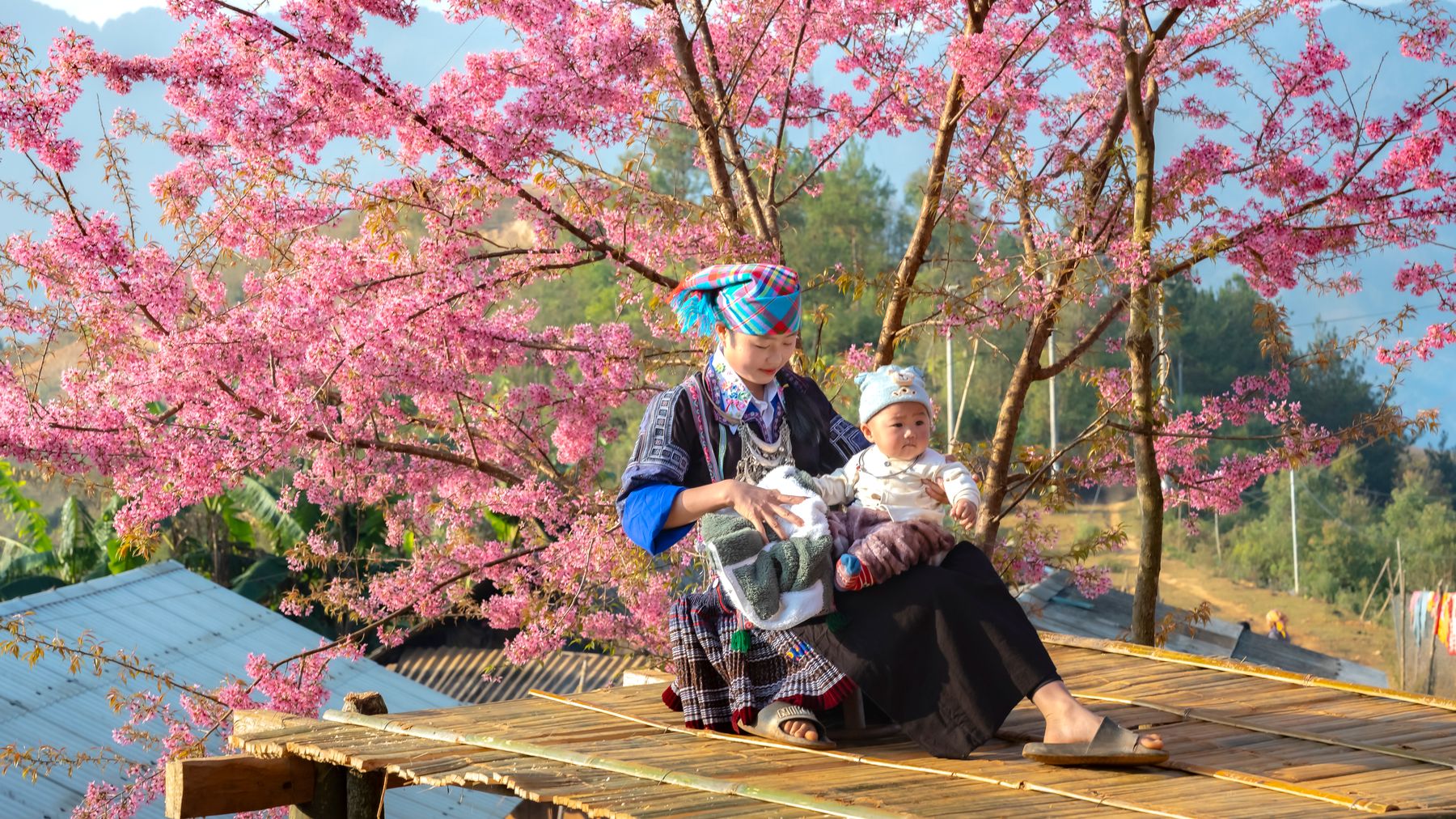
Photo by Quang Nguyen Vinh on Pexels
Practical tips
- Bring cash. There's no ATM in Na Ka and card payment doesn't exist here. The nearest ATM is in Moc Chau town.
- Wear shoes with grip. The trails between orchards are slippery clay when damp.
- If visiting during Tet, book accommodation at least 2 weeks ahead. Hanoi residents flood Moc Chau during the holiday.
- Dress warmer than you think. January nights drop to 5–8°C. Even daytime rarely exceeds 15°C.
Common mistakes
Coming on a weekend in peak bloom. The valley is small. It gets genuinely overcrowded with Hanoi day-trippers on Saturday–Sunday in early February. Weekdays are dramatically better.
Not checking bloom status before driving 5 hours. Follow local Moc Chau tourism Facebook groups (search "Du lich Moc Chau") for real-time photos. Bloom timing shifts yearly.
Treating it as a day trip from Hanoi. You can technically do it, but 10+ hours of driving for 2 hours in a valley is a bad ratio. Stay overnight — the plateau deserves at least two days, combining Na Ka with the tea hills, Dai Yem, and the pine forests near town.
Practical notes
Na Ka works best as part of a broader Moc Chau trip rather than a standalone destination. Pair it with a night in Mai Chau on the way up for a solid 3-day loop from Hanoi. The valley is free to visit, small enough to explore in a morning, and genuinely rewarding if you time it right.
Last updated · May 29, 2026 · independently researched, never sponsored.