Hang Doi — literally "Bat Cave" — is one of the larger limestone caves in the Moc Chau plateau, tucked into the karst hills about 3 km from Moc Chau town center in Son La province. It's not a theme park. It's a proper cave with an interesting local backstory and a cool interior temperature that feels almost unreal after riding through the midday heat.
What it is and a bit of history
Hang Doi sits inside a limestone mountain in Co Noi commune, just off National Road 6. The cave gets its name from the thousands of bats that once roosted inside — you'll still see (and smell) some of them clinging to the ceiling in the deeper chambers. The main cavern stretches roughly 300 meters deep, with ceilings reaching over 30 meters in places. Stalactites and stalagmites have been forming here for thousands of years, and locals from the Thai ethnic community have long considered the cave a sacred site. During wartime, it also served as a shelter for people in the area.
The cave was developed for tourism in the early 2000s with walkways, lighting, and a ticket booth out front. It's modest compared to Phong Nha, but that's partly the appeal — you won't be shuffling through with 200 other tourists.
Why travelers go
Moc Chau is mostly known for tea plantations, plum blossoms in January, and dairy farms. Hang Doi adds a different texture to a visit. The cave itself is genuinely impressive in scale — the main chamber opens up wide enough that your voice echoes back at you from multiple directions. The formations are varied: some sections look like frozen waterfalls, others like melted candle wax stacked floor to ceiling.
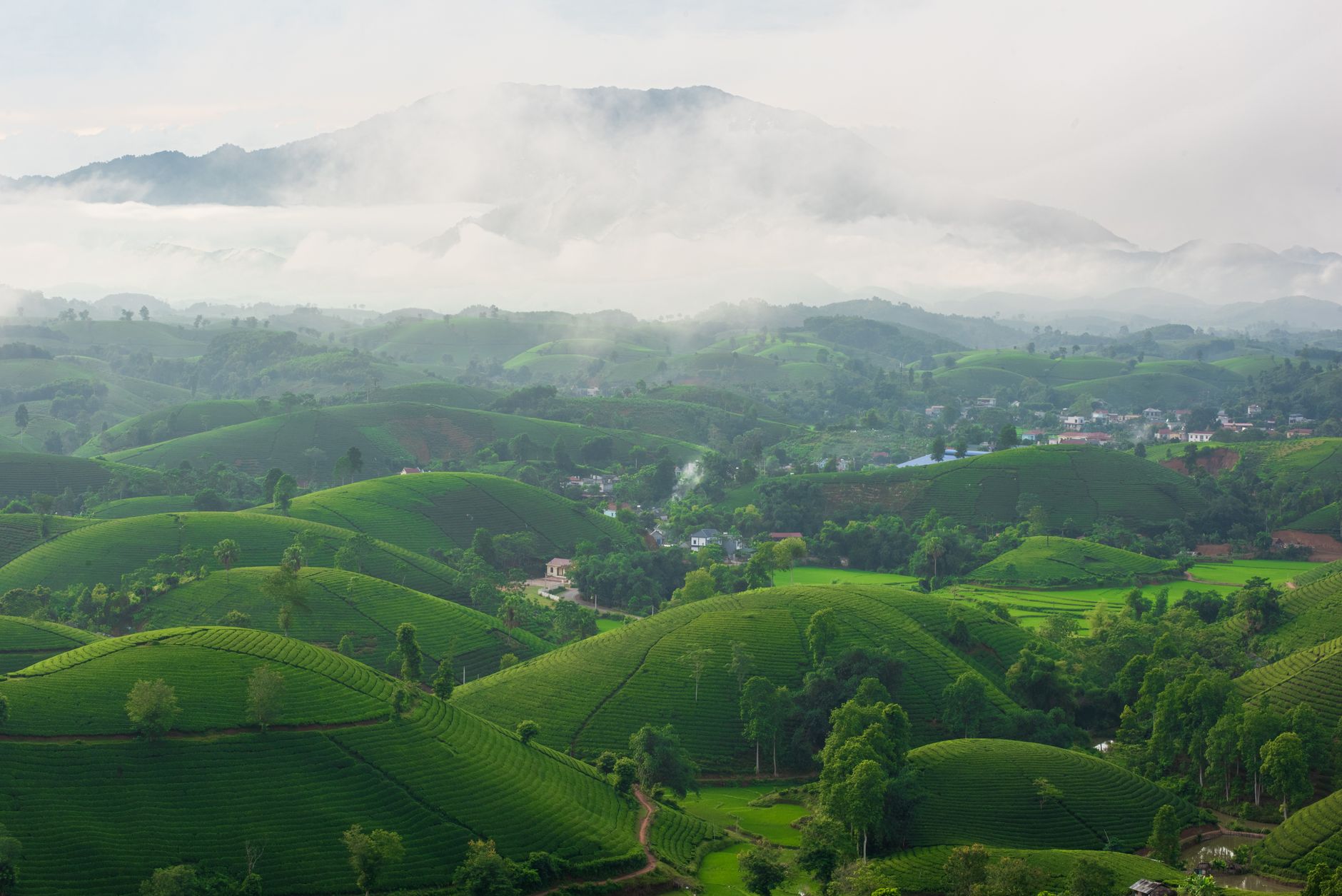
Beyond the cave, the surrounding area is a good reason to linger. The road in passes through tea fields and small Thai villages with stilt houses. If you're spending two or three days in Moc Chau (which you should), Hang Doi fills a solid half-day without feeling rushed.
Best time to visit
Moc Chau has two crowd-pulling seasons: late January to early February for plum and peach blossoms, and October to November when the wild sunflowers bloom. The cave is fine year-round since the interior stays cool and dry, but visiting during these windows means you get the cave plus the landscape at its most photogenic.
Avoid July and August if you can. Heavy rain makes the access road slippery in spots, and humidity inside the cave ramps up. March through May is a sweet spot — warm but not oppressive, fewer visitors, and the tea hills are bright green.

Photo by Carlo Giovanni Ghiardelli on Pexels
How to get there
From Hanoi, Moc Chau is about 200 km northwest — roughly 4.5 to 5 hours by car or motorbike via National Road 6 through Hoa Binh. Buses from My Dinh station run daily, costing around 150,000–180,000 VND one way, and drop you at Moc Chau town.
From Moc Chau town center, Hang Doi is only about 3 km south along a well-signed road. You can ride there on a motorbike in 10 minutes. A "xe om" (motorbike taxi) from town costs roughly 30,000–50,000 VND. There's parking at the cave entrance.
Entrance fee is 40,000 VND per person — though this has a habit of changing without announcement, so carry some extra small bills.
What to do
Walk the full cave circuit
The illuminated path runs about 300 meters in. Take your time — the lighting picks out different formations at different angles, and rushing through means missing the details. The deepest section, where the ceiling drops and narrows, is where you're most likely to see bats. Bring a light jacket; the temperature inside hovers around 18–20°C even when it's 30+ outside.
Climb to the upper viewpoint
Before or after the cave, a short trail leads up the hillside to a clearing with a wide view over the valley. It's a 15-minute climb on uneven steps — not strenuous, but wear proper shoes, not sandals. On clear mornings, the tea fields below look like a green quilt.
Visit a Thai village nearby
Ban Ang village, about 2 km from the cave, is a Thai ethnic community with traditional stilt houses. Some families offer homestay and cook meals on request. It's low-key and genuine — nobody's going to hard-sell you a tour package. Just be respectful about photographing people's homes.
Stop at the tea fields
Moc Chau's Heart Tea Hill (Doi Che Hinh Trai Tim) is a 10-minute ride from Hang Doi. The rows of tea bushes are trimmed into neat lines that curve over the hillside. Early morning is best for photos before the tourist buses show up. Free entry, though there's a small parking fee.
Try the local dairy
Moc Chau is Vietnam (베트남 / 越南 / ベトナム)'s dairy heartland. The Moc Chau Milk factory has a small shop selling fresh yogurt, condensed milk, and flavored milk that tastes noticeably different from what you buy in Hanoi or Saigon. The yogurt in particular is worth stopping for — thick, slightly tangy, around 8,000 VND a cup.
Where to eat nearby
Don't leave Moc Chau without trying "com lam" — sticky rice cooked inside a bamboo tube over charcoal. You'll find vendors selling it along the main road near the cave turnoff, usually for 15,000–20,000 VND per tube. Pair it with grilled stream fish or "ga doi" (free-range hill chicken), which local restaurants roast whole over wood coals. A full chicken meal for two runs about 250,000–350,000 VND at places like Nha Hang Thanh Xuan on the main road through town.
If you're craving something familiar, Moc Chau town has several "pho" spots that open early — useful before a morning cave visit.

Photo by Vietnam Hidden Light on Pexels
Where to stay
Moc Chau town has a decent range:
- Budget: Guesthouses along National Road 6 run 200,000–350,000 VND per night. Basic but clean. Hot water works most of the time.
- Mid-range: Places like Moc Chau Eco Garden or Moc Chau Arena Village offer bungalows for 500,000–800,000 VND. Some have valley views.
- Homestays: Thai stilt house stays in Ban Ang or nearby villages cost 150,000–250,000 VND per person, often including dinner and breakfast.
Book ahead during blossom season (late January–February). Outside peak months, you can usually just show up.
Practical tips locals would tell you
- Wear shoes with grip. The cave floor is damp in places, and the steps on the hillside trail can be slick after rain.
- Bring a small flashlight or use your phone light for the deeper sections — the installed lighting doesn't reach every corner.
- Moc Chau gets genuinely cold from November through February, especially at night. Pack a warm layer even if Hanoi (하노이 / 河内 / ハノイ) felt mild when you left.
- The bats are harmless but the smell in the deep chamber is strong. If you're sensitive, breathe through a scarf.
- Fill up on fuel in Moc Chau town. There aren't many gas stations between here and Hoa Binh.
Common mistakes to avoid
Skipping Hang Doi because you've "already seen Phong Nha" is the main one. They're completely different experiences. Hang Doi is smaller but more intimate, and the surrounding Moc Chau landscape gives context that a cave alone doesn't.
Don't try to day-trip from Hanoi. Five hours each way leaves you exhausted and rushed. Give Moc Chau at least two nights — there's enough here to fill the time without a packed schedule.
And don't rely on Google Maps for exact directions to the cave entrance. The pin has been known to drift. Follow the physical signs from town instead.
Last updated · May 29, 2026 · independently researched, never sponsored.