
What Coc Vai is and why it matters
Coc Vai is a commune in the far northern reaches of Tuyen Quang province, tucked into the limestone karst country that characterizes the border between the old Tuyen Quang and Ha Giang territories. Following recent provincial boundary adjustments, the area now falls under Tuyen Quang's administration but retains the geographic and cultural DNA of the Ha Giang highlands — think narrow valleys, terraced hillsides, and villages where Hmong, Tay, and Dao communities maintain traditions that have barely shifted in generations.
The landscape here is raw. Not the photogenic, Instagram-ready raw of Ha Giang (하장 / 河江 / ハーザン)'s Ma Pi Leng pass, but the quieter kind — fog-wrapped mornings over rice paddies, dogs barking across valleys, the clatter of a motorbike on an empty road. Coc Vai doesn't have a tourism office or a branded viewpoint. That's the point.
Why travelers go
Most people who end up in Coc Vai are either motorcyclists exploring northern loops beyond the standard Ha Giang circuit, or travelers specifically seeking places where tourism infrastructure hasn't yet reshaped daily life. The draw is straightforward:
- Authentic highland village stays without the guesthouse-trail feeling of Sapa or even Du Gia
- Karst scenery on par with better-known spots, minus the traffic
- Weekly markets where locals trade livestock, produce, and "thang co" (horse meat stew) without a single tourist menu in sight
- A genuine sense of remoteness — you're 6-8 hours from Hanoi by road, and the final stretch feels like it
Best time to visit
September through November delivers the best combination of weather and scenery. Rice terraces turn gold in late September and early October before harvest. Skies clear after the summer monsoon, though mornings stay misty until mid-morning.
December to February is cold — properly cold at elevation, dipping to 5-8°C at night. Beautiful if you're prepared, but roads can be slick and fog sometimes closes in for days.
Avoid June through August unless you're comfortable riding wet mountain roads. Landslides aren't uncommon, and some village tracks become impassable.
How to get there
From Hanoi (하노이 / 河内 / ハノイ), the most practical route runs north through Tuyen Quang city (roughly 3.5 hours by car or bus), then continues into the highlands toward the former Ha Giang border area. The final 80-100 km from Tuyen Quang city to Coc Vai takes 2.5-3 hours on winding mountain roads — paved but narrow, with occasional gravel patches after rain.
By motorbike: The classic choice. Rent in Hanoi (150,000-250,000 VND/day for a Honda Wave; 350,000-500,000 VND for a Honda XR or similar) and ride up in a long day or break it with an overnight in Tuyen Quang city.
By bus + local transport: Buses from Hanoi's My Dinh station reach Tuyen Quang city regularly (100,000-150,000 VND, 3-4 hours). From there, local minibuses or "xe khach" run to district towns closer to Coc Vai, but schedules are irregular. You'll likely need to arrange a "xe om" (motorbike taxi) for the final leg — negotiate 200,000-400,000 VND depending on distance.
By car: Private transfer from Hanoi runs 2,500,000-3,500,000 VND one-way. Worth it for groups of 3-4.
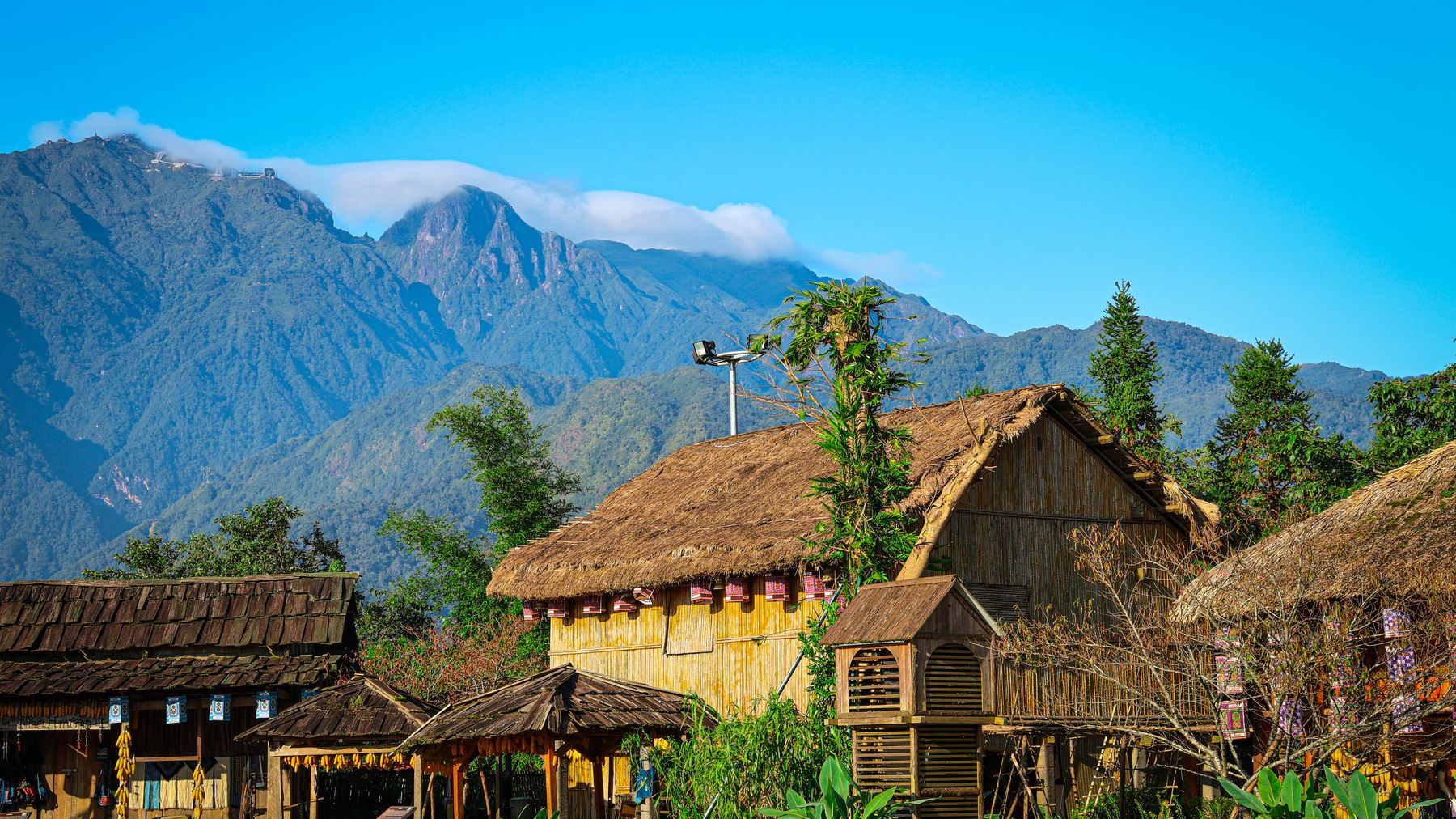
Photo by Haneul Trac on Pexels
What to do
Walk the villages
Coc Vai's hamlets are scattered across hillsides. Walking between them — there's no formal trail, just village paths — takes you past stilt houses, small corn plots, and hand-built stone fences. Ask before photographing people. A smile and a gesture toward your camera is enough; most families are welcoming.
Catch a market day
Weekly markets rotate among commune centers. Arrive early (6-7 AM) for the full scene: pigs carried in bamboo cages on motorbikes, indigo-dyed fabric sold by the bolt, and bowls of "pho" or rice noodle soup ladled from massive pots. These aren't staged — they're working markets.
Ride the roads
The mountain roads around Coc Vai reward slow riding. Expect single-lane passes with karst towers on both sides, stretches cut into cliffsides, and occasional river crossings. Distances are short (20-40 km loops) but the terrain means you won't average more than 25 km/h.
Visit a Dao or Hmong household
If you stay in a homestay, your host family can often introduce you to neighbors practicing traditional crafts — weaving, blacksmithing, or preparing herbal medicines. This isn't a tour; it's a visit. Bring a small gift (fruit, tea, or snacks from town).
Where to eat
Don't expect restaurants. Meals happen at your homestay or at market stalls. Expect:
- "Com" (rice) with stir-fried greens, pork, and broth — 30,000-50,000 VND at market stalls
- "Thang co" at markets — the Hmong stew of offal and horse meat, served with rice wine. Challenging but worth trying once.
- "Xoi" (sticky rice) with sesame or pork floss — common breakfast, 15,000-20,000 VND
- Local corn wine and rice wine offered by hosts — sip carefully, it's stronger than it tastes
If you have dietary restrictions, communicate them to your homestay host in advance or carry translation cards. Options are limited to what's available.
Where to stay
Homestays are the only real option, and that's not a downside. Expect a mattress on the floor (or a simple bed), mosquito net, shared bathroom, and home-cooked meals. Rates typically run 200,000-350,000 VND per person including dinner and breakfast.
Booking in advance is wise — contact through local tourism Facebook groups for Tuyen Quang or ask in Ha Giang rider communities. Some homestays are phone-only (Vietnamese language), so having a Vietnamese-speaking friend help arrange is useful.
There's no hotel in Coc Vai. The nearest proper guesthouses are in district towns 30-60 minutes away.

Photo by Manh Pham on Pexels
Practical tips
- Cash only. No ATMs in Coc Vai. Withdraw in Tuyen Quang city. Bring more than you think — 1,000,000-2,000,000 VND per person covers 2-3 days comfortably.
- Phone signal is patchy. Viettel has the best coverage in northern highlands. Download offline maps before you leave town.
- Fuel up at the last petrol station before entering the commune area. Carry a spare liter if riding deep into the hills.
- Language: Very little English spoken. Basic Vietnamese phrases ("xin chao", "cam on", "bao nhieu") go a long way. Google Translate's offline Vietnamese pack helps.
- Respect local customs. Don't enter homes without invitation. Remove shoes. Don't touch altar items.
Common mistakes
- Underestimating travel time. The 100 km from Tuyen Quang city isn't highway — budget 3 hours minimum.
- Arriving without a plan for accommodation. Showing up unannounced works in bigger tourist areas, not here.
- Packing too light for cold. Even in October, nights at elevation get chilly. Bring a fleece or light down jacket.
- Expecting Ha Giang-level scenery nonstop. Coc Vai is subtler. The payoff is immersion, not panoramas.
Practical notes
Coc Vai works best as part of a wider northern loop — combine it with a few days exploring Tuyen Quang province's waterfalls and forests, or link it to a broader Ha Giang or Ninh Binh itinerary. Two nights here is the sweet spot: enough to settle in, walk the villages, and catch a market morning without feeling rushed.
Last updated · May 26, 2026 · independently researched, never sponsored.





