What It Is
Cua Khau Thanh Thuy is an international border gate in the far north of Vietnam (베트남 / 越南 / ベトナム), sitting at the edge of what was formerly Ha Giang province (now part of the merged Tuyen Quang administrative region). The gate connects Vietnam to China's Yunnan province via the Tian Bao crossing on the Chinese side. It operates primarily as a trade corridor — trucks loaded with agricultural goods rumble through daily — but it's also a legitimate crossing point for travelers with the right paperwork.
The gate has been active since the early 2000s when bilateral trade agreements opened several land crossings along the northern border. For most visitors, it's less a destination in itself and more a transit point or a curiosity stop while exploring the Ha Giang loop region.
Why Travelers Go
Three reasons, mostly:
-
Crossing into China — If you're heading overland to Kunming or Wenshan, this is one of the quieter alternatives to the chaotic Lao Cai–Hekou crossing. Less crowded, fewer touts, shorter queues.
-
The drive up — The road from Ha Giang city to Thanh Thuy (about 30 km) passes through limestone valleys, terraced hillsides, and small Tay and Nung villages. It's a gentler version of the famous Ha Giang loop scenery without the tourist traffic.
-
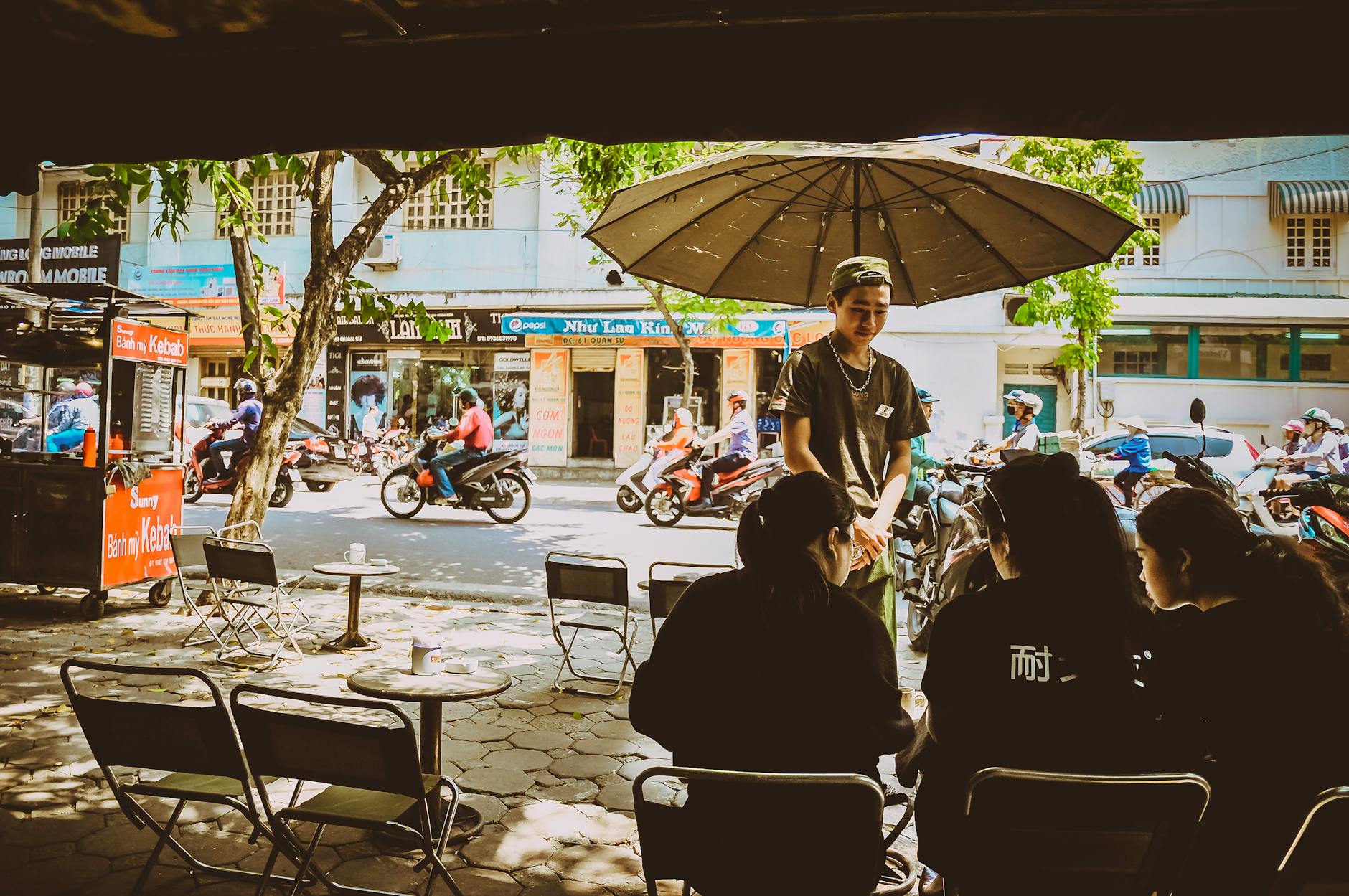
Border market vibes — The area around the gate hosts a small trading market where Vietnamese and Chinese vendors sell everything from dried herbs to cheap electronics. It's not a polished tourist market, which is exactly the appeal.
Best Time to Visit
September through November offers clear skies and comfortable temperatures (18–25°C). The rice terraces along the approach road turn gold in late September — genuinely photogenic without needing a drone.
Avoid June through August if you dislike mud. The roads hold up fine, but landslides occasionally block sections for a few hours. December to February brings fog and temperatures dropping to 5–8°C at night — pack layers if you're on a motorbike.
How to Get There
From Ha Giang (하장 / 河江 / ハーザン) city: 30 km northeast. Motorbike takes about 45 minutes on QL2 (National Road 2), which is paved and in decent condition. You can also hire a "xe om" (motorbike taxi) for around 150,000–200,000 VND one way.
From Hanoi: Take a sleeper bus to Ha Giang (roughly 280 km, 6–7 hours, departing from My Dinh bus station, tickets 250,000–350,000 VND). From Ha Giang, continue by motorbike or local bus. There's a local minibus from Ha Giang bus station to Thanh Thuy that runs twice daily (morning and early afternoon, about 40,000 VND).
By rented motorbike: Most travelers exploring Ha Giang already have a rental bike (150,000–250,000 VND/day from shops on Nguyen Trai street in Ha Giang city). The Thanh Thuy road makes an easy half-day side trip before or after the main loop.

Photo by Anh Tuan on Pexels
What to Do
Walk the Border Market
The market area near the gate is busiest in the mornings (7–11 AM). You'll find Chinese snacks, herbal medicines, fabric, and local produce. Bargaining is expected — start at 60% of the asking price. Don't expect English; basic Vietnamese or pointing works fine.
Visit Thanh Thuy Hot Springs
About 5 km before the border gate, natural hot springs feed into a basic bathing area. Entry is cheap (30,000–50,000 VND) and the facilities are no-frills — concrete pools, cold-water rinse stations — but the mineral water is genuinely hot and the mountain backdrop makes up for the lack of spa polish.
Ride the Valley Road
The stretch between Km 15 and Km 25 on the road from Ha Giang passes through a narrow valley with karst formations on both sides. Early morning mist makes this stretch feel remote, though you're never far from a village. Pull over at any of the small tea stalls along the road — a glass of fresh "tra xanh" (green tea) costs 5,000 VND or nothing at all, depending on the hospitality of the owner.
Where to Eat
Options near the border gate itself are limited to a handful of "com binh dan" (everyday rice) shops lining the road. Expect plates of rice with stir-fried greens, braised pork, and soup for 35,000–50,000 VND. Nothing fancy, everything filling.
For better variety, eat in Ha Giang city before or after. Try "chao au tau" — a black porridge made from a local plant that's specific to Ha Giang's ethnic minority communities. You'll find it at morning market stalls near the central market for about 20,000 VND a bowl. Pho shops also line Nguyen Trai street if you need something familiar.
Where to Stay
There's no real accommodation at the border gate itself. Your options:
- Ha Giang city (30 km away) — Dozens of hostels and guesthouses. Budget beds from 100,000 VND/night, private rooms 250,000–500,000 VND. Look along Nguyen Trai or Tran Hung Dao streets.
- Homestays en route — A couple of Tay family homestays operate between Km 10 and Km 20 on the Thanh Thuy road. Basic rooms, shared bathrooms, dinner included. Expect 200,000–300,000 VND per person with meals. Ask at the tea stalls — they'll point you to whoever has space.

Photo by Quang Nguyen Vinh on Pexels
Practical Tips
- Border crossing hours: The gate opens at 7:00 AM and closes at 5:00 PM (Vietnam time). Arrive before 3:00 PM if you're actually crossing — paperwork takes time.
- Documents for crossing: You need a valid passport with a Chinese visa already stamped. There's no visa-on-arrival on the Chinese side at this gate. Vietnamese citizens use a border pass system.
- Cash: Bring VND in small denominations. There's no ATM at the border. The nearest ATMs are in Ha Giang city (Agribank and Vietcombank both have machines on Tran Hung Dao street).
- Phone signal: Vietnamese carriers (Viettel, Mobifone) work fine all the way to the gate. Signal drops immediately on the Chinese side.
- Fuel: Fill up in Ha Giang city. There's one small petrol station about 10 km before the gate, but it occasionally runs dry.
Common Mistakes
Showing up without a Chinese visa — This crossing doesn't offer any kind of border pass or visa exemption for foreign tourists entering China. Sort your visa in Hanoi before heading north.
Treating it as a full-day destination — Unless you're crossing into China, the border gate area itself takes about 1–2 hours to explore. Pair it with the hot springs and the valley drive for a proper half-day trip.
Skipping the morning — The market is dead by noon. If you want the atmosphere, leave Ha Giang by 6:30 AM.
Practical Notes
Cua Khau Thanh Thuy works best as a half-day add-on to a Ha Giang trip rather than a standalone destination. Combine it with the famous Ha Giang loop — ride north for the border gate on your first or last day, then tackle the Dong Van karst plateau separately. If you're planning a broader northern Vietnam route, Ha Giang connects easily to Sapa (about 4–5 hours by road) or back to Hanoi for onward travel.
Last updated · May 29, 2026 · independently researched, never sponsored.