Nha Trang (냐짱 / 芽庄 / ニャチャン) draws a remarkably mixed crowd — Russian package tourists, Korean honeymooners, Malaysian families, and backpackers from across Southeast Asia. That diversity has quietly built a halal food scene that, while not enormous, is reliable enough that you won't be eating plain rice for a week.
Who's Feeding the Halal Crowd
The halal dining options in Nha Trang cluster around two communities: Malaysian and Indonesian visitors who arrive in steady numbers year-round, and a smaller but consistent stream of Muslim travelers from the Middle East and South Asia. A handful of local Vietnamese restaurants have also pursued halal certification, largely to capture the Malaysian tour group market.
Don't expect a dedicated halal district the way you'd find in Kuala Lumpur or even parts of Saigon. Instead, the restaurants are scattered — mostly within 1–2 km of the main beachfront strip along Tran Phu street and the backpacker pocket around Biet Thu street.
Malaysian-Run and Malaysian-Focused Restaurants
The most reliable halal kitchens in Nha Trang tend to be Malaysian-owned or specifically set up to serve Malaysian tour groups, which means the food leans toward Southeast Asian flavors: nasi lemak, chicken curry, fried rice, and roti canai. These aren't fine-dining spots — they're practical, affordable, and the staff usually speak basic English and Malay.
Halal Nha Trang Restaurant on Nguyen Thien Thuat street is one of the longer-running options. It's a no-frills room with ceiling fans, and the menu covers fried rice, grilled chicken, and a rotation of daily curries. Prices hover around 60,000–90,000 VND per main dish. The owners display their halal certification visibly — worth checking whenever you walk into somewhere new.
Muslim Food near the Biet Thu backpacker strip is another spot that's been around long enough to have a loyal following among repeat visitors. The "nasi goreng" (fried rice) here is competent, the portions are generous, and they do a decent beef soup that works as a rough stand-in for the kind of clear broths you'd want after a day on the beach.
Vietnamese Dishes That Work (and What to Watch)
Some Vietnamese food is halal-compatible by nature — "goi cuon" (fresh spring rolls) with shrimp, for example, or grilled seafood ordered without the usual accompanying pork-based dipping sauces. Nha Trang is a fishing city, so fresh seafood is everywhere and generally prepared simply.
The challenge is "nuoc cham," the ubiquitous dipping sauce that turns up with almost everything. It's fish sauce-based rather than pork-based, so it's generally fine for halal purposes — fish sauce is fermented fish, not haram — but if you have specific concerns, ask the restaurant directly. Pork fat (mo hanh) can sometimes be used in cooking oils or as a garnish, so it's worth confirming when ordering Vietnamese dishes at non-certified spots.
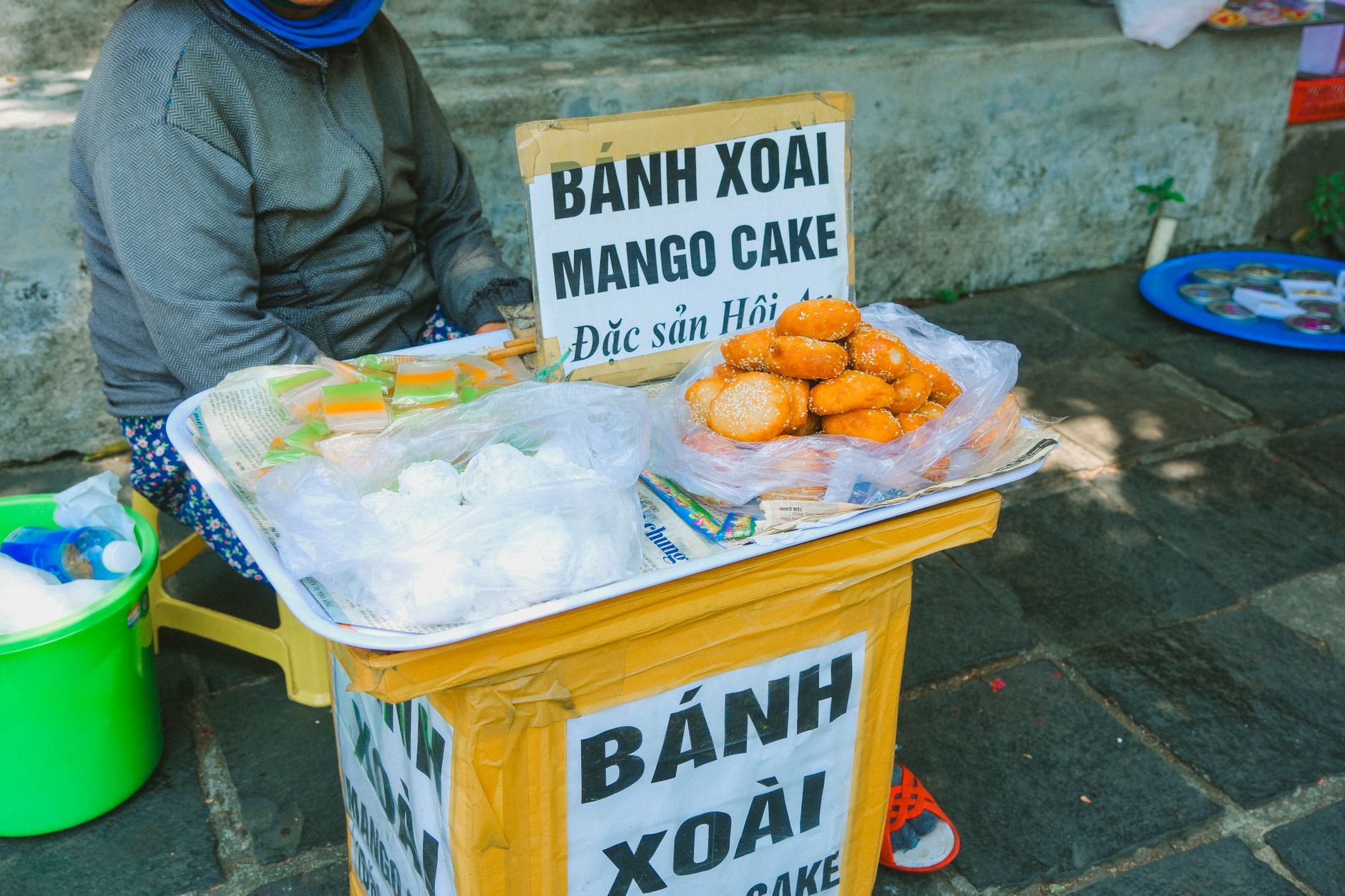
"Banh mi" stalls are almost always a no-go as sold — the standard fillings include cha lua (pork sausage) and head cheese. Stick to egg banh mi if you want one, and confirm the bread roll itself hasn't been brushed with lard, which some older bakeries still do.

Photo by Calvin Seng on Pexels
Beachfront and Hotel Options
If you're staying at one of the mid-range or larger hotels along Tran Phu, most will accommodate halal requests with advance notice — particularly hotels that regularly host Malaysian and Middle Eastern tour groups. It's worth emailing ahead rather than asking at the buffet line.
For seafood on the beach, the seafood restaurants along Pham Van Dong street (the northern beach road near Hon Chong) offer fresh grilled fish, squid, and shrimp. These are not halal-certified, but the cooking is straightforward — whole fish grilled over charcoal, priced by weight, typically 150,000–300,000 VND per 500g depending on species. If pork cross-contamination is a concern for you, this is trickier to navigate, and a certified restaurant is the safer call.
What a Halal Meal Costs in Nha Trang
Budget realistically: a full meal at a halal restaurant runs 80,000–150,000 VND per person including a drink. That's slightly higher than the cheapest street food, but in line with a sit-down Vietnamese restaurant. Imported halal snacks and packaged foods are available at a few minimarts near the backpacker area — look for shops that stock Malaysian and Indonesian brands, which signal the owner knows the market.

Photo by Anil Sharma on Pexels
Finding Certified Places
Halal certification in Vietnam (베트남 / 越南 / ベトナム) isn't as standardized as in Malaysia or Indonesia, so "halal" signs vary in meaning. The most reliable signal is a certificate from a recognized body — the Islamic Religious Council of Vietnam (HĐII) issues certifications that carry weight. When in doubt, ask to see the certificate, or cross-reference with apps like HalalTrip or Zabihah before you leave your hotel. The Nha Trang listings on both apps are thin but real, and user reviews are more current than any printed guide.
The local Muslim community in Nha Trang is small — there's a mosque on Nguyen Thi Minh Khai street that the local Vietnamese Muslim population uses, and the community around it can be a useful word-of-mouth source for where to eat.
Practical Notes
Bring a translation of your dietary requirements in Vietnamese if you're navigating non-certified restaurants — "khong an thit heo" (no pork) is the most useful phrase to have ready. The halal scene in Nha Trang is functional rather than expansive, so plan your meals in advance rather than assuming you'll find something around the corner. That said, between the Malaysian-run spots, the fresh seafood options, and hotel flexibility, a week here without compromise is entirely doable.
Last updated · May 26, 2026 · independently researched, never sponsored.