Most people passing through Quang Binh are here for the caves — Son Doong, Phong Nha, Hang En. Fair enough. But if you leave without eating properly, you've missed half the point. The food in this province is distinct, unfussy, and almost entirely ignored by the standard Vietnam (베트남 / 越南 / ベトナム) food conversation.
Chao Canh: The Dish You'll See Everywhere
"Chao canh" is the first thing worth knowing about. It's a rice porridge — thicker than congee but brothier than a risotto — cooked with pork bones, offal (usually intestines and liver), and fresh vegetables. In Dong Hoi, the provincial capital about 50 km south of Phong Nha (퐁냐 / 峰牙 / フォンニャ), you'll find it at small shops from around 5:30am until it runs out, typically before 9. A bowl runs 20,000–30,000 VND.
The broth is where the work is. It's not the clean, delicate stock of Hanoi cooking. It's darker, richer, with a slight mineral edge from the bones and organs. Some shops add blood cake. You'll get a small plate of fresh herbs and raw banana flower on the side. Eat it with a fried dough stick ("quay") dunked in.
If you're staying in the Phong Nha village area rather than Dong Hoi, ask your guesthouse where locals go for morning chao canh. Most guesthouses catering to backpackers serve Western breakfasts — walk ten minutes off the main strip and you'll find the real thing.
Mountain Pho: Not What You Expect
"Pho" in Quang Binh doesn't look or taste like Hanoi pho or Saigon pho. The local version uses a thinner, less sweet broth with a pronounced smokiness — some cooks char the ginger and onion directly over wood fire rather than gas. The noodles are slightly thicker and chewier. Beef is common, but you'll also see pho ga (chicken) made with free-range birds from the surrounding hill farms, which gives the broth a more intense, almost gamey depth.
Along Truong Son Road (Highway 20) between Phong Nha and the Laos border, a handful of roadside stalls serve pho to truck drivers and day workers from around 6am. These are not tourist spots — no English menus, no Wi-Fi — but they're some of the better bowls you'll find in the province. Expect to pay 25,000–35,000 VND.
Banh Uot Cha Nuong: The Underrated Breakfast
"Banh uot" — steamed rice sheets — is common across central Vietnam, but Quang Binh's version comes with "cha nuong", a lemongrass-heavy grilled pork sausage cooked over charcoal. The smokiness of the meat against the cool, slippery rice sheets is one of those food combinations that works better than it sounds on paper.
In Phong Nha village, a couple of shops near the boat dock serve this in the mornings. One reliable option is the open-fronted place on the road running parallel to the Son River — there's no sign in English, but it's the one with the charcoal grill out front. A full plate with dipping fish sauce is 25,000–40,000 VND depending on how much cha nuong you take.
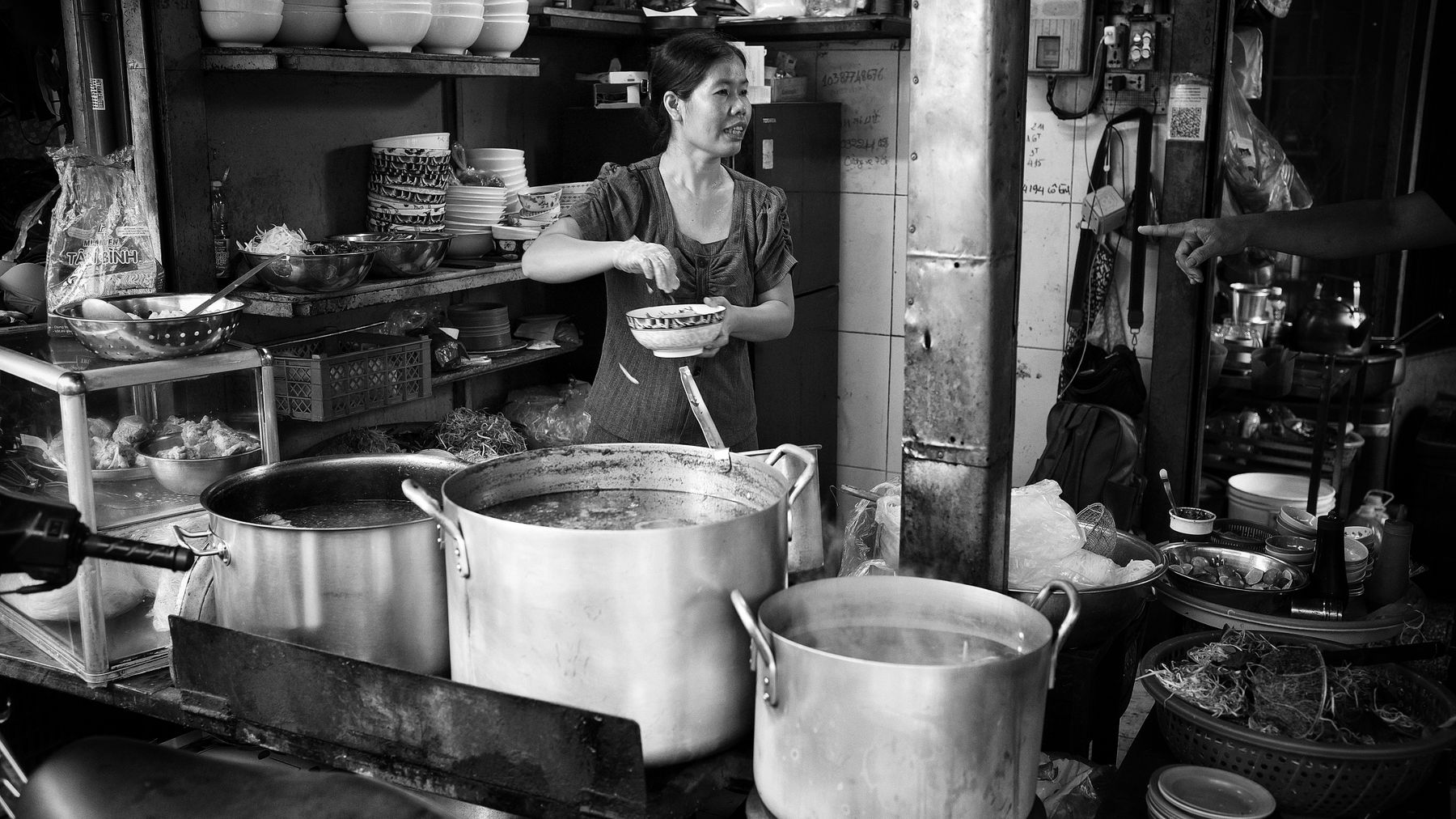
Photo by Alfred Rosales on Pexels
Seafood from Dong Hoi
Quang Binh has a long coastline, and Dong Hoi is a real working fishing town. If you're spending a night there before or after caving, the fish market area near Nhat Le Beach is worth exploring after dark. Stalls set up around 6pm selling grilled squid (muc nuong), steamed clams with lemongrass, and whole grilled fish by weight. This isn't a polished night market — plastic stools, outdoor tables, prices written in chalk. Grilled squid runs about 80,000–120,000 VND per skewer depending on size.
The local specialty is "oc buu" — freshwater apple snails from the rivers around Phong Nha, stir-fried with chili and lemongrass. You'll see bags of them at the Dong Hoi market in the afternoon. Some guesthouses in Phong Nha will cook them if you buy a bag and bring it back — worth asking.
Drinking in Cave Country
Vietnam's coffee culture reaches Quang Binh in a particular form: iced ca phe sua da from small plastic-stool shops, usually mixed stronger than you'd get in Saigon. But the local drink worth trying is "ruou can" — communal rice wine drunk through long bamboo straws from a clay jar. You'll encounter it at homestays and some guesthouses run by ethnic minority communities near the Phong Nha-Ke Bang park boundary. It's ceremonial as much as recreational; don't expect to order it off a menu.
For "bia hoi", the draught beer that fuels most of Southeast Asia's backpacker economy, Dong Hoi has a strip of open-air bia hoi spots near the central market. A glass is 7,000–10,000 VND.

Photo by Theodore Nguyen on Pexels
Where to Eat in Phong Nha Village
The village itself is small. Most restaurants on the main road are aimed at foreigners and serve adequate but unexceptional Vietnamese standards — spring rolls, fried rice, "com" plates. For something more grounded, the morning market (open from about 5am to 9am, near the secondary school) is where locals buy prepared food: bánh, soups, grilled skewers, rice dishes. It's not organized for tourists but it's approachable.
If you want a sit-down meal in Phong Nha, Capture Restaurant has been consistently recommended by long-term visitors for honest local food at fair prices. It's not street food, but it's not tourist-trap pricing either.
Practical Notes
Bring cash — Phong Nha village has one ATM and it's not always reliable. The best food happens early: if you're sleeping past 9am you're missing the market and the chao canh. Quang Binh's food isn't spicy by central Vietnam standards, but the fish sauce dips can be pungent — phu quoc-style sauce this is not.
Last updated · May 29, 2026 · independently researched, never sponsored.