A Coastal Crossroads
Dong Hoi sits on Vietnam (베트남 / 越南 / ベトナム)'s North Central Coast, roughly halfway between Hanoi (486 kilometers north) and Ho Chi Minh City (1,204 kilometers south). The city covers 155.71 square kilometers and had a population of about 133,600 as of 2019. It's the hub of Quang Binh Province — a region with a 12-kilometer coastline, limestone karsts, caves, and river valleys. National Highway 1A, the North-South Railway, and Dong Hoi Airport all pass through, making it a logical overnight stop or base for exploring the Phong Nha area.
For most travelers, Dong Hoi is one night, maybe two. That's fine. The city doesn't pretend to be something it isn't. But if you pay attention, you'll find decent seafood, a quiet beach, and a town that functions well as a launching pad without the tourist-village atmosphere of Son Trach.
Geography and Beaches
Dong Hoi's 12-kilometer coastline features Nhat Le Beach, known for fine white sand and calm waters. The Nhat Le River is the city's main waterway; Tro Lake supplies fresh water and is a minor attraction in the city center. The city narrows to roughly 40 kilometers at its widest point here — Vietnam's thinnest landmass, a quirk worth knowing if you're looking at a map.
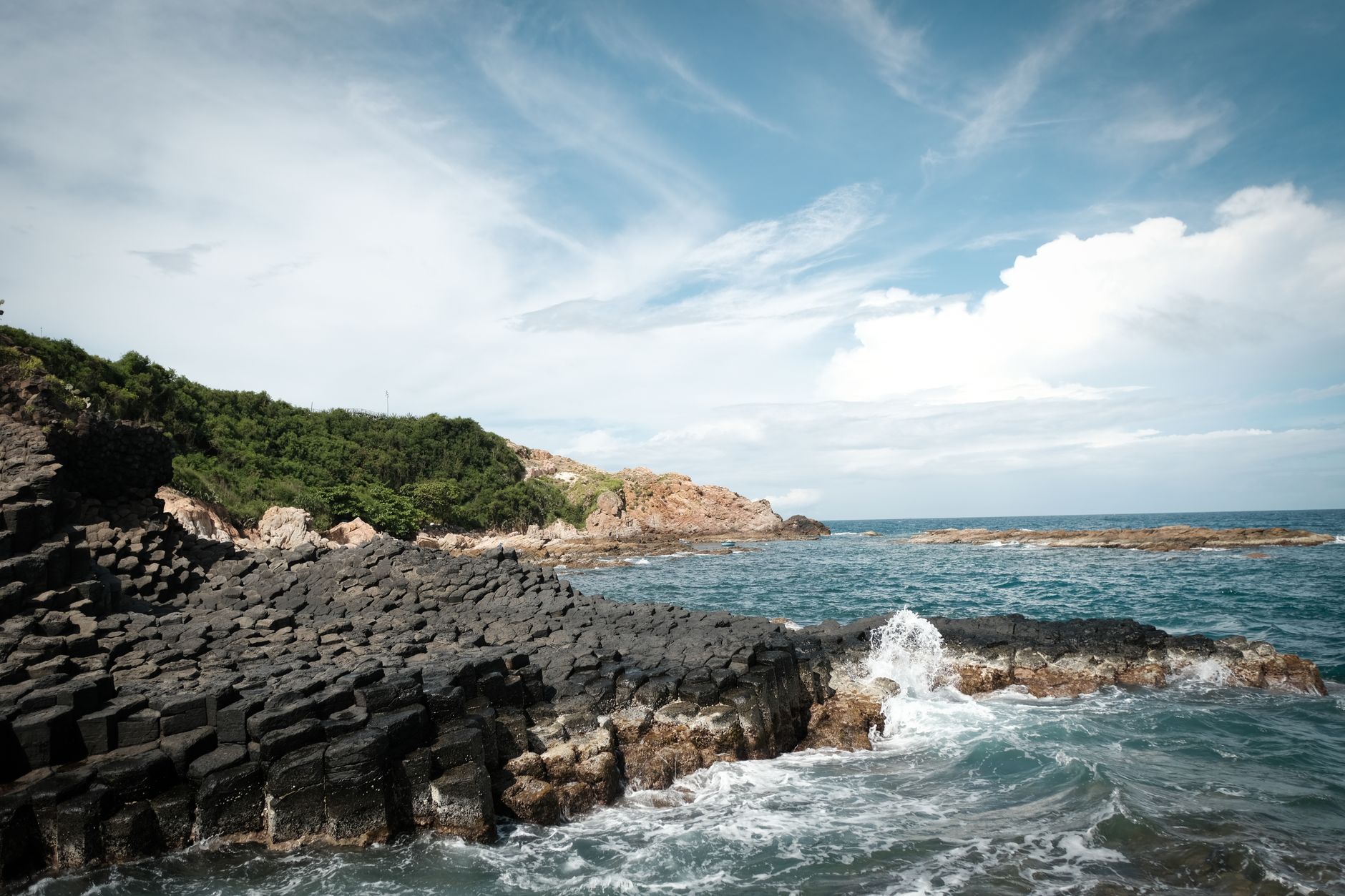
The landscape is mixed: coastal plains and sand dunes near the water, semi-mountainous terrain inland, and forested hills to the west. Much of the lower-lying area is used for agriculture and small fishing operations.
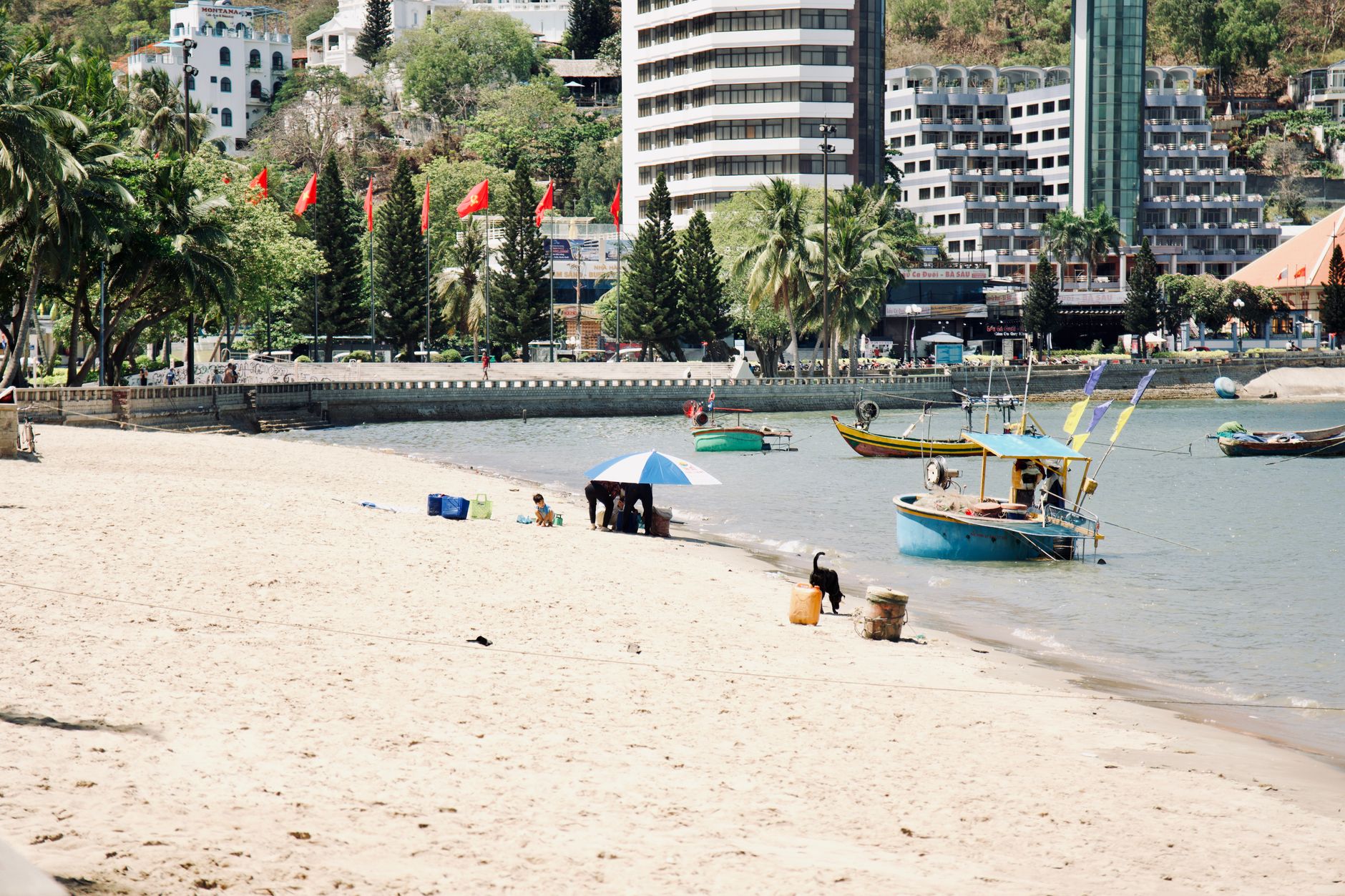
Nhat Le Beach runs along Truong Phap Street on the east side of the river. The northern end near the Nhat Le Bridge is busiest — locals swim here in the late afternoon, and a few seafood shacks line the road. Walk ten minutes south and the crowd thins out. Sunbeds rent for around 30,000-50,000 VND on weekends, though during weekdays you can often just lay a towel down unbothered. The water is swimmable from April through September; outside that window, swells pick up and red-flag days are common. A second, less-visited stretch called Bao Ninh Beach sits across the river on the Bao Ninh Peninsula — quieter, a bit rougher, and popular with kitesurfers when the wind cooperates.
Practical Climate and Seasons
Dong Hoi has a tropical monsoon climate (Koppen Am) with distinct seasons. Average annual temperature is around 25°C (77°F), but it swings sharply. The coldest months (December-February) can drop below 18°C on clear nights, especially when cold air pushes in from Siberia. Summer (May-August) is hot and humid, often above 30°C (86°F), with a dry southwest wind that sucks moisture away — rainfall is light in summer.
Fall (September-November) is the wettest season; October alone sees about 650 millimeters of rain. Spring (March-April) tends to be warm, foggy, and humid. Plan coastal activities for spring or early fall; pack a light jacket for winter nights.
One thing guides rarely mention: the "Lao wind" — a hot, dry foehn wind that blows from Laos across the Truong Son mountains in June and July. Temperatures can spike above 40°C for days at a time. If you hit one of these spells, the caves stay cool (around 20-22°C inside), which is one more reason Phong Nha works as an all-weather activity.

Image by ansieee via Wikimedia Commons (CC BY-SA)
Stone Age to Modern Era
Archaeological digs have found Stone Age tools and pottery throughout Quang Binh, dating back roughly 10,500 years. Hum Grotto (near Tuyen Hoa District) and Khai Grotto contain stone tools and animal bones from ancient hunters. Human settlement in the Dong Hoi area itself stretches back about 5,000 years; artifacts from Bau Tro lake suggest Stone Age communities lived nearby.
During the Trinh-Nguyen civil war (1558-1775), the Gianh River served as the frontier between north and south; Dong Hoi was a southern fortress town. The city was heavily damaged during the Vietnam War due to its proximity to the 17th parallel and the Demilitarized Zone. The bell tower of Tam Toa Church, a Catholic cathedral, survives as a monument near the town center. After 1975, the city underwent administrative reorganization and was reinstated as Quang Binh's capital in 1990.
The Dong Hoi Citadel, originally built under the Nguyen Dynasty in 1812, was largely destroyed during the war. What remains is the main gate on Quang Trung Street — worth a five-minute stop if you're walking through the center. Tam Toa Church's bell tower, on Nguyen Du Street about 500 meters south of the citadel gate, stands without a roof or walls. There's no entrance fee. Locals jog past it in the evening without a second glance, but for visitors it's a stark, quiet reminder of how thoroughly the city was flattened.
Gateway to Phong Nha
The main reason to stay in Dong Hoi is access to Phong Nha-Ke Bang National Park, a UNESCO World Heritage Site, about 50 kilometers north by road. The park contains karst caves (Son Doong, Phong Nha Ke Bang proper, and dozens more), the Son Trach River, and trekking trails. Most visitors base themselves in Dong Hoi or the small town of Son Trach and day-trip to cave entrances. The park is best visited during the dry season (April-August) or early fall (September); monsoon season (October-November) brings flooding that closes some cave tours and river routes.
From Dong Hoi, the drive to Son Trach takes about one hour on the Ho Chi Minh (호치민 / 胡志明 / ホーチミン) Highway (Highway 20). You can rent a motorbike in town (120,000-180,000 VND per day for a semi-automatic Honda Wave), hire a car with driver (around 800,000-1,000,000 VND round trip), or join a group tour. Most guesthouses in Dong Hoi arrange transport.
Key caves and their approximate entrance fees as of recent pricing:
- Phong Nha Cave: 150,000 VND per person, plus a shared boat fee (around 360,000 VND per boat, fits up to 14 people). The boat ride up the Son River is half the experience.
- Paradise Cave (Thien Duong): 250,000 VND. A boardwalk leads one kilometer into the cave. An extended seven-kilometer trek costs more and requires a guide.
- Dark Cave (Hang Toi): Around 450,000 VND for the zip-line, kayak, and mud-bath package. Touristy but fun if you don't mind crowds.
- Son Doong Cave: The world's largest cave. Expeditions run about four days and cost upward of 70,000,000 VND (roughly $3,000 USD). Bookings fill months ahead through Oxalis Adventure.
If you only have one day, Phong Nha Cave in the morning and Paradise Cave in the afternoon is the standard combo. Leave Dong Hoi by 7:30 AM to beat the tour buses.

Image by User: (WT-shared) Baklavabaklava at wts wikivoyage via Wikimedia Commons (CC BY-SA)
Where to Eat and What to Order
Dong Hoi isn't a food destination on the level of Hue or Hoi An, but the seafood is fresh and cheap. The stretch of restaurants along Nhat Le Beach — particularly on Truong Phap Street near the bridge — serves grilled squid, steamed clams, and garlic butter shrimp at prices that would be unthinkable in Da Nang. A seafood spread for two with beer runs 200,000-350,000 VND.
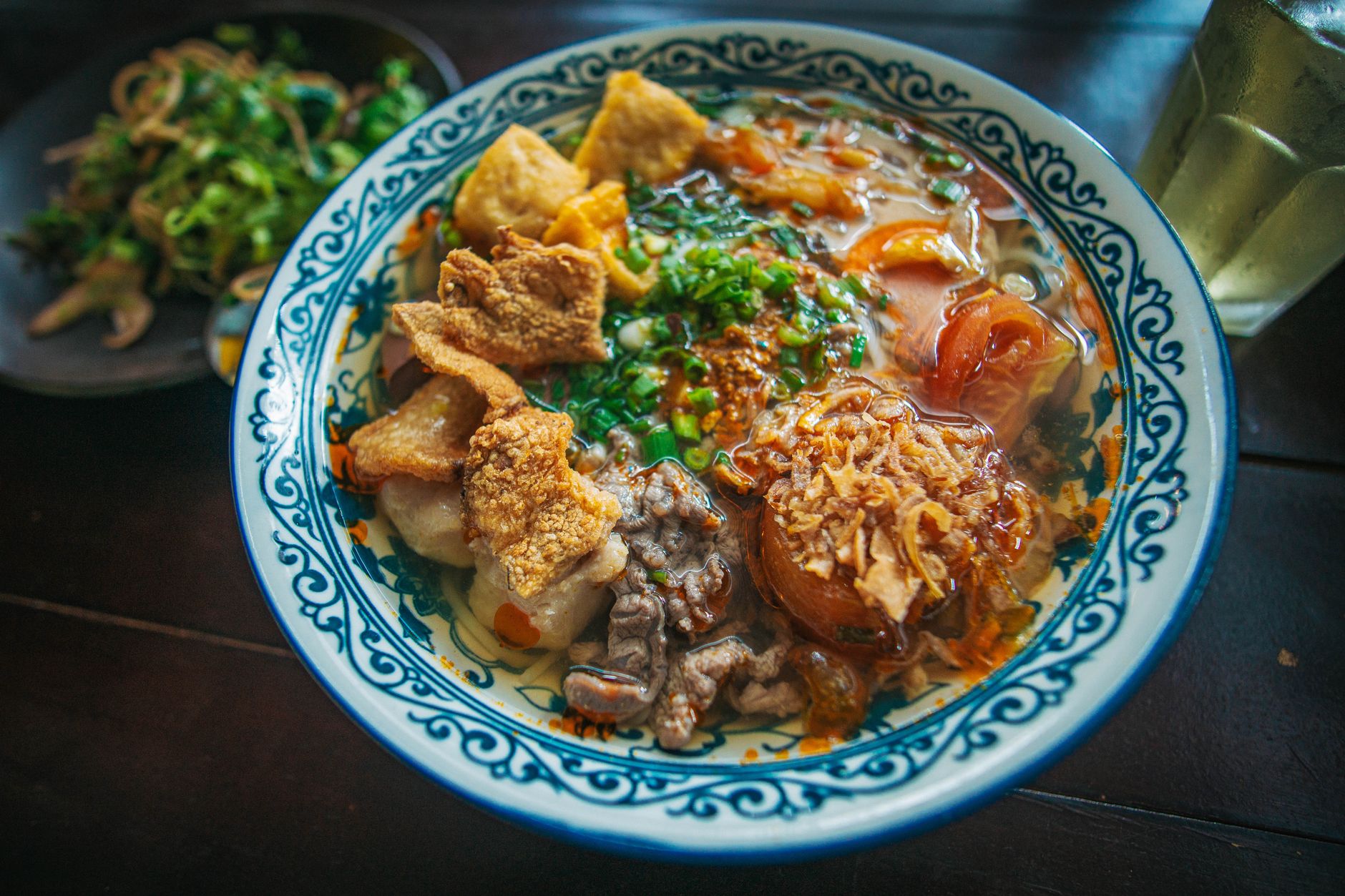
Quang Binh's signature dish is "chanh" — a rice-vermicelli soup with pork bone broth, shrimp paste, and fresh herbs, sometimes listed as "bun chanh" or "banh canh" on menus. It's heavier and more rustic than pho and closer in spirit to bun bo Hue with its thick noodles. A bowl costs 25,000-40,000 VND at local shops. Try it at the small stalls near Dong Hoi Market (Cho Dong Hoi) on Quang Trung Street — mornings only, most close by 10 AM.
For breakfast, "banh loc" — translucent tapioca dumplings stuffed with shrimp and pork — are a Quang Binh specialty. You'll see women selling them from baskets near the market for 3,000-5,000 VND per piece. Pair them with a glass of "ca phe" — Vietnamese coffee here is strong, sweet, and served over ice as "ca phe sua da" at every streetside stall for 15,000-20,000 VND.
If you want a sit-down meal with air conditioning, the restaurant row on Ly Thuong Kiet Street near the Nhat Le riverfront has a handful of places with English menus. They mark up by maybe 20-30% over market stalls, which still keeps a full dinner under 300,000 VND per person.
Getting Around
Dong Hoi has direct bus connections to Hanoi (10-12 hours), Vinh (4 hours), Hue (3-4 hours), and Ho Chi Minh City (18-20 hours). Trains serve the Hanoi-Ho Chi Minh route, stopping in Dong Hoi. Flights connect to Hanoi and Ho Chi Minh City daily. Once in the city, taxis, motorbike rentals, and guided tours are widely available. The town itself is walkable; most attractions and guesthouses cluster near the coast and the Nhat Le River.
Dong Hoi Airport (VDH) is three kilometers from the city center — a taxi costs about 50,000-70,000 VND, or you can book a hotel pickup. Vietnam Airlines and VietJet Air operate daily flights from Hanoi (1 hour 10 minutes) and Ho Chi Minh City (1 hour 40 minutes). Book a few weeks ahead and one-way fares start around 800,000-1,200,000 VND.
The train station is on Tran Hung Dao Street, a short walk from the Nhat Le riverfront area. The Reunification Express (SE trains) is the most comfortable option — a soft sleeper berth from Hanoi to Dong Hoi takes about 9-10 hours overnight and costs roughly 500,000-700,000 VND. If you're heading south toward Hue, the train takes about 3.5 hours and is arguably more scenic than the bus, tracking along the coast.
For getting to Phong Nha, local buses depart from Dong Hoi bus station but schedules are irregular. Most travelers rent a motorbike or arrange a car. If you ride a motorbike, the road is flat and paved the entire way — an easy ride even for less confident riders.
Common Mistakes Visitors Make
- Skipping Dong Hoi entirely. Some travelers bus straight to Son Trach village near Phong Nha. Son Trach has improved, but options for food, ATMs, and pharmacies are still limited. Dong Hoi gives you a proper town with services.
- Arriving in October without a backup plan. October is peak monsoon. Caves flood, roads wash out, and boat tours get canceled with little notice. If your trip is locked to October-November, build in buffer days.
- Underestimating travel time from Hue. The bus says 3-4 hours; in practice, with stops and traffic, budget closer to 4-5. The train is more predictable.
- Not bringing cash. Card acceptance is low outside the bigger hotels. ATMs exist (Vietcombank and BIDV on Quang Trung Street are reliable), but withdraw in Dong Hoi before heading to Phong Nha — Son Trach's ATMs run out of cash on busy weekends.
- Packing only beach clothes. Caves are cool inside (18-22°C), and the boat rides can be breezy. A light long-sleeve layer and closed-toe shoes are worth the bag space. Flip-flops won't cut it on the boardwalks inside Paradise Cave.
- Ordering "pho" everywhere. Dong Hoi is not pho country. You'll find it, but it's not the local specialty. Ask for "banh canh" or "chanh" instead — that's what the town does well.
Quick Reference
- Province: Quang Binh
- Distance from Hanoi: 486 km (1 hr 10 min flight, 10-12 hrs bus, 9-10 hrs train)
- Distance from Hue: ~170 km (3-4 hrs bus, 3.5 hrs train)
- Distance to Phong Nha (Son Trach): ~50 km (1 hr by road)
- Airport: Dong Hoi Airport (VDH), 3 km from center
- Best months for beach: April-August
- Best months for caves: April-September
- Avoid if possible: October-November (heavy rain, cave closures)
- Average meal cost: 30,000-60,000 VND at local stalls, 100,000-200,000 VND at restaurants
- Motorbike rental: 120,000-180,000 VND per day
- Budget hotel: 250,000-500,000 VND per night
- Mid-range hotel (beachfront): 600,000-1,200,000 VND per night
- Currency: VND. Bring cash. Card acceptance is limited outside hotels.
A Practical Stop
Dong Hoi is rarely a destination in itself — beaches here are pleasant but not exceptional compared to Phu Quoc or Nha Trang. The real draw is location: it's the closest major city to Phong Nha's limestone grottoes and river caves, and it sits on the main north-south transport artery. If you're traveling between Hanoi and the Mekong Delta, Dong Hoi is a logical place to break the journey, grab seafood dinner, and overnight before heading into the karst.
It also works as a pivot point on a longer central Vietnam loop. From Dong Hoi, Hue is half a day south — the former imperial capital with its citadel, royal tombs like the Tomb of Tu Duc, and the best "bun bo Hue" in the country. From Hue, Hoi An and Da Nang are another few hours down the coast. String them together and you have a week-long route through the heart of the country, with Dong Hoi as the quiet northern anchor.
Frequently Asked Questions
How far is Dong Hoi from Hanoi and Ho Chi Minh City?
Dong Hoi sits roughly halfway between Vietnam's two major cities: 486 kilometers south of Hanoi and 1,204 kilometers north of Ho Chi Minh City. National Highway 1A, the North-South Railway, and Dong Hoi Airport all serve the city, making it reachable by train, bus, or domestic flight. Most travelers use it as a one- or two-night stop when heading to Phong Nha.
What is the best time of year to swim at Nhat Le Beach?
The water at Nhat Le Beach is swimmable from April through September. Outside that window, swells increase and red-flag days are common. Be aware that June and July can bring the "Lao wind," a dry foehn wind from Laos that pushes temperatures above 40°C. If conditions are extreme, the caves at Phong Nha stay around 20-22°C inside, making them a practical alternative during heat spikes.
When does Dong Hoi get the most rainfall during the year?
The wettest season falls in autumn, with October alone receiving around 650 millimeters of rain. September through November is the peak rainy period overall. Summer months (May-August) are actually drier, with a southwest wind that reduces rainfall. For coastal activities, spring (March-April) or early fall offers the most manageable conditions, though spring brings warm fog and high humidity.
Bottom Line
Dong Hoi won't top anyone's list of favorite Vietnamese cities, and that's fine. It's a working coastal town that happens to sit next to one of the most impressive cave systems on earth. Spend a night, eat grilled squid by the river, catch an early start to Phong Nha, and let the town do what it does best — get you where you're going without fuss.
Last updated · May 29, 2026 · independently researched, never sponsored.