Phong Nha (퐁냐 / 峰牙 / フォンニャ) town in Bo Trach district is one of those places that makes you want to come back. If your last Quang Binh trip stuck to Dong Hoi City and Nhat Le Beach, it's time to spend 48 hours here instead. This itinerary—built on advice from local tour operators—works for active travelers. If you prefer to move slower, alternatives are listed throughout.
The town itself is small. One main road runs parallel to the Son River, and most of what you need—ATMs, mini-marts, restaurants, tour booking offices—sits along a 1.5 km stretch. Phong Nha-Ke Bang National Park, a UNESCO World Heritage Site since 2003, is the reason everyone comes. But the town and its surrounding villages have their own rhythm worth tuning into.
Quick Reference: 48 Hours in Phong Nha at a Glance
- Best months: February to August. September-November is peak rain season; caves may close.
- Getting there: 45 km northwest of Dong Hoi (about 50 minutes by car or motorbike).
- Budget per day: 800,000-1,500,000 VND covers accommodation, meals, and one activity.
- Phong Nha Cave boat ticket: 150,000 VND/person (as of 2024); boats hold up to 14 passengers.
- Paradise Cave entry: 250,000 VND/person for the standard 1 km boardwalk route; 450,000 VND for the extended 7 km trek with guide.
- Dark Cave combo (zipline + kayak + mud bath): around 450,000 VND/person.
- Botanical Garden entry: 40,000 VND/person.
- Son River boat tour: 300,000-600,000 VND per boat depending on duration and route.
- Currency: Cash is king. A few places accept card, but don't rely on it. There's a Vietcombank ATM on the main road.
- SIM/WiFi: Most guesthouses have decent WiFi. Pick up a Viettel SIM in Dong Hoi for reliable mobile data in the park.
Getting to Phong Nha
Most travelers arrive via Dong Hoi. The city has a train station on the north-south Reunification Express line and Dong Hoi Airport (VDH), which receives domestic flights from Hanoi and Ho Chi Minh City. From Dong Hoi, you have a few options:
- Motorbike rental: 120,000-150,000 VND/day from shops near Dong Hoi train station. The 45 km ride on Highway 16 (now called DT20) passes through flat farmland and small towns. Easy road, light traffic.
- Private car/taxi: Around 350,000-450,000 VND one way. Book through your hotel or use a Grab car if one is available (coverage is spotty).
- Local bus: A public bus runs from Dong Hoi bus station to Son Trach (Phong Nha town) a few times daily, but schedules shift. Ask at the station. Around 30,000 VND.
If you're coming from Hue, it's roughly 270 km north on the AH1 highway—about 4 to 4.5 hours by car. Some travelers break the trip at the Hai Van Pass area near Da Nang and continue the next day, though that adds significant distance.
Day 1: Breakfast, Forest Trek, and Riverside Camp
Begin along the Son River. A 3 km stretch near Phong Nha Cave clusters resorts, guesthouses, and restaurants serving local specialties: "chao canh" (fish cake noodle soup), oyster porridge, and "banh bot loc" (tapioca dumplings). If you want Western options, they're available too. Try Phong Nha Coffee Station, Bamboo Chopsticks Restaurant - Phong Nha, Momma D's Rooftop Lounge & Soiree, or Oxalis Home. Oxalis Home's riverside coffee setup is especially pleasant to start the day.
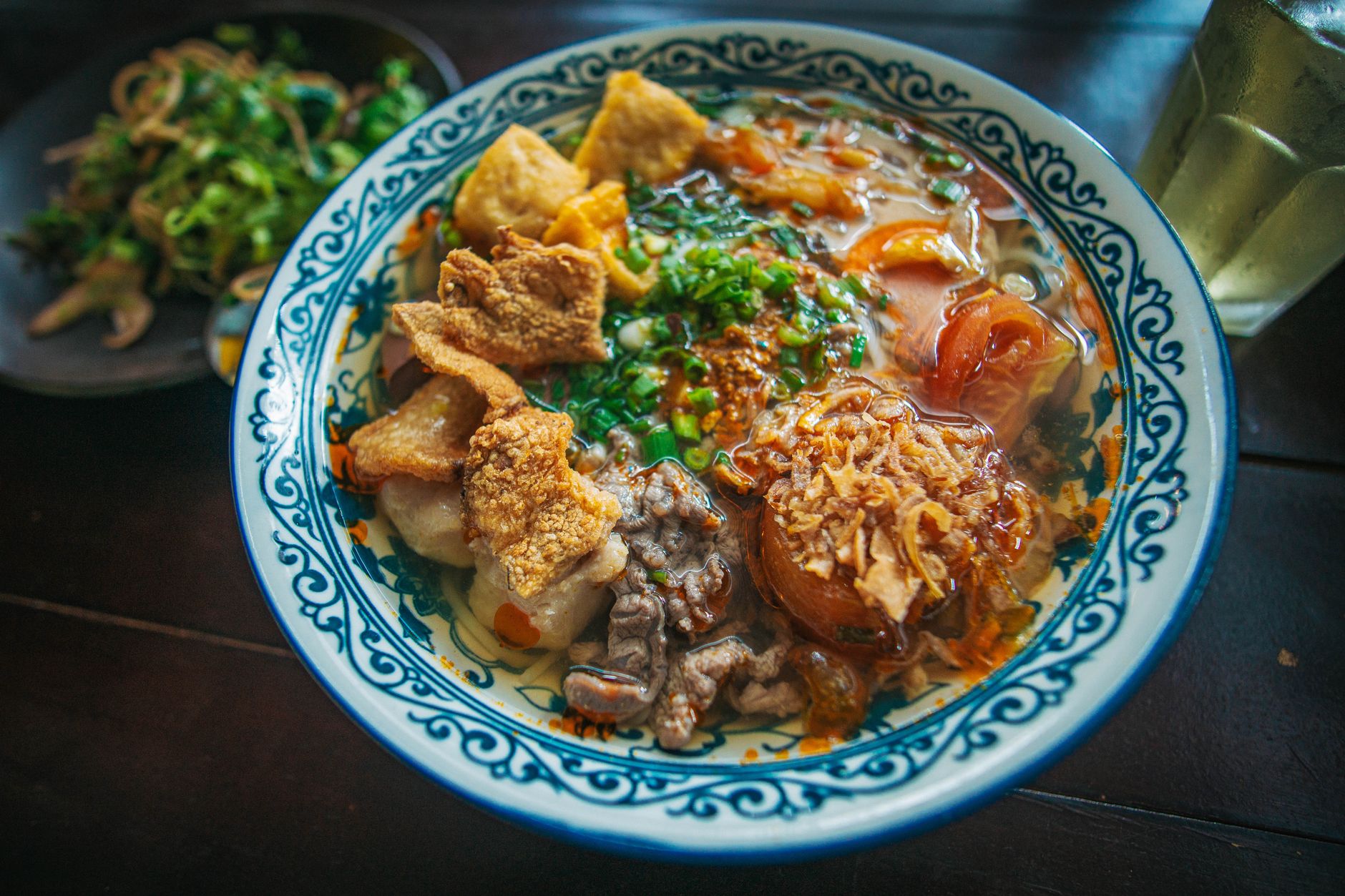
A bowl of "chao canh" runs about 25,000-35,000 VND at local spots. The fish cakes are made fresh—pressed river fish mixed with tapioca starch, a technique common in Quang Binh but different from what you'll find in Hanoi or Saigon. Pair it with a "ca phe" (Vietnamese coffee)—iced black or with condensed milk. Most cafes open by 6:30 AM, which gives you time to eat before the park gets busy.
Next, head 10 km to the Phong Nha Botanical Garden inside Phong Nha-Ke Bang National Park. Start at the specimen house and native plant nursery for a route briefing. Wear proper shoes and carry water. Entry is 40,000 VND per person, and the garden opens at 7:00 AM. Get there early—by 7:30 or 8:00—before the midday heat makes the trek less pleasant.
The garden offers Gio Waterfall, Tien Waterfall, Vang Anh Lake, a century-old Sao tree, Vong Canh Hill, and Dan Cave. Short on time? Trek to Gio Waterfall (just over an hour), rest there, and return. The resting area is quiet and surrounded by forest. The full loop covering all sites takes about 3 to 4 hours at a moderate pace. Trails are marked but can be slippery after rain—trekking sandals with grip work better than sneakers. Leeches appear in the wet months (September-November), so long socks help if you're here during that window.
Lunch: Son River carp. This is the dish to eat here. Local residents raise carp in river cages; the fish has firm flesh and is cooked in ways—braised, grilled with fermented rice, grilled in banana leaves, stewed with sour bamboo shoots, stir-fried with salt, steamed with pepper and lime, or in hotpot—that you won't find elsewhere. Try Chay Lap Farmstay, Thu Hue, Thu Ha, or Vung Hue.
A plate of grilled carp at a riverside restaurant costs around 120,000-180,000 VND depending on size. Order it "ca chep nuong trui" (grilled directly over coals) or "ca chep nuong giay bac" (grilled in foil with herbs). The fermented rice version—"ca chep nuong com ruou"—is the local signature. Ask for it specifically. Side dishes usually include steamed rice, a plate of fresh herbs, dipping fish sauce with garlic and chili, and a simple vegetable soup. A full lunch for two runs around 250,000-400,000 VND.
In the afternoon, check into Blue Diamond Camp. Relaxed travelers can lounge in treehouses, camp under the stars, or walk the elevated forest bridges. Active types have Blue Stream (an underground-river-style pool), cycling, soccer, volleyball on natural grass, kayaking, and wind sailing.
According to Dung Pham, who stayed here, late-afternoon kayaking is the highlight: "Paddling leisurely feels peaceful. You forget all your fatigue." Dinner at the campsite is flexible—request what you want. Sleep in air-conditioned tents with a mist cooling system.
Kayak rental at the camp is typically included in the stay or costs around 50,000-100,000 VND per hour. The Son River is calm here, no rapids, so even beginners can paddle without worry. Late afternoon light on the water—around 4:00 to 5:30 PM—is genuinely the best time, both for temperature and for watching village life along the banks.

Image by HoangTuanAnh via Wikimedia Commons (CC BY-SA)
Day 2: Yoga, Grilled Chicken, and Village Tours
Wake gently with meditation, yoga, or light kayaking. Breakfast is outdoors in a shaded, cool spot. Checkout is noon. If you missed afternoon activities yesterday, do them now.
Lunch: Grilled chicken. Order locally raised bird, flattened and grilled over wood fire with no extra seasoning. Eat by hand, dipped in "muoi cheo"—a sauce of basil, lime leaves, local herbs, salt, and green chili (or pounded with grilled fish and sawtooth coriander). The flavor is aromatic and spicy. As one Hanoi visitor noted: "The hot fat releases when you break it by hand. Stimulating to both taste and sight." Try East Hill Phong Nha, Len Con, or Ga met O o Lake Silence. Book ahead and confirm the exact location.
A whole grilled chicken costs 250,000-350,000 VND. Half portions are sometimes available—ask. The "muoi cheo" dipping sauce is specific to Quang Binh and the central provinces; it's different from the "muoi tieu chanh" (salt-pepper-lime) you get with grilled chicken in Saigon or the "muoi ot" (chili salt) common in Da Nang. If you like it, buy a small jar to take home—some restaurants sell them for 30,000-50,000 VND.
In the afternoon, take a boat tour on the Son River (1 or 2 hours, standard or premium). You'll see daily life in Tram and Me villages, visit carp fish farms, tour rice wine distilleries, and explore souvenir and handmade jewelry workshops.
The standard 1-hour boat tour covers the immediate village area and costs around 300,000 VND per boat (fits 4-6 people, so splitting with other travelers makes sense). The 2-hour premium tour goes deeper upstream and often includes a stop at a rice wine house where you can taste "ruou gao" (rice wine) distilled on-site. It's strong—around 35-40% alcohol—and sold by the liter for about 50,000-80,000 VND. Handmade jewelry from river shells and local wood makes for better souvenirs than the mass-produced items in Dong Hoi's tourist shops.
Alternatively: visit Chay River - Dark Cave, Mooc Spring, or Ozo Tree Top Park (day use only). If you're staying another night, try Chay Lap Farmstay or homestays like Nguyen Shack - Phong Nha Eco, Phong Nha Coco Riverside, or Phong Nha Lake House. First-timers shouldn't miss Phong Nha Cave or Paradise Cave.
For those who want a bigger adventure before leaving: Oxalis Adventure runs multi-day expeditions into Son Doong (the world's largest cave), though those require booking months in advance and cost upward of 58,000,000 VND. Their one-day Hang En and Tu Lan cave treks (around 2,500,000-6,500,000 VND) are more accessible and fit into an extended Phong Nha stay.
What to Eat Beyond Carp and Chicken
Phong Nha's food scene is small but has more range than most travelers expect. Besides the signature carp and grilled chicken:
- "Banh xeo" (sizzling crepes): The Quang Binh version is smaller and crispier than what you find in Saigon. Filled with shrimp, pork, and bean sprouts, wrapped in lettuce and herbs. Around 10,000-15,000 VND per crepe at local stalls.
- "Bun" (noodle soups): Some restaurants serve "bun bo Hue" adapted to local taste—less lemongrass-heavy, slightly sweeter broth. A bowl costs 30,000-40,000 VND.
- Wild boar and deer: Occasionally on menus at farmstays. Farmed, not hunted—legal and surprisingly common in Quang Binh. Prices vary.
- River snails: Stir-fried with lemongrass and chili. A shareable plate runs 60,000-80,000 VND.
- "Bia hoi (비아호이 / 鲜啤 / ビアホイ)" (fresh draft beer): Less common here than in Hanoi's Old Quarter, but a few spots serve it for 10,000-15,000 VND per glass. Most travelers default to bottled Huda (the regional Hue-brewed beer) at 15,000-20,000 VND.
For breakfast variety, Bamboo Chopsticks and Phong Nha Farmstay both do solid "banh mi" with local pate and pickled vegetables—around 25,000-35,000 VND.
Common Mistakes Travelers Make in Phong Nha
- Only visiting caves, skipping town life. The caves are extraordinary, but the Son River villages, the food, and the pace of daily life here are what make the trip memorable. Don't just bus in, see a cave, and bus out.
- Not booking adventure tours early enough. Oxalis and Jungle Boss tours fill up weeks or months in advance during peak season (March-August). Book online before you arrive.
- Underestimating rain season. October and November can bring serious flooding. Roads to some attractions close. Caves sometimes shut. Check conditions before committing to travel dates.
- Wearing flip-flops on treks. The Botanical Garden trails and cave paths are rocky and wet. Proper footwear matters. Some tour operators rent trekking shoes if you don't have your own.
- Skipping Phong Nha for Hoi An or Da Nang. Central Vietnam travelers often cut Quang Binh from their route because it's "too far north." It's only about 300 km from Hue—an easy bus or train ride. The landscape here is completely different from the coast.
- Expecting fast WiFi and card payments everywhere. Most accommodation has WiFi, but speeds vary. Carry cash. ATMs exist but sometimes run out on weekends.
- Not trying the local dipping sauces. Vietnamese food is built around condiments. In Phong Nha, "muoi cheo" and fermented shrimp paste ("mam tom") are the ones to ask for. Point at another table's sauce tray if you're unsure—locals are happy to explain.
Frequently Asked Questions
How much does it cost per day to visit Phong Nha on a budget?
A daily budget of 800,000 to 1,500,000 VND covers accommodation, meals, and one activity. Individual costs include: Phong Nha Cave boat ticket at 150,000 VND, Paradise Cave entry at 250,000 VND for the standard 1 km boardwalk, and the Dark Cave combo (zipline, kayak, mud bath) at around 450,000 VND. A bowl of chao canh at a local restaurant runs 25,000 to 35,000 VND.
What is the best way to get from Dong Hoi to Phong Nha?
The most flexible option is renting a motorbike in Dong Hoi for 120,000 to 150,000 VND per day. The 45 km ride on Highway 16 takes about 50 minutes through flat farmland with light traffic. A private car or taxi costs 350,000 to 450,000 VND one way. A public bus from Dong Hoi bus station to Son Trach runs a few times daily for around 30,000 VND, though schedules can shift.
When is the best time to visit Phong Nha to avoid cave closures?
Plan your visit between February and August. September through November is peak rain season, and caves may close during this period. The national park, a UNESCO World Heritage Site since 2003, is the main draw, so timing your trip outside the rainy season ensures access to the cave routes, including the 7 km extended trek at Paradise Cave, which requires a guide and costs 450,000 VND per person.
Bottom Line
Phong Nha rewards the traveler who stays long enough to eat by the river, paddle through the late-afternoon light, and walk into a forest that's been growing for millions of years. Forty-eight hours is the minimum to feel the rhythm here—but don't be surprised if you rearrange your itinerary to stay a third day. Most people do.
Last updated · May 29, 2026 · independently researched, never sponsored.