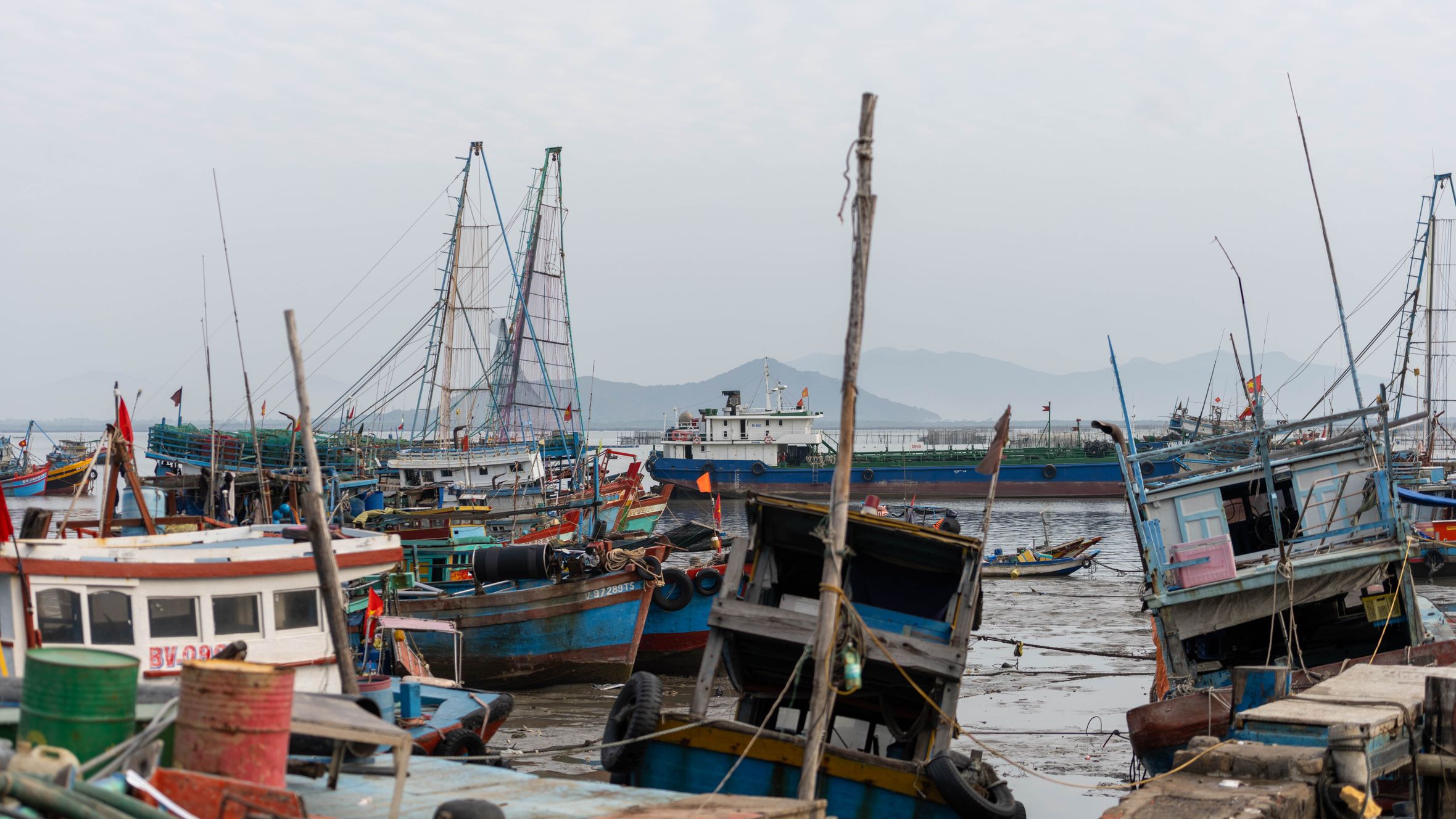
Rach Gia doesn't try to charm you. It's a functional, mid-sized coastal city in the western Mekong Delta (메콩 델타 / 湄公河三角洲 / メコンデルタ) — the kind of place where fishermen haul in catches before dawn and the market is louder than any bar. Most travelers pass through on their way to Phu Quoc, but those who stay a night or two find decent seafood, a couple of genuine pagodas, and a slower rhythm that feels more real than tourist-facing.
What it is
Rach Gia is the capital of Kien Giang province, sitting on the Gulf of Thailand about 250 km southwest of Saigon. The city has around 400,000 people and functions primarily as a fishing port and commercial hub. It's been a trading post for centuries — Khmer, Chinese, and Vietnamese communities have layered their influences here since at least the 18th century. You'll notice this in the mix of pagoda styles, the Khmer-influenced temples on the outskirts, and the Chinese shophouse architecture along the older streets near the waterfront.
The city isn't polished. Infrastructure is improving but still patchy in parts. That's also what makes it feel unperformed — nobody here is putting on a show for visitors.
Why travelers go
Three reasons, mostly:
- Ferry to Phu Quoc (푸꾸옥 / 富国岛 / フーコック) — The fast ferry from Rach Gia port takes about 2.5 hours. It's the mainland departure point if you're not flying.
- Seafood — Cheaper and arguably fresher than tourist-priced coastal towns. Crab, squid, blood cockles, and razor clams straight off the boats.
- Mekong Delta base — Rach Gia connects easily to Ha Tien (for the Cambodia border crossing), U Minh forest, and the floating markets further inland toward Can Tho.
Best time to visit
Dry season runs from November to April. January through March is ideal — less rain, lower humidity, calmer seas for the Phu Quoc ferry. The wet season (May–October) brings afternoon downpours and occasionally rough seas that delay or cancel ferry services. If your Phu Quoc trip depends on the boat, don't gamble with September or October.
How to get there
From Saigon: Buses from Mien Tay station run frequently (5–6 hours, around 150,000–200,000 VND). Phuong Trang (Futa) and Kumho Samco are reliable operators. Some services run overnight sleeper buses.
From Can Tho: About 3 hours by bus or private car (120 km). Easy day connection.
From Ha Tien: 1.5 hours by bus along the coastal road (QL80). Useful if you're coming from Cambodia via the Xa Xia or Ha Tien border gates.
By air: Rach Gia has a small airport (Rach Gia Airport, VKG) with limited domestic flights from Saigon on some schedules. Check availability — it's not daily and routes shift seasonally.

Photo by Spencer Lee on Pexels
What to do
The waterfront and fishing port
Walk along Tran Hung Dao street in the early morning. The port area between 5:00 and 6:30 AM is active with boats unloading. It's not set up for tourists — no railing, no signage — but it's genuine and photogenic if you don't mind the fish smell.
Nguyen Trung Truc Temple
A well-maintained temple dedicated to a 19th-century resistance figure against French colonialism. Locals are proud of it. The architecture is distinctly southern Vietnamese — colorful, busy with ceramic dragons. Worth 30 minutes.
Tam Bao Pagoda
A quiet Buddhist pagoda about 1 km from the center. The grounds have a modest garden and a large reclining Buddha. Peaceful in the afternoon when the city heat peaks.
Phat Lon Pagoda
Khmer-style pagoda on the edge of the city — worth a ride out if you're interested in how Khmer and Vietnamese Buddhist traditions overlap in this region. The murals inside depict Jataka tales.
Day trip to Hon Dat
About 30 km north, Hon Dat is a low granite hill rising out of the delta flatness. There's a memorial site and good views of the surrounding rice paddies. It's nothing dramatic, but the ride through the countryside is the real appeal.
Where to eat
"Hu tieu" Rach Gia style — The local breakfast soup uses a pork and seafood broth that's slightly sweeter than the Saigon version. Try the stalls along Nguyen Du street near the market. A bowl runs 30,000–40,000 VND.
Seafood on Bach Dang street — Several open-air restaurants line the waterfront. Point-and-choose from tanks. Expect to pay 80,000–150,000 VND per dish depending on the catch. Crab in tamarind sauce is a local preference.
"Banh canh" — The thick-noodle soup here uses crab meat and is heavier than versions you'll find in Hue or Saigon. Stalls near Vinh Thanh market serve it mornings only.
Grilled "nem chua" — Fermented pork rolls grilled over charcoal, served with herbs and rice paper. Common at evening street stalls near the central market.
Vietnamese coffee — The city has no specialty scene, but sidewalk "ca phe sua da" is strong and cheap (15,000–20,000 VND). Look for the older shops on Mac Cuu street.
Where to stay
Rach Gia isn't a hotel town. Options exist but don't expect boutique charm.
- Mid-range: Kim Co Hotel or Hung Cuong Hotel — clean, air-conditioned, around 400,000–600,000 VND/night. Both are central.
- Budget: Nha nghi (guesthouses) near the bus station start around 200,000 VND. Basic but functional.
- Near the port: If you're catching an early ferry, stay within walking distance of the pier. A few mini-hotels cluster on Nguyen Cong Tru street.
Book direct or via local apps (Traveloka works here). International platforms have limited listings for Rach Gia.

Photo by Đạt Nguyễn on Pexels
Practical tips
- ATMs are available (Vietcombank, BIDV) but bring backup cash. Card acceptance is low outside hotels.
- Language — Very little English spoken. Google Translate with the camera function helps at restaurants.
- Ferry tickets — Book a day ahead during peak season (December–February) or holiday weekends. Superdong and Ngoc Thanh are the main operators to Phu Quoc.
- Motorbike rental — Available from some hotels (120,000–150,000 VND/day). Useful for reaching pagodas and Hon Dat.
Common mistakes
- Skipping it entirely — If you're ferry-bound to Phu Quoc, arriving the evening before and spending a night gives you time for the port market and a seafood dinner. It's more interesting than the bus station suggests.
- Expecting a beach town — Rach Gia's coastline is mudflat and mangrove, not sand. The swimming beach is on Phu Quoc, not here.
- Not confirming ferry schedules — Services get cancelled in rough weather. Check the morning of departure, especially in wet season.
Practical notes
Rach Gia works best as a one-night stopover: arrive by afternoon, eat well, catch the morning ferry. If you're exploring the deeper Mekong Delta — Can Tho's floating markets, the forests near Ha Tien — it connects logically as a spoke in a longer loop through the south.
Last updated · May 29, 2026 · independently researched, never sponsored.









