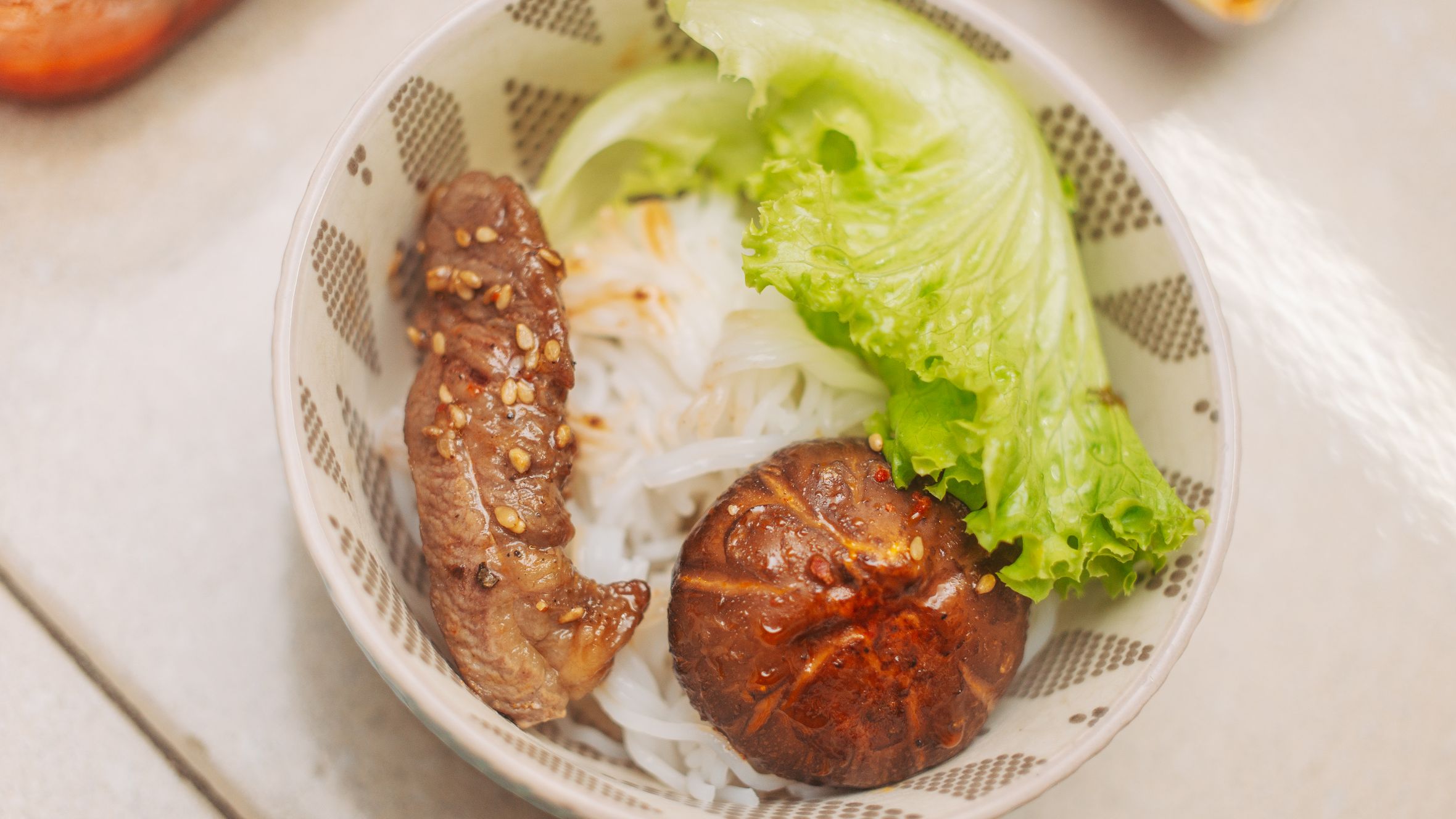
Saigon doesn't have one street food district — it has about twenty, each running on its own schedule and specializing in its own handful of dishes. The trick isn't finding "the best" stall; it's knowing which neighborhood to be in, and at what hour.
District 1 — Tourist-Adjacent but Still Real
Most visitors land in District 1 and assume the food is watered-down. Some of it is. But the blocks immediately around Ben Thanh Market — particularly Phan Chu Trinh and Luong Nhu Hoc — have a working-class lunch crowd that keeps prices honest and quality up.
For breakfast, the "banh mi" cart outside the northeastern corner of Ben Thanh (open from around 6:30 a.m.) sells a solid pork-and-pate version for 25,000–30,000 VND. It's not Hoi An-level, but it's made fresh and the bread has crunch. By 7 a.m. the line forms.
For lunch, walk five minutes south to the "com tam" cluster on Vo Van Tan. Com tam — broken rice with grilled pork, a fried egg, and pickled vegetables — is the definitive Saigon midday meal. You'll pay 45,000–60,000 VND depending on toppings. Eat before 1 p.m.; most stalls pack up by 1:30.
District 1 goes quiet for street food after about 9 p.m. If you want late-night eating, move elsewhere.
District 3 — The Neighborhood Locals Actually Live In
District 3 is where Saigon (사이공 / 西贡 / サイゴン) feels like a city people actually inhabit rather than perform for visitors. The streets around Vo Thi Sau and Nguyen Thien Thuat are good for "bun bo hue" in the morning — spicier and more complex than its Hue origins might suggest, adapted here with a heavier pork broth. Look for the stall with the red plastic stools on Nguyen Thien Thuat, open 6–10 a.m., bowls around 50,000 VND.
Evening in District 3 belongs to "banh xeo" — the crisp, turmeric-yellow crepes filled with shrimp, pork, and bean sprouts. The stretch of Dinh Cong Trang is famous for it. Pull up a low stool, order a beer, and eat with your hands wrapped in mustard leaf. Budget 80,000–120,000 VND per crepe, more with extra fillings. These stalls run 5–10 p.m.
District 4 — A Five-Minute Bridge Ride Worth Taking
Just across the Khanh Hoi Bridge from District 1, District 4 punches above its size for street food density. Nguyen Tat Thanh and the surrounding alleys are thick with seafood stalls from around 5 p.m. onward — grilled clams (so huyet), snails in lemongrass (oc len xao sa), and whelks with butter and scallion oil. A full spread for two with "bia hoi (비아호이 / 鲜啤 / ビアホイ)" runs 200,000–350,000 VND.
For something lighter, "bun rieu" — crab-paste vermicelli with tomato and tofu — shows up on Hoang Dieu in the mornings, 6–9 a.m. It's a dish that's quietly underrated compared to pho but just as satisfying on a humid Saigon morning.
The walking radius in District 4 is tight — you can cover the main food streets in about 15 minutes on foot. Come hungry, come after dark.

Photo by Pragyan Bezbaruah on Pexels
District 10 — The Cantonese Corner
District 10 bleeds into Cholon (District 5) geographically and culturally, and the food reflects the Hoa (ethnic Chinese) community that shaped this part of the city. "Hu tieu" — a southern noodle soup with pork, shrimp, and offal in a clean, slightly sweet broth — is the dish to chase here. The stalls on Su Van Hanh and Ba Thang Hai are the real article: ceramic bowls, pork-bone broth that's been going since early morning, 50,000–65,000 VND a bowl.
These stalls open at 5:30 a.m. and many are gone before noon. The later you arrive, the more likely you are to get a pale version of the broth.
"Goi Cuon" at the Wet Market Edges
While you're in District 10, the market perimeter on Ly Thuong Kiet has vendors selling "goi cuon" — fresh rice-paper rolls with shrimp, pork, and herbs — by the tray. They're not a meal on their own but make a solid mid-morning snack at around 15,000 VND per roll with peanut dipping sauce.
Phu Nhuan — The After-Work District
Phu Nhuan is a residential district northwest of District 3, and its food scene peaks between 5:30 and 8:30 p.m. when office workers stop on the way home. Phan Xich Long is the main drag — it's become a bit of a cafe strip, but the side streets off it still have proper food.
Look for "banh canh" stalls — a thick, chewy noodle soup with crab or pork that doesn't get nearly enough attention in the tourist guides. A bowl is 40,000–55,000 VND. There's also reliable "cha gio" at a few corner spots — crispy fried spring rolls that, when done right, crackle audibly when you bite through.
Phu Nhuan is about 4 km from the Ben Thanh area. Grab a Grab (the rideshare app) — it's rarely more than 30,000–40,000 VND from District 1.

Photo by Arnie Chou on Pexels
A Few Timing Notes
Saigon's street food clock runs earlier than people expect. The best "pho" and hu tieu are served before 9 a.m. Com tam peaks at lunch. Seafood and banh xeo are an evening affair. If you sleep until 9 and expect the full range, you'll miss the morning half of the menu.
Also: rain matters. During the wet season (May–October), afternoon downpours push many open-air stalls to close early. Eat lunch before 1 p.m. and plan evening food after 6, when the rain usually eases.
Practical Notes
Cash in small denominations (5,000 and 10,000 VND notes) makes street food transactions faster for everyone. Google Maps is surprisingly accurate for finding stalls — search the dish name plus the district. Prices listed here are from late 2024; expect modest increases but nothing dramatic.
Last updated · May 29, 2026 · independently researched, never sponsored.






