At 6am in Sapa, the temperature hovers around 10–15°C for most of the year and the market vendors have been set up for an hour already. If you walk out looking for a coffee shop with an English menu, you'll miss the whole thing.
Start at the morning market on Cau May
The strip running along Cau May street and into the covered section near Sapa (사파 / 沙坝 / サパ) Market is where most of the morning action is. Stalls open as early as 5:30am, mostly catering to Hmong and Kinh vendors who've come in from surrounding villages and need to eat before they start selling. The food here is cheap, fast, and not designed for tourists — which is exactly the point.
Bring small bills. Most bowls and plates here cost 20,000–35,000 VND. Nobody will chase you down for change.
The soup you should order first
"Pho" exists in Sapa, but the local version skews noticeably different from what you'd get in Hanoi. The broth is lighter, often made with less bone and more aromatics, and the portions are smaller — suited to the altitude and the early hour. Look for small plastic tables with a pot of broth simmering over charcoal. Sit down and you'll get a bowl without needing to say much.
More interesting, and more specific to the north, is "bun bo Hue"-adjacent soups that some Kinh families sell here — thick, slightly spiced broths with pork or beef over round rice noodles. This isn't the canonical bun bo Hue of Central Vietnam (베트남 / 越南 / ベトナム), but the influence is there. Whatever they're calling it on the handwritten sign, point at the pot and nod.
"Chao" (rice porridge) is also everywhere at this hour. Vendors sell it plain or topped with minced pork, a soft-boiled egg, and fried shallots. A bowl is usually 20,000–25,000 VND. It's the most logical breakfast at this elevation on a cold morning.
Sticky rice — the real local staple
"Xoi" (sticky rice) is what a huge percentage of Sapa's working population actually eats for breakfast. Hmong and Dao women sell it wrapped in banana leaf or piled into small baskets near the market entrance. Common toppings: fried shallots, shredded chicken, pate, or just a thin layer of mung bean paste. Xoi ga (with chicken) is around 25,000–30,000 VND and filling enough to carry you through a cold morning.
Some vendors sell xoi ngo — sticky rice cooked with corn kernels, which is a northern highlands thing you won't find easily further south. It's slightly sweet, slightly smoky if it's been kept warm over coals, and worth trying once. Usually 15,000–20,000 VND for a small portion.

Photo by Vietnam Tri Duong Photographer on Pexels
Banh mi — but not quite the Saigon version
A few rolling carts sell "banh mi" along Ham Rong street by around 6:30–7am. The bread here tends to be chewier and denser than the airy loaves you get in the south — a result of different flour blends and altitude affecting the bake. Fillings are typically pate, margarine, cha lua (pork roll), and a scrape of chili sauce. Don't expect the loaded Hoi An-style banh mi here. This is working food: 15,000–20,000 VND, eaten standing up.
Coffee in Sapa at 6am
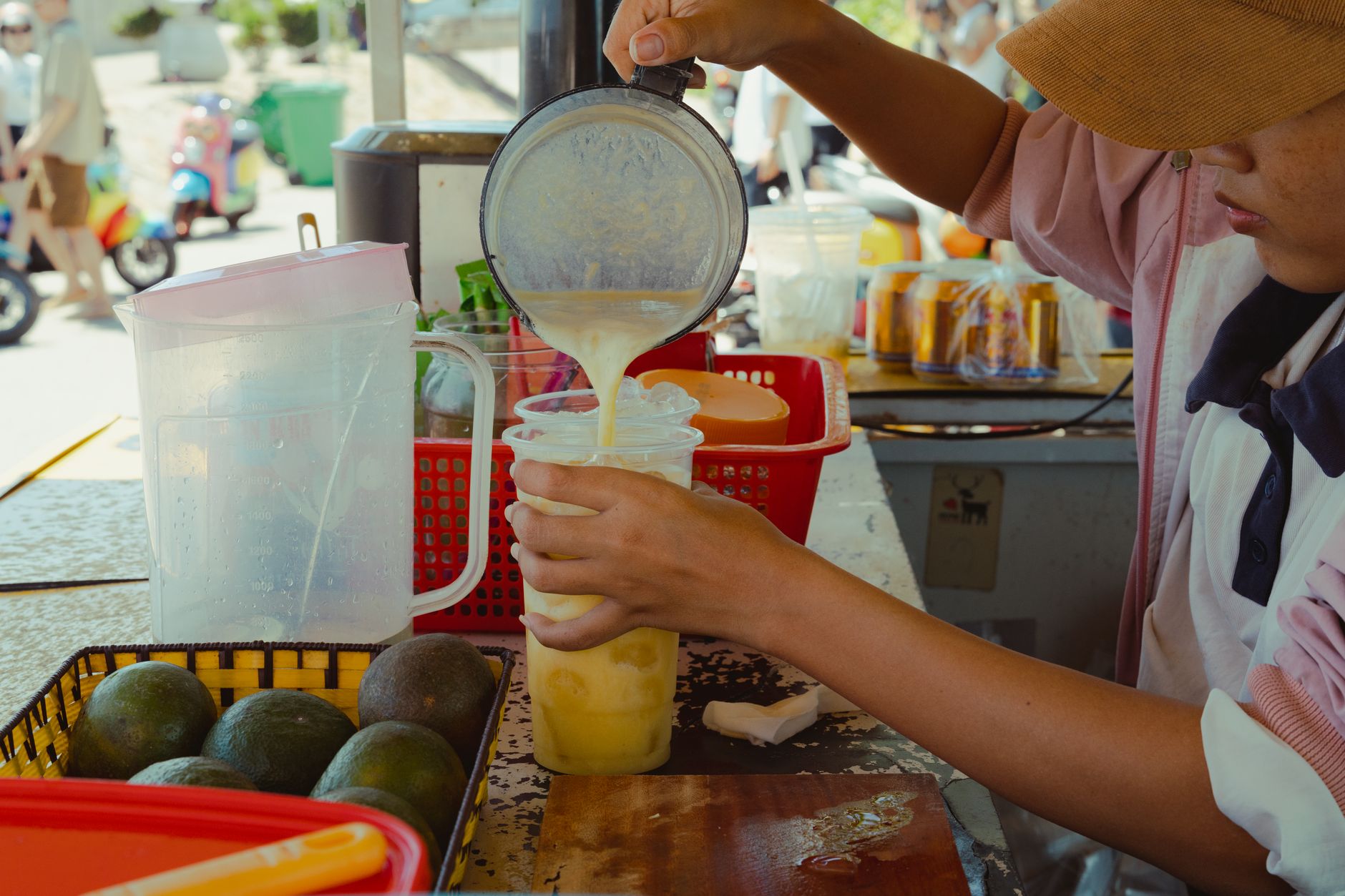
"Vietnamese coffee" culture exists in Sapa, but it looks different from the Hanoi cafe scene. At this hour, you're drinking ca phe from a thermos someone's carried to a plastic stool next to their food stall. It's typically "ca phe sua da" without the ice — just ca phe sua nong (hot, with condensed milk) because it's too cold for anyone to want ice. A cup poured from a thermos is 10,000–15,000 VND.
If you want to sit somewhere, Sapa has a small cluster of local-facing cafes on Thac Bac road and behind the market that open by 6:30am. These are not Instagrammable. They have plastic chairs, loud Vietnamese morning television, and excellent coffee. That's the trade.
Note: the "egg coffee" trend that's very much a Hanoi thing hasn't really landed in Sapa's morning street scene yet. You'll find it at a few tourist-facing cafes that open later in the morning, but not at 6am from a thermos.

Photo by Quang Nguyen Vinh on Pexels
What to skip in the morning
The restaurants along the main tourist strip — Ta Van road and the hotel-facing blocks — don't open for breakfast until 7:30 or 8am at the earliest, and when they do, they're oriented around Western breakfasts for trekkers. Nothing wrong with that, but it's not what this guide is about.
Also, the night market area is mostly dead at 6am. Don't bother walking that way first.
A practical 6am route
Start at the covered section of Sapa Market on Xuan Vien street, walk toward Cau May for xoi or chao, loop back along Ham Rong for a banh mi cart if you're still hungry, and find a plastic stool somewhere along that stretch for coffee. The whole circuit is under 1 km and takes about 45 minutes if you stop to eat properly.
Practical notes
Dress for the cold — even in April and May, 6am in Sapa requires a layer. Most vendors pack up or transition to lunch food by 9–10am, so the window is real. If you're joining a trekking group that departs at 8am, eat before you meet your guide — not after.
Last updated · May 29, 2026 · independently researched, never sponsored.