The version of Sapa that most visitors see — misty mountains, rice terraces, souvenir stalls — starts shutting down around 6pm. What opens up after that is worth staying awake for.
The Layout After Dark
Sapa (사파 / 沙坝 / サパ) town is small enough to cover on foot, which matters when you're hopping between stalls at 10pm in 12-degree weather. The main tourist drag runs along Cau May Street and around the central square near St. Joseph Church. That's where the night market operates, and it's fine for a first look — but it's not where you want to eat. Locals eat on the streets that branch off toward Ham Rong Mountain and down toward the residential blocks southeast of the market. Keep walking past the souvenir blankets and you'll find the actual food.
The Night Market — What to Buy, What to Skip
The Sapa Night Market runs nightly from around 7pm until 10 or 11pm along a pedestrianized stretch near the town center. Vendors are mostly H'Mong and Dao women selling embroidered bags, woven scarves, and silver jewelry. The food stalls here are functional but aimed at tourists: grilled corn (bap nuong) at 15,000–20,000 VND, sugarcane juice, and the occasional "pho" stall charging 50,000–60,000 VND for a bowl that's good but not remarkable.
Buy the corn. It's charcoal-grilled and brushed with a soy-salt glaze, and at that altitude on a cold night it's hard to argue with. Skip the sit-down restaurants inside the market perimeter — they've got laminated English menus and prices that reflect the foot traffic, not the food quality.
Where the Grills Are: Ham Rong and the Side Streets
By 8:30pm, the real action is on the unnamed lanes running parallel to Hoang Lien Street, roughly between the market and the bus station area. Look for smoke. That's the signal.
"Thit nuong" — grilled meat on skewers — is the main event. Pork belly, chicken thighs, and buffalo meat run 10,000–20,000 VND per skewer depending on the cut. Buffalo is the one to order in Sapa; it's a staple protein for highland communities and the local vendors know how to handle it. Marinated in lemongrass and a little chili, grilled hard over charcoal until slightly charred at the edges. Pair it with sticky rice (xoi) served wrapped in banana leaf for around 10,000 VND. This is dinner for 50,000 VND if you don't overthink it.
Several of these grill spots have no name, just a woman with a portable grill and a plastic stool situation on the pavement. Sit down. Point at what the person next to you is eating. It works.

Photo by Dominiquemel16 Ramos on Pexels
Snail Joints: The Late-Night Local Scene
Sapa's snail restaurants ("oc" joints) are where you'll find the liveliest tables after 9pm — groups of local guys drinking "bia hoi" or Saigon cans, sharing plates of stir-fried snails in lemongrass and chili, or the cold-weather version with butter and pepper. A few spots have established themselves on the road heading northeast out of town toward Cat Cat village. They run until midnight or later on weekends.
Ordering is straightforward: oc len xao sa ot (snails with lemongrass and chili) or oc buou nuong mo hanh (grilled apple snails with spring onion butter) are the two most common preparations. A shared plate feeds two for 60,000–80,000 VND. These places are loud, occasionally smoky, and completely worth it.
Dessert Carts and Sweet Snacks
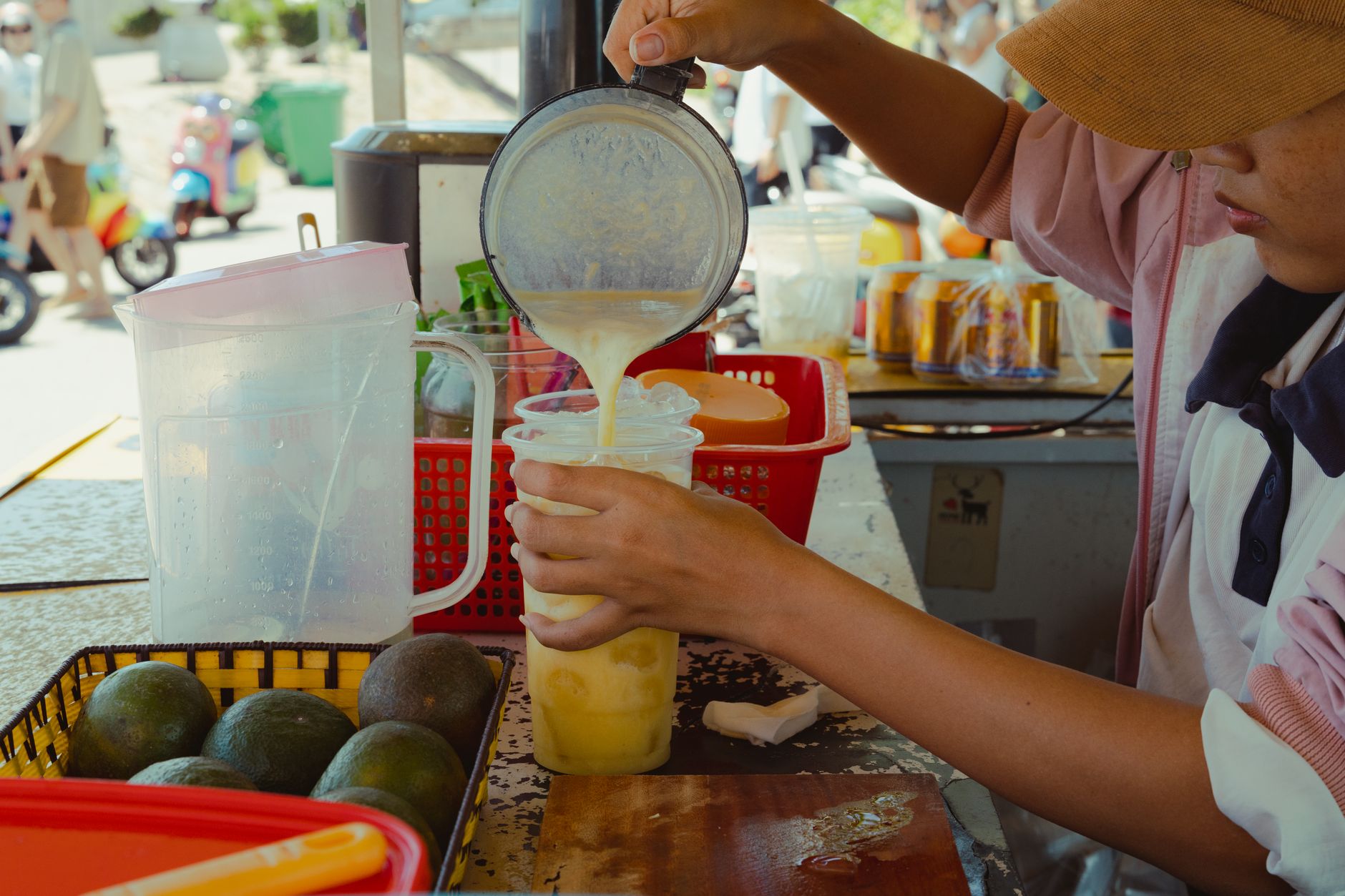
Pushed carts selling "che" — Vietnamese sweet dessert soups — appear around the central square from about 7pm onward. At Sapa's altitude, the warm versions are what you want: che dau do (red bean), che hot sen (lotus seed), or a mixed bowl with coconut milk poured over. 15,000–25,000 VND a cup. A few vendors also sell "banh trang nuong", the rice paper pizza that's more of a Da Lat thing but has migrated north — rice paper grilled over coals, topped with egg, dried shrimp, and chili sauce. It's a snack, not a meal, but at 20,000 VND it fills the gap between the grill stalls and the snail spot.
For something warming to drink, skip the tourist cafes and look for vendors with thermos flasks selling ginger tea or "ruou can" — rice wine sipped communally through bamboo straws — though the latter is more of a village experience than a street-cart find.

Photo by Nguyễn Hưng on Pexels
Tourist Routes vs. Local Haunts — A Practical Split
If it's your first night in Sapa and you want orientation: start at the night market, walk the central square, grab grilled corn, get a feel for the layout. Fine. Do it once.
If you have a second or third night: go south and east of the market after 8:30pm. The streets get quieter, the food gets better, and prices drop by 30–50% once you're off Cau May. Use your phone light if needed — some of these lanes are poorly lit, but they're safe. Sapa is a small town with low street crime; the usual awareness applies (don't flash expensive cameras at midnight) but it's not a place that requires particular caution.
Price Range and Payment
Street food: 10,000–25,000 VND per item. A full night of eating and drinking — snails, skewers, sticky rice, dessert, a couple of beers — runs 150,000–250,000 VND per person. Cash only at virtually every street stall and grill spot. Bring small bills; vendors rarely have change for 500,000 VND notes after dark.
Practical Notes
Bring a layer — even in April or May, Sapa nights drop fast once the sun is gone, and you'll be standing around outdoor grills. The night market is closed during heavy rain, but the snail joints and grill carts usually stay open. Most street food activity winds down by midnight; if you're arriving on a late bus, the central square vendors tend to hold out the latest.
Last updated · May 26, 2026 · independently researched, never sponsored.