Hue doesn't rush its coffee. In a city where people still take a two-hour lunch break and the Perfume River moves like it has nowhere to be, the coffee culture reflects exactly that — unhurried, particular, and worth paying attention to.
The Baseline: What You'll Find Everywhere
The classic "ca phe sua da" — iced coffee with sweetened condensed milk — is everywhere, as it is across Vietnam (베트남 / 越南 / ベトナム). In Hue, you'll pay around 15,000–20,000 VND for a glass at a sidewalk stall, typically served in a short glass with a metal drip filter still sitting on top when it reaches you. The ritual of waiting for the drip is part of the point.
What sets Hue (후에 / 顺化 / フエ) apart isn't the drink itself but the pace. Street-corner cafes here operate on a different social logic. The plastic-stool spots along Nguyen Chi Thanh or near the An Cuu market aren't just cheap — they're genuinely communal. Retired men play co tuong (Vietnamese chess), motorbike drivers take a break mid-shift, students nurse a single glass for an hour. You're welcome to do the same.
The Hue-Specific Roast
Hue has a preference for dark-roasted robusta, often blended with a small amount of arabica for fragrance. The result is bitter, thick, and strong — more so than what you'd find in Saigon or Da Nang. Some older roasters around Hue still add butter or fish sauce to the roasting process, a legacy technique that smooths the bitterness and adds a faint savory depth. It sounds strange; it works.
Look for locally roasted beans sold by the bag near Dong Ba Market. Brands like Trung Nguyen are everywhere, but the interesting stuff comes from smaller family-run roasters who rarely label their product with anything more than a handwritten tag.

Photo by Theodore Nguyen on Pexels
Beyond the Classic: What Else to Order
Ca phe trung) has its origin in Hanoi — a whipped egg yolk and condensed milk foam over espresso — but Hue has its own quieter version of the genre. A few cafes here serve a whipped-cream variation that's locally called "ca phe bong" (cloud coffee), where the foam is lighter and less sweet than the Hanoi original. If you see it on a handwritten chalkboard, order it.
Sua chua ca phe — yogurt coffee — is common across central Vietnam and worth trying if you haven't. Tart Vietnamese-style yogurt (denser than Greek, slightly grainy) sits under a layer of drip coffee and ice. It's polarizing. Most people who try it become regulars.
Lotus tea has deep roots in Hue's imperial past — the Nguyen lords had it scented in the lotus ponds around the citadel — and several cafes in the city still serve a proper version. It's not coffee, but it belongs in this conversation. The best lotus tea in Hue is made with green tea leaves stored overnight inside lotus flowers. The scent is absorbed, not added artificially. Expect to pay 30,000–50,000 VND for a cup at a traditional tea house.
Where to Sit
Plastic Stool Tier
The stretch of cafes along Nguyen Binh Khiem near the train station is reliable for no-frills ca phe sua da. Get there before 8am if you want a seat among the regulars. No menus, no Wi-Fi passwords — just point at what the person next to you is drinking.
Mid-Range: Garden Cafes
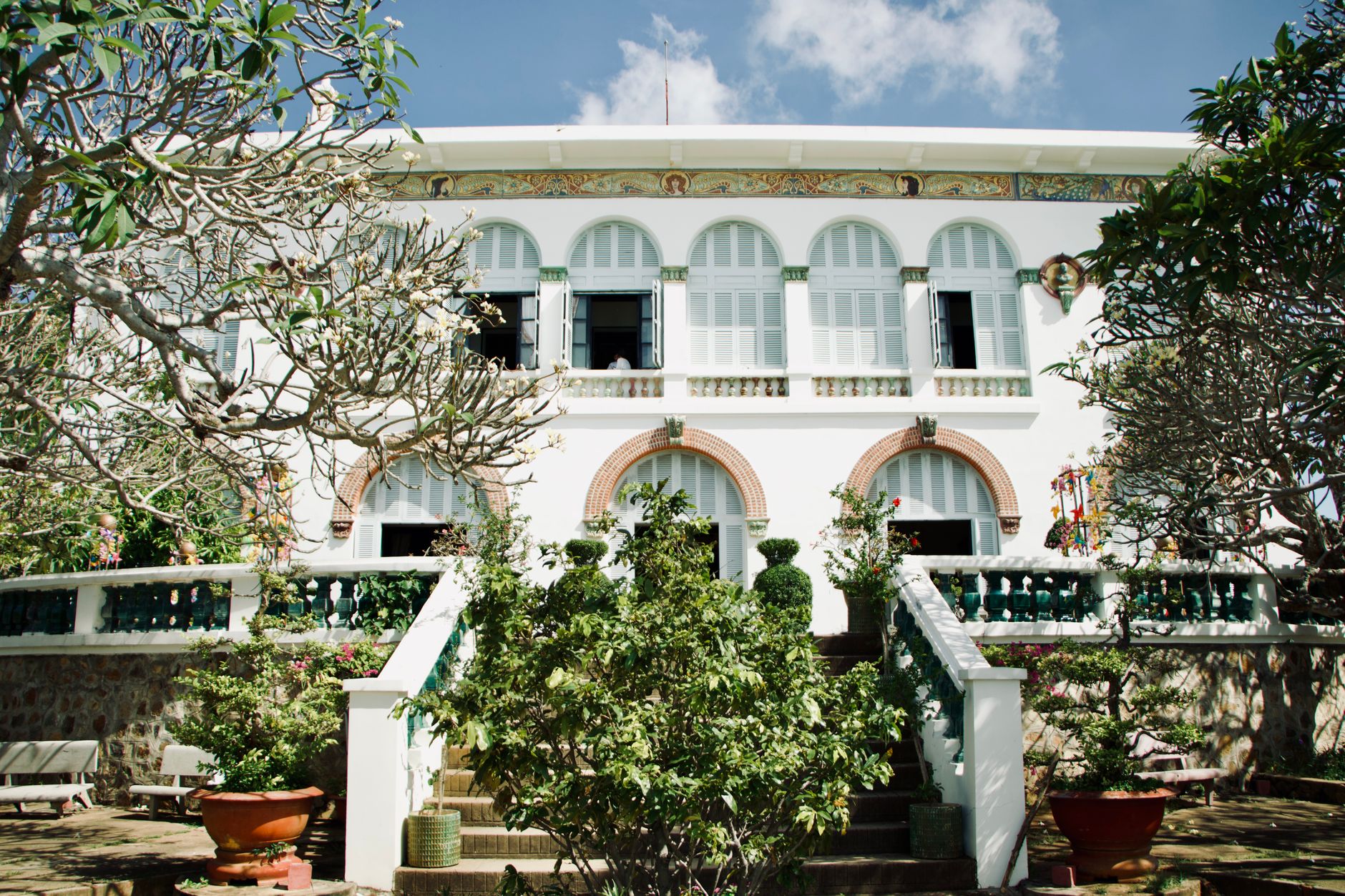
Hue has a strong tradition of garden cafes — "quan vuon" — where a family home's courtyard is converted into a seating area under frangipani trees and draped with the occasional ceramic pot. These are the cafes that lean into Hue's imperial aesthetic without being theme parks about it. The area around 34 Dang Tran Con and the streets south of the Thien Mu Pagoda road have several worth wandering into. Expect 30,000–50,000 VND for coffee, and a menu that also carries che (sweet dessert soups) and light bites.
Third-Wave and Specialty
Hue's specialty coffee scene is small but real. A handful of shops now import single-origin arabica from the Central Highlands — Da Lat and Kon Tum beans in particular — and offer pour-over or aeropress preparation. Cong Ca Phe has a branch in Hue (the chain's socialist-retro aesthetic fits the city well), but the more interesting shops are independent: look around the backpacker area on Pham Ngu Lao and the university district near Nguyen Hue Street for newer spots with actual brewing equipment and staff who can talk about the beans.
Prices jump at these places — 55,000–85,000 VND for a single-origin pour-over — but the quality gap over street coffee is real if that's what you're after.

Photo by Minh Lê on Pexels
When to Go
Morning is the main event. Hue's coffee culture is fundamentally a morning institution. By 10am, the best sidewalk spots are already winding down. If you want the full ritual — drip filter, low plastic stool, a bowl of "banh mi" from the cart across the street — show up before 8am.
Afternoons belong to the garden cafes and the slower, more contemplative tea-house culture. Evenings are for bia hoi if you want company, or a quiet cup at one of the riverside spots along the south bank of the Perfume River.
Practical Notes
Hue's coffee shops rarely have English menus outside the tourist-facing spots, but ordering is simple: "ca phe sua da" for iced milk coffee, "ca phe den" for black, "nong" for hot, "da" for iced. Bring cash — most street stalls and garden cafes don't take cards. Budget 20,000–50,000 VND for most drinks outside the specialty tier.
Last updated · May 29, 2026 · independently researched, never sponsored.