What Soc Bom Bo actually is
Soc Bom Bo is a cultural and historical site in Bu Dang district, in the highlands northeast of Saigon. The name comes from the S'tieng ethnic minority language — "soc" means village, and "Bom Bo" is the local place name. During the resistance war period, this village became known as the birthplace of the "Tieng chay tren soc Bom Bo" (Sound of the Pestle on Soc Bom Bo) movement, where local S'tieng villagers pounded rice at night to supply fighters in the jungle.
Today, the site is a memorial complex with a museum, reconstructed longhouses, and a large bronze sculpture of S'tieng women pounding rice. It sits on a gentle hill surrounded by cashew plantations and patches of secondary forest. The atmosphere is more reflective than dramatic — this isn't a theme park. It's a small, well-maintained site that tells a specific local story.
The area has historically been part of Binh Phuoc province, though administrative boundaries in this part of the south have shifted over the years. For travelers based in Dong Nai or Saigon (사이공 / 西贡 / サイゴン), it makes a worthwhile day trip or overnight stop on a loop through the southern highlands.
Why travelers go
Most visitors come for two reasons: the history and the ethnic culture. The S'tieng community in this area is one of Vietnam's lesser-known minority groups, and Soc Bom Bo is one of the few places where you can see reconstructed traditional longhouses and learn about highland customs without trekking deep into the Central Highlands (중부 고원 / 中部高原 / 中部高原). The museum is small but earnest, with photographs, tools, and artifacts from the wartime period and traditional S'tieng daily life.
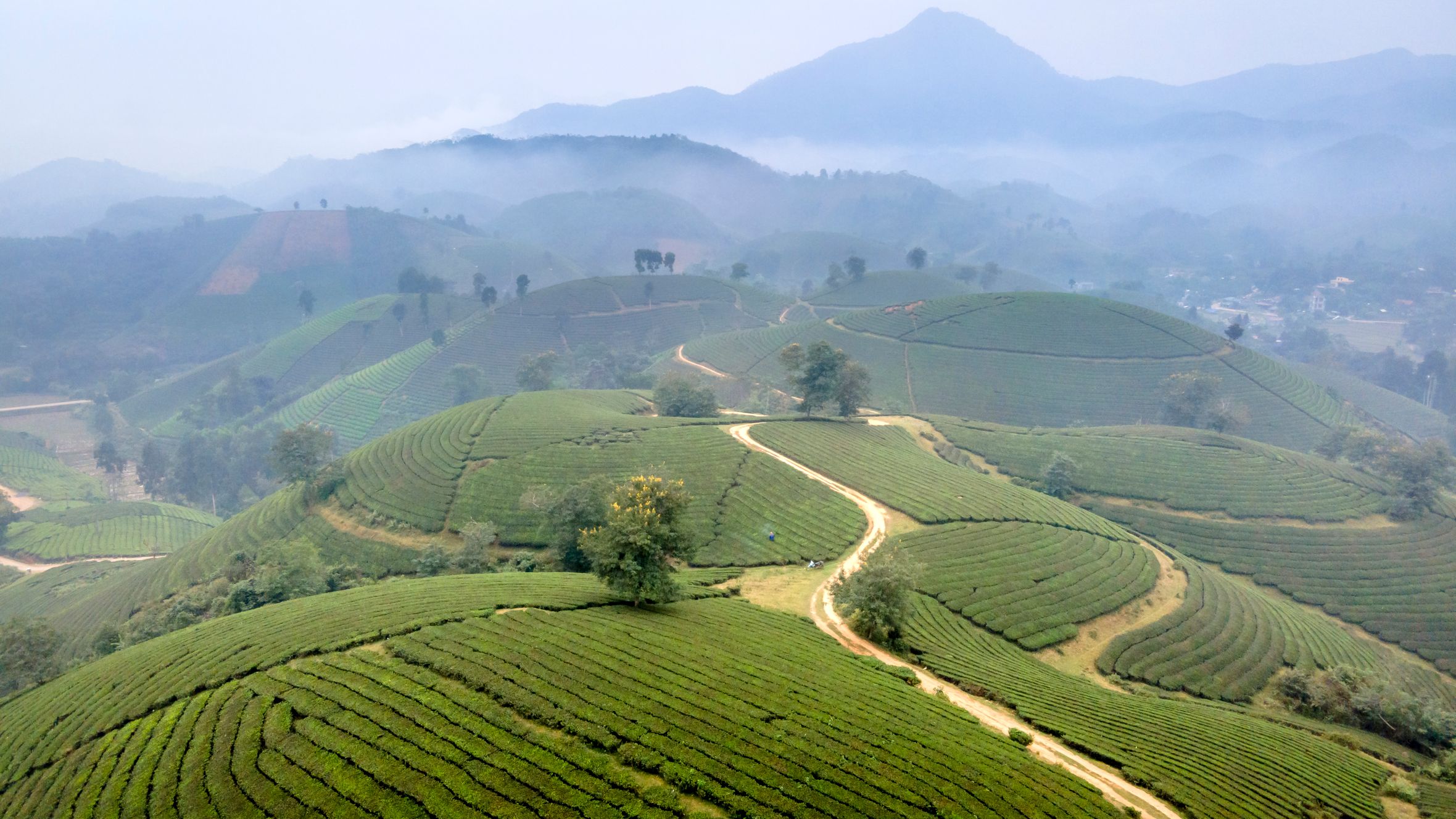
Beyond the memorial itself, the surrounding countryside is genuinely pleasant — rolling hills, red laterite roads, rubber and cashew trees stretching in every direction. If you've spent a week in Saigon eating "com tam" and drinking "ca phe sua da", the air up here feels noticeably different.
Best time to visit
The dry season from November through April is the most comfortable window. December to February brings cooler mornings — unusual for the south — and the hills are green from the tail end of the rains. March and April get hot, but the roads stay dry and easy.
Avoid June through September if you can. The laterite roads around Bu Dang get slippery in heavy rain, and the site itself, while open year-round, is less enjoyable when you're dodging downpours.
How to get there from Saigon
Soc Bom Bo is roughly 170 km northeast of Saigon, in Bu Dang district. The drive takes about 3.5 to 4 hours depending on traffic getting out of the city.
By motorbike: The most popular option for independent travelers. Take Highway 13 north through Binh Duong and Binh Phuoc, then cut east on provincial roads toward Bu Dang. The last 30 km is on smaller roads — paved but narrow. Budget around 120,000–150,000 VND for fuel (round trip on a 125cc bike).
By bus + xe om: Catch a bus from Saigon's Mien Dong bus station to Dong Xoai (Binh Phuoc's capital), about 3 hours and 100,000–130,000 VND. From Dong Xoai, you'll need a local "xe om" (motorbike taxi) for the remaining 60 km to Bu Dang — negotiate around 200,000–250,000 VND one way, or arrange a return through your guesthouse.
By car: If you're renting a car with driver from Saigon, expect to pay 1,500,000–2,000,000 VND for a full day trip.

Photo by Jaqor Q.I. on Pexels
What to do
Visit the memorial complex
The main site includes the bronze sculpture, a small museum, and several reconstructed S'tieng longhouses built on stilts. Give yourself 60–90 minutes. Entry is free. A local guide is sometimes available — they won't speak much English, but Google Translate gets you through the basics. The sculpture of the rice-pounding women is the centerpiece and genuinely well-crafted.
Walk the surrounding trails
Behind the memorial, a dirt path leads through cashew groves and into patches of scrubby forest. It's not a serious hike — maybe 2–3 km round trip — but it's quiet and gives you a sense of the landscape the S'tieng have lived in for generations. Wear closed shoes; the red soil stains everything.
Stop at a cashew farm
Bu Dang district is one of Vietnam's cashew-growing heartlands. Between February and April, the trees fruit, and you'll see families processing raw cashews by the roadside. It's perfectly fine to stop, watch, and buy a bag of fresh-roasted nuts. Expect to pay 80,000–120,000 VND per kilogram — significantly cheaper than Saigon shops.
Explore Bu Dang town
The district capital is a one-street town, but it has a daily morning market worth walking through. You'll find local produce, forest honey, and dried game meats. The market wraps up by 9 AM, so don't sleep in.
Drive the red roads
If you're on a motorbike, the network of laterite roads around Soc Bom Bo is genuinely enjoyable riding — gentle hills, minimal traffic, views of plantations fading into blue-green ridgelines. No particular destination needed. Just ride.
Where to eat nearby
Don't expect a restaurant scene. Bu Dang town has a handful of "com binh dan" (everyday rice) shops along the main road, serving rice with grilled pork, greens, and soup for 30,000–45,000 VND.
The local dish to seek out is "ga nuong" — grilled chicken, often free-range birds from nearby farms, cooked over charcoal and served with salt-pepper-lime dip and broken rice. Ask at any roadside eatery. A whole chicken runs about 180,000–250,000 VND and feeds two comfortably.
If you pass through Dong Xoai on the way back, look for "banh canh" — thick tapioca noodle soup, usually with pork knuckle. There are a few decent spots near the central market.
Where to stay
Soc Bom Bo itself has no accommodation. Bu Dang town has a couple of basic guesthouses ("nha nghi") in the 200,000–350,000 VND range — clean enough, air-conditioned, hot water, no frills. Don't expect English-speaking staff.
For something more comfortable, stay in Dong Xoai, which has proper hotels in the 400,000–700,000 VND range with Wi-Fi and breakfast included.
Most travelers do this as a day trip from Saigon or as a stop on a longer motorbike loop through the southern highlands.

Photo by Tường Chopper on Pexels
Practical tips locals would tell you
- Bring cash. There are no ATMs at Soc Bom Bo and only one or two in Bu Dang town. Load up in Dong Xoai or before leaving Saigon.
- Fuel up in Dong Xoai. Gas stations get sparse after that.
- Sunscreen and a hat. The site has limited shade, and the highland sun is deceptive.
- Respect the memorial. This is a significant site for the local community. Keep noise down, don't climb the sculpture, and ask before photographing people.
Common mistakes to avoid
- Showing up after 4 PM. The museum area closes early and there's no lighting on the grounds. Arrive by early afternoon at the latest.
- Skipping Dong Xoai. It's not exciting, but it's your last reliable stop for fuel, cash, and food. Don't bypass it.
- Wearing sandals on the trails. Red laterite mud is relentless. You will ruin white shoes too — wear something you don't care about.
- Expecting English signage. There's almost none. Download offline Vietnamese on Google Translate before you go.
Practical notes
Soc Bom Bo works best as part of a broader southern highlands loop — combine it with a ride through the rubber plantation country of Binh Phuoc, or continue northeast toward Cat Tien National Park for a completely different landscape. As a standalone destination from Saigon, it's a long drive for a small site, but paired with the road itself and a night in the countryside, it becomes a genuinely rewarding detour from the southern coast circuit.
Last updated · May 29, 2026 · independently researched, never sponsored.