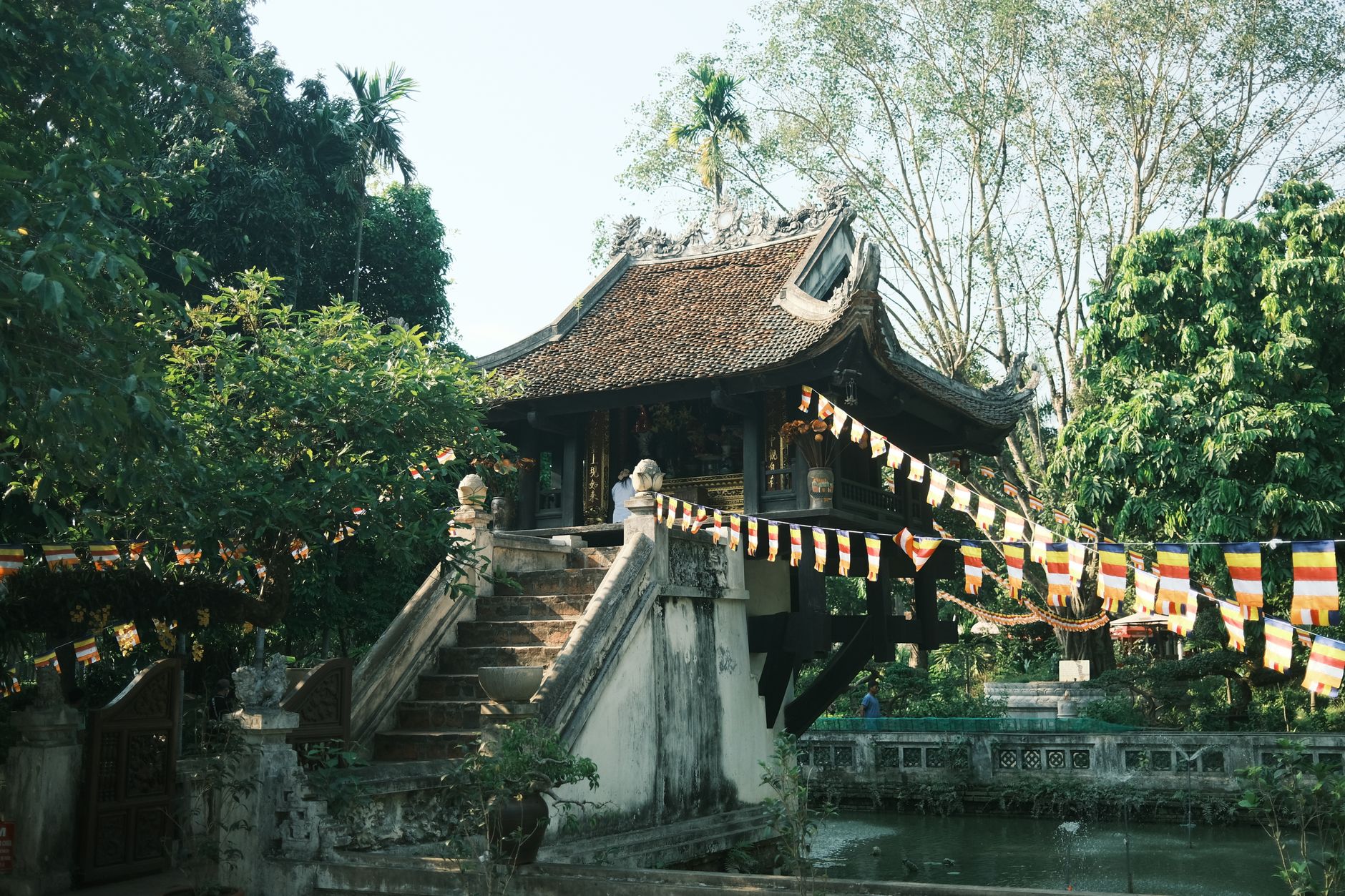
What it is
Son Tay Citadel (Thanh Co Son Tay) is a early 19th-century military fortress in Son Tay town, about 40 km west of Hanoi's Old Quarter. Built in 1822 under the Nguyen Dynasty during the reign of Emperor Minh Mang, it served as the administrative and defensive hub for the region west of the capital. The citadel was constructed from laterite — the same dark, rust-red stone you see in older structures across northern Vietnam (베트남 / 越南 / ベトナム) — and designed in the Vauban style, a European-influenced star-fort layout that the Nguyen court adopted for several citadels across the country.
The walls still stand in reasonable shape, enclosing a quiet park-like space with old trees, a small lake, a few temple structures, and crumbling gates that feel like they belong to a different century. Which, of course, they do. Unlike the [Imperial Citadel](/posts/imperial-citadel-thang-long-hanoi (하노이 / 河内 / ハノイ)-history) Thang Long in central Hanoi, Son Tay sees almost no international visitors. On a weekday you might share the grounds with a handful of locals exercising or a school group on a field trip.
Why travelers go
Most people who make it out here come for three reasons. First, it's one of the best-preserved Nguyen-era citadels in the north, and it costs nothing to enter. Second, it pairs well with a day trip to Duong Lam Ancient Village, which is only 5 km further west — together they make a solid half-day outside the city. Third, the atmosphere. There's no ticket booth hustling you through, no loudspeaker narration, no souvenir gauntlet. It's just old walls, big trees, and the kind of quiet that Hanoi proper doesn't really offer.
If you've visited Hue and walked the citadel there, Son Tay gives useful context — a smaller, rougher sibling built in the same era, same dynasty, same defensive logic, but without the royal grandeur.
Best time to visit
October through December is ideal. The heat has broken, rain tapers off, and the sky goes clear — good conditions for wandering laterite walls and taking photos without melting. March and April work too, before the summer humidity sets in.
Avoid July and August if you can. The citadel grounds flood in heavy rain, paths get muddy, and the laterite turns slippery. It's not dangerous, but it's not pleasant either. Early morning any time of year beats midday — the grounds face west, and afternoon sun in summer is punishing.
How to get there from Hanoi
By motorbike: The most flexible option. Take Highway 32 (Quang Oai road) heading west from Cau Giay district. The ride is about 40 km and takes roughly 1 hour depending on traffic. Straightforward route, mostly flat, light traffic once you clear the city edge.
By bus: Bus 71 runs from My Dinh bus station to Son Tay town. The trip takes 60–90 minutes and costs around 10,000–15,000 VND. From the Son Tay bus drop-off point, the citadel is a 10-minute walk or a quick xe om ride for 15,000–20,000 VND.
By Grab car: About 350,000–450,000 VND one way from the Old Quarter. Reasonable if you're splitting with someone, but you'll want to arrange a return or combine with Duong Lam to justify the cost.
The citadel sits right in the middle of Son Tay town, so once you're there, finding it isn't hard. Look for the old laterite walls — they're not exactly subtle.

Photo by Hiếu Vũ Vlog on Pexels
What to do
Walk the walls and gates
The citadel has three original gates still standing: the south gate (Cua Tien), the north gate (Cua Hau), and the west gate (Cua Huu). The south gate is the most photogenic, with its laterite arch framed by old banyan roots. Walk the perimeter — it takes maybe 20 minutes at a slow pace. The moat is still partially intact, overgrown in places, which adds to the atmosphere.
Visit the temples inside the walls
Inside the citadel grounds, there's a small temple dedicated to local guardian spirits and a modest shrine. Neither is architecturally remarkable on their own, but they're kept up by local families and give you a sense of how the space is used today — less museum, more living neighborhood relic.
Explore the central lake and old trees
The interior has a small lake and several massive old trees — banyans and "sau" trees — that are probably older than the citadel itself. If you've been in Hanoi long enough to miss green space that isn't Hoan Kiem Lake surrounded by selfie sticks, this delivers.
Combine with Duong Lam Ancient Village
Duong Lam is 5 km west and charges a 20,000 VND entrance fee. It's a preserved farming village with laterite houses, narrow lanes, and a pace of life that feels decades removed from Hanoi. Together with Son Tay Citadel, you get a genuinely good half-day trip. Leave Hanoi by 8 AM, hit the citadel first, then Duong Lam, and be back for dinner.
Sit and sketch or photograph
The laterite walls change color throughout the day — dark red-brown in the morning, almost orange in late afternoon light. Photographers and sketchers come out here specifically for the textures. The south gate with banyan roots is the signature shot.
Where to eat nearby
Son Tay town has a decent food scene for a district town. Look for "pho ga" (chicken "pho") at the small shops lining the road near the south gate — Son Tay's version uses a cleaner, lighter broth than what you typically find in central Hanoi. A bowl runs 35,000–45,000 VND.
If you push on to Duong Lam, try "che lam" — a chewy snack made from roasted sticky rice, peanuts, and malt. It's a local specialty sold in most village houses. A bag costs 20,000–30,000 VND and makes a decent edible souvenir.
Where to stay
Most travelers visit Son Tay as a day trip from Hanoi, and that's the right call. There's no compelling reason to overnight in Son Tay town itself. If you're on a motorbike loop and need a place, basic guesthouses ("nha nghi") in town run 200,000–350,000 VND per night. They're clean enough, nothing special.
For a nicer option, a few homestays around Duong Lam offer rooms in traditional laterite houses for 400,000–600,000 VND, breakfast included. Worth considering if you want to experience the village without the day-trip rush.

Photo by Thi Đoàn on Pexels
Practical tips locals would tell you
- Bring water. There's no reliable vendor inside the citadel grounds. Buy a bottle from the shops along the road before you enter.
- Wear shoes with grip. Laterite gets slick when damp, and the paths inside aren't paved.
- Budget 45–60 minutes for the citadel alone. It's not huge, but it rewards slow walking over speed-touring.
- There is no entrance fee. The grounds are open and free. If someone at the gate asks for money, they're freelancing — politely decline.
Common mistakes to avoid
- Coming only for the citadel and going straight back. Son Tay Citadel alone isn't worth a 80 km round trip. Pair it with Duong Lam, or with a longer motorbike loop toward Ba Vi mountain, and the day earns its keep.
- Arriving at midday in summer. There's limited shade along the walls, and the laterite radiates heat. Morning or late afternoon only.
- Expecting a polished museum experience. There are no English-language signs, no audio guides, no cafe inside. That's part of the appeal, but come prepared to wander and discover rather than be guided.
Practical notes
Son Tay Citadel is open daily, no gates or hours to worry about. The whole Son Tay + Duong Lam loop works well as a motorbike day trip from Hanoi — budget a full morning and early afternoon. If you're already planning time at the Temple of Literature or other Hanoi historical sites, this makes a good contrast: same dynasty, different energy, no crowds.
Last updated · May 13, 2026 · independently researched, never sponsored.