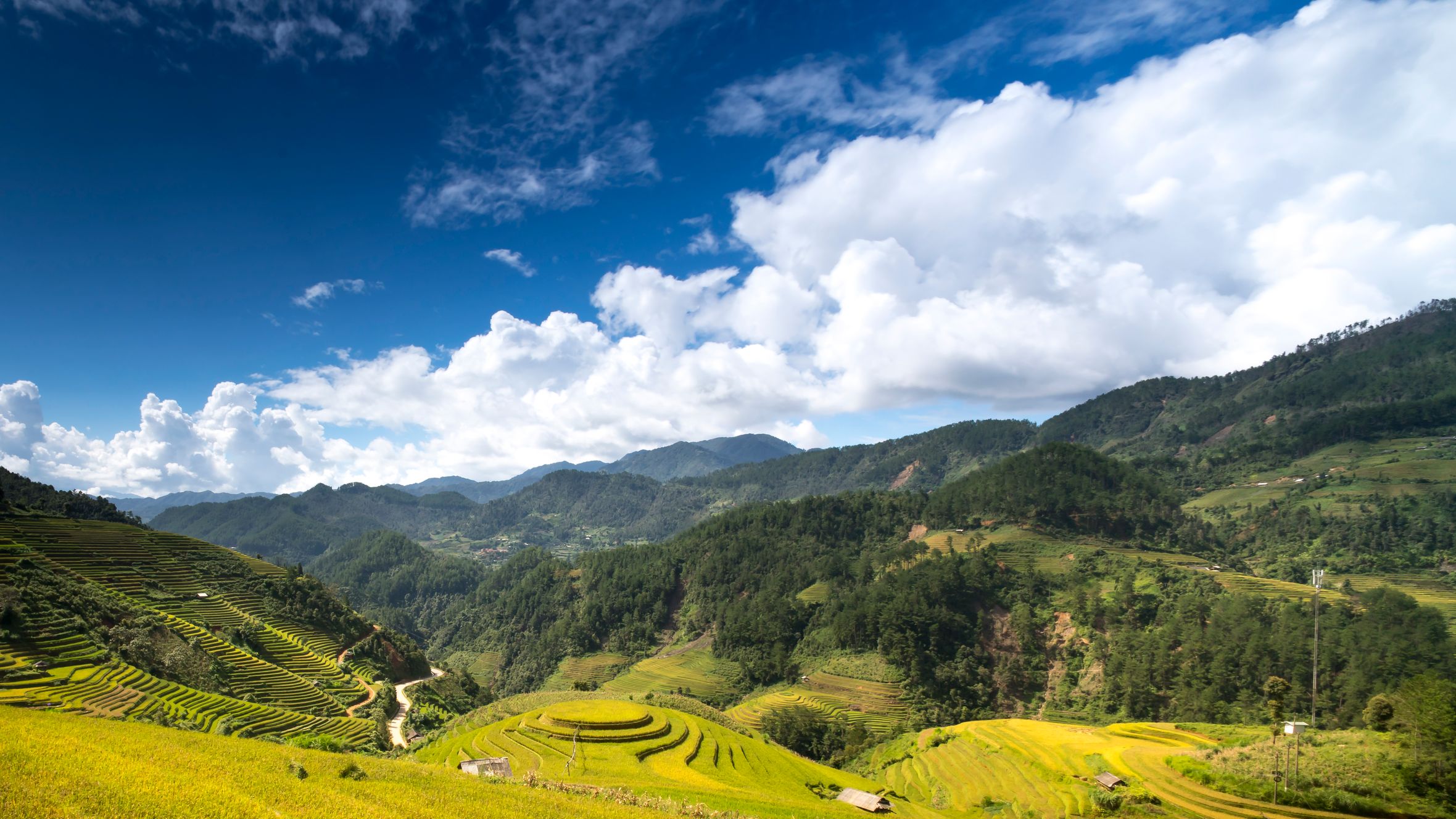
Tay Ninh is not on every traveler's radar, and that's partly why it's worth the drive from Saigon. The province sits 96 km northwest of the city, wedged between rubber plantations, provincial towns, and the Cambodian border. A day trip from Saigon works, but an overnight stay lets you breathe and catch the rhythm of a place that moves slower than the capital.
Cao Dai Holy See — The Main Event
The Cao Dai Holy See is the reason most people come. This massive temple complex dominates the town of Tay Ninh city and is the global headquarters of Caodaism, a 20th-century syncretic religion that blends Buddhism, Catholicism, Taoism, and Confucianism. The architecture is peculiar and colorful — turrets, dragons, pastel walls, and an ornate altar that feels more theme-park than monastery, but that's part of its charm.
Visit at 6 am for the morning prayer service (it's the most atmospheric). Foreigners are welcome to sit quietly in the gallery above the main hall and watch hundreds of devotees in white robes and colorful silk capes process through ceremonies. The chanting is hypnotic. Bring a sarong or long pants; dress codes are enforced. Admission is free but donations are expected (50,000 VND is standard). Photography inside the temple is permitted but be discreet during prayers.
Other Cao Dai temples scatter across the province — there are over 200 in Tay Ninh alone — but this is the only one tourists should prioritize. The others are working temples without the spectacle.
Nui Ba Den (Black Virgin Mountain)
Nui Ba Den rises 986 m out of flat land near the Cambodian border, about 30 km north of Tay Ninh city. On a clear day, the hike takes 2–3 hours to the summit. The path winds through scrubland and jungle, steep in sections, with stone steps that appear and disappear without logic. The view from the top is worth the sweat — rubber plantations stretching to the horizon, and Cambodia beyond.
The mountain has history: it was a stronghold during the American War, and you'll spot a few abandoned bunkers and war relics half-buried on the upper slopes. A small pagoda sits at the summit. Hire a local guide from the base (around 200,000 VND for a full day) — paths are poorly marked and it's easy to waste time. Start early, bring 2 liters of water, and wear proper shoes. Don't go in afternoon rain; the trail becomes treacherous.
Rubber Plantations and Agritourism
Tay Ninh is rubber country. The province has hundreds of square kilometers of rubber plantations, and a few have opened their gates to visitors. A rubber plantation tour is slow and oddly meditative — you walk between rows of tapped trees, watch workers collect latex, and learn how rubber blocks are made. It's not thrilling, but it gives you a tangible sense of how this region works and what pays for it.
Most plantation tours run half-day (9 am–12 pm or 2–5 pm) and include a coffee break and basic lunch. Expect to pay 400,000–600,000 VND per person. Arrange through your hotel or a Saigon (사이공 / 西贡 / サイゴン) tour operator. The bigger plantations are easier to access, but smaller family-run operations offer a more authentic experience if you speak Vietnamese or have a guide.

Photo by Haneul Trac on Pexels
War History and Underground Tunnels
Tay Ninh was a major staging ground during the American War. The province is laced with Cu Chi-style tunnel networks, though they're far less developed for tourism than the famous site near Saigon. If you're already interested in war history, a guided tunnel walk near Ben Cau (on the Cambodian border) is less crowded and cheaper than Cu Chi Tunnels. Expect basic conditions — narrow, hot, claustrophobic. Not for everyone.
A few war museums exist in town, but they're modest and sometimes closed without warning. Skip them unless you're a history buff; your time is better spent elsewhere.
Day-Trip Ideas from Tay Ninh
Nui Ba Den + Cao Dai Holy See combo: Drive to Nui Ba Den at dawn, hike 2–3 hours, return to base by early afternoon, visit the temple for evening prayers (around 6 pm). This works as a long day trip from Saigon, though you'll be exhausted.
Rubber plantation + local lunch: Half-day plantation tour in the morning, lunch at a roadside pho stall or com tam restaurant in Tay Ninh city, then back to Saigon. Easy and low-key.
Border village exploration: Drive to Ben Cau or Tan Chau, villages on the Cambodian border. They're rough, unremarkable, but offer a genuine frontier feel and avoid tourist zones. Bring your passport if you want to walk to the border crossing (photography strictly forbidden).
Where to Eat
Tay Ninh city has no standout restaurants. Stick to street food and family-run shops. Com tam (껌땀 / 碎米饭 / コムタム) (broken-rice) stalls are everywhere and cost 30,000–50,000 VND. Banh mi shops on Truong Chinh Street are solid. If you're staying overnight, ask your hotel for recommendations; locals know where the good food is, and it won't be in a guidebook.

Photo by Thái Trường Giang on Pexels
What to Skip
Tay Ninh city itself: It's a provincial town with little charm. The grid of streets, motorbikes, and dust are functional but not memorable.
Fake Cao Dai temples: Don't let guides take you to small temples claiming "authentic local worship." They're hunting commissions from visitors.
Anything labeled "eco-tourism": The phrase is often a veneer for mediocre activities with markup prices.
Getting There and Around
From Saigon, drive northwest on National Highway 22 (about 2 hours). Buses run from Ben Thanh Market or Mien Tay Bus Station, but they're slow and inconvenient (2.5–3 hours). Rent a motorbike or hire a driver through your hotel. If you drive yourself, gas and tolls will cost 200,000–300,000 VND round trip. Roads are decent but expect traffic near Saigon.
Within Tay Ninh, a motorbike is essential. Taxis are unreliable. If you don't ride, hire a driver for the day (negotiate around 600,000–800,000 VND).
Practical Notes
Tay Ninh is humid and rural. Bring sunscreen, a hat, and plenty of water. ATMs are available in the city center. English is rare outside hotels. The best time to visit is November–March (cooler and drier). A full day trip from Saigon is doable; an overnight stay is more relaxed and allows you to catch temple prayers at dawn.
Last updated · May 26, 2026 · independently researched, never sponsored.








