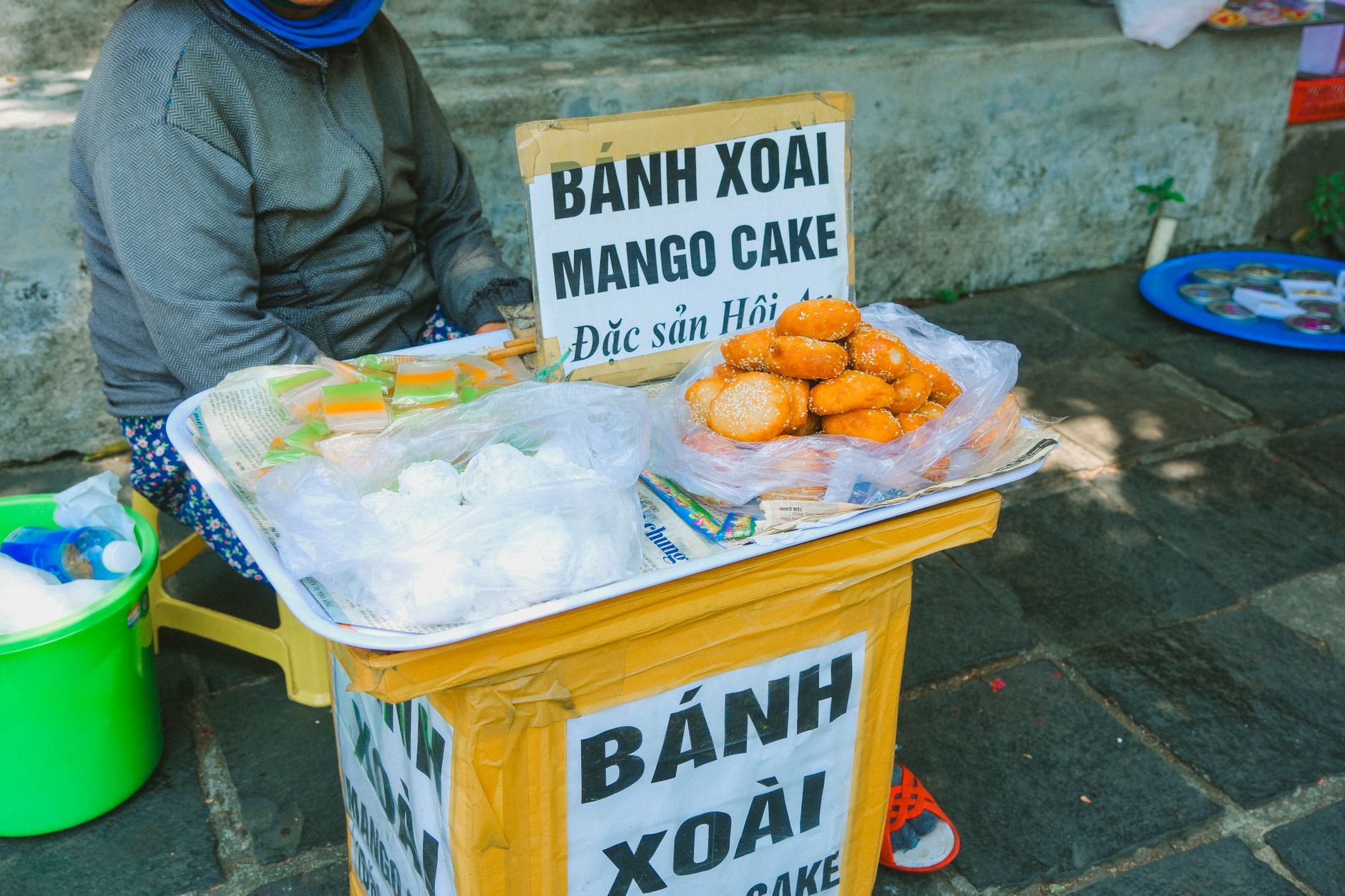
Tet is Vietnam (베트남 / 越南 / ベトナム)'s biggest holiday, and the food that surrounds it is just as deliberate as the preparations: every dish has a reason for being there, from the days of slow cooking before the new year to the cold leftovers eaten on the third day.
The Centerpiece: Banh Chung and Banh Tet
"Banh chung" is the dish most people think of first. It's a square parcel of glutinous rice packed with mung bean paste and fatty pork, wrapped tightly in dong leaves and boiled for eight to ten hours. The square shape is intentional — it represents the earth in ancient Vietnamese cosmology. In the north, this is the definitive Tet food. Families make them together in the days before the new year, sitting around a fire through the night to tend the pot. You can buy them at markets for around 40,000–80,000 VND each, but the ones a family makes themselves are almost always better.
In the central and southern regions, the equivalent is "banh tet (뗏 (베트남 설날) / 越南春节 / テト)" — same filling concept, but cylindrical and wrapped in banana leaves instead of dong leaves. The shape is purely regional tradition, not a meaningful distinction in flavor, though southerners will argue otherwise. Both cakes are sliced thick and eaten cold or pan-fried until the rice skin crisps up. Pan-fried is the right answer.
Gio: The Charcuterie of the Holiday Table
"Gio" is Vietnamese pork sausage, and it appears in several forms during Tet. Gio lua — steamed pork paste wrapped in banana leaves — is the classic, with a smooth, firm texture that slices cleanly next to a piece of banh chung. Gio bo (beef) and cha que (cinnamon pork roll) are common variations. A full Tet spread in the north will have at least two or three types arranged on a single platter. Gio is made weeks in advance and keeps well, which is part of the logic: Tet means the kitchen fires go cold for a few days, so everything on the table needs to hold.
Mut: The Candy Tray That Never Empties
"Mut" is the collective term for the candied and dried fruits set out for guests throughout the holiday. The mut tray — a lacquered box divided into compartments — is one of the clearest visual signals that Tet has arrived. Common contents include mut gung (candied ginger, sharp and sweet), mut dua (candied coconut strips), mut hat sen (lotus seed candy), and mut khoai lang (sweet potato candy). Each one is associated with a general wish: ginger for warmth, lotus seeds for fertility and success. In practice, guests eat whatever they like best and the tray gets refilled daily.

Photo by Nguyen Truong Khang on Pexels
Hat Dua and Snacks for the Long Visits
"Hat dua" — roasted watermelon seeds — are cracked open and eaten while people talk, play cards, and wait between meals. Pumpkin seeds and sunflower seeds appear too, but watermelon seeds are the Tet standard. There is a specific technique to cracking them with your teeth that takes practice; watching someone fumble with them is a reliable way to tell they didn't grow up with the holiday. Bags of hat dua sell for 30,000–60,000 VND and disappear fast.
The Feast Dishes
Beyond the preserved and packaged foods, a proper Tet meal includes several cooked dishes that vary by region.
In the North
The northern Tet table typically includes "bun thang" — a delicate rice vermicelli soup with shredded chicken, gio lua, and dried shrimp — though this is more of a post-Tet dish eaten once the holiday quiets down. More central to the feast are canh mang (bamboo shoot soup), thit dong (jellied pork), and ga luoc (boiled chicken), the whole bird presented with the head intact as a symbol of completeness.
In the Center
Hue-style Tet cooking leans toward more complex preparations. "Bun bo Hue" doesn't disappear from the table just because it's a holiday — if anything, it gets made more carefully. Nem chua (fermented pork rolls) are a central Vietnamese Tet staple: sour, garlicky, wrapped in banana leaf, and eaten with fresh chili. Markets in Hue sell them by the bundle in the days before the new year.
In the South
The southern Tet spread is generally more varied and more relaxed about strict tradition. Canh kho qua (bitter melon soup stuffed with pork) is a southern Tet fixture — the name "kho qua" means "hardship passing," which makes it deliberately optimistic table talk. Thit kho tau (braised pork and eggs in coconut water) is another southern Tet essential, slow-cooked until the eggs turn dark brown and the pork practically dissolves. It's eaten with banh tet for the first few days of the holiday.
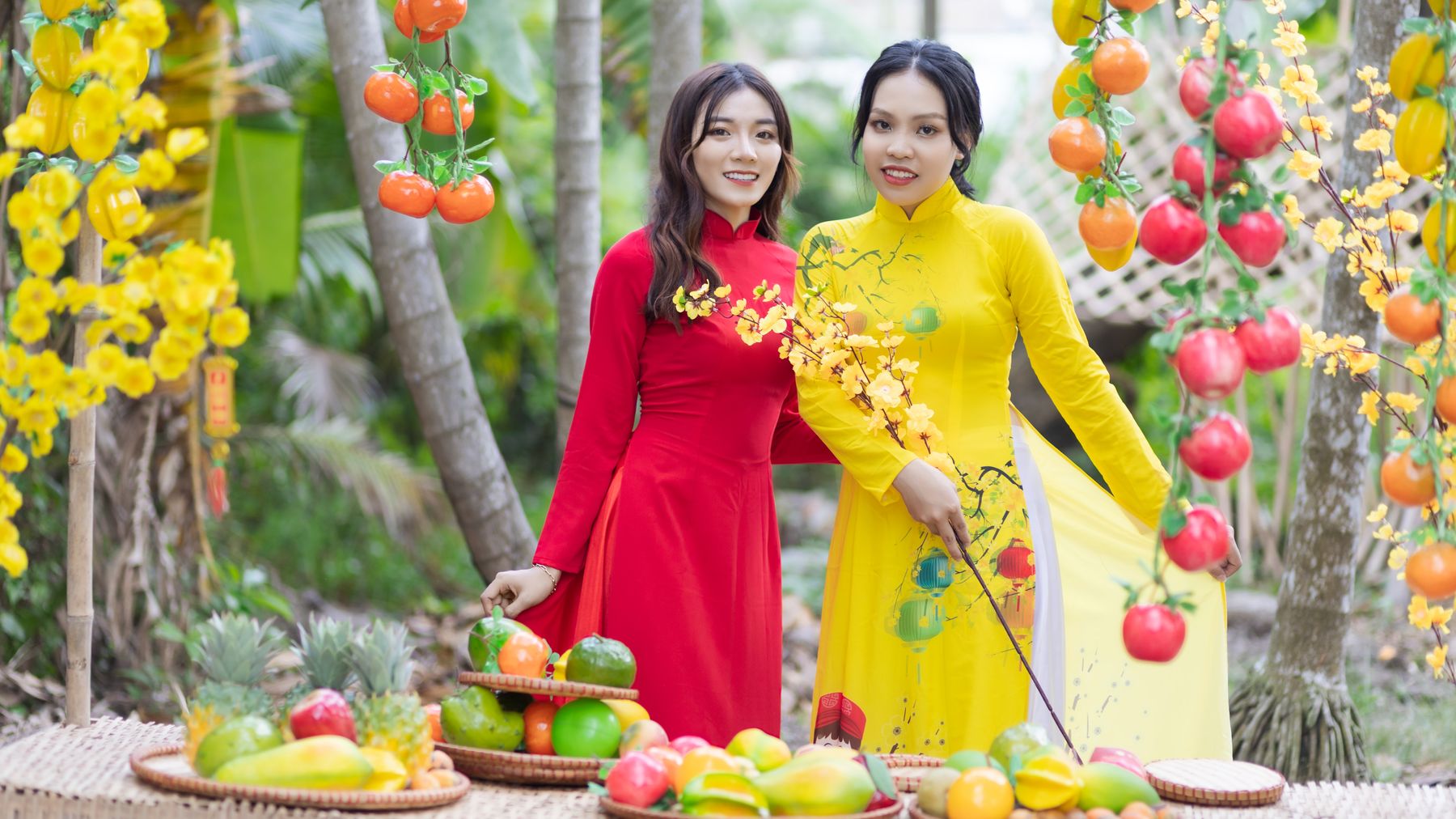
Photo by Hưng Hoàng on Pexels
What to Drink
Traditionally the answer is bia hoi for the men and lotus tea or tra atiso for everyone else, served in small cups and refilled constantly. Rau mu tro (mugwort tea) and various herbal teas are common in northern households. The holiday also licenses a certain amount of ruou can (rice wine drunk through communal straws) in the highlands, though in cities it's more likely to be whatever the family bought from the liquor shop.
Practical Notes
If you're in Vietnam during Tet, expect restaurants to close for three to five days — sometimes longer in smaller cities. Stock up on banh chung, mut, and snacks before the holiday starts. Supermarkets and wet markets sell Tet food boxes (hop qua Tet) pre-assembled for gifting, which are a practical and appreciated present if you're visiting a Vietnamese household during the holiday.
Last updated · May 29, 2026 · independently researched, never sponsored.