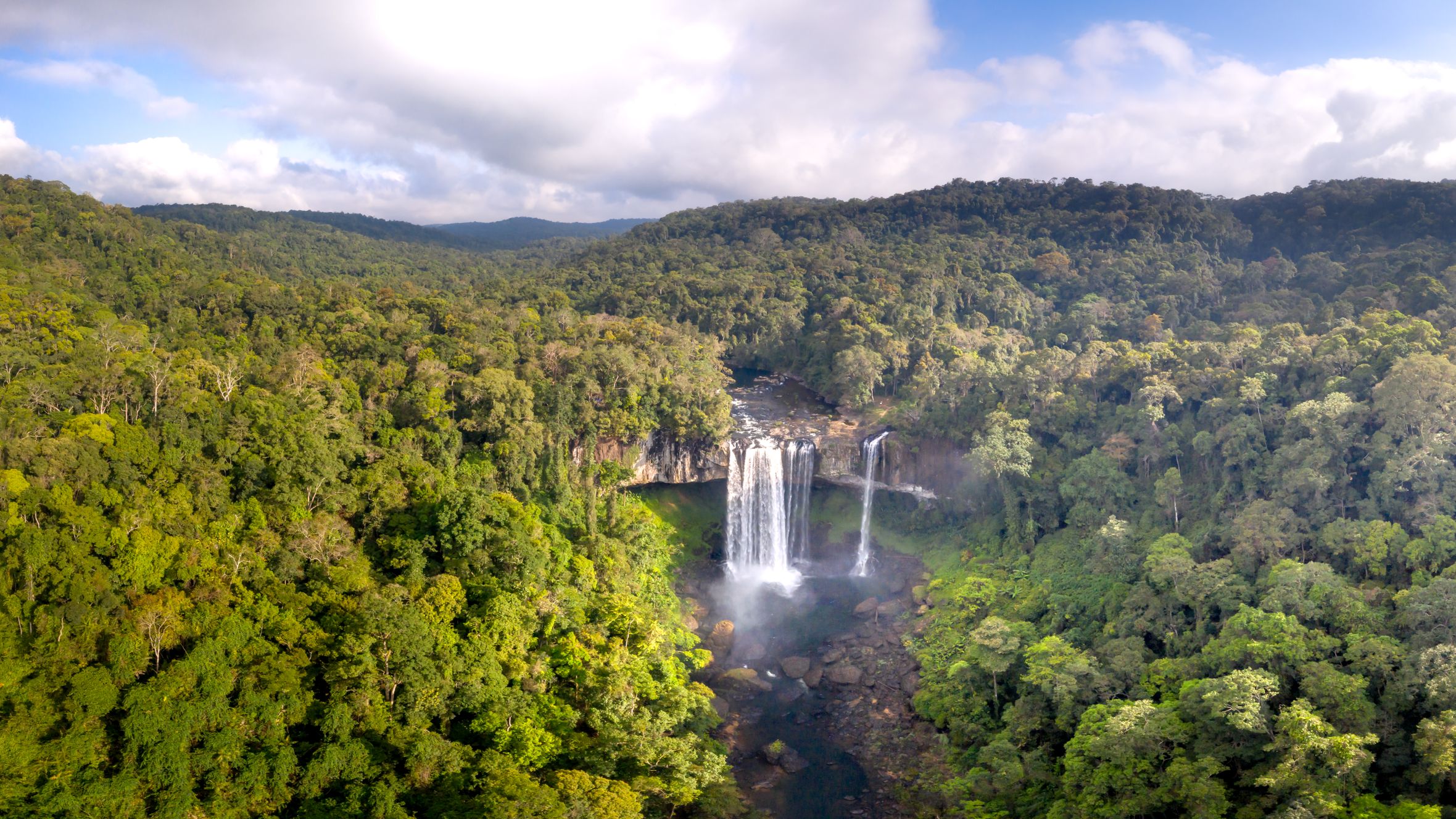
Thac Ba Tia sits in the forested hills that used to belong to Bac Giang province before the 2025 merger folded the area into greater Bac Ninh. The waterfall itself hasn't changed — three tiers of water dropping over mossy rock shelves into shallow pools, surrounded by dense secondary forest. It's the kind of place that rewards people willing to drive a bit past the usual day-trip radius from Hanoi.
What it is
Thac Ba Tia — roughly "Three-Ray Waterfall" — is named for the way the water splits into separate streams as it fans across a wide rock face. The falls sit at around 300 meters elevation in the hilly terrain of what was formerly Luc Nam district, Bac Giang. The surrounding area is home to Tay and Nung ethnic communities who've farmed these valleys for generations. There's no grand historical monument here, no ticket booth with a gift shop. It's a natural site, lightly managed, mostly visited by Vietnamese families on weekends and the occasional foreign traveler who heard about it from a homestay owner.
The cascade runs about 20 meters high across its main drop, with smaller upper tiers you can scramble up to if you're reasonably fit and don't mind wet rocks.
Why travelers go
Most people come for a half-day escape that feels genuinely rural without requiring an overnight trip. The forest canopy keeps the area noticeably cooler than the lowlands — a real draw from May through September when Hanoi (하노이 / 河内 / ハノイ) turns into a steam room. The pools at the base are shallow enough to wade in safely, and the rocks around the falls make decent spots to sit with a packed lunch.
It also pairs well with a broader northeast loop. If you're riding a motorbike toward Lang Son or looping back from the Dong Trieu area, Thac Ba Tia fits neatly into a route without a major detour.
Best time to visit
The waterfall runs strongest from June through September, during the rainy season. August and September tend to deliver the most dramatic flow. Outside of those months, the cascade thins out — by December or January, you might find just a trickle over the rocks, which is honestly disappointing if that's your main reason for coming.
Weekday mornings in the wet season are ideal. Weekends in summer draw local picnic crowds, and the trail to the falls can feel congested. If you visit on a Saturday, arrive before 8:00 AM.
Photo by Hoang Duy on Pexels
How to get there from Hanoi
Thac Ba Tia is roughly 100 km northeast of Hanoi. The most practical option is motorbike or private car.
By motorbike
Take QL1A north to Bac Ninh city, then continue northeast on DT295 and local roads toward the former Luc Nam district. Total ride time is about 2.5 hours depending on traffic getting out of Hanoi. The last 10-15 km is on narrow concrete village roads — passable on any motorbike but not great for large coaches. Fuel up in Bac Ninh city; there's nothing reliable close to the falls.
By car or taxi
A private Grab car from central Hanoi runs around 800,000-1,000,000 VND one way. You can also arrange a return trip with a driver through your hotel. Agree on the price beforehand — most drivers will want 1,800,000-2,200,000 VND for a full day including wait time.
By bus (partial)
Buses run from Hanoi's Gia Lam station to Bac Giang city (now part of merged Bac Ninh) for about 60,000-80,000 VND, taking roughly 1.5 hours. From there, you'll need to arrange a "xe om" (motorbike taxi) or local taxi for the remaining 30-odd km to the falls. Budget around 150,000-200,000 VND for that last stretch.
What to do
Walk the trail to the main falls
The path from the parking area to the base of the cascade takes about 20-25 minutes on a dirt trail through forest. It's not technical, but it gets slippery after rain. Bring shoes with grip — flip-flops are a recipe for a bruised tailbone.
Wade in the lower pools
The pools below the main drop are knee- to waist-deep in peak season. The water is cool and clean enough that locals swim in it regularly. There's no lifeguard, no roped-off area — use common sense about current strength after heavy rain.
Scramble to the upper tiers
A rough trail on the left side of the falls leads up to the second and third tiers. It involves some rock scrambling and is steeper than it looks from below. Worth it for the view back down the valley, but skip it if the rocks are soaked.
Visit a nearby village
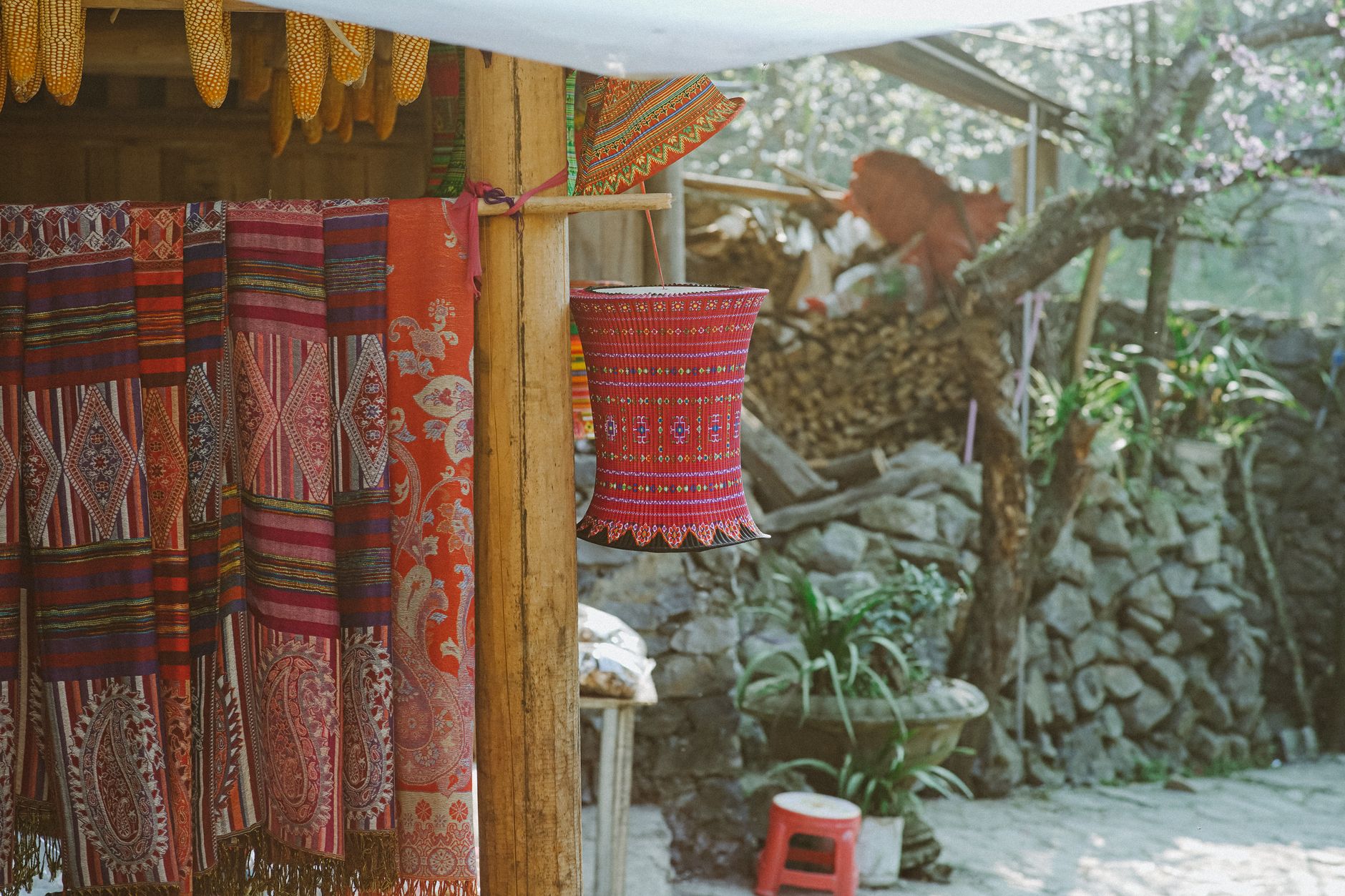
The Tay communities in the surrounding valleys are welcoming if you approach respectfully. Some families sell local honey, dried bamboo shoots, and rice wine. Don't barge in with a camera — say hello, buy something small, ask before photographing.
Combine with Bac Ninh's cultural sites
If you're driving back through Bac Ninh city, it's worth stopping at a "quan ho" folk singing performance if one is scheduled — Bac Ninh is the heartland of this UNESCO-recognized tradition. The Lim Festival in early spring is the biggest showcase, but smaller performances happen year-round at community houses.
Where to eat nearby
Options near the falls are limited. A couple of small food stalls near the trailhead sell instant noodles, boiled corn, and drinks. For a real meal, eat in the nearest town before or after.
Look for "banh cuon" — the thin steamed rice rolls that the greater Bac Ninh area does exceptionally well. The version here uses a pork and wood-ear mushroom filling, served with fried shallots and dipping fish sauce. A plate runs 25,000-35,000 VND at a local market stall. If you pass through Bac Ninh city, seek out a bowl of "pho" at one of the morning-only shops along Ngo Gia Tu street — these tend to close by 9:30 AM.

Photo by Lucas Tran on Pexels
Where to stay
There's no accommodation at the waterfall itself. Your options:
- Homestays in nearby villages: Basic but clean rooms, usually 200,000-350,000 VND per night. Expect a mattress on the floor, mosquito net, shared bathroom. Meals can sometimes be arranged with the family for an extra 80,000-120,000 VND.
- Hotels in Bac Ninh city: The provincial capital has plenty of mini-hotels in the 300,000-600,000 VND range. Nothing fancy, but air-conditioning and hot water are standard. Bac Ninh is about 60-70 km from the falls, so this works best as a base for a two-day trip.
- Day trip from Hanoi: Most visitors do this. Leave early, spend the morning at the falls, eat lunch on the drive back.
Practical tips locals would tell you
- Bring your own water and snacks. The stalls at the trailhead sometimes close on weekdays or run out of stock.
- Pack a plastic bag for your phone and wallet — the trail spray zone near the base gets everything wet in high season.
- Mosquito repellent is non-negotiable from June through October.
- If you're on a motorbike, check your tire pressure before the last stretch of village road. Potholes appear without warning.
- There's no mobile signal at the falls themselves. Download offline maps before you leave Bac Ninh city.
Mistakes to avoid
- Coming in dry season and expecting a waterfall. December through March, you'll mostly find damp rocks. Time your visit for the rains.
- Wearing sandals on the trail. The clay soil turns to ice when wet. Proper shoes save you a fall.
- Skipping the upper tiers. If conditions are safe, the second tier is where the best swimming spots are — most day-trippers stop at the base and miss it.
- Not bringing cash. There are no ATMs near the falls and the village stalls don't take cards. Withdraw what you need in Bac Ninh city.
- Littering. This should go without saying, but the site has no regular cleanup crew. Whatever you bring in, carry it out.
Last updated · May 26, 2026 · independently researched, never sponsored.