
What it is
Thac Bac — literally "Silver Waterfall" — is a 100-meter cascade fed by mountain streams off the Hoang Lien Son range, about 12 km northwest of Sapa town center along the road toward O Quy Ho Pass. The water drops in stages over dark granite, and during the wet season it earns its name: a wide silver sheet visible from the road before you even reach the entrance gate.
The site has been a recognized scenic spot since the French colonial period, when Sapa (사파 / 沙坝 / サパ) served as a hill station. It was formally developed for tourism in the 1990s with stairs, viewing platforms, and a ticket booth. Today it sits within Hoang Lien National Park and draws a steady mix of domestic visitors and foreign travelers making the drive toward Tram Ton Pass.
Why travelers go
Thac Bac works as a half-day stop rather than a full destination. The main reasons people pull over:
- The waterfall itself. During peak flow (July–September), it's genuinely impressive — loud, misty, and wide enough to fill your field of vision from the viewing platform roughly 50 meters away.
- The O Quy Ho drive. Most people visit Thac Bac as part of the scenic route over O Quy Ho (Tram Ton) Pass, one of the longest mountain passes in northern Vietnam (베트남 / 越南 / ベトナム). The waterfall is a natural rest stop.
- Cooler air. At roughly 1,800 meters elevation, temperatures here run 5–8°C below Sapa town. In summer that's a relief; in winter, bring a jacket.
- Quick visit. You can see the falls, climb the stairs, take photos, and leave in 30–45 minutes. It doesn't require a guide or serious fitness.
Best time to visit
The waterfall peaks from June through September, when monsoon rains feed the streams. August is the most dramatic month — heavy flow, thick mist rolling through the valley. The downside: rain gear is non-negotiable, the metal stairs get slippery, and clouds sometimes obscure the view entirely.
October–November offers a good compromise. Flow is still decent, skies clear more often, and the road is less foggy for the drive.
December–February is the dry season. The waterfall thins to a trickle some years, and honestly, it's not worth a special trip in January unless you're already driving over the pass. Temperatures can drop below 5°C — occasionally below zero — and frost or light snow on the pass road is possible.
How to get there
Thac Bac is on Highway 4D (the O Quy Ho road), 12 km from Sapa town center heading toward Lai Chau.
By motorbike
The most common option for independent travelers. Rent a semi-automatic bike in Sapa for 120,000–180,000 VND/day. The road is paved and in reasonable condition, though watch for loose gravel on bends and fog reducing visibility in the mornings. The ride takes about 25 minutes one way.
By car or van
Hire a private car with driver through your hotel — expect 600,000–900,000 VND for a half-day loop that includes Thac Bac, O Quy Ho Pass summit, and possibly Thac Tinh Yeu (Love Waterfall) on the way back. This is the easier option if you're not confident on mountain roads.
By tour
Many Sapa day tours bundle Thac Bac with Cat Cat Village or Ham Rong Mountain. Group tours run 250,000–400,000 VND per person but spend limited time at each stop — often just 20 minutes at the waterfall.
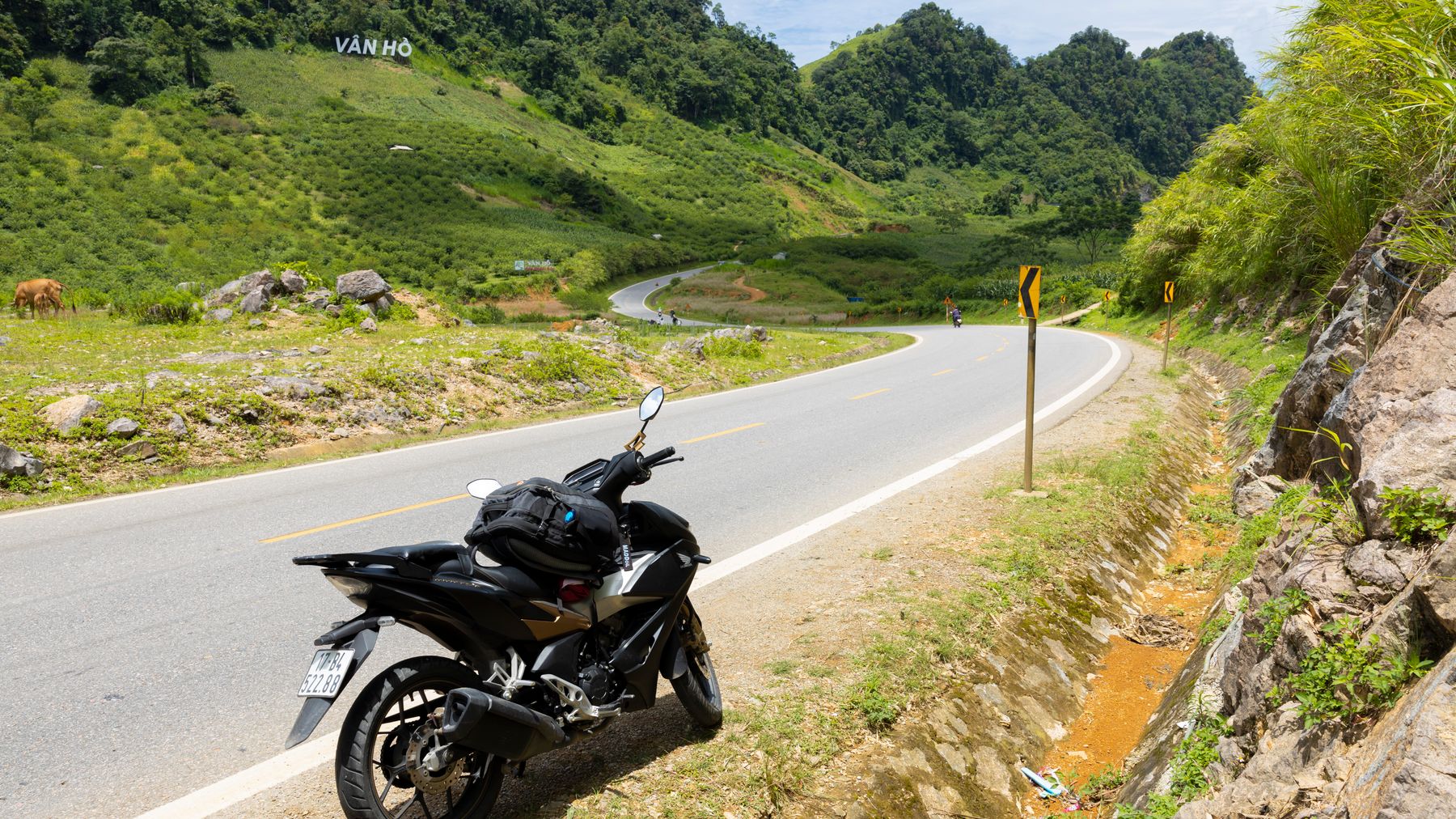
Photo by HONG SON on Pexels
What to do
The site is straightforward. Pay the entrance fee (currently 20,000 VND), walk through a gauntlet of souvenir stalls, and follow a concrete-and-metal staircase up toward the base of the falls. There are several viewing platforms at different heights.
At the waterfall
- Lower platform: Best for photos of the full cascade. Less spray here.
- Upper stairs: Climb higher for a closer view and more mist. During heavy flow, you'll get soaked — waterproof your phone.
- The surrounding forest: Short informal trails branch off into the tree line. Nothing marked, but the mossy forest at this altitude is dense and quiet if you want five minutes away from the crowd.
Combine with O Quy Ho Pass
Don't just turn around after the waterfall. Continue another 3 km up Highway 4D to the Tram Ton Pass summit (2,047 m) — the highest road pass in Vietnam. The views over the Lai Chau valley are worth the extra ride. On clear days you can see Fansipan's summit from here.
Where to eat
There's no real restaurant at Thac Bac — just vendors selling grilled corn, sweet potatoes, and instant noodles at the parking area. Fine for a snack, not a meal.
Eat before or after in Sapa town instead. The area around the church and Cau May Street has plenty of options. For something local, look for "thang co" (a Hmong-style organ stew — earthy, not for everyone) or a bowl of "pho" at one of the market-edge shops. Sapa also has decent "banh mi" stalls near the lake if you want something quick before heading out.
If you're doing the full O Quy Ho loop, there are a few roadside "com binh dan" (rice-and-dish) places on the Lai Chau side of the pass, roughly 20 km past the summit.
Where to stay
Nobody stays at Thac Bac — it's a day trip from Sapa. Your accommodation options are all in town:
- Budget: Hostels and homestays near the market run 150,000–300,000 VND/night. Basic but functional.
- Mid-range: Hotels along Muong Hoa Street with valley views go for 500,000–1,200,000 VND. Worth it for the balcony.
- Splurge: A few resort-style hotels sit on the ridge above town with heated pools and proper restaurants, 2,000,000 VND and up.
Sapa has no shortage of beds. Booking ahead matters only during Tet, summer weekends (June–August), and the rare snow event in winter when half of Hanoi drives up overnight.

Photo by Ahmet Yüksek ✪ on Pexels
Practical tips
- Footwear matters. The stairs are metal grating and wet stone. Sandals are a bad idea. Wear shoes with grip.
- Arrive early. Tour buses from Sapa start arriving around 10:00. If you leave town by 08:00, you'll have the place mostly to yourself.
- Rain gear. A lightweight poncho costs 15,000 VND from any Sapa shop. Bring one even if the sky looks clear — mountain weather shifts fast.
- Cash only. The ticket booth and all vendors at Thac Bac are cash. No cards, no mobile payment.
- Fuel up in town. There's no petrol station between Sapa and the Lai Chau side of the pass. Fill your tank before you leave.
Common mistakes
Visiting in January expecting a big waterfall. Dry season means a dry waterfall. Check recent photos online or ask your hotel before making the trip.
Spending too long here. Thac Bac is a 30–45 minute stop, not a half-day destination. Budget your time for the pass drive and maybe Thac Tinh Yeu (a longer walk, more secluded) rather than lingering at the souvenir stalls.
Skipping the pass. Turning around at the waterfall and driving back to Sapa means you miss the best part of the road. The 3 km from Thac Bac to the summit is the most scenic stretch.
Final note
Thac Bac is not a destination that will define your Sapa trip — the trekking through rice terraces and Hmong villages does that. But as a stop on the O Quy Ho road, it's a clean 30-minute break with a genuinely big waterfall when the season cooperates. Time it right, arrive before the buses, and keep driving to the top of the pass.
Last updated · May 8, 2026 · independently researched, never sponsored.





