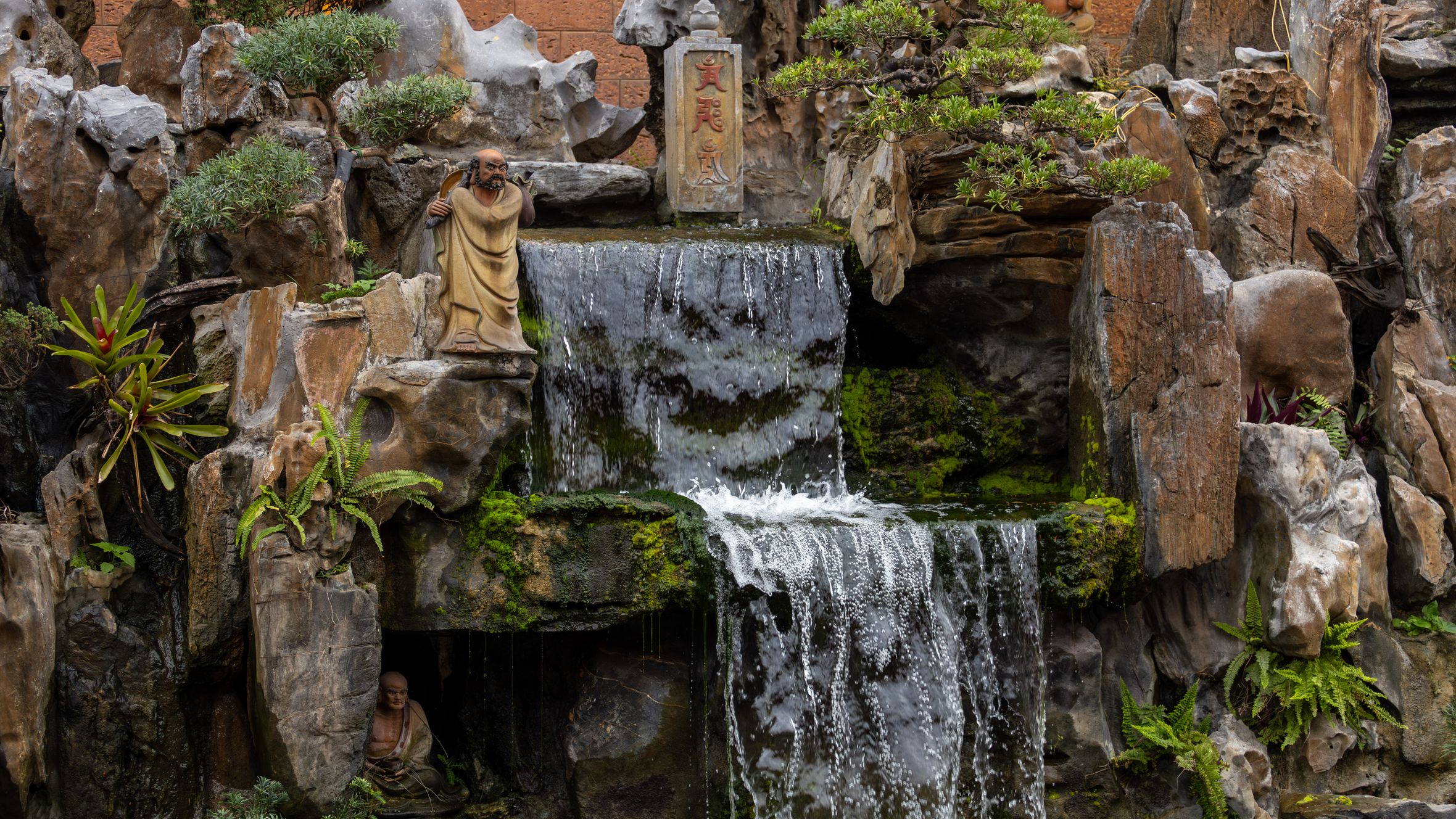
Datanla Waterfall sits about 5 km south of central Da Lat, tucked into the pine-covered hills that make this part of Lam Dong province feel nothing like the rest of southern Vietnam (베트남 / 越南 / ベトナム). It's one of the most visited waterfalls in the area — not because it's the biggest or the wildest, but because it's easy to reach and packs a surprising amount of activity into a relatively small site.
What it is
Thac Datanla (Datanla Waterfall) is a multi-tiered cascade dropping through dense forest in the highlands southwest of Da Lat (달랏 / 大叻 / ダラット). The name comes from the K'Ho ethnic minority language — local lore translates it loosely as "water under the leaves," which is about right. The falls themselves aren't enormous, but the surrounding forest is thick and cool, and the site has been developed with a mix of adventure activities and walking paths that wind down through several levels of the waterfall system.
The site has been a local attraction since at least the French colonial period, when Da Lat was built up as a hill station retreat. These days it draws a steady mix of domestic tourists and backpackers, especially on weekends.
Why travelers go
Datanla works because it's close, cheap, and offers more than just standing at a railing looking at water. The alpine roller coaster — a single-rail toboggan that winds downhill through the trees to the falls — is genuinely fun, not just a tourist gimmick. There's also canyoning, which is the real draw for anyone who wants to get wet and doesn't mind rappelling down rock faces. And if you just want a walk in cool forest air after a few days eating your way through Da Lat's night market, the paths here do the job.
The temperature helps too. Da Lat sits at around 1,500 meters elevation, so even in the hot season you're looking at 20-25°C during the day. Standing next to a waterfall in that climate is genuinely pleasant, not the sweat-soaked slog you'd get at lowland falls.
Best time to visit
The dry season — roughly November through March — is the most comfortable for visiting. Skies are clearer, trails are less slippery, and the canyoning operators run more reliably. That said, the waterfall is actually more impressive during and just after the rainy season (May to October), when the volume of water picks up significantly. If you visit in July or August, expect afternoon downpours but a much more dramatic cascade.
Avoid major Vietnamese holidays if you can, particularly Tet (late January or February) and the April 30 / May 1 long weekend. The site gets packed with domestic visitors, queues for the roller coaster stretch long, and the atmosphere shifts from forest retreat to theme park.
How to get there from Da Lat
Datanla is on the Prenn Pass road (Highway 20), about 5 km from Da Lat city center heading toward Phan Rang. You have a few options:
- Motorbike: The most common choice. Rental bikes in Da Lat run 120,000-150,000 VND/day for a semi-auto. The ride takes 15 minutes, mostly downhill on the way there. The road is well-paved but watch for trucks on Highway 20.
- Grab/taxi: A Grab bike costs around 25,000-35,000 VND one way; a Grab car about 60,000-80,000 VND. Easy and quick.
- Tour: Many Da Lat day tours bundle Datanla with other stops like the Crazy House or Linh Phuoc Pagoda. These run 200,000-400,000 VND per person depending on group size and inclusions. Fine if you want convenience, but you'll have limited time at each stop.
Entrance to the waterfall site costs 50,000 VND for adults (as of early 2025). The roller coaster ride is an additional 80,000 VND.

Photo by Dongdilac on Pexels
What to do
Ride the alpine coaster
The single-rail toboggan runs about 1 km downhill through the pine forest to the first level of the falls. You control your own speed with a hand brake. It's not white-knuckle extreme, but it's a lot more entertaining than walking down stairs, and kids love it. The ride back up is by a separate lift system included in the ticket.
Go canyoning
This is the highlight for adventure-minded visitors. Several operators in Da Lat run half-day canyoning trips at Datanla that include rappelling down the waterfall faces, cliff jumping into pools, scrambling over wet rock, and zip-lining. Expect to pay around 700,000-1,200,000 VND per person depending on the operator and group size. Phat Tire Ventures and Groovy Gecko are two long-running outfits with decent safety records. Book a day ahead in high season.
Walk the lower levels
Most casual visitors only see the first tier. If you keep going past the main viewing platform, trails and stairs lead to lower levels of the cascade that are quieter and more forested. The full walk down and back takes about 45 minutes. Wear shoes with grip — the steps get slick.
Swim (when conditions allow)
At the lower pools, swimming is sometimes possible depending on water levels and current site rules. Don't count on it, but if the water is calm and staff aren't waving you off, the pools are refreshing.
Just sit in the forest
Seriously. Da Lat's pine forests have a specific quality — cool, quiet, smelling like resin and damp earth. Bring a coffee from town and find a bench off the main path.
Where to eat nearby
Datanla itself has basic food stalls selling snacks, instant noodles, and grilled corn. Nothing worth planning around. Head back into Da Lat for real food.
Da Lat's signature street food is "banh trang nuong" — rice paper grilled over charcoal with egg, scallion, dried shrimp, and chili sauce. You'll find it at night market stalls for 15,000-25,000 VND. The city is also a good place to try "banh mi" — the Da Lat version often features local pate and pickled vegetables that taste different from the Saigon or Hoi An versions. And Da Lat has some of the best Vietnamese coffee in the country, which makes sense since the surrounding highlands grow most of Vietnam's arabica. Look for small roasters in the streets around the central market rather than the big tourist cafes.
Where to stay
You'll be staying in Da Lat proper — there's nothing at Datanla itself.
- Budget: Hostels and basic guesthouses around the market area run 150,000-300,000 VND/night. Plenty of options on Phan Dinh Phung and Hai Thuong streets.
- Mid-range: Boutique hotels and modern homestays in the 500,000-1,200,000 VND range are Da Lat's sweet spot. Many have valley views and fireplaces (yes, you might actually use them from November to February).
- Upper: A handful of resorts outside the city center charge 2,000,000-4,000,000 VND/night with proper grounds and French-colonial atmosphere.

Photo by Quang Nguyen Vinh on Pexels
Practical tips
- Wear closed-toe shoes, not sandals. The paths are steep and wet.
- Bring a light rain jacket even in dry season — mist from the falls and sudden mountain showers are both common.
- If you're doing canyoning, leave your phone in a dry bag or with the operator. Waterproof cases from the night market are usually garbage.
- Go early (before 9 AM) on weekends to avoid the worst crowds at the roller coaster.
Common mistakes
- Only seeing tier one. Most visitors ride the coaster down, snap photos at the first platform, and leave. The lower tiers are better and quieter.
- Wearing flip-flops. Every visit, someone slips on the stairs. The site is damp year-round.
- Skipping canyoning because it sounds touristy. It's actually the best thing to do here. Datanla's layout is almost purpose-built for it, and the half-day trips are well-run.
- Visiting on a holiday weekend. The site capacity hasn't kept up with domestic tourism growth. A Tuesday in November and a Saturday during Tet / 越南春节 / テト) are two completely different experiences.
Practical notes
Datanla works best as a half-day trip from Da Lat — morning if you want fewer people, afternoon if you're combining it with lunch in town first. It pairs well with a broader Da Lat itinerary that might include the city's cafes, the night market, and longer day trips to places like Lang Biang peak or the less-visited Elephant Falls further out. Budget 2-3 hours for a casual visit, or a full half-day if you're canyoning.
Last updated · May 29, 2026 · independently researched, never sponsored.








