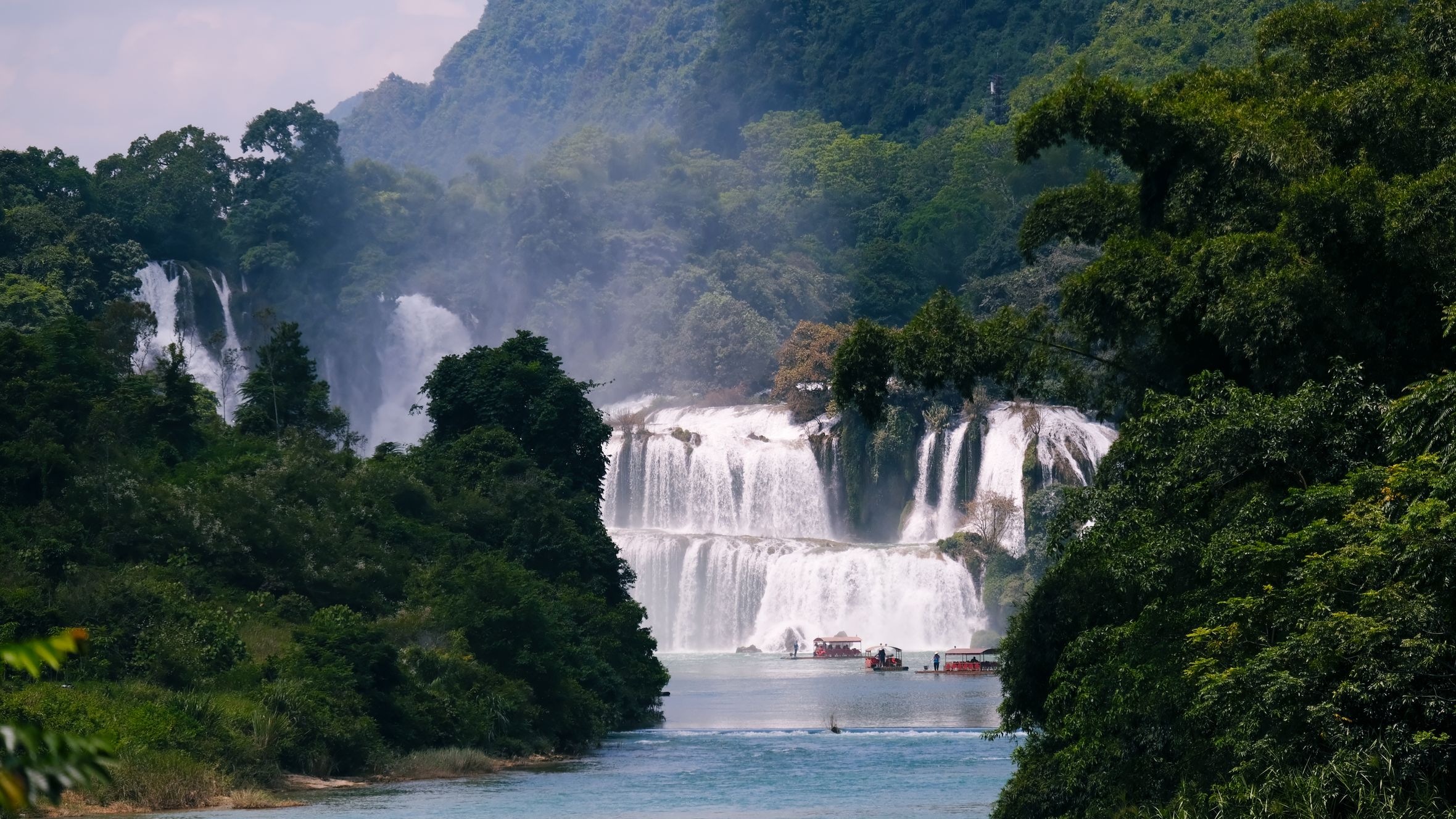
Thac Nam Luc is the kind of waterfall that rewards the effort of getting there. Tucked into the mountains of Lai Chau province in Vietnam (베트남 / 越南 / ベトナム)'s far northwest, it doesn't appear on most tourist itineraries — which is exactly why it's worth the trip.
What it is
Thac Nam Luc is a multi-tiered waterfall fed by mountain streams that cut through the dense forest canopy west of the town of Tan Uyen in Lai Chau province. The main cascade drops roughly 50 meters across several rock shelves before pooling at the base. The surrounding area is home to Thai, Hmong, and Dao communities who have lived in these valleys for generations. The falls sit within a broader landscape of terraced rice fields and bamboo forest — the sort of scenery that defines the northwest but without the tour bus crowds you'll find at better-known spots like Sapa.
Lai Chau province itself was reorganized administratively in 2004 when the old Lai Chau province was split. The capital moved from the former Lai Chau town (now Muong Lay) to the current Lai Chau city. For travelers, this mostly matters because GPS and older guides sometimes confuse the two locations. You want the current Lai Chau city as your staging point.
Why travelers go
People come here for the quiet. Thac Nam Luc doesn't have ticket booths, souvenir stands, or selfie platforms. It's a raw natural site where you can swim in the pools at the base, eat lunch on the rocks, and hear nothing but water and birds. The trek in passes through forest and local farmland, which is half the experience. If you've already done Ha Giang on a motorbike loop and want that same feeling of remote discovery without the increasingly busy roads, the Lai Chau backcountry delivers.
Best time to visit
The sweet spot is September through November, just after the wet season peaks. Water volume is high enough to make the falls dramatic, but the trails are drying out and passable. The rice terraces in the surrounding valleys turn gold in late September and October, which adds a lot to the ride in.
Avoid June through August if you can. The trails get slippery and sometimes impassable after heavy rain, and flash flooding in mountain streams is a real risk. December through February is dry season — the falls thin out considerably and some of the upper tiers barely trickle. March to May is fine but hot, and the landscape looks parched before the rains green everything up.
How to get there
From Hanoi, the most practical route is an overnight bus to Lai Chau city. Several operators run sleeper buses from My Dinh bus station, departing around 8-9 PM and arriving around 5-6 AM. Tickets run 350,000-450,000 VND one way. The ride is roughly 450 km and takes 9-10 hours depending on road conditions.
From Lai Chau city, Thac Nam Luc is about 30 km east toward Tan Uyen district. You have two options:
- Rent a motorbike in Lai Chau city (150,000-200,000 VND/day for a Honda Wave or similar semi-auto). The road to Tan Uyen is paved and in decent shape. From the main road, you'll turn off onto a smaller track for the last 5-7 km to the falls. This section is dirt and gravel — manageable on a semi-auto in dry weather, but you'll want some off-road comfort.
- Hire a local driver/guide through your guesthouse. Expect 400,000-600,000 VND for a half-day round trip. Worth it if you're not confident on mountain roads or want someone who knows the exact turnoff (it's not well-signed).
If you're coming from Sapa (사파 / 沙坝 / サパ), you can take the route via Lai Chau city — about 170 km, roughly 4-5 hours by motorbike through mountain passes. It's a genuinely good ride.

Photo by HONG SON on Pexels
What to do
Hike to the base pool
The walk from where you park to the main falls takes about 30-40 minutes through forest. The path is informal — follow the stream and look for foot-worn trails. Wear shoes with grip, not sandals. The base pool is deep enough to swim in during and just after wet season. The water is cold, even in summer.
Climb to the upper tiers
If you're reasonably fit and the rocks aren't wet, you can scramble up alongside the falls to reach the second and third tiers. Each has its own smaller pool. The views back down the valley from the upper levels are the real payoff. Take your time — the rocks are mossy.
Visit a Thai village on the way
Several Thai communities sit along the road between Lai Chau city and the falls. If you stop and are respectful, locals are generally welcoming. You might see women weaving on traditional looms under their stilt houses. Don't photograph people without asking — a smile and a gesture go a long way.
Ride the Tan Uyen loop
If you have a full day on a motorbike, combine the waterfall with a loop through Tan Uyen district. The roads pass through tea plantations and terraced valleys with very little traffic. Pack lunch — there aren't many stops.
Sit and do nothing
Seriously. Bring a book, a couple of "banh mi" from town, and spend a few hours at the base of the falls. The northwest moves at a different speed and Thac Nam Luc is a good place to match it.
Where to eat nearby
There are no restaurants at the falls. Eat in Lai Chau city or Tan Uyen town before or after.
In Lai Chau city, look for "pho" shops along the main street near the market — a bowl runs 30,000-40,000 VND. The local version tends toward a clearer, lighter broth than what you'll find in Hanoi. Also seek out "com lam" — sticky rice cooked inside bamboo tubes over charcoal, a staple among Thai communities in the northwest. Street vendors sell it for 10,000-15,000 VND per tube, often paired with grilled pork or dried buffalo meat.
If you pass through Tan Uyen, the small market has simple rice-and-meat plates for 35,000-50,000 VND.
Where to stay
Lai Chau city has a handful of guesthouses and mini-hotels. Budget rooms with fan and hot water go for 200,000-300,000 VND/night. Air-conditioned rooms with better mattresses are 350,000-500,000 VND. Don't expect anything fancy — this is a provincial capital, not a tourist hub. The rooms are clean and functional.
There's no accommodation at the falls themselves. A few homestays operate in Thai villages along the road to Tan Uyen — ask around in Lai Chau city or check with your guesthouse host. Homestay rates are typically 150,000-250,000 VND including dinner and breakfast.
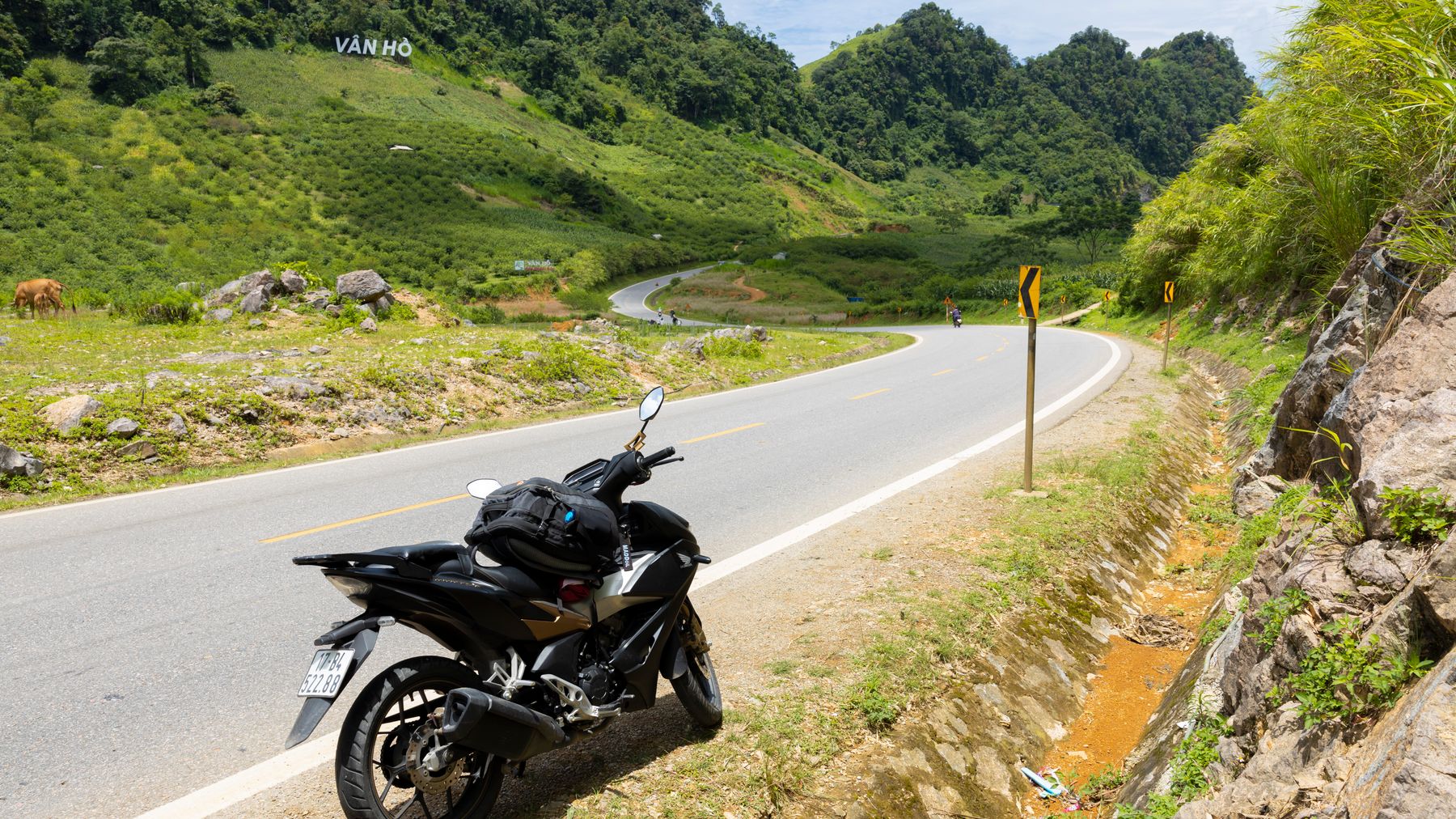
Photo by HONG SON on Pexels
Practical tips locals would tell you
- Bring cash. There are ATMs in Lai Chau city but nothing once you leave town. Tan Uyen has one ATM that sometimes works.
- Pack a dry bag or plastic bags for your phone and camera. Even in dry season, mist from the falls soaks everything at the base.
- Carry at least 2 liters of water per person. The hike isn't long but it's humid and there's nowhere to buy drinks.
- If you're riding a motorbike, fill your tank in Lai Chau city. Fuel stops thin out quickly.
- Mobile signal (Viettel works best up here) is patchy near the falls. Download offline maps before you leave town.
Common mistakes to avoid
- Going in flip-flops. The trail and rocks around the falls are slippery. Proper shoes prevent a bad day.
- Not asking for directions. The turnoff from the main road isn't obvious. Ask at your guesthouse or stop at a roadside shop near Tan Uyen and ask — "Thac Nam Luc o dau?" will get you pointed the right way.
- Treating it as a half-day trip from Sapa. It's too far for a comfortable day return from Sapa. Base yourself in Lai Chau city for at least one night.
- Leaving trash. This should be obvious but pack out everything you bring in. There are no bins at the falls.
Practical notes
Thac Nam Luc works best as part of a broader northwest loop — combine it with a few days in Sapa, the road through Lai Chau, and possibly onward to Ha Giang if you have the time. Budget two nights in Lai Chau to see the falls without rushing. The journey is as good as the destination up here.
Last updated · May 29, 2026 · independently researched, never sponsored.




