The white statue of "Quan Am" — the Bodhisattva of Compassion — rising from Son Tra Peninsula is visible from almost anywhere along Da Nang's coastline. At 67 meters tall, it's the tallest Buddha statue in Vietnam, and it sits inside Linh Ung Pagoda, a functioning Buddhist temple complex that draws both pilgrims and travelers year-round.
What it is and how it got here
Linh Ung Pagoda on Son Tra Peninsula is the youngest of three Linh Ung temples in the Da Nang (다낭 / 岘港 / ダナン) area (the other two are on Ba Na Hills and on Ngu Hanh Son, the Marble Mountains). Construction started in 2004 and the main statue was completed in 2010. The Quan Am figure faces the East Sea, which locals say is meant to protect fishermen and the city from storms. Inside the statue's base are 17 floors, each containing a smaller Buddha figure.
The pagoda grounds spread across a hillside at about 100 meters above sea level. Beyond the statue itself, there's an ornate main hall, a large courtyard with 18 "La Han" (Arhat) statues, a bell tower, and well-maintained bonsai gardens. It's an active place of worship — you'll see monks, incense, and locals praying, not just tourists taking photos.
Why travelers go
Three reasons, mostly. First, the statue and temple complex are genuinely impressive in scale — this isn't some minor roadside shrine. Second, the location on Son Tra Peninsula means panoramic views of Da Nang, My Khe Beach, and the Hai Van Pass coastline to the north. Third, it's free. No entrance fee, no parking fee, no hidden charges. For a major attraction in a Vietnamese city, that's worth noting.
It also pairs naturally with a half-day exploring Son Tra Peninsula, which has its own appeal — winding mountain roads, quiet beaches, and if you're lucky, a glimpse of the endangered red-shanked douc langurs in the forest canopy.
Best time to visit
Da Nang's dry season runs from about March to August, and that's the most comfortable window. Mornings before 9 AM are best — fewer tour buses, cooler temperatures, and softer light for photos. The rainy season (September through January) brings overcast skies and occasional downpours, though the temple stays open.
If you visit during Tet (뗏 (베트남 설날) / 越南春节 / テト) or the Lunar New Year period, expect large crowds of Vietnamese pilgrims. The pagoda is beautifully decorated, but it gets packed. The "Phat Dan" (Buddha's Birthday) celebration in the fourth lunar month (usually May) is another busy but culturally rich time.
How to get there
Linh Ung Pagoda is about 10 km northeast of central Da Nang on the Son Tra Peninsula road.
- Grab/taxi: 15–20 minutes from the city center. A Grab car runs about 80,000–120,000 VND one way. This is the easiest option.
- Motorbike: Rent one for 120,000–150,000 VND per day from most hotels or rental shops along My Khe Beach. The road up Son Tra is paved and in decent shape, though it has sharp curves — ride carefully, especially if it's been raining.
- Tour: Many Da Nang half-day tours bundle Linh Ung with the Marble Mountains and sometimes the Golden Bridge on Ba Na Hills. Expect 500,000–800,000 VND per person for a group tour.
There's no public bus that goes directly to the pagoda. If you don't ride a motorbike and want to avoid tour groups, Grab is your best bet.

Photo by Tuan Minh on Pexels
What to do
Walk the full complex, not just the statue
Most visitors beeline for the Quan Am statue, snap a photo, and leave. Spend time in the main worship hall — the woodwork and ceramic murals are detailed and well-crafted. The 18 Arhat statues along the courtyard each have distinct, exaggerated expressions that are worth a slow walk.
Climb inside the statue
The base of the statue is open to visitors. Climb the interior staircase through the 17 floors. Each level has a small altar. The views from the upper openings aren't spectacular (they're narrow slits), but the interior architecture is interesting and it's cool inside on hot days.
Catch the view from the upper terrace
Behind the statue, a terrace looks out over the East Sea and the full sweep of Da Nang's coast. On clear mornings you can see the Cham Islands (Cu Lao Cham) offshore. Bring a water bottle — there's no shade up here.
Combine with a Son Tra Peninsula loop
If you have a motorbike, continue past the pagoda on the peninsula road. There are several small beaches (Bai But, Bai Rang), a former military checkpoint with coastal views, and forested stretches where the douc langurs live. Budget two to three hours for the full loop.
Visit early for monk chanting
If you arrive around 5:30–6:00 AM, you may hear the morning chanting session. It's a more atmospheric experience than showing up at midday with three tour buses.
Where to eat nearby
There's no real restaurant scene on Son Tra Peninsula itself — a few drink stands near the pagoda parking lot sell water and snacks, but that's about it. Head back toward the coast.
Along Vo Nguyen Giap street near My Khe Beach, look for "mi quang" — Da Nang's signature turmeric noodle dish with pork, shrimp, peanuts, and crispy rice crackers. Mi Quang 1A on Hai Phong street is a reliable local spot, bowls around 35,000–45,000 VND. For something lighter, "banh xeo" (crispy crepes stuffed with shrimp and bean sprouts) is everywhere in Da Nang — Ba Duong on Hoang Dieu street has been doing it for decades.
If it's hot and you need caffeine, Da Nang has solid vietnamese coffee shops all over the beach strip.
Where to stay
Most travelers base themselves along My Khe Beach or in the Han River area of central Da Nang.
- Budget: Guesthouses and hostels along An Thuong street, 200,000–400,000 VND/night.
- Mid-range: Beach-facing hotels on Vo Nguyen Giap, 600,000–1,200,000 VND/night.
- Upscale: Several international-brand resorts along the coast toward Hoi An, from 2,500,000 VND/night up.
Son Tra Peninsula itself has a couple of resorts (InterContinental is the notable one), but they're in a different price bracket entirely.
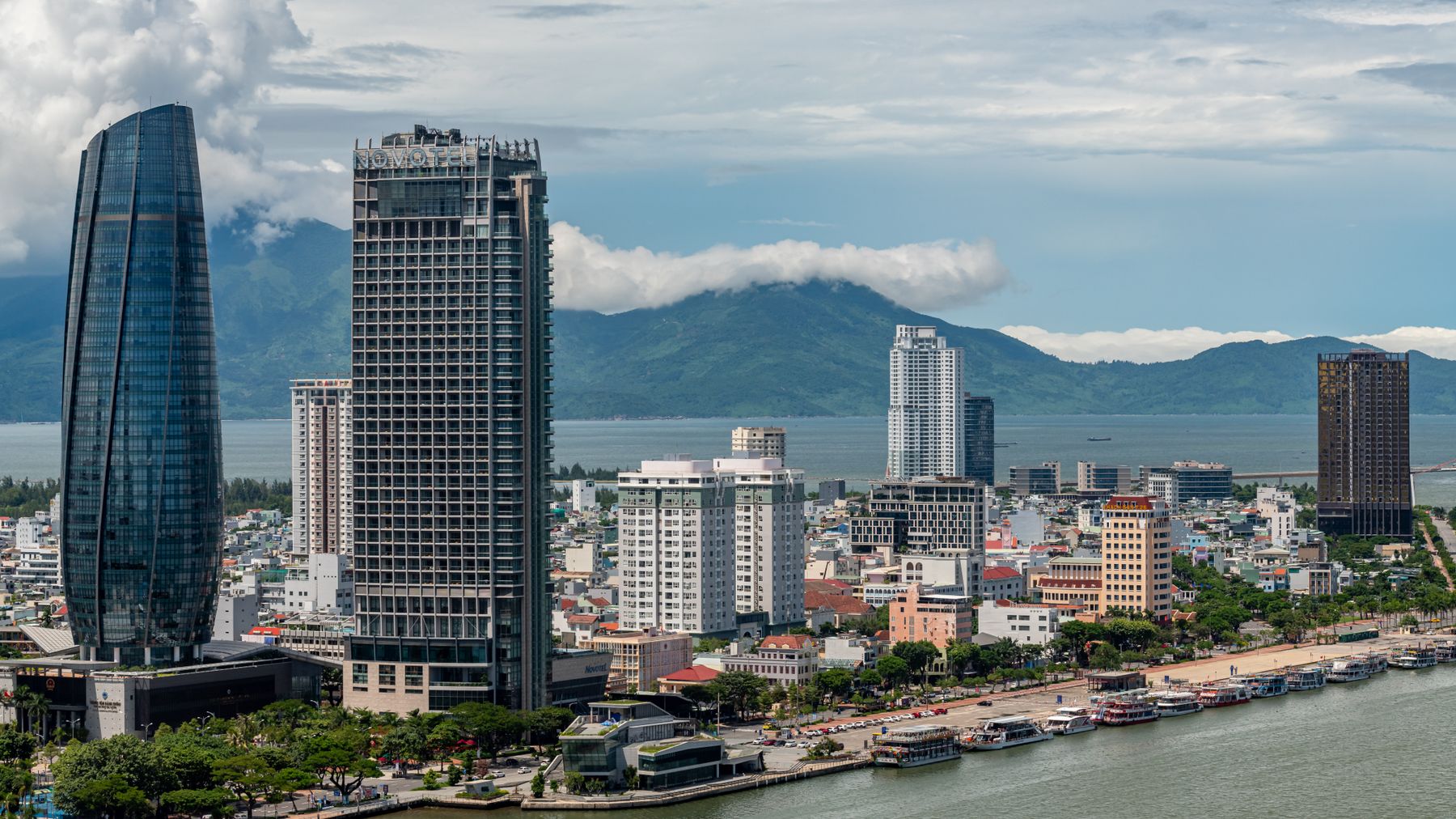
Photo by Kirandeep Singh Walia on Pexels
Practical tips
- Dress code: This is an active temple. Cover your shoulders and knees. Sarongs are sometimes available to borrow at the entrance, but don't count on it.
- Shoes off inside the main hall and the statue base.
- Sunscreen and water: There's limited shade between the parking lot and the statue. The walk up the steps in midday heat is no joke.
- Photography: Allowed everywhere outdoors. Be respectful in the worship halls — don't use flash or pose in front of active altars.
- Son Tra permits: Foreigners occasionally get stopped at a checkpoint on the peninsula road. Carry your passport or a photo of it. This is inconsistently enforced but worth being prepared for.
Common mistakes
- Coming at noon with a tour group. The parking lot is chaos between 10 AM and 2 PM. Early morning or late afternoon is better in every way.
- Only seeing the statue. The gardens and main hall are more interesting than most visitors realize.
- Not combining with Son Tra. You're already on the peninsula — driving back to the city without exploring further is a missed opportunity.
- Wearing flip-flops for the interior climb. The stairs inside the statue base are smooth and occasionally slippery. Proper shoes help.
Practical notes
Linh Ung Pagoda is open daily from roughly 5:00 AM to 9:00 PM. No tickets, no reservations needed. If you're spending a few days in Da Nang, pair this with a day trip to Hoi An (30 km south) or the Marble Mountains (15 km down the coast) to round out the cultural side of the area.
Last updated · May 29, 2026 · independently researched, never sponsored.