
What it is
Thac Tien (Fairy Waterfall) and Deo Gio (Wind Pass) sit in the mountainous north of what is now Tuyen Quang province, in terrain that until recently belonged to Ha Giang. The landscape here is limestone karst at its most dramatic — sheer cliffs dropping into narrow valleys, with the waterfall cascading roughly 50 meters down a moss-covered rock face into a natural pool. Deo Gio is the winding mountain pass that connects the valley settlements, cutting through ridgelines at around 1,200 meters elevation.
The area has long been home to Tay and Dao ethnic communities who've farmed terraced rice on these slopes for generations. Tourism arrived slowly — there's no cable car, no ticket booth empire. It's still a place where you'll share the road with water buffalo more often than tour buses.
Why travelers go
People come here for the same reasons they go to Ha Giang (하장 / 河江 / ハーザン) — karst mountains, empty roads, ethnic minority villages — but without the Instagram crowd. Thac Tien offers a genuine jungle waterfall experience: a 2 km hike through bamboo forest to reach the falls, no concrete path, no selfie platforms. Deo Gio gives you the switchback mountain pass riding that northern Vietnam is famous for, just on roads you'll likely have to yourself on weekdays.
The combination works well. You get physical adventure (the hike, the pass) alongside cultural texture — weekly markets in nearby villages, homestays where dinner is cooked over a wood fire, rice wine poured from recycled water bottles.
Best time to visit
The sweet spot is September through November. Rice terraces turn gold in late September and early October, the monsoon rains taper off, and the waterfall still runs heavy from accumulated rainfall. Mornings are misty — expect visibility on Deo Gio to open up only after 9 or 10 AM.
Avoid December through February if you dislike cold. Temperatures at elevation drop to 5-8°C at night, fog can close the pass for hours, and the waterfall thins to a trickle by late January. March to May is dry and warming but the falls lose their force.
June through August brings the heaviest rain. The waterfall is spectacular but trails become slippery and landslides occasionally block Deo Gio for a day or two. Ride with caution.
How to get there
From Hanoi, take a bus to Tuyen Quang city (roughly 3 hours, 130 km, buses depart from My Dinh station, tickets around 120,000-150,000 VND). From Tuyen Quang city, you'll need to continue north toward the former Ha Giang border areas — this leg is another 80-100 km depending on your exact destination. Local buses run but are infrequent; most travelers rent a motorbike in Tuyen Quang city (150,000-200,000 VND/day for a Honda Wave).
If you're coming from Ha Giang town, the approach from the east is possible but roads are rougher and less signposted. Budget 3-4 hours on a motorbike from Ha Giang.
The road to Thac Tien branches off the main route — look for a small signpost (sometimes just a painted arrow on a rock). From the parking area, it's a 30-40 minute walk to the falls on an unimproved trail.
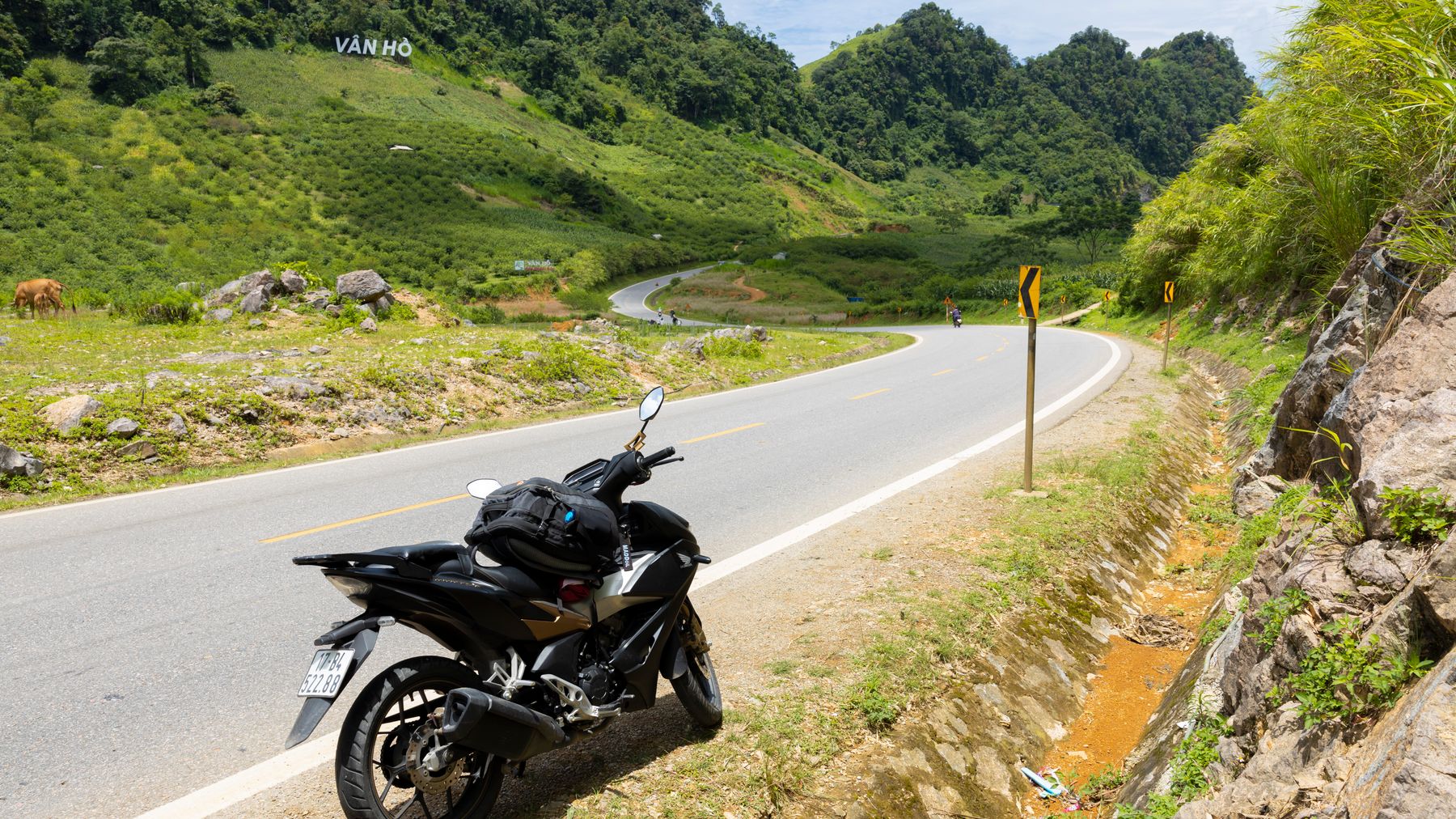
Photo by HONG SON on Pexels
What to do
Hike to Thac Tien
The trail follows a stream uphill through dense bamboo and broadleaf forest. Wear shoes with grip — the rocks are perpetually damp. At the base of the falls, there's a natural pool deep enough to swim in during the wet months. Water temperature hovers around 18-20°C year-round. Bring a dry bag for electronics.
Ride Deo Gio
The pass runs roughly 15 km with continuous switchbacks and elevation changes between 600 and 1,200 meters. Best ridden in the morning before clouds settle. Stop at the informal viewpoint near the summit — there's usually a woman selling instant coffee and boiled corn for 10,000-15,000 VND.
Visit local markets
Surrounding villages hold rotating market days (typically every five days on the lunar calendar). These aren't tourist markets — expect livestock trading, fabric bolts, herbal medicine stalls, and "thang co" (horse meat stew) simmering in massive pots. Ask your homestay host for the current market schedule.
Explore village life
Tay stilt houses dot the valley floor. If you're staying in a homestay, your host can usually arrange a walk through neighboring hamlets. The etiquette: greet people, accept tea if offered, don't photograph altars without asking.
Where to eat
Options are limited to homestay meals and small roadside "quan com" (rice shops). Expect simple northern mountain food: sticky rice steamed in banana leaves, stir-fried greens, grilled stream fish, pork cooked with local herbs. Homestay dinners typically cost 80,000-120,000 VND per person including rice wine.
In Tuyen Quang city before you head up, grab a bowl of pho or "bun cha" for breakfast — the city has decent options along the riverfront near Tan Quang bridge.
Where to stay
Up near Thac Tien and Deo Gio, accommodation means homestays. These are basic — shared bathrooms, thin mattresses on wooden floors, mosquito nets. Prices run 150,000-250,000 VND per night, often including dinner and breakfast. Book through local contacts or just show up and ask around — most villages have at least one family hosting travelers.
For more comfort, base yourself in Tuyen Quang city where guesthouses and small hotels range from 300,000-600,000 VND. You'll need to ride up and back in a day, which is doable but tiring.

Photo by Q. Hưng Phạm on Pexels
Practical tips
- Cash only. No ATMs near the falls or pass. Withdraw in Tuyen Quang city.
- Fuel up. Last reliable petrol station is in the district town, 20-30 km before Thac Tien. Fill your tank completely.
- Phone signal. Viettel works intermittently on ridgelines. Mobifone is unreliable above 900 meters. Download offline maps before you go.
- Packing. Rain jacket regardless of season, headlamp for the trail if you start late, sandals for the waterfall pool, warm layer for evenings October-March.
Common mistakes
Riding Deo Gio in flip-flops. Underestimating the hike duration (it's only 2 km but steep and uneven — allow 40 minutes each way). Arriving without cash. Trying to do both the waterfall hike and the full pass in a half-day — give yourself a full day minimum, ideally two with an overnight in a village homestay. Skipping the market because it "doesn't look touristy" — that's exactly why it's worth your time.
Final note
Thac Tien and Deo Gio reward travelers willing to tolerate basic conditions and uncertain logistics. It's not a polished destination and probably won't be for years. That's the appeal. Bring patience, good shoes, and enough cash — the mountains do the rest.
Last updated · May 26, 2026 · independently researched, never sponsored.





