
Thanh Hoa, 150 km south of Hanoi, doesn't get much food tourism press. That's a mistake. Two dishes alone — "nem chua" and "banh cuon que tre" — are worth going out of your way for, and both are deeply specific to this province in ways that copies elsewhere simply don't replicate.
Nem Chua Thanh Hoa: Fermentation Done Right
Nem chua (넴쭈어 / 酸肉肠 / ネムチュア) exists across Vietnam, but the Thanh Hoa version has a distinct identity. The base is finely pounded raw pork — lean meat mixed with pork skin cut into thin strips — seasoned with fish sauce, pepper, garlic, and a measured amount of sugar. The mixture is wrapped tightly in banana leaves, sometimes with a slice of fresh chili tucked inside, then left to ferment at room temperature for two to three days.
What sets the Thanh Hoa style apart is the ratio: more pork skin than you'll find in Saigon versions, giving each bite a firmer, chewier texture with a sharper sour note. The fermentation is aggressive enough that the meat develops real tang without tipping into ammonia territory. You want it slightly firm to the touch when you unwrap it — if it's still soft, it needs another day.
Locals eat nem chua as a drinking snack alongside "bia hoi", sliced thin and paired with raw garlic and green chili. You'll also find it served as part of a larger meal — a few pieces alongside rice and braised pork. Street stalls near Thanh Hoa Market (Cho Thanh Hoa, on Phan Chu Trinh street in the city center) sell individually wrapped pieces for around 8,000–12,000 VND each. Packaged versions in vacuum-sealed plastic, priced at 30,000–50,000 VND for a pack of five or six, make practical souvenirs — they travel well for a day or two unrefrigerated.
The flavor profile is genuinely different from the sweeter nem chua you'd find in Saigon (사이공 / 西贡 / サイゴン)'s Ben Thanh Market or the milder northern interpretations sold in Hanoi. It's worth buying from a stall where you can see the product rather than a pre-packed tourist shop — fresher wraps, better fermentation.
Banh Cuon Que Tre: Rice Rolls on a Bamboo Skewer
"Banh cuon" in most of Vietnam means steamed rice sheets filled with minced pork and wood-ear mushroom, served in a bowl with broth or dipping fish sauce. Thanh Hoa's banh cuon que tre is a different animal entirely.
Que tre means bamboo skewer. Here, the rice batter is spread thin on a cloth stretched over a steaming pot — standard technique — but instead of being folded around a filling and served flat, the sheet is rolled directly onto a thin bamboo stick while still hot, forming a tight cylinder about the length of a chopstick. The result is a chewy, slightly translucent tube of steamed rice that you eat by pulling off the bamboo or biting straight from the stick.
The dipping sauce is the key variable. A good stall makes it from diluted fish sauce with lime, sugar, fresh chili, and — crucially — the rendered fat from fried shallots. That shallot oil is what elevates the dish: it coats the rice roll with a faint sweetness and an aroma that plain fish sauce can't replicate. Some vendors add a small amount of pork floss or dried shrimp on top. A full serving of eight to ten rolls costs 20,000–35,000 VND.
The best time to find banh cuon que tre is early morning. Stalls set up from around 6 a.m. and are usually sold out or closed by 10. The area around Ham Rong Bridge and the small lanes off Le Loi street in central Thanh Hoa city have reliable vendors. The format — portable, eaten on the spot standing up — means it's primarily a breakfast or mid-morning snack, not a sit-down meal.
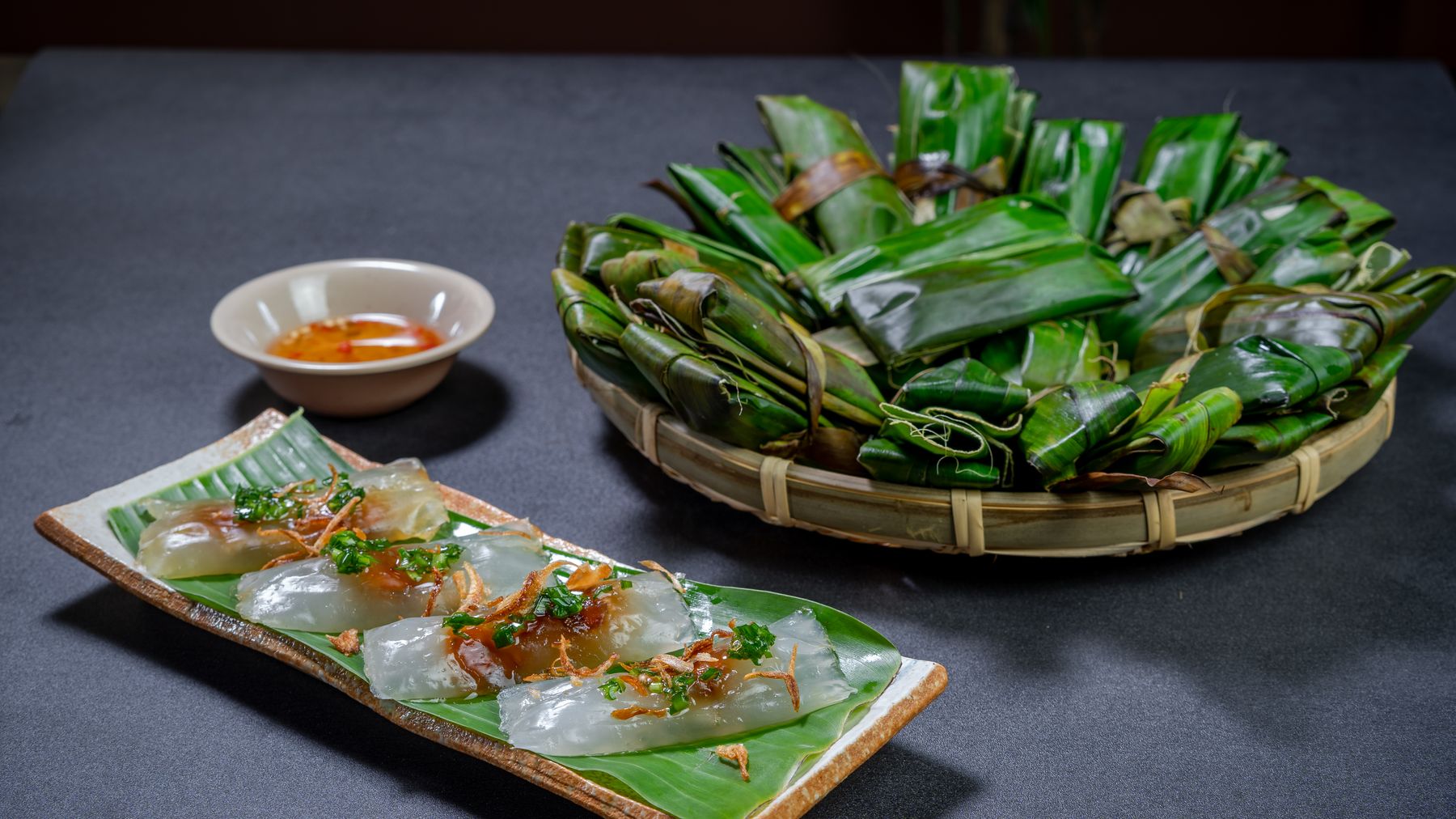
Photo by Hải Nguyễn on Pexels
The Broader Thanh Hoa Food Culture
Thanh Hoa sits in a transitional zone between the Red River Delta food culture of the north and the spicier, more complex cuisine of Hue and the central coast. The food here is direct and unfussy — heavy on pork, rice-based preparations, fermented or cured components, and fish sauce as the primary seasoning.
This isn't a province with a lot of culinary showmanship. There are no tasting menus, no fusion restaurants dressing up local ingredients for Instagram. What you get instead is the same stall, the same recipe, refined over decades by someone who learned it from their parents. That continuity is the point.
Other dishes worth trying in Thanh Hoa include cha tom (shrimp paste grilled on sugarcane), banh da (dark sesame-coated rice crackers sold near the market), and a local version of "banh canh" made with a slightly thicker noodle than you'd find in the south. If you're road-tripping between Hanoi and Hue or Da Nang, Thanh Hoa is a natural lunch or dinner stop — the city is about two hours south of Hanoi by car, just off National Highway 1A.
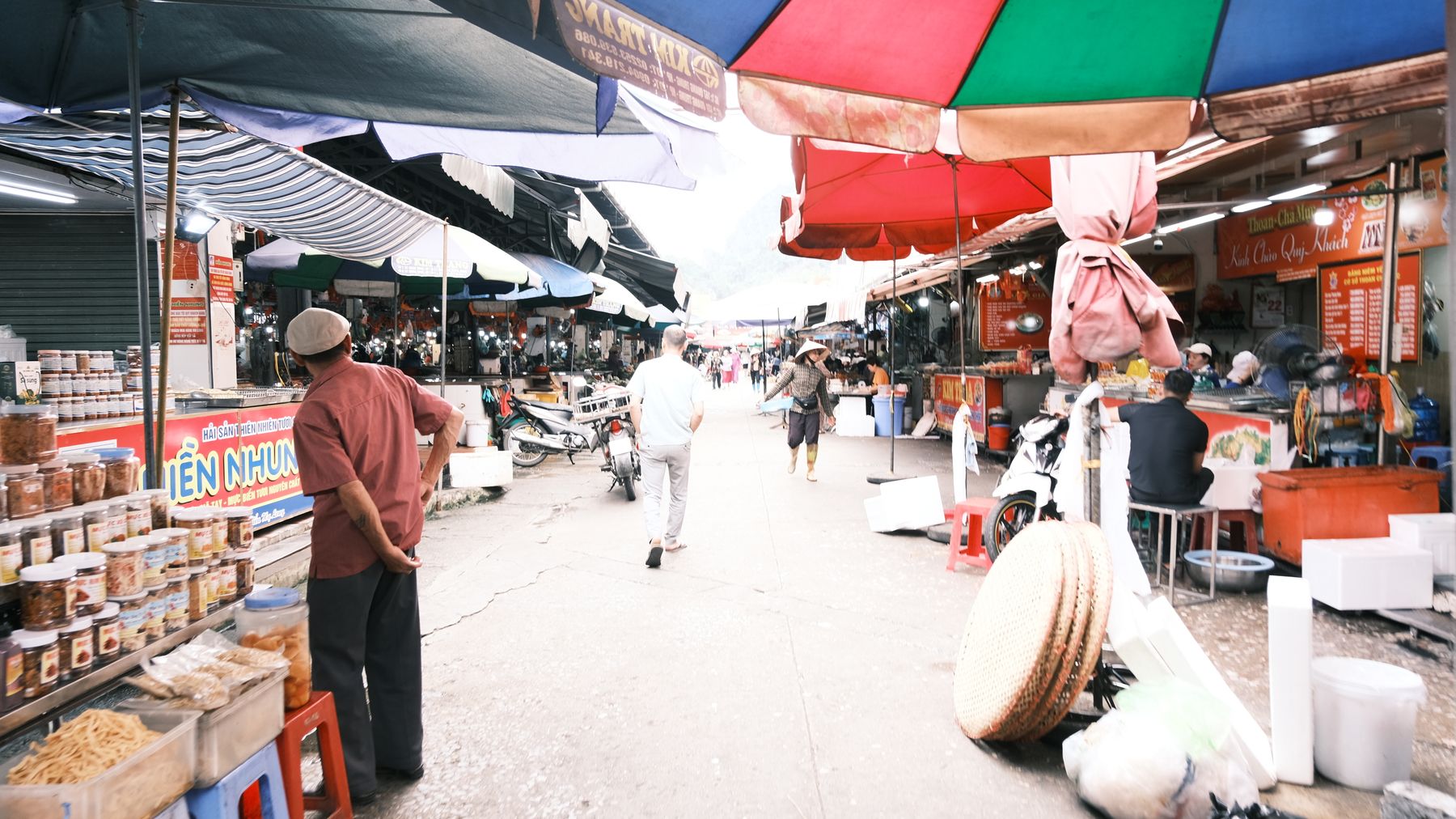
Photo by Đạt Nguyễn on Pexels
Practical Notes
Thanh Hoa city is accessible by train from Hanoi (around 2.5 hours on the SE trains, tickets from 100,000 VND) or by bus from My Dinh station. Most food stalls are cash-only; small denominations are useful. Nem chua from reputable market vendors is safe to eat as-is — the fermentation process preserves it — but avoid pre-packaged versions that look older than a few days.
Last updated · May 29, 2026 · independently researched, never sponsored.



