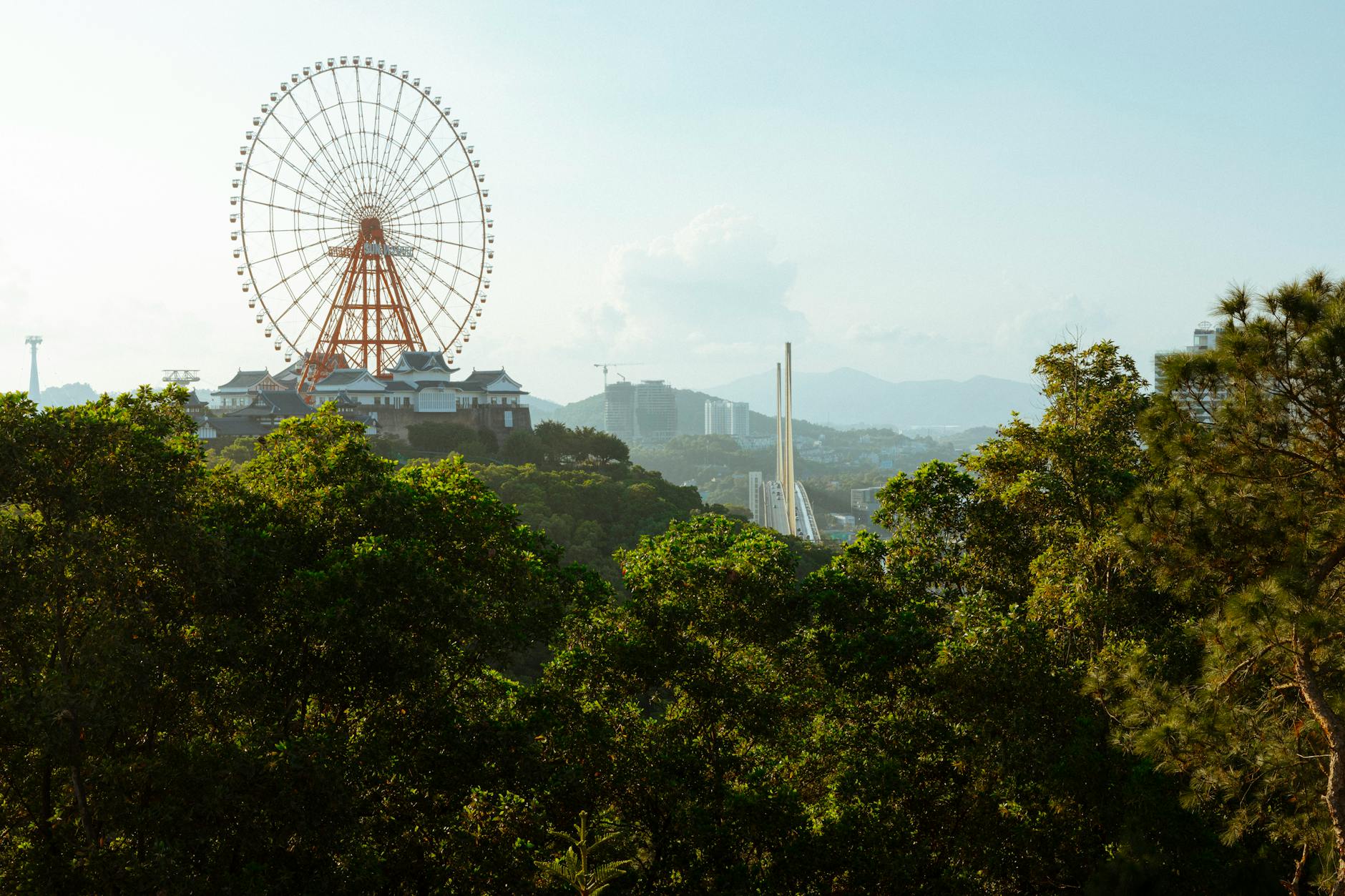
Most people who visit Quang Ninh province head straight for Ha Long Bay. That's fair — limestone karsts and overnight boats are a hard sell to compete with. But about 50 km inland, Ho Yen Lap sits in a wide valley surrounded by low forested hills, and almost nobody from outside the province bothers to go. That's exactly what makes it worth the detour.
What it is
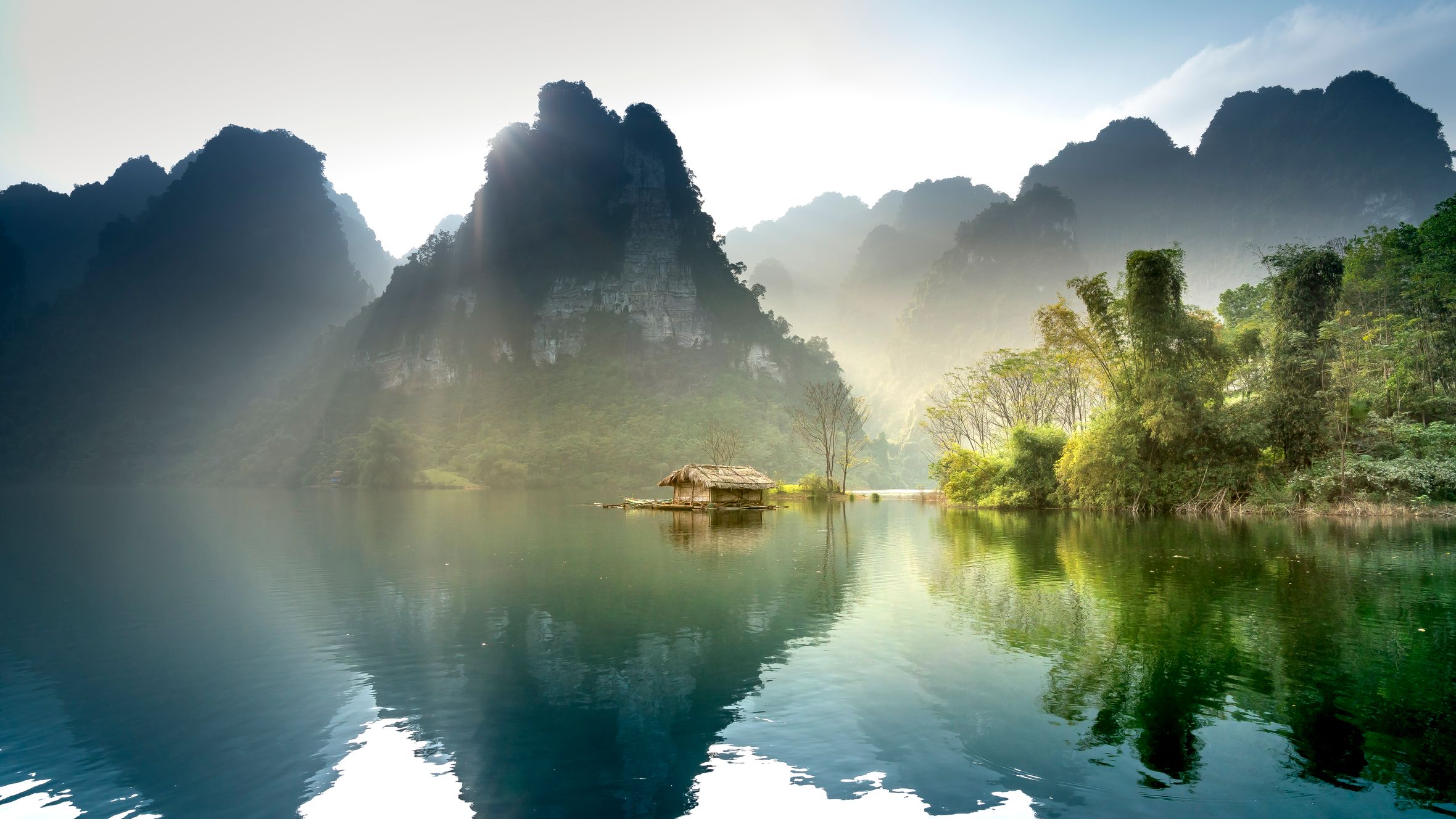
Ho Yen Lap is an artificial reservoir built in the early 1980s for irrigation and flood control in Quang Ninh's agricultural interior. The dam holds back water from several streams feeding into the Yen Lap river system, creating a lake that stretches roughly 10 km long with dozens of small islands and submerged hilltops poking above the waterline. The landscape draws comparisons to Ninh Binh (닌빈 / 宁平 / ニンビン) or Tuyen Quang's Na Hang — karst-adjacent terrain, calm water, green everywhere — but with a fraction of the visitors. On weekdays you might have entire stretches of shoreline to yourself.
The reservoir sits primarily in Hoang Bo district (recently reorganized under Ha Long city's expanded boundaries), about 45 km northwest of central Ha Long.
Why travelers go
Ho Yen Lap isn't a theme park. There's no zipline, no glass bridge, no Instagram walkway. People come here for the quiet: boat rides through the islands, fishing with locals, cycling the perimeter roads, or just sitting with a thermos of "lotus tea" and watching the water. It's the kind of place that rewards you for slowing down rather than ticking off a checklist. If you've been doing back-to-back tourist sites across northern Vietnam, a half-day or overnight here works as a reset.
Birdwatchers occasionally turn up — the forested islands shelter herons, kingfishers, and cormorants, especially in early morning.
Best time to visit
The sweet spot is September through November. The rains have filled the reservoir to capacity, the islands look their greenest, and the summer humidity is starting to ease. Mornings are cool enough to enjoy without sweating through your shirt by 8 a.m.
March to May also works — drier, slightly hazy, but comfortable temperatures around 22-28°C. Avoid June through August if you dislike heat and afternoon downpours, though the lake is at its most dramatic when low clouds hang over the water after a storm.
December to February can be surprisingly cold and grey this far north. It won't ruin the trip, but the atmosphere turns bleak rather than peaceful.
How to get there
From Ha Long city center, Ho Yen Lap is about 45 km northwest — roughly 1 hour by motorbike or car along QL279 and local roads. The route passes through Hoang Bo with decent road surfaces most of the way.
From Hanoi, you're looking at around 150 km. The fastest option is the Ha Long–Hai Phong expressway to Ha Long, then local roads north to the reservoir. Total drive time is about 2.5–3 hours. Buses from My Dinh station to Ha Long run every 30 minutes (100,000–130,000 VND), but from Ha Long you'll need a taxi or hired motorbike to reach the lake — there's no direct public transport to Ho Yen Lap itself.
A Grab car from Ha Long center to the reservoir area runs roughly 350,000–450,000 VND one way. If you're on a motorbike tour through the northeast, the lake makes a logical stop between Ha Long and destinations further north like Binh Lieu or Mong Cai.

Photo by Quang Nguyen Vinh on Pexels
What to do
Take a boat through the islands
Local fishermen offer boat rides from the dam area and a few informal piers along the southern shore. Expect to pay around 200,000–400,000 VND for 1–2 hours depending on the route and your negotiation. The small wooden boats hold 4–6 people. Mornings before 9 a.m. give you the best light and the calmest water.
Cycle the perimeter
A rough loop around the accessible parts of the reservoir covers about 25–30 km on mixed paved and dirt roads. It's not a technical ride — any basic bicycle or scooter handles it — but the route passes through small villages, fruit orchards, and eucalyptus plantations. Bring water; there are very few shops along the way.
Fish with locals
The reservoir is stocked with tilapia, carp, and snakehead. Locals fish from the banks and from small boats. If you ask around near the dam, someone will usually lend you a rod or let you join. No permit needed for casual fishing. This is not catch-and-release culture — whatever you pull out, someone will cook.
Walk the dam
The Yen Lap dam itself is a wide concrete structure with good views over the lake in one direction and rice paddies in the other. It's a short walk, maybe 20 minutes end to end, but it orients you and gives you a sense of the reservoir's scale.
Visit nearby Yen Tu
Yen Tu mountain — one of Vietnamese Buddhism's most important pilgrimage sites — is only about 30 km south of Ho Yen Lap. If you have a full day, combining the lake in the morning with Yen Tu in the afternoon is a solid itinerary. The cable car at Yen Tu costs around 300,000 VND round trip.
Where to eat nearby
Don't expect a restaurant row. The food situation is basic — a few "com binh dan" (everyday rice) shops in Hoang Bo town and occasionally a family near the dam selling grilled fish and rice. The grilled reservoir fish (usually tilapia, sometimes carp) with dipping salt, chili, and herbs is genuinely good — the kind of simple meal that tastes better outdoors.
If you head back toward Ha Long after your visit, stop for "[bun cha](/posts/bun-cha-hanoi (하노이 / 河内 / ハノイ)-grilled-pork-noodles)" or a bowl of "pho" in town rather than expecting dining options at the lake. Quang Ninh's coast also does excellent "cha muc" (squid cake) — Ha Long's signature street food — worth seeking out if you haven't tried it.
Where to stay
Accommodation at Ho Yen Lap itself is limited. A few homestays and guesthouses operate near the reservoir, mostly catering to domestic visitors. Expect basic rooms — fan or AC, clean enough, hot water — for 250,000–400,000 VND per night. Don't expect English-speaking staff or booking platforms; you may need to call ahead or just show up.
For more comfort, base yourself in Ha Long city where budget hotels start around 300,000 VND and mid-range options run 600,000–1,200,000 VND. Day-trip to the lake from there.

Photo by Pragyan Bezbaruah on Pexels
Practical tips locals would tell you
- Bring cash. There are no ATMs at the lake and no card payment anywhere nearby. Hoang Bo town has a couple of ATMs if you need to withdraw on the way.
- Sunscreen and a hat matter. The water reflects hard, and shade is limited on boats and along the dam.
- Mosquitoes peak at dusk. If you're staying overnight, repellent is non-negotiable from about 5 p.m. onward.
- Fuel up before you go. Fill your tank in Ha Long or Hoang Bo. The last reliable petrol station is in Hoang Bo town center.
Common mistakes to avoid
- Showing up without transport arranged for the return. Grab coverage this far out is unreliable. If you took a taxi, ask the driver to wait or agree on a pickup time. Otherwise you might be stranded.
- Expecting Ha Long Bay-level infrastructure. This is a rural reservoir, not a tourism zone. No English signage, no tour desks, no souvenir shops. That's the point, but come prepared.
- Trying to do it as a rushed half-day from Hanoi. The 3-hour drive each way makes a day trip exhausting. Either stay overnight near the lake, base in Ha Long, or fold it into a longer northeast loop.
Practical notes
Ho Yen Lap works best as part of a broader Quang Ninh itinerary — combine it with Ha Long Bay, Yen Tu, or a run up to Binh Lieu. On its own, it's a half-day to one-day stop, not a multi-day destination. But for travelers who've done the northern circuit and want somewhere genuinely uncrowded, it delivers without pretending to be something it's not.
Last updated · May 29, 2026 · independently researched, never sponsored.