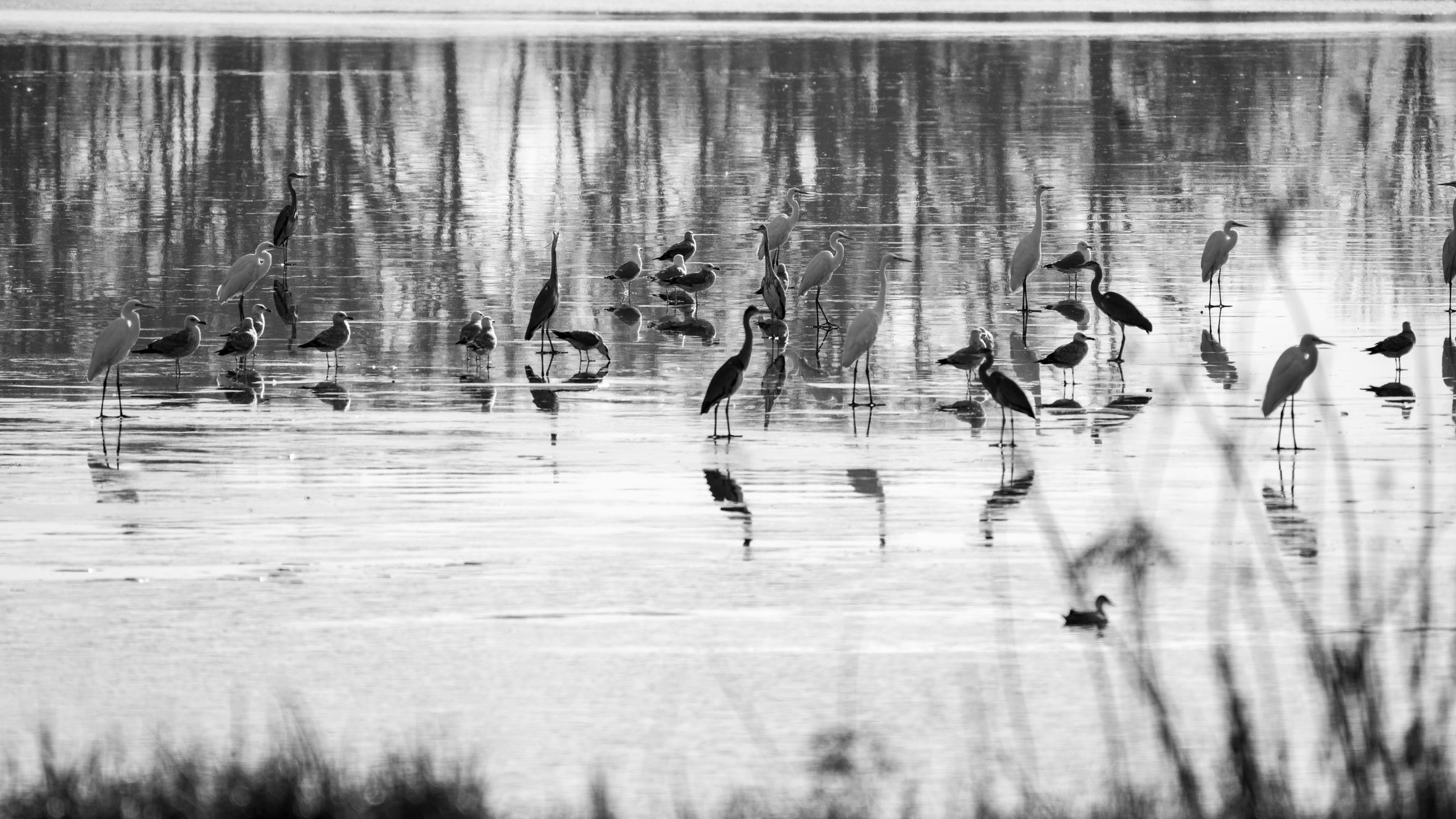
Tram Chim National Park sits about 130 km west of Saigon in the heart of Dong Thap province — a 7,600-hectare slab of seasonally flooded grassland, lotus marshes, and melaleuca forest that operates as one of the most important bird habitats in Southeast Asia. If you're interested in the Mekong Delta (메콩 델타 / 湄公河三角洲 / メコンデルタ) beyond the usual floating-market circuit in Can Tho, this is one of the few places that rewards the detour.
What it is
Tram Chim — the name translates roughly to "bird garden" — was designated a national park in 1998 and later recognized as a Ramsar Wetland of International Importance. The park occupies a chunk of the Dong Thap Muoi (Plain of Reeds), a vast floodplain that once covered much of the upper Mekong Delta. Most of that landscape has been converted to rice paddies over the past century. Tram Chim is what remains: a managed wetland where water levels are controlled to mimic natural flood cycles, sustaining habitat for over 230 bird species.
The headline resident is the Eastern Sarus Crane ("hong" or red-headed crane), the tallest flying bird in the world. Their population here has fluctuated — dropping to around a dozen in bad years, recovering to several hundred in good ones — and seeing them depends entirely on timing.
Why travelers go
Most visitors come for the cranes. But even outside crane season, Tram Chim delivers something increasingly rare in southern Vietnam (베트남 / 越南 / ベトナム): actual quiet. The park's network of canals cuts through dense stands of melaleuca trees, open marshland thick with sedge grass, and seasonal lotus fields that bloom pink across huge stretches of water. The birding is genuinely excellent year-round — herons, storks, cormorants, eagles, kingfishers — and you'll likely have most of the park to yourself on a weekday.
This isn't a theme park. There's no zipline or Instagram bridge. It's a working conservation site that happens to be open to visitors, and that low-key quality is exactly what makes it worth the trip.
Best time to visit
Two distinct seasons matter here:
-
December to March — Dry season. Water levels drop, concentrating fish and birds into smaller areas. This is when the Sarus Cranes are present (they arrive around December and leave by late March or April). January and February are peak months for crane sightings. Early morning, around 5:30-6:30 AM, is when they're most active.
-
July to October — Flood season. The Plain of Reeds fills up, and the lotus fields bloom. You won't see cranes, but the landscape transforms into an enormous shallow lake dotted with pink flowers. Boat rides feel completely different — more open water, different bird species.
Avoid April to June if possible. It's brutally hot, the cranes have left, the lotus hasn't bloomed, and the park looks like a dried-out field.
How to get there
The park entrance is near Tam Nong town in Dong Thap province. From Saigon (Ho Chi Minh City), you have a few options:
-
Bus to Cao Lanh — Buses from Ben Xe Mien Tay (Western Bus Station) run to Cao Lanh, the provincial capital of Dong Thap, every 30-60 minutes. The ride takes about 3.5-4 hours and costs 120,000-150,000 VND. From Cao Lanh, it's another 45 km north to Tam Nong — grab a local bus (around 30,000 VND) or hire a xe om (motorbike taxi, roughly 150,000-200,000 VND one way).
-
Motorbike from Saigon — Around 160 km via QL1A and DT844. Doable in 4-5 hours with stops. The roads through Dong Thap are flat and easy, passing through rice country the entire way.
-
Private car/taxi from Cao Lanh — Expect to pay 300,000-400,000 VND for a car to Tam Nong.
From Can Tho, Cao Lanh is about 80 km (2 hours by bus), making it possible to combine Tram Chim with a broader Mekong Delta trip.

Photo by thAnh nguyễn on Pexels
What to do
Boat tour through the wetlands
The core experience. You'll board a motorized sampan at the park's canal system and spend 2-3 hours weaving through narrow waterways lined with melaleuca trees. During crane season, guides steer toward known feeding grounds — bring binoculars. Park entrance is 80,000 VND per person; boat hire runs around 400,000-600,000 VND per boat (fits 4-6 people). Go at dawn for the best light and bird activity.
Bird observation towers
Several wooden watchtowers are scattered through the park. Climb up for a wide view across the grassland — useful for spotting larger species like adjutant storks and eagles. The A1 observation area is the most popular for crane watching.
Lotus field visits (seasonal)
During flood season, sections of the park fill with wild lotus. Some boat routes pass directly through these fields. The scale is genuinely impressive — thousands of flowers across open water.
Cycling the perimeter roads
The flat terrain around the park is ideal for cycling. Some guesthouses in Tam Nong can arrange bike rentals. Riding along the canal roads at dawn, with herons lifting off the water every few hundred meters, is one of the better mornings you can have in the delta.
Tam Nong floating market (limited)
Much smaller and less touristy than the markets near Can Tho, the local morning market along the canal near Tam Nong gives a glimpse of delta trading life without the boat-tour crowds.
Where to eat nearby
Dong Thap province is known for freshwater fish and field-foraged ingredients. Two things to look for:
-
"Lau mam" (fermented fish hotpot) — a thick, pungent broth made from fermented mudfish, loaded with vegetables, shrimp, and snakehead fish. It's intense but deeply representative of delta cooking. Look for local restaurants in Tam Nong or Cao Lanh serving this.
-
"Banh xeo" — the delta version is oversized, stuffed with bean sprouts, shrimp, and pork, cooked until the rice-flour crepe shatters when you bite it. Vendors around Cao Lanh market make excellent ones for 20,000-30,000 VND each.
Freshwater snail dishes and grilled snakehead fish wrapped in lotus leaf are also common and worth trying.
Where to stay
Tam Nong has a handful of basic guesthouses ("nha nghi") in the 200,000-350,000 VND range — clean enough, air-conditioned, minimal English. Cao Lanh offers more choice: mid-range hotels like Xuan Hieu or Song Tra run 400,000-700,000 VND per night with decent rooms. There's nothing approaching a resort near the park, and that's fine.
If you're doing an early-morning crane trip, staying in Tam Nong the night before saves you a 5 AM scramble from Cao Lanh.

Photo by Nhẫn Nguyễn on Pexels
Practical tips locals would tell you
- Hire a park guide. Freelancing through the canals is technically possible, but the guides know exactly where the cranes are feeding that week. Worth the 200,000-300,000 VND.
- Bring sun protection. The delta is fully exposed — no shade on the boats. A hat, long sleeves, and sunscreen are non-negotiable.
- Bring binoculars. The cranes and larger birds are often 100+ meters away across open marsh. Without optics, you're squinting at grey dots.
- Carry cash. There are no ATMs in the park area and limited options in Tam Nong. Cao Lanh has banks.
Common mistakes
- Arriving mid-afternoon. Bird activity drops to almost zero in the midday heat. If you only have one visit, make it sunrise.
- Coming in April expecting cranes. The cranes leave by late March most years. Don't plan a trip around them outside December-March.
- Skipping Cao Lanh entirely. The provincial capital has a pleasant riverfront, a decent market, and the Sa Dec flower villages are nearby — worth a half-day on either side of your Tram Chim visit.
- Expecting a national-park experience like Phong Nha. Tram Chim is flat, quiet, and subtle. The appeal is ecological, not dramatic scenery. Come with the right expectations and you'll appreciate it.
Practical notes
Tram Chim works best as a 1-2 day stop on a longer Mekong Delta loop — combine it with Can Tho's floating markets and Sa Dec's old town. The park is open daily from 6:00 AM to 5:00 PM. Bring your patience and a decent zoom lens.
Last updated · May 29, 2026 · independently researched, never sponsored.