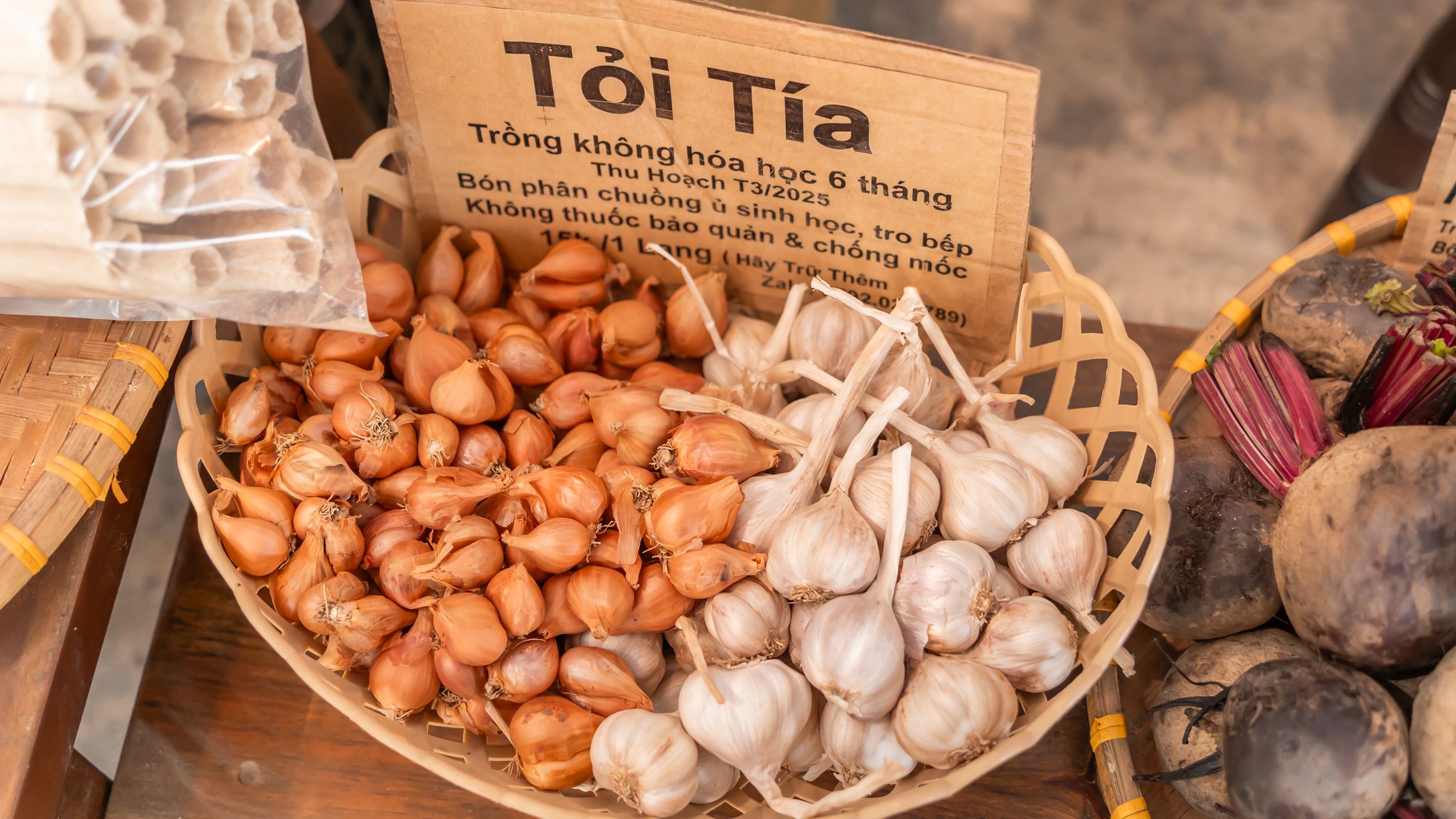
Vietnam (베트남 / 越南 / ベトナム)'s food logic only clicks when you're standing in a market at 7am, holding a bunch of rau ram and arguing gently with a vendor about whether it's the same as rau hung. Cooking classes get you there faster than any restaurant crawl. This is a loose country-wide trail — Hanoi to Hoi An to Da Lat to Saigon — built around where the classes are genuinely good, not just tourist-convenient.
Hanoi — Northern Fundamentals
Hanoi (하노이 / 河内 / ハノイ) cooking classes tend to be serious about technique, which reflects how the north thinks about food: restrained, precise, not a lot of fresh herb chaos. The city's culinary identity is built on clear broths, careful seasoning, and dishes that don't need chili to make their point.
The best classes here start with a trip to Dong Xuan Market, where you'll source ingredients before heading to a kitchen. Expect to work through "pho" stock from scratch — this takes time and most classes won't cut corners on it — alongside "banh cuon", the delicate steamed rice rolls that most visitors walk past without noticing. A half-day class typically runs 600,000–900,000 VND per person.
If you want something more immersive, a handful of Hanoi operators run evening classes that pair cooking with a short lesson on "ca tru", the classical sung poetry form that originated in the north. It's a niche combination but it gives the food more cultural context than a purely kitchen-focused session.
After class, spend the evening in the Old Quarter. Order an "egg coffee" at one of the original spots on Dinh Tien Hoang and think about what you just made.
Hoi An — The Country's Cooking Class Capital
Hoi An has more cooking schools per square kilometer than anywhere else in Vietnam, and while that sounds like a warning, the concentration has actually pushed quality up. The bad ones get reviewed out of existence fast.
Most classes follow the same structure: a boat or bicycle ride to the Tra Que vegetable village, a market stop, then three to four hours in the kitchen. What makes Hoi An interesting is that its cuisine sits at a genuine geographic crossroads — you'll work with "cao lau", the thick wheat noodles that are specific to Hoi An and depend on water from a particular local well, and "banh xeo", the sizzling crepe that's thinner and crispier here than its southern cousin.
"Mi quang" is another staple in most Hoi An class menus — turmeric-stained noodles with pork, shrimp, and a handful of roasted peanuts. It's a central Vietnamese dish that doesn't travel well outside the region, which makes learning it here worthwhile.
Prices range from 700,000 VND for a basic half-day to 1,500,000 VND for full-day classes that include a visit to a local fishing village. Red Bridge Cooking School and Morning Glory both have consistent reputations, but independent chefs running smaller group classes (four to six people) often deliver a better ratio of hands-on time.

Photo by Quang Nguyen Vinh on Pexels
Da Lat — Produce-Forward and Underrated
Most people don't think of Da Lat as a cooking class destination, which is exactly why it's worth going. The city sits at 1,500m altitude and supplies a significant portion of Vietnam's temperate vegetables — strawberries, artichokes, cabbages, and greenhouse herbs that don't grow anywhere else in the country at scale.
Classes here are less codified than Hoi An. You're more likely to end up in someone's home kitchen than a purpose-built school, and the menus reflect what's actually in season rather than a standardized tourist syllabus. Expect dishes like "banh canh" with locally grown vegetables, and a lot of focus on how Da Lat's cooler climate changes the flavour profile of ingredients you'll have already encountered further south.
A few operators offer farm-to-table half-days where you harvest your own produce before cooking — not a gimmick here, since the farms are genuinely minutes from the city centre. Budget 500,000–800,000 VND. Da Lat also does interesting things with "ca phe sua da" — the classes that include a coffee component will take you through the local Arabica bean production, which is a different conversation from the Robusta-heavy south.

Photo by Quang Nguyen Vinh on Pexels
Saigon — Street Food Logic and Southern Heat
Saigon cooking classes are looser, faster, and louder than their northern equivalents, which is appropriate. Southern Vietnamese food is abundant and herb-forward — there's always a pile of rau song (fresh herbs) on the table, always fish sauce in the dipping bowl.
The best Saigon classes build menus around the dishes that define the city: "com tam", the broken rice plates that are eaten at every hour of the day; "bun thang", the delicate Hanoi-origin noodle soup that's been adopted and adapted here; and "goi cuon", the fresh spring rolls that require more precision than they look like they do.
Market visits in Saigon usually mean Ben Thanh Market or one of the wet markets in Districts 3 or 5, where the produce is cheaper and the vendors less accustomed to tour groups. Classes that go to Ben Thanh tend to spend more time navigating tourist pricing than actually understanding ingredients — worth asking your class operator which market they use.
Prices in Saigon run 700,000–1,200,000 VND. Some operators in the Pham Ngu Lao area cater almost entirely to backpackers and keep things quick and cheap; if you want depth, look for classes hosted by actual chefs rather than travel agencies.
Practical Notes
Book classes at least two days ahead in Hoi An, especially October through March when the town fills up. Hanoi and Saigon have more availability. Bring a notebook — most classes move quickly and you won't remember ratios otherwise. If you have dietary restrictions, confirm specifics by email before booking; "vegetarian-friendly" means different things to different operators across the country.
Last updated · May 29, 2026 · independently researched, never sponsored.