Traveling Vietnam (베트남 / 越南 / ベトナム) with children is entirely doable, but mealtimes take a bit more strategy. The heat, the unfamiliar flavors, the fish sauce in everything — it adds up. The good news: Vietnamese cuisine has a genuine mild side that most kids land on without complaint.
Start With the Broth-Based Stuff
If there's one dish that converts cautious young eaters, it's "pho". The broth is clean and faintly sweet, the rice noodles are soft, and you can keep the bowl plain — no herbs, no bean sprouts, no chili. Order "pho bo" (beef) or "pho ga" (chicken) and ask for the condiments on the side. Most kids who turn their nose up at "exotic" food will quietly finish a bowl of pho ga. It's essentially a very good noodle soup.
"Banh cuon" — steamed rice rolls filled with minced pork and wood ear mushroom — is another gentle entry point. The texture is soft and slightly silky, the filling mild, and the dipping sauce can be skipped entirely if your child is sensitive to fish sauce funk. It's common at breakfast spots across the north and central regions.
Dishes That Travel Well With Kids
"Banh mi" is the obvious one. A well-made banh mi is crunchy, cheesy (the pate acts like one), and customizable — ask for "banh mi thit" with just ham and butter if yours won't go near pickled daikon. Bread is a comfort food universally, and Vietnam does it properly.
"Com tam", broken rice with a grilled pork chop, is a Saigon staple that looks reassuringly familiar — rice and meat, clearly identifiable, nothing hiding in the sauce unless you add it. Kids tend to be fine with the pork once they smell it coming off the grill. A fried egg on top doesn't hurt.
"Goi cuon", fresh spring rolls, can work well if your child is curious. The wrapper is translucent rice paper, the fillings are usually cold shrimp, pork, lettuce, and vermicelli. Ask ahead whether there's much chili in the dipping sauce ("nuoc cham"). You can swap it for plain soy sauce at most places.
For something closer to kid-safe universal, look for "chao" — Vietnamese rice porridge. It's sold everywhere from hospital canteens to street carts. Plain chicken chao is warm, starchy, and almost impossible to object to. It's what Vietnamese parents feed sick children, which tells you something about its gentleness.

Photo by Kai-Chieh Chan on Pexels
What to Watch Out For (Spice-Wise)
Not everything in Vietnam is mild. "Bun bo Hue" is genuinely spicy — the broth has lemongrass and shrimp paste, and the chili oil arrives pre-mixed rather than on the side. Skip it for younger children or anyone with a sensitive palate. "Mi quang" from Da Nang and "banh xeo (반세오 / 越南煎饼 / バインセオ)" (sizzling crepes) can also carry heat, though the latter varies a lot by cook.
The safest regional sweep: northern Vietnamese food (Hanoi-style) tends to be subtler. Central food (Hue, Da Nang) runs hotter. Southern food) is often sweeter and a little richer — kids from Western countries sometimes adapt to it fastest.
Where to Feed Picky Eaters
Local "com binh dan" shops — the canteen-style spots with trays of pre-cooked dishes behind glass — are actually great for kids. You can see everything before you order, point at what looks approachable, and build a plate of plain rice with two or three mild sides. No menu anxiety, no translation drama.
Foreign-owned bakeries and cafe chains are a fallback when someone's hitting a wall. Most cities have Vietnamese-French bakeries where you can get a baguette, a croissant, or a simple ham sandwich. In Hoi An and Hanoi's Old Quarter, you'll find spots that do reliable Western breakfasts without much effort.
Night markets — like the one in Hoi An or the weekend street food markets in Saigon's District 1 — are worth a wander. Kids can graze, try one thing at a time, and bail if nothing appeals. The social atmosphere helps too; it's harder to be a reluctant eater when there's something grilling three meters away.

Photo by Pragyan Bezbaruah on Pexels
Hygiene: What to Actually Look For
Skip the checklist anxiety and focus on a few practical signals. High turnover is your best friend: a crowded stall moves food quickly, meaning nothing sits. A place with six occupied tables at noon is safer than a quiet spot that opened an hour ago.
Broth-based dishes are generally lower risk because everything passes through boiling liquid. Raw garnishes — herbs, bean sprouts, lettuce — are where you want to be more selective. In tourist-heavy areas, most vendors know to wash produce properly. In rural spots, ask for greens on the side or skip them.
For young children or anyone with a sensitive stomach, stick to freshly cooked, hot food for the first few days. "Bia hoi" spots and streetside places that cook to order (you can see the wok) are fine. Pre-made food that's been sitting in a bain-marie since morning deserves more scrutiny.
Bottled water is standard everywhere. Most Vietnamese families don't drink tap water either, so you're not being overly cautious — it's just the norm.
A Note on Drinks
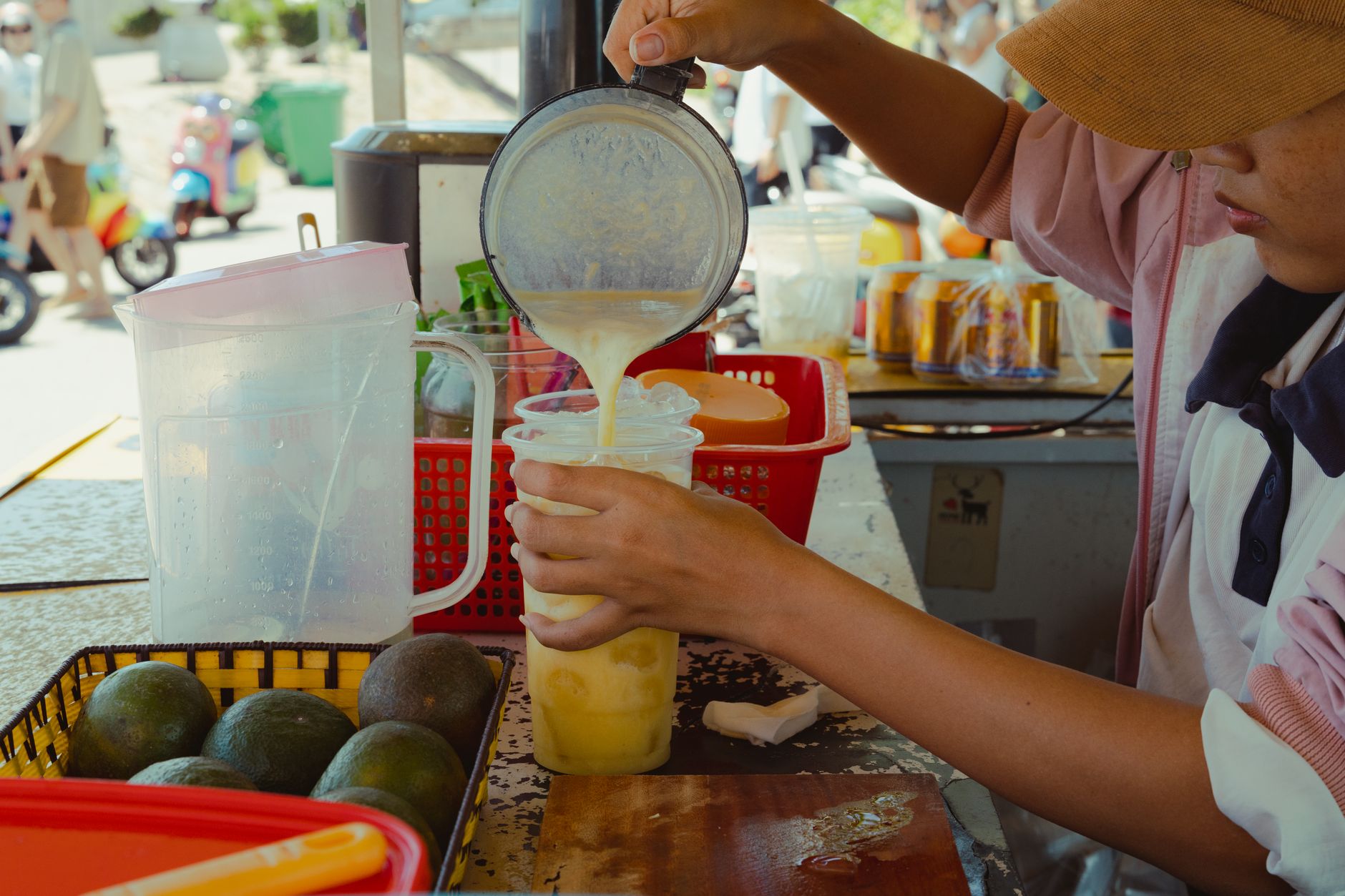
Fresh sugarcane juice and packaged fruit juice boxes are widely available and usually a hit with kids. "Vietnamese coffee" and "ca phe sua da" are adult territory — the caffeine is no joke. "Lotus tea" is caffeine-light and sold in many restaurants; kids generally take to the faintly sweet flavor without complaint.
Practical notes: Carry a small snack stash (crackers, fruit pouches) for the 3pm gap between lunch and dinner when everything feels too unfamiliar. Most Vietnamese restaurants will accommodate plain rice on request even if it's not on the menu — just ask. Budget around 40,000–80,000 VND per child per meal at local spots, less for a bowl of chao or banh mi on the street.
Last updated · May 29, 2026 · independently researched, never sponsored.