The basics: shoes and dress
Remove your shoes before entering the main prayer hall or any sanctuary. Full stop. Leave them on the rack or shelf outside — theft is rare in temples, especially in smaller ones. Dress conservatively: shoulders covered, knees covered. Loose, long pants or a skirt work. T-shirts with sleeves, not tank tops. It's not about looking "exotic" or fitting a stereotype — Vietnamese Buddhists are pragmatic, and they respect visitors who show up appropriately dressed more than those who treat a temple visit like a beach trip.
Women in particular should avoid very tight clothing; loose fabrics are better. Head coverings are not required in most Vietnamese temples, unlike some other Asian countries. Remove hats indoors.
Photography: the real boundaries
Photoography itself is usually fine — temples generally permit it. The friction comes when you photograph people actively practicing. Don't photograph monks meditating, chanting, or performing ceremonies. If you want a shot of a monk, ask politely first. Many will say yes; some won't. Respect that.
Avoid photographing private prayer areas or people making offerings at altars. Use common sense: if someone is clearly in a moment of personal devotion, step back. Tourists with cameras at arm's length snapping everything turn temples into Instagram sets, not sacred spaces.
High-flash photography can startle people and damage old murals and statues. Dial back the flash or turn it off entirely. Most temple interiors have soft natural light anyway.
Buddha statues: don't point, step over thresholds
Don't point your feet toward a Buddha statue — it's considered disrespectful. Sit with your legs folded or tucked, not stretched out toward the altar. Similarly, don't point at statues or imagery with one finger; an open hand or gesture is fine.
Step over doorway thresholds, not on them. Thresholds are often considered sacred boundaries between outer and inner spaces. One small step; no big deal, but it matters to regular practitioners.
Be aware of where you sit. If there's a cushion or designated seating area, use it. If you're not sure where to sit or stand, watch what others do, or ask a temple attendant. Most speak some English or will gesture you to the right spot.
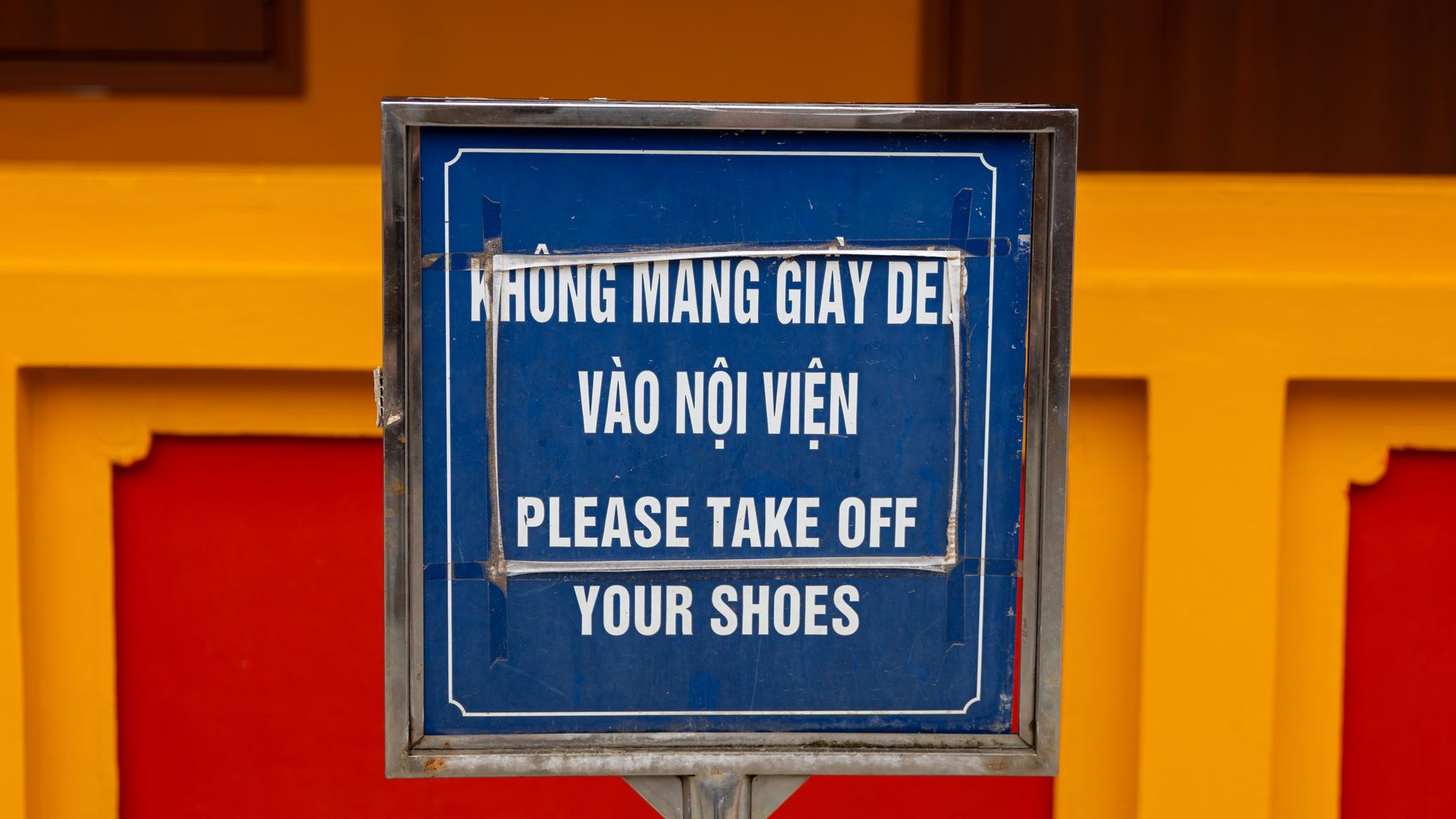
Photo by Hồng Quang Official on Pexels
Donations: voluntary, no pressure
Donation boxes are usually placed near the entrance or altar. Giving is optional and entirely up to you. Small contributions — 10,000–50,000 VND ($0.40–$2 USD) — are customary if you're moved to give, but not required. Some temples have printed donation envelopes; others have simple wooden boxes.
Don't expect a receipt or bracelet in return. Vietnamese temples aren't transactional in the way some Southeast Asian temples are. You're not "buying" karma or a souvenir. Give if you want to support the temple upkeep, or don't. No one will chase you down.
If someone approaches you asking for money, that's not standard temple practice — you've probably encountered a touts or unofficial person. Politely decline and move on.
Inside the hall: voice, behavior, and altar etiquette
Speak quietly or not at all. Temples are places for meditation and prayer, not group-tour chitchat. If you have questions, ask a monk or attendant in a low voice.
Don't touch statues, offerings, or altar items unless invited or unless it's clearly meant for visitors (like a donation box). Don't rearrange offerings or flowers. Don't lean on pillars or railings, and avoid sitting on decorative elements.
If you're a woman and a monk is present, be mindful: some monastic traditions are strict about physical contact. Don't shake hands with a monk unless he extends his hand first. A slight bow with hands together is the safest greeting.

Photo by Nikon on Pexels
What you'll see and what it means
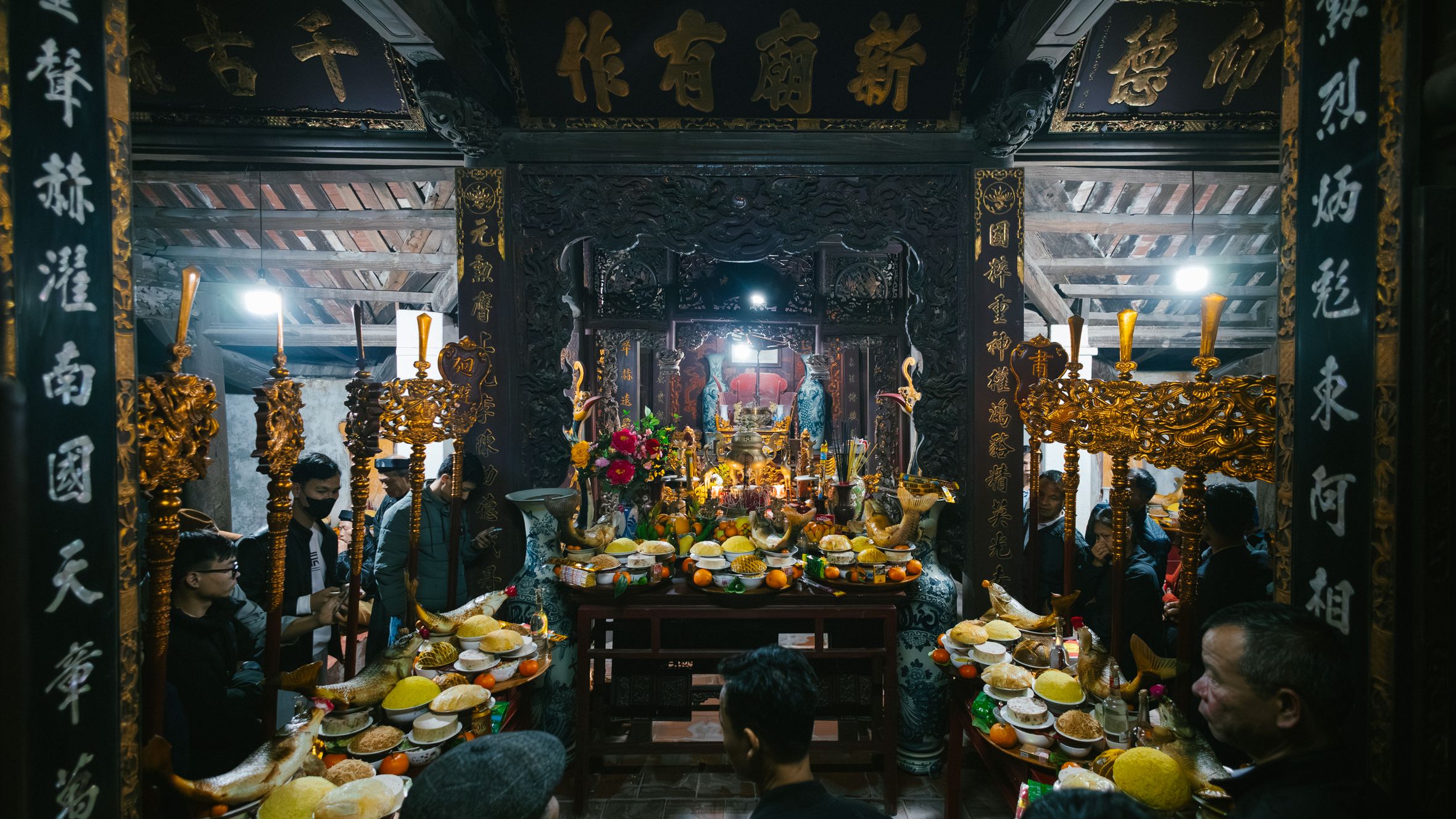
Incense, candles, and offerings of fruit, flowers, or sticky rice are normal. You don't have to participate in any ritual, but you can observe quietly. If a ceremony is happening and you're unsure whether it's "open" to visitors, stand at the back or step outside. No one will mind.
Bells, drums, and chanting are part of temple life. It's not a performance; it's practice. Enjoy the soundscape or focus on your own visit.
Regional notes
Northern temples (around Hanoi and the Red River Delta) tend to be older and busier. Stricter shoe policies and narrower personal-space expectations. Central temples (Hue, Hoi An) are often smaller and more intimate; monks may be more likely to chat with visitors. Southern temples often see more tourists and are slightly more relaxed, though respect is still expected.
Frequently Asked Questions
What should I wear to avoid being turned away at a Vietnamese temple?
Cover your shoulders and knees — loose long pants or a skirt and a sleeved T-shirt work well. Avoid tank tops and very tight clothing; loose fabrics are preferred. Head coverings are not required in most Vietnamese temples, but remove hats once inside. Dress codes are practical, not ceremonial: Vietnamese Buddhists respect visitors who show up appropriately over those who treat a temple visit casually.
How much should I donate when visiting a temple in Vietnam?
Donations are entirely voluntary. If you choose to give, 10,000–50,000 VND (roughly $0.40–$2 USD) is customary. Drop it in the box near the entrance or altar — no receipt or item is given in return. Vietnamese temples are not transactional. If someone approaches you directly asking for money, that is not standard temple practice; politely decline and move on.
When inside a temple hall, what behavior is considered disrespectful?
Do not point your feet toward a Buddha statue — sit with legs folded or tucked. Step over doorway thresholds, not on them. Avoid touching statues, altar items, or offerings unless clearly invited. Do not photograph monks meditating, chanting, or performing ceremonies without asking first, and turn off or reduce camera flash to avoid startling people and damaging old murals.
Bottom line
Temple etiquette boils down to common sense: remove your shoes, cover your shoulders and knees, don't photograph people praying, and step over thresholds. Keep your voice low and your hands to yourself. Donations are optional. Treat the space as you'd treat someone's home, because in many ways, it is — monks live in temples. A bit of respect goes a long way, and you'll have a far better experience than if you treat it as a tourist photo op.
Last updated · Sep 15, 2026 · independently researched, never sponsored.