Lao Cai sits in Vietnam (베트남 / 越南 / ベトナム)'s far northwest, where the Red River valley meets China's Yunnan Province. The food here reflects that geography: heavy on noodles, rice, and grilled pork; lighter on the seafood that dominates coastal Vietnam. Most visitors pass through on their way to Sapa (22 km uphill), but the city itself has a distinct eating culture worth an afternoon of exploration.
Signature noodles and the cult of "bánh canh"
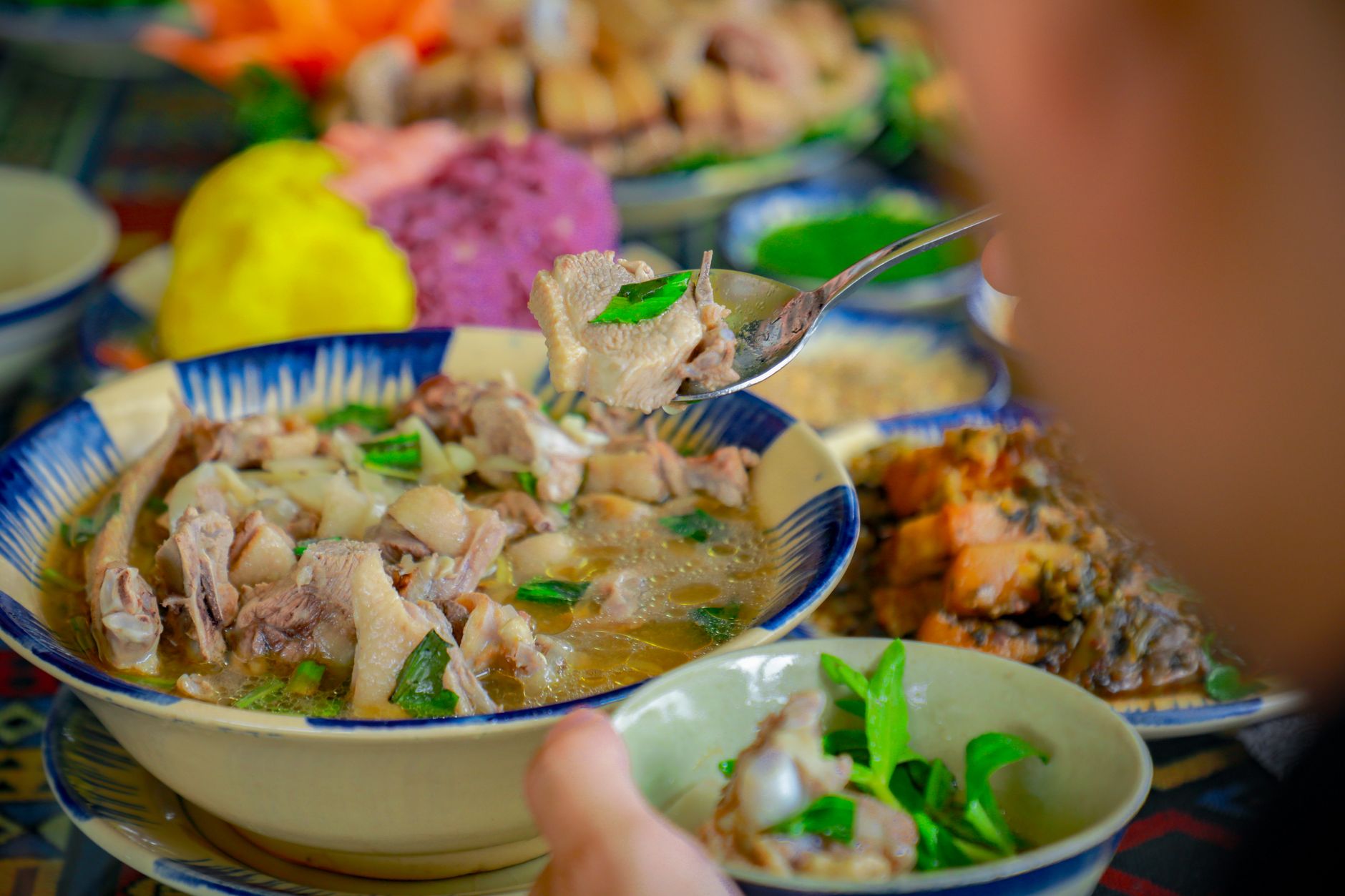
Lao Cai's most iconic dish is "bánh canh Lao Cai"—thick, chewy noodles made from tapioca or rice flour, served in a pork-bone broth with shredded pork, shrimp, and often a poached egg. The noodles are substantial, almost doughy, nothing like the delicate strands of "[phở](/posts/pho (쌀국수 / 越南河粉 / フォー)-vietnam-noodle-soup-guide)" or "mi quang". A bowl costs 35,000–50,000 VND at a street stall.
The best bánh canh in the city is at unmarked stalls near the Lao Cai Market (Chợ Lao Cai), on Hoang A Tuc Street. Open 6–10 a.m. only. Vendors ladle broth from pots that have been simmering since 4 a.m.; the pork ribs are soft enough to fall apart with a spoon. Go early. By 9 a.m., the best broths are depleted.
Market food and where locals actually eat
Lao Cai Market (open 5 a.m.–11 a.m.) is the real kitchen of the city. On the ground floor, vendors sell fresh noodles, vegetables, and live poultry. Upstairs, a dozen "bánh" (bread) and noodle stalls operate side-by-side. Order at the counter, find a stool, eat.
Try:
- Bánh chưng (sticky rice cake wrapped in dong leaves, typically eaten at Tet but available year-round here): 15,000 VND. Ask for bánh chưng nóng (hot, fresh-made).
- Bánh cuốn (steamed rice-flour rolls with ground pork and mushrooms): 20,000 VND for three rolls, eaten with a dipping sauce of fish sauce, chili, and garlic.
- Cơm tấm (broken-rice plate with grilled pork chop, fried shallots, a fried egg, and a small bowl of broth): 40,000 VND. One vendor on the market's east side has been making it the same way for 15 years.
West of the market, along Hoang Van Thu Street, a row of low-slung stalls serves "bún chả"—grilled pork (often heart, liver, or belly) over noodles with herbs and dipping sauce. 45,000 VND per bowl. The meat is charred, salty, and rich. Sit on plastic stools; the plastic tablecloths are reused but food hygiene is reliable.
Grilled meat and "thịt nướng"
Lao Cai's proximity to the mountains means game and hill-raised pork are more common here than in the delta. Grilled pork ribs, grilled chicken heart, and grilled beef are staples at family dinners and restaurants alike.
For casual grilled meat, head to Thịt Nướng An (no English sign; ask locals), a family-run stall on Pham Thi Phuong Street, near the corner of Tran Phu. It's open 11 a.m.–9 p.m. Order by weight: pork ribs (sườn), pork belly (thịt ba chỉ), or beef brisket (nạm bò). You'll pay 200,000–250,000 VND per kg. The grill is at the front; you watch your meat cook. Come with friends and order a mix. Serve yourself with lettuce leaves, fresh herbs (mint, coriander, basil), and dipping sauces. The owner's wife makes a peanut sauce that's worth the trip alone.

Photo by Gibson Chan on Pexels
Border influence: Vietnamese-Chinese fusion
Lao Cai's Chinese border means Chinese traders, truck drivers, and their families pass through regularly. A few older restaurants serve hybrid dishes—Vietnamese ingredients and cooking methods with Chinese spice profiles.
Mien Truc Restaurant (55 Hoang Van Thu Street) is one of the last. It serves dishes like pork and Chinese broccoli stir-fried with soy and oyster sauce, spicy beef with dried chilies (Sichuan-style heat), and braised pork leg with star anise. Mains are 80,000–120,000 VND. The décor is dated, but the cooking is honest and the owner speaks some Mandarin if you're curious about the history. It's not a tourist spot—locals eat there for lunch.
Coffee and casual breakfast
Lao Cai's coffee culture is understated compared to Hanoi or Saigon. "Cà phê sữa đá" (iced coffee with sweetened condensed milk) is the default at street stalls: 15,000–20,000 VND. Few places make "egg coffee" or specialty brews.
For breakfast, grab a "bánh mì" from one of the vendors on the corner of Hoang Van Thu and Tran Phu streets. A banh mi with pâté, cold cuts, pickled vegetables, and cilantro costs 25,000 VND. The bread is baked fresh at 5 a.m. each morning.
If you want to sit and linger, Hanoi Café (12 Hoang Van Thu Street) serves decent coffee, fresh pastries, and Vietnamese breakfasts in a quiet, air-conditioned room. A ca phe sua da is 20,000 VND; an egg custard tart is 18,000 VND. It's the most "traveler-friendly" spot in town—Wi-Fi works, bathrooms are clean—but it's also where you'll find other tourists and your meal will cost 50% more than at a street stall.
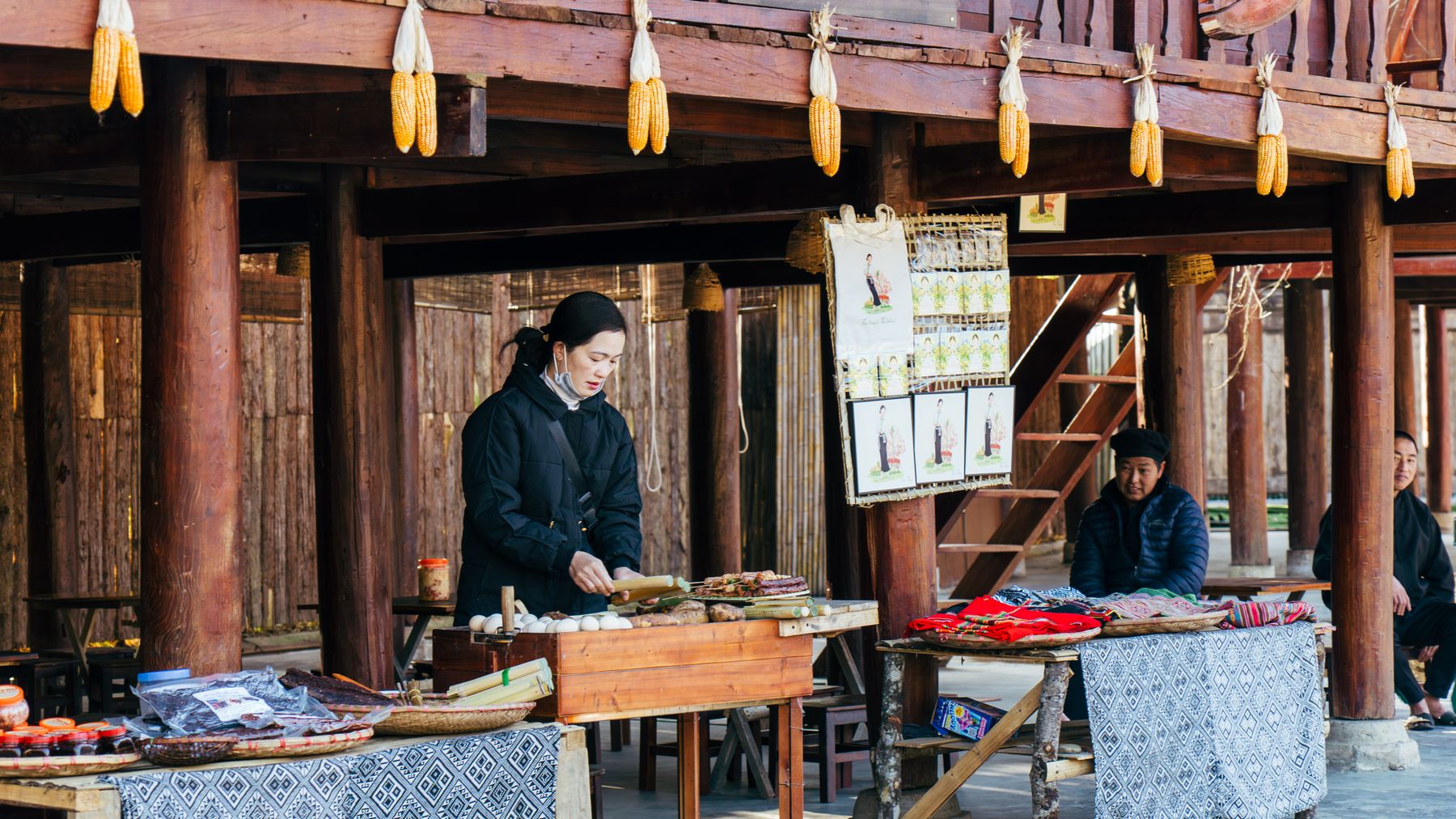
Photo by Gibson Chan on Pexels
Tourist traps and what to avoid
The stretch of Hoang A Tuc Street nearest the Old Town market has several restaurants with laminated English menus and inflated prices. A simple noodle soup there costs 60,000–80,000 VND; the same bowl at a market stall is 35,000. Avoid anything with big English signage or photos of dishes on the window.
The restaurants catering to Sapa-bound tourists often oversalt dishes, overcharge, and source ingredients from lower-quality suppliers. Locals rarely eat in these places.
Cost expectations and meal budgets
A full meal at a street stall or market (noodles, a drink, a small snack): 50,000–70,000 VND (~$2–3 USD).
A casual lunch at a local restaurant (grilled meat, rice, soup): 100,000–150,000 VND (~$4–6 USD).
A sit-down meal at a mid-range restaurant with waiter service: 150,000–250,000 VND (~$6–10 USD).
Drinks: coffee 15,000–20,000 VND; "bia hơi" (fresh beer) 12,000–15,000 VND per glass; bottled water 8,000 VND; fresh fruit smoothies 20,000–25,000 VND.
Frequently Asked Questions
What does a bowl of banh canh cost at Lao Cai street stalls?
Banh canh Lao Cai — thick tapioca or rice-flour noodles in pork-bone broth with shredded pork, shrimp, and a poached egg — costs 35,000–50,000 VND at street stalls near Lao Cai Market on Hoang A Tuc Street. Vendors start their broth at 4 a.m., and the best pots are depleted by 9 a.m., so arrive between 6 and 8 a.m. for the richest bowl.
Where can first-time visitors eat cheap local food in Lao Cai city?
Lao Cai Market, open 5–11 a.m., is where locals eat. Upstairs stalls serve banh cuon (steamed rice rolls with pork and mushrooms) for 20,000 VND and com tam (broken rice with grilled pork, fried egg, and broth) for 40,000 VND. Along Hoang Van Thu Street west of the market, bun cha — grilled pork over noodles with herbs — runs 45,000 VND per bowl.
When should you visit Lao Cai Market to get the best food selection?
Go before 9 a.m. The market opens at 5 a.m. and runs until 11 a.m., but banh canh stalls on Hoang A Tuc Street sell out their best broth by 9 a.m. Vendors simmer pork-bone broth from 4 a.m., and once the ribs are gone, they are gone for the day. Earlier is better for both quality and variety across all stalls.
Practical notes
Most stalls close by 10 a.m. or don't open until 11 a.m.—Lao Cai is an early-eating town. Bring cash (VND); many market stalls and small restaurants don't take cards. English is rarely spoken; learn the names of dishes or point at what other people are eating. The wet market is the safest, cheapest, and most authentic place to eat, and hygiene is reliable despite the crowded appearance.
Last updated · May 29, 2026 · independently researched, never sponsored.