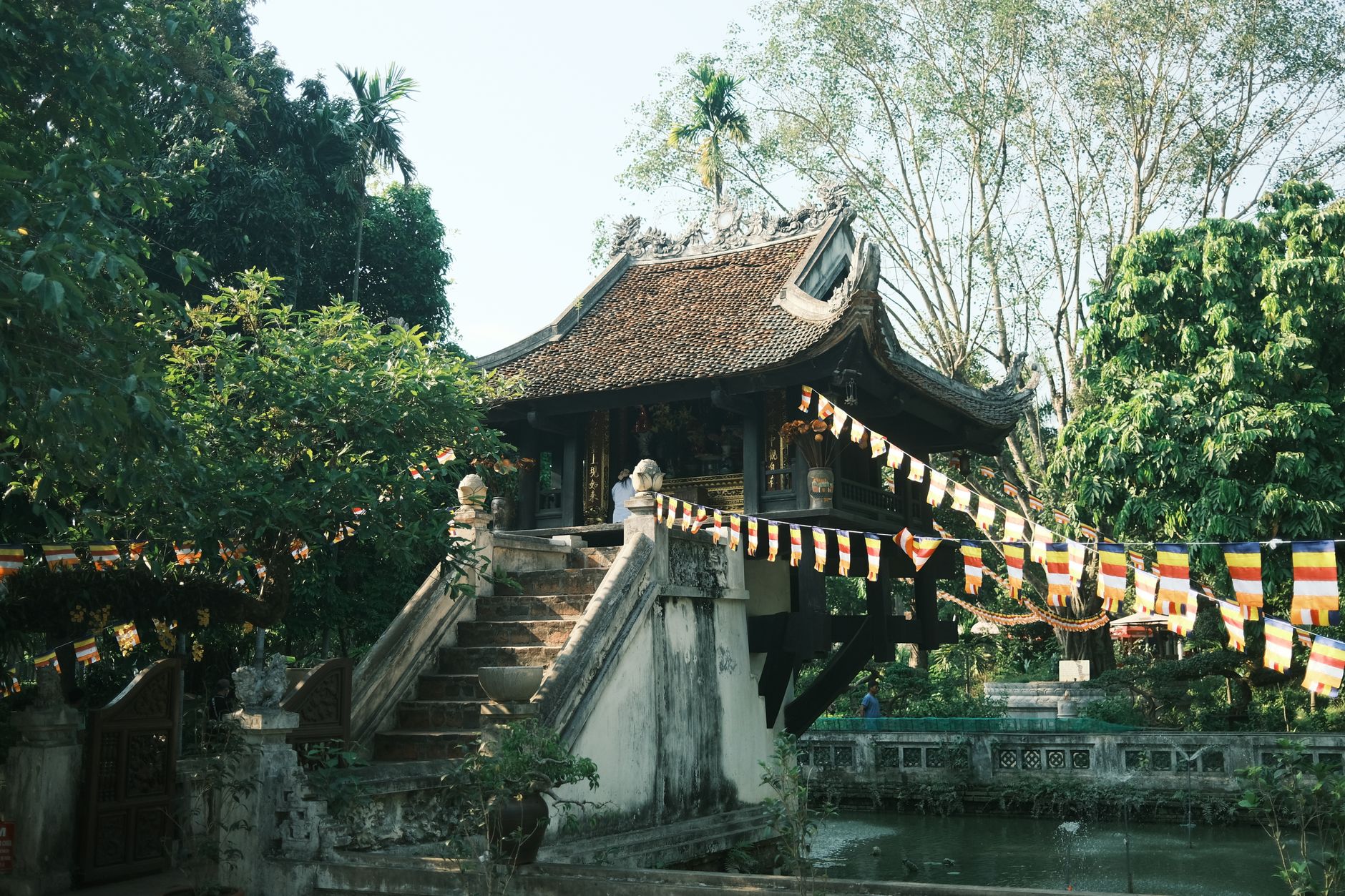
Hanoi's Old Quarter — "Pho Co" to locals — is a roughly 100-hectare tangle of narrow streets north of Hoan Kiem Lake. It's loud, chaotic, and one of the few places in Southeast Asia where a medieval street layout still dictates daily commerce. If you only have a day or two in Hanoi, you'll probably spend most of it here.
What it is and why it matters
The Old Quarter has been a trading district since the 11th century, when artisan guilds set up shop along the Red River. Each street was named for its trade — Hang Bac (Silver Street), Hang Gai (Silk Street), Hang Ma (Paper Street) — and while the goods have shifted over the centuries, the naming convention stuck. Today, Hang Bac sells more jewelry than raw silver, and Hang Ma is wall-to-wall festival decorations, especially before Tet and Mid-Autumn Festival.
The architecture is a compressed timeline: French colonial shophouses sit next to narrow "tube houses" — buildings sometimes only 2-3 meters wide but 50-60 meters deep — alongside concrete rebuilds from the 1990s. It's not preserved like Hoi An. It's a living, working neighborhood where people hang laundry over streets that haven't been widened since the Ly Dynasty.
Why travelers go
The Old Quarter is where Hanoi (하노이 / 河内 / ハノイ)'s density becomes a feature. You can eat "pho" for breakfast, buy propaganda posters, get a haircut on the sidewalk, drink "bia hoi" on a plastic stool, and watch a Water Puppetry show — all within a 15-minute walk. It's also the main backpacker and mid-range hotel zone, so logistics are simple.
More importantly, it's still a real neighborhood. Families live above shops, elderly residents do tai chi by Hoan Kiem Lake at dawn, and the street food vendors have been in the same spots for decades. That's increasingly rare in rapidly developing Vietnamese cities.
Best time to visit
October to December is the sweet spot. Temperatures drop to 18-25°C, humidity eases off, and the light turns golden in the afternoons. September can still be rainy. January and February bring Tet (뗏 (베트남 설날) / 越南春节 / テト) — the streets empty out dramatically as Hanoians leave to visit family, which is either fascinating or inconvenient depending on what you want. Many restaurants close for a week.
Avoid June through August if you dislike heat. Hanoi in July hits 38°C with oppressive humidity, and the Old Quarter's narrow streets trap it like an oven. That said, summer also means cheap hotel rates and fewer tourists.
How to get there
From Noi Bai International Airport, the Old Quarter is about 30 km east. A metered taxi (Mai Linh or Vinasun are reliable) costs 350,000-450,000 VND and takes 40-60 minutes depending on traffic. Grab is usually cheaper — around 250,000-350,000 VND. The public bus 86 runs a fixed route to the Old Quarter for 45,000 VND per person, departing every 25-30 minutes. It drops you near Hoan Kiem Lake, a 5-minute walk to most Old Quarter hotels.
If you're arriving by train at Ga Ha Noi (Hanoi Station), the Old Quarter is about 2 km north — a 30,000-40,000 VND Grab ride or a 20-minute walk up Tran Hung Dao street.

Photo by tu nguyen on Pexels
What to do
Walk the 36 streets without a plan
Seriously. The Old Quarter rewards aimless wandering more than any checklist. Start from Dong Xuan Market — Hanoi's largest indoor market, operating since 1889 — and drift south. Each block shifts in character. Hang Buom has backpacker bars. Hang Quat sells red banners and altar supplies. Ta Hien is the beer street that gets rowdy after 8 PM.
Visit Hoan Kiem Lake and Ngoc Son Temple
The lake anchors the southern edge of the Old Quarter. Early morning is best — the perimeter fills with joggers, dancers, and people practicing "tai chi." Cross the red The Huc Bridge to Ngoc Son Temple on the small island. Entry is 30,000 VND. It takes maybe 20 minutes, but the views back toward the Old Quarter from the bridge are worth the detour.
Catch a Water Puppetry show at Thang Long Theatre
The theatre sits on the northeast corner of Hoan Kiem Lake. Shows run several times daily, last about 50 minutes, and cost 100,000 VND. It's genuinely entertaining — the puppeteers stand waist-deep in water behind a bamboo screen. Book a couple hours ahead on weekends; it sells out.
Explore Bach Ma Temple
One of Hanoi's four guardian temples, tucked on Hang Buom street. It dates to the 11th century and is dedicated to a white horse spirit. It's small, free to enter, and usually quiet — a sharp contrast to the street noise outside. Look for the carved wooden palanquin inside, one of the oldest surviving artifacts in the Old Quarter.
Weekend night market on Hang Dao
Friday through Sunday evenings, several blocks close to traffic and become a walking street. It's crowded and mostly sells cheap clothing and souvenirs, but the atmosphere is fun, and the food stalls along the edges sell grilled "nem chua" (fermented pork skewers), "banh trang tron" (rice paper salad), and sugarcane juice for 15,000-25,000 VND.
Where to eat
The Old Quarter is one of the best street food zones in the country. Two dishes to prioritize:
Pho — Pho Thin at 13 Lo Duc (technically just outside the Old Quarter) serves a beef pho with seared fat and a rich, almost smoky broth. A bowl runs 50,000-60,000 VND. For a more classic style, Pho Gia Truyen at 49 Bat Dan always has a queue — that's how you know.
Bun cha — grilled pork patties with rice noodles and herb plates. Bun Cha Huong Lien at 24 Le Van Huu got famous after Barack Obama and Anthony Bourdain ate there in 2016, but the version at Bun Cha Dac Kim on Hang Manh street is just as good and less of a production. Expect 40,000-60,000 VND per serving.
For morning fuel, track down an egg coffee at Cafe Giang on Nguyen Huu Huan street — the family claims to have invented the drink in the 1940s. It's 35,000 VND and tastes like warm tiramisu.
Where to stay
The Old Quarter has hundreds of hotels and hostels packed into a small area.
- Budget: Dorm beds run 150,000-250,000 VND/night. Private rooms in mini-hotels start around 400,000 VND.
- Mid-range: Expect 800,000-1,500,000 VND for a clean room with breakfast, air conditioning, and decent Wi-Fi. Streets like Hang Be and Hang Bong have clusters of these.
- Upscale: A few boutique hotels charge 2,000,000-4,000,000 VND. The Hanoi La Siesta chain has several properties in the quarter with rooftop bars.
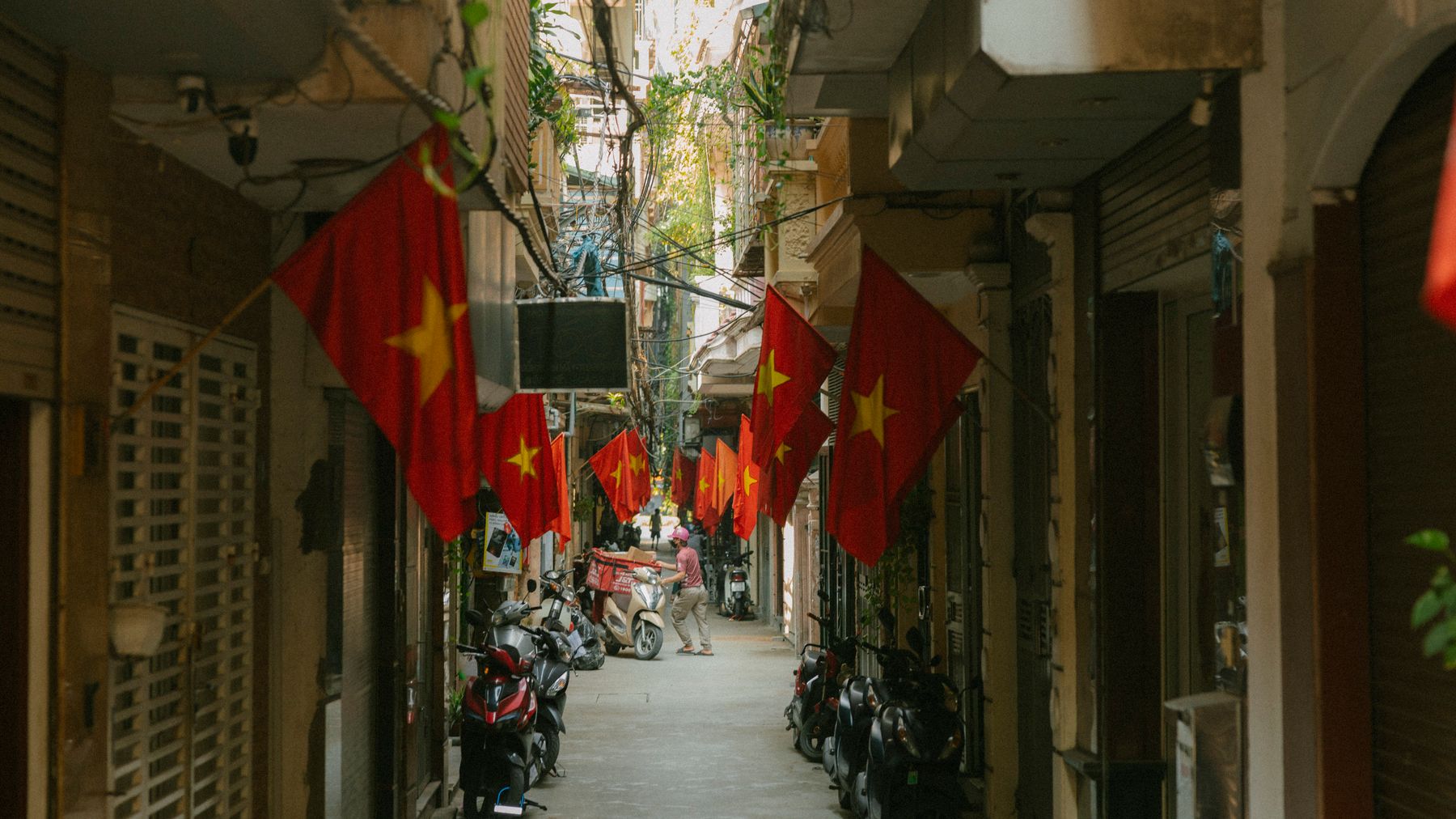
Photo by HONG SON on Pexels
Practical tips locals would tell you
- Cross the street with steady, predictable movement. Don't stop, don't sprint, don't make sudden turns. Motorbikes will flow around you.
- Carry small bills. Vendors selling "banh mi" or fruit often can't break 500,000 VND notes.
- Earplugs help if your hotel faces a main street. Horn noise starts around 6 AM.
- Tap water is not drinkable. Buy bottled water — 5,000-10,000 VND at any shop.
- Learn "xin chao" (hello) and "cam on" (thank you). It genuinely changes how people interact with you.
Common mistakes to avoid
- Over-planning. You don't need a color-coded itinerary for an area you can walk across in 20 minutes. Just go outside.
- Only eating on Ta Hien beer street. The tourist strip food is fine but overpriced. Walk two blocks in any direction for better meals at half the cost.
- Taking cyclos without agreeing on price first. Settle the fare before you sit down. A 15-20 minute ride should be around 100,000-150,000 VND. If someone quotes in dollars, walk away.
- Skipping the early morning. The Old Quarter between 6-7 AM — before the tourist wave — is a completely different place. That's when you see the real neighborhood.
Practical notes
The Old Quarter is walkable in a single day, but it rewards two or three. Budget at least one full morning for food and one evening for the night market or Ta Hien street. If you're heading to Sapa, Ha Long Bay, or Ninh Binh, most tour buses and shuttle vans depart from offices clustered in the Old Quarter — booking is easy from any hotel.
Last updated · May 29, 2026 · independently researched, never sponsored.