— HẾT —
Cập nhật lần cuối · May 29, 2026 · nghiên cứu độc lập, không tài trợ.
We use minimal analytics + ads (no personal tracking). See our privacy policy.
Da Lat has quietly become Vietnam's most livable remote-work base — cool air, cheap rent, and a cafe scene dense enough to keep you caffeinated for months.

Cập nhật lần cuối · May 29, 2026 · nghiên cứu độc lập, không tài trợ.
Bài viết khác về thành phố này.

Thousands of foreigners teach English or freelance in Vietnam on tourist visas. Here is what Vietnamese law actually says, when it gets enforced, and how to do it properly.

…
Hotels, homestays, hostels — strongest inventory in Vietnam.
From Da Lat's hillside wineries to Hanoi's old-quarter street food, this 8-day itinerary connects Vietnam's most distinctive food cultures in one focused trip.

Vietnam's herbal tea tradition goes well beyond lotus tea. Artichoke, chrysanthemum, and voi leaf each have a devoted following — here's what they taste like and where to find them.
Bài viết khác trong vùng này.

Forget everything you know about standard noodle soup. In the Central Highlands city of Pleiku, the local obsession is 'pho kho', a two-bowl ritual that defines the region's breakfast culture.

Quy Nhon is often overlooked for its neighbors, but its rice-based specialties, particularly the local take on vermicelli, define the city's culinary identity.

Hoi An is slow, cheap, and surprisingly well-connected. Here is what a working month actually looks like — costs, internet, and where to sit with a laptop.
More articles from the same category.

Hoi An works better as a slow-living base than most people expect — if you know where to sleep, where to plug in, and how far your budget actually stretches.

Skip the crowded highways and ride this 4-day motorbike loop from Quy Nhon through the dramatic cliffs of Phu Yen and the quiet valleys of the Central Highlands.
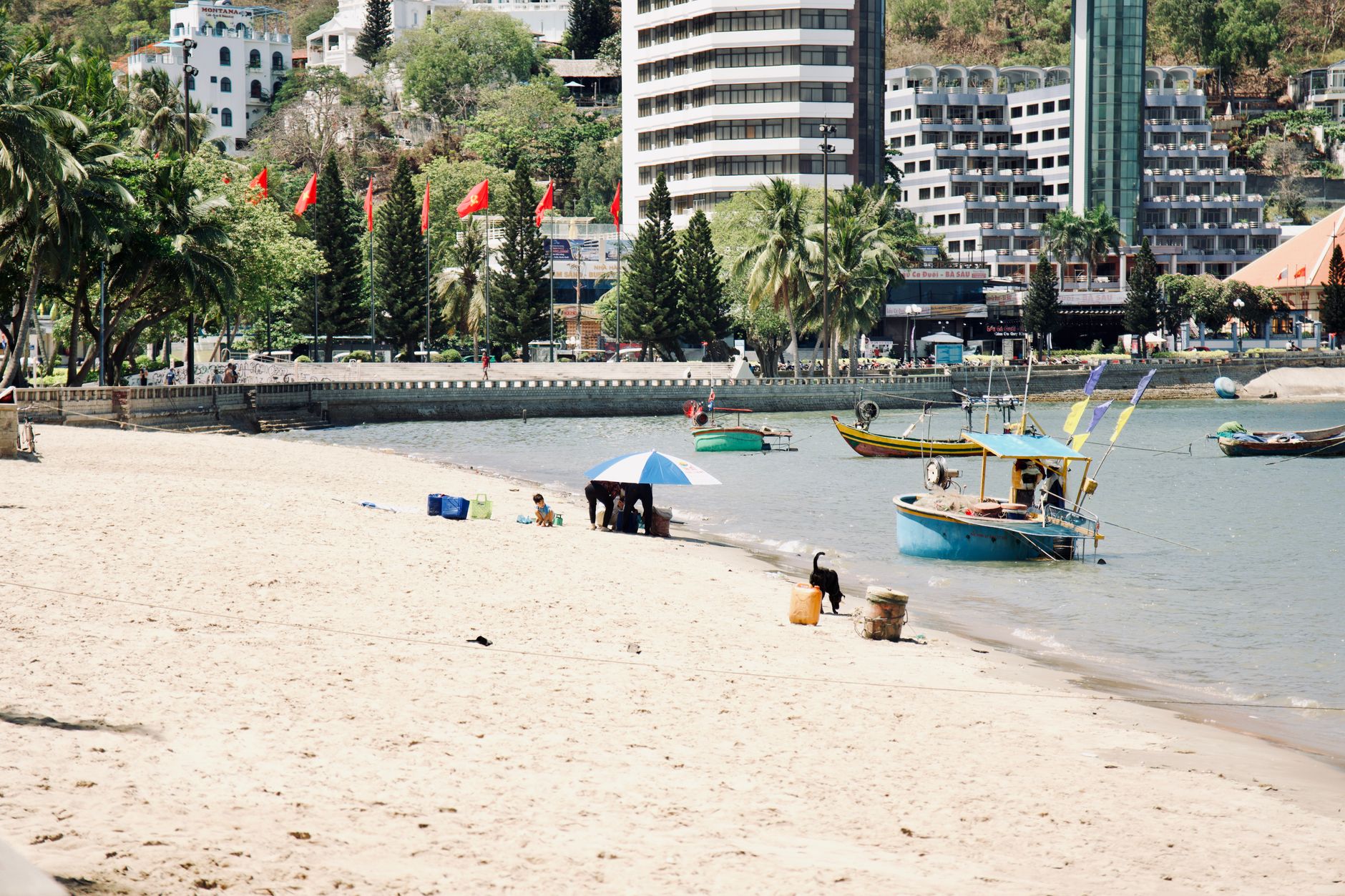
Escape the weekend crowds with this slow-paced, five-day family itinerary to Vung Tau, featuring kid-friendly seafood spots, shaded walks, and quiet coastal day trips.
Vung Tau is Saigon's pressure-release valve — two hours by ferry, a long beach, and one of the south's best street-food scenes. Here's how to do it in 48 hours.

Five destinations within reach of Saigon, each with a best season and a reason to go — a practical rotation for residents and repeat visitors alike.

Five destinations within 150 km of Hanoi, each with a best season, a practical transport option, and a reason to actually go.
Da Lat sits at 1,500 meters above sea level and runs about 18–22°C year-round. That alone sets it apart from every other Vietnamese city where you'd consider putting down a laptop for a month.
The short answer: it's cheap, cool, and just functional enough. A furnished studio or one-bedroom in a residential neighborhood like Hoang Dieu or around Ho Xuan Huong lake runs 4,000,000–7,000,000 VND per month, utilities included. That's roughly the price of a week in a Hanoi serviced apartment. Landlords are used to short-term stays of one to three months — the city has a long history of Vietnamese students and domestic tourists taking extended breaks here.
Internet quality has improved significantly in the last few years. Most apartments and cafes now offer fiber connections through Viettel or VNPT. Speeds of 50–100 Mbps are common. Power cuts happen occasionally in rainy season (roughly May through October), but they're short. A UPS battery backup is worth packing if your work depends on zero downtime.
The other draw is the food. Da Lat (달랏 / 大叻 / ダラット) has its own micro-cuisine built around the highland's unusual produce: artichoke, black fungus, strawberries, avocado. A bowl of "banh canh" here gets mushrooms and pork belly that you won't see in the coastal version. Grilled corn on Phan Dinh Phung Street costs 15,000 VND. You'll spend less on food here than almost anywhere in Vietnam.
Da Lat's cafe culture is genuinely absurd in scale for a city of 220,000 people. The area around Truong Cong Dinh Street alone has thirty-plus cafes within a ten-minute walk. A few that consistently work for laptop sessions:
Nhà Của Nắng (House of Sunshine) on Hai Thuong street draws a local student crowd and has solid Wi-Fi, multiple power outlets at most tables, and opens at 7am. A "ca phe sua da" runs 30,000 VND.
Là Việt Coffee near the Da Lat train station has become a go-to for longer work sessions — it's spacious, the cold brew is serious, and they tolerate three-hour occupancy without pressure.
The Married Bean on Truong Cong Dinh is a smaller spot that leans into specialty beans from the Central Highlands (중부 고원 / 中部高原 / 中部高原). Quieter than most, better for focus work.
True dedicated coworking spaces are still sparse. Toong Da Lat (part of a national chain) is the most established option, offering day passes around 100,000–150,000 VND and monthly desks starting around 2,000,000 VND. It has stable fiber, a printer, and meeting rooms — practical if you need professional infrastructure. Mì Láng cafe-cowork hybrid on Bui Thi Xuan has a younger crowd and more of a hostel-common-room energy, which works for some people and not others.
For an afternoon change of pace, the area around the Da Lat Flower Garden has several quieter cafes with valley views. Not optimal for video calls — the background alone will generate questions from your colleagues.

Photo by HONG SON on Pexels
The easiest areas to base yourself:
Ward 1 / city center: walkable to everything, noisier, more Vietnamese city feel. Good for people who want restaurants and markets on their doorstep. Cho Da Lat (the main market) is a five-minute walk from most guesthouses here.
Hoang Dieu / Ward 7: quieter residential streets, a ten-minute drive from the center. Monthly rents here skew lower — 4,000,000–5,500,000 VND for a clean one-bedroom. More pine trees, fewer tourist restaurants.
Phu Dong / the northern hills: the hillside zone where most of the Instagram-friendly guesthouses sit. Beautiful, isolated, expensive for what you get. Fine for a week; less practical for a month of actual work.
Facebook groups like "Da Lat Expats" and "Da Lat Nomads Vietnam" move fast — landlords post directly, and you can usually find a furnished place within two or three days of arriving. Booking.com has listings too but at a 20–40% markup over direct rates.
Photo by HONG SON on Pexels
Be honest with yourself before booking a one-way ticket here. A few gaps:
English is limited. Da Lat gets international tourists but is not a Hoi An-style expat town. Outside hostels and a handful of cafes, daily life runs in Vietnamese. This isn't a dealbreaker, but it's different from Saigon or Hanoi, where workarounds are everywhere.
No reliable coworking infrastructure. If you need a dedicated desk, fast printing, frequent video calls in a quiet room, and reliable IT support, Da Lat is improvised compared to Saigon's coworking ecosystem. Toong covers basics, but that's about it.
Transport dependency. The city is hilly and spread out. Without a motorbike, you're Grab-dependent for anything beyond the immediate center. Renting a semi-automatic scooter runs 150,000–200,000 VND per day or around 2,500,000 VND per month. Factor it in.
Rainy season is genuinely wet. July through September sees near-daily afternoon downpours. The city doesn't flood badly, but outdoor cafe culture and early evening walks become harder. Pack accordingly.
Best arrival: fly into Da Lat (DLI) directly from Hanoi or Saigon on VietJet or Vietnam Airlines; the fare is typically 500,000–900,000 VND one-way booked two to three weeks ahead. The airport is 30 km from the city center — budget 200,000–250,000 VND for a Grab car. Most nomads settle in for four to eight weeks; the sweet spot before the novelty of the cold wears thin and the limited English starts to chafe.