— HẾT —
Cập nhật lần cuối · May 29, 2026 · nghiên cứu độc lập, không tài trợ.
We use minimal analytics + ads (no personal tracking). See our privacy policy.
Hoi An works better as a slow-living base than most people expect — if you know where to sleep, where to plug in, and how far your budget actually stretches.

Cập nhật lần cuối · May 29, 2026 · nghiên cứu độc lập, không tài trợ.
Bài viết khác về thành phố này.

Locals live on Zalo, tourists default to WhatsApp — here's why that gap matters and how to bridge it before your trip.

…
Hotels, homestays, hostels — strongest inventory in Vietnam.
Thousands of foreigners teach English or freelance in Vietnam on tourist visas. Here is what Vietnamese law actually says, when it gets enforced, and how to do it properly.

The Wise debit card works well in Vietnam if you know the fee structure. Here's how to use it at ATMs and merchants without losing money on bad rates.
Bài viết khác trong vùng này.

Forget everything you know about standard noodle soup. In the Central Highlands city of Pleiku, the local obsession is 'pho kho', a two-bowl ritual that defines the region's breakfast culture.

Quy Nhon is often overlooked for its neighbors, but its rice-based specialties, particularly the local take on vermicelli, define the city's culinary identity.
Da Lat has quietly become Vietnam's most liveable remote-work base — cool air, cheap rent, and more cafes than you can reasonably test in a month.
More articles from the same category.

Hoi An is slow, cheap, and surprisingly well-connected. Here is what a working month actually looks like — costs, internet, and where to sit with a laptop.

Da Lat has quietly become Vietnam's most livable remote-work base — cool air, cheap rent, and a cafe scene dense enough to keep you caffeinated for months.

Skip the crowded highways and ride this 4-day motorbike loop from Quy Nhon through the dramatic cliffs of Phu Yen and the quiet valleys of the Central Highlands.

From Da Lat's hillside wineries to Hanoi's old-quarter street food, this 8-day itinerary connects Vietnam's most distinctive food cultures in one focused trip.
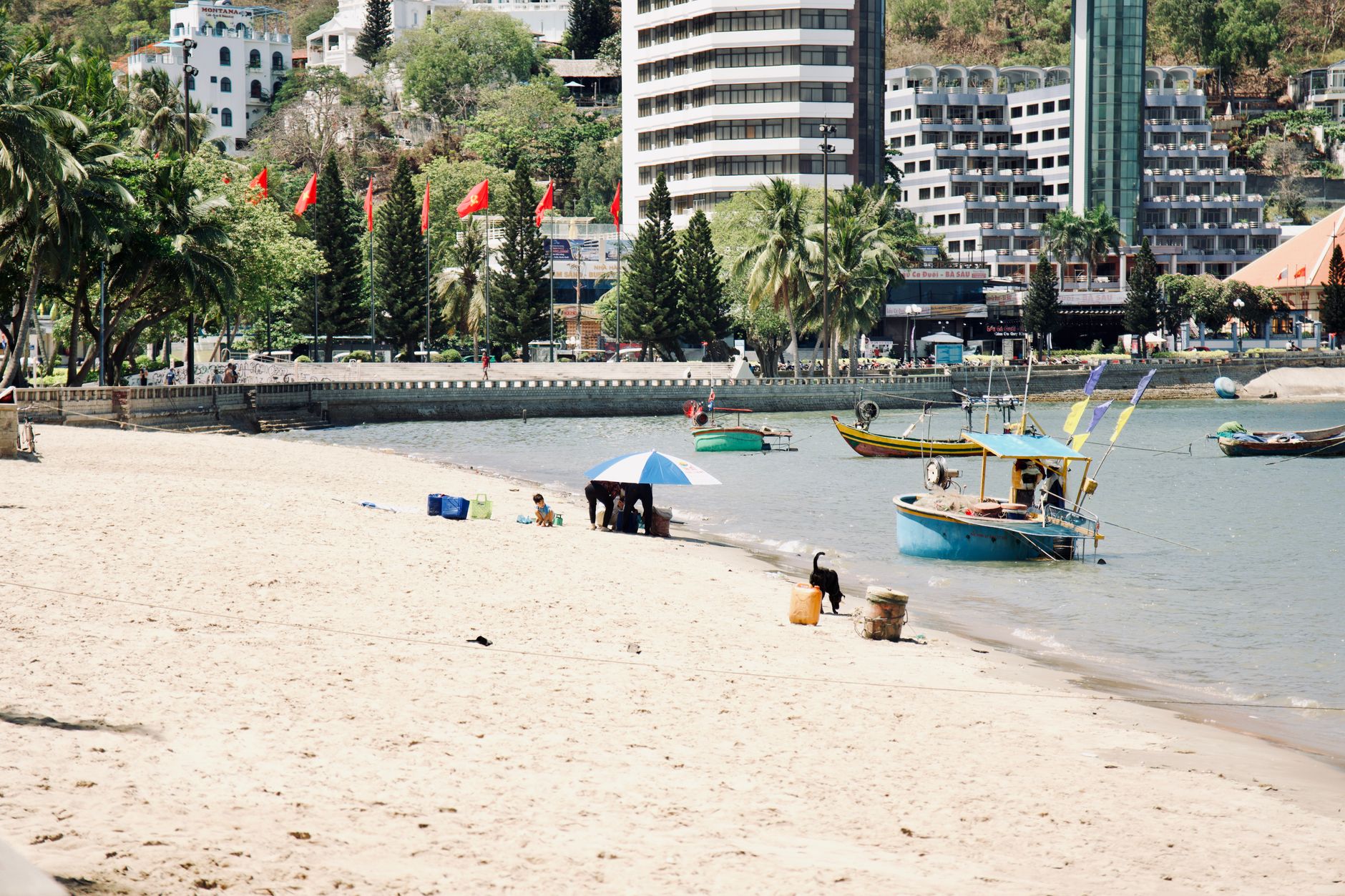
Escape the weekend crowds with this slow-paced, five-day family itinerary to Vung Tau, featuring kid-friendly seafood spots, shaded walks, and quiet coastal day trips.
Vung Tau is Saigon's pressure-release valve — two hours by ferry, a long beach, and one of the south's best street-food scenes. Here's how to do it in 48 hours.
Hoi An has a reputation for day-trippers and tailors. Spend a month there and you find something different: a genuinely liveable town with cheap rent, decent internet, good food within walking distance, and just enough going on to stop cabin fever setting in.
This is the fork that shapes your whole month. The Old Town — the lantern-lit UNESCO core along the Thu Bon River — is atmospheric but noisy after 9 a.m. when tour groups arrive. Rent is higher here, guesthouses are often full of two-night guests, and the Wi-Fi in older shophouse buildings can be patchy through thick walls.
An Bang Beach, about 3 km east, runs slower. The streets behind the beachfront are lined with homestays and small guesthouses that cater to people staying weeks rather than days. It is quieter, the air moves, and a motorbike gets you into the Old Town in ten minutes. Most long-stay nomads end up out here.
Cam Nam Island, just across the footbridge from the Old Town, is a middle option: local neighbourhood feel, lower prices, five-minute bicycle ride to the old quarter. Worth considering if you want proximity without the noise.
For a full month, a homestay with a monthly rate will almost always beat a guesthouse on cost and comfort. Around An Bang, expect to pay 5,000,000–8,000,000 VND per month for a private room with air-con, a small desk, and included breakfast. Some places will negotiate a free dinner a few nights a week if you commit early.
Guesthouses in the Old Town charge 300,000–600,000 VND per night for similar rooms. Do the math: a guesthouse month runs 9,000,000–18,000,000 VND before food. It is not worth it unless you specifically need daily housekeeping and a front desk.
What to ask before you book: download speed (ask for a screenshot of a speed test — anything above 30 Mbps is workable, 50+ is comfortable), whether there is a backup SIM router, and whether the desk has a power point within cable reach. These feel like small things until you are on a client call and the router is across the room.
Hoi An (호이안 / 会安 / ホイアン) is not Da Nang in terms of connectivity. Fibre is available through Viettel and VNPT in most of the newer builds around An Bang and Cam Thanh, and speeds of 50–100 Mbps are achievable on a good day. Older shophouses in the Old Town often run slower ADSL lines that struggle under load.
Get a local SIM as backup regardless. Viettel's 4G coverage across Hoi An town and the An Bang area is solid. A 30-day data package with 60 GB costs around 200,000–250,000 VND. Tether when the homestay line drops, which it occasionally will during heavy rain.

Photo by Bid on Pexels
Most people split their time between their accommodation and one or two regular cafes. The ones that work for actual work — not Instagram — tend to be slightly off the main drag.
Reach cafe (near An Bang) has reliable Wi-Fi, a shaded courtyard, and a staff that does not rush you after one order. The Espresso Station on Nguyen Phuc Chu handles pour-overs properly and has strong connectivity. In the Old Town, a cluster of cafes along Bach Dang and the lanes behind Hoi An Market offer seating all day, though expect ambient noise by midday.
There is no dedicated coworking space in Hoi An at the scale you would find in Hanoi or Saigon. The town is small enough that cafes fill the gap. If you need a private booth for video calls, plan for that back at your accommodation.
These are realistic mid-range figures, not minimums:
Total, living reasonably without being austere: 11,000,000–14,000,000 VND per month (roughly USD 440–560 at current rates). You can go lower on a bicycle and eating exclusively local. You will go higher if you eat at the tourist-facing restaurants in the Old Town every night.
Photo by Bid on Pexels
The town rewards routine. Morning markets on Tran Phu and near Cho Hoi An fill up early and are largely done by 8 a.m. — worth factoring into when you schedule your first work block. Afternoons in summer (March–August) are hot enough that most people do not fight it; late afternoon is beach time, and the second work session runs 4–7 p.m.
Thu Bon River at dusk is where Hoi An actually slows down enough to feel like the place people describe. The lanterns come on, the tourist noise drops a register, and a Vietnamese coffee (베트남 커피 / 越南咖啡 / ベトナムコーヒー) on the riverbank costs the same as anywhere else in town. That hour is worth protecting.
Day trips to Da Nang (about 28 km north) are easy by motorbike or the frequent bus service, useful for visa runs to a consulate or picking up gear you cannot find locally. My Son, the Cham temple complex, is 40 km southwest and worth a half-day on a weekday when crowds are manageable.
Visas: most nationalities can enter Vietnam on the 90-day e-visa, renewable once inside the country — check current rules before you travel as processing times vary. The rainy season in Hoi An runs roughly October–December; flooding in the Old Town is a real occurrence in November, and working around that means keeping accommodation on higher ground. Book a month-rate homestay at least two to three weeks ahead if you are coming between January and April, when An Bang fills up fast.