Overview
This four-day loop takes you 150 km west and north of Hanoi into three nature reserves that most tourists skip. You'll spend nights in a minority village homestay, see endangered primates up close, wade through emerald rice paddies, and return to the city without retracing your route. It's a genuine escape from tourist infrastructure—bring good shoes, a light rain jacket, and cash in VND; ATMs are sparse.
Day 1 — Hanoi to Cuc Phuong National Park
Morning to afternoon: drive west (120 km, 3 hours)
Leave Hanoi early on a hired motorbike or arrange a private car (around 800,000 VND for the day). The route heads through Phu Ly and Thai Nguyen toward the park, winding into hills as you approach. Stop for lunch in a small town—pho or "com tam" (broken-rice plates) cost 30,000–50,000 VND.
Arrive at Cuc Phuong around 1 p.m. and check into your accommodation near the main gate. Basic bungalows inside the park cost 150,000–300,000 VND; budget guesthouses in nearby Nho Quan town are cheaper but less convenient.
Afternoon: Primate Rescue Center
Walk or bike to the Cuc Phuong Primate Rescue Center (5 km from the gate; entry included with park fee). This is the real reason to visit—staff rehabilitate confiscated langurs and gibbons for release. You'll see white-headed "langurs" in large enclosures, playful "golden-headed" langurs, and a breeding program that's genuinely interesting if you care about conservation. Bring binoculars. Guides speak basic English. Budget 1.5 hours.
Evening: forest walk or rest
If energy allows, walk one of the shorter trails near the rescue center—the forest is noisy with bird calls at dusk. Otherwise, eat at your bungalow or a park restaurant (noodle soup, grilled fish, 50,000–100,000 VND) and sleep.
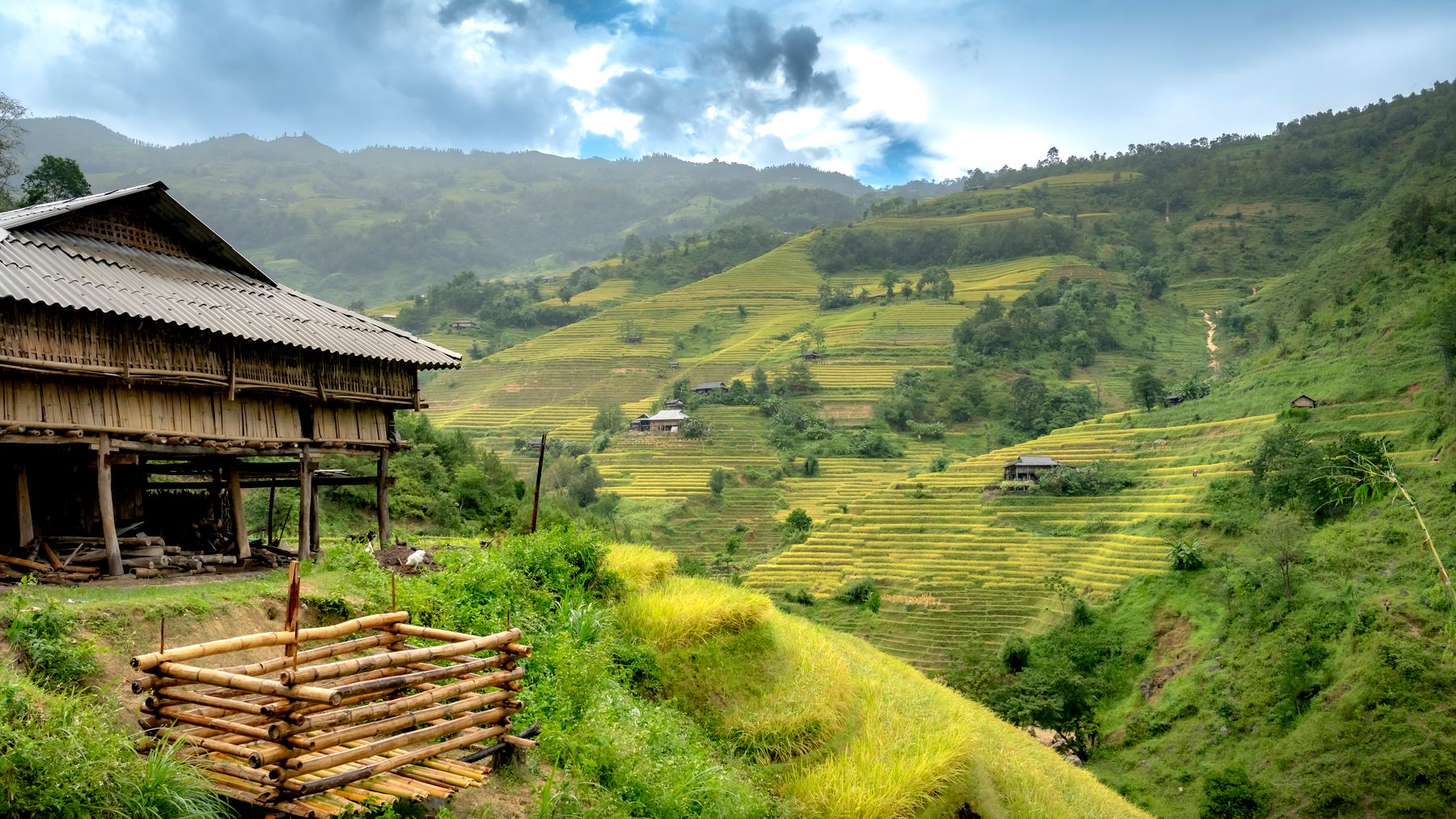
Photo by Quang Nguyen Vinh on Pexels
Day 2 — Cuc Phuong to Mai Chau
Morning: Cuc Phuong hike (optional)
Wake early and tackle the Ancient Tree Trail or the Thousand-Year Old Tree circuit if you want to feel the forest depth. Both are 3–4 km loops starting near the rescue center. The old-growth canopy is genuinely striking, and you may hear gibbons calling. By 9 a.m., head to the main gate to check out.
Drive to Mai Chau (90 km, 2.5 hours)
Head north and west through Phu Ly again, then loop toward Hoa Binh. The road climbs into karst country and narrows toward Mai Chau. Views open up as you descend into the valley—your first glimpse of the rice paddies and "stilt houses" that define the region.
Arrive in Mai Chau village by early afternoon. The main settlement is compact; homestays are scattered around the valley floor. Popular options include homestays run by Thai or Muong families (120,000–180,000 VND per person, including dinner and breakfast). Book ahead via a local agency in Hanoi (하노이 / 河内 / ハノイ) or email directly.
Afternoon and evening: valley orientation
Unpack, take a walk around the village, and chat with your host family. Many homestays provide a simple bike and a light dinner—sticky rice, grilled fish, boiled greens, and "bia hoi" (draught beer) at 5,000–10,000 VND per glass. Sleep early; the family will feed you breakfast at 6 or 7 a.m., which is good if you want to cycle before the heat peaks.
Day 3 — Mai Chau to Pu Luong
Morning: cycling and rice paddies
After breakfast, borrow the homestay's bike and pedal through the paddies toward Pu Luong. The route is roughly 25 km of dirt tracks and village lanes—mostly flat to gently rolling, with views across terraced fields. You'll pass through Thai villages and see water buffalo grazing. It's slow and beautiful, not a race; allow 4–5 hours with stops.
Alternatively, hire a motorbike taxi from your homestay to ride you partway (50,000–100,000 VND each leg), or book a guided day-trip from the village. Many homestays can arrange this.
Midday: Pu Luong arrival and waterfall
Reach Pu Luong Nature Reserve by early afternoon. This reserve is less developed than Cuc Phuong—more pristine, fewer tourists. Base yourself at one of the small eco-lodges or homestays in the hamlets at the reserve's edge (Kho Muong is the main access point). Expect 150,000–250,000 VND per night.
In the afternoon, walk downhill to a natural swimming hole in a stream (guides at your lodge can point you to the safest spot). The water is cool and clear, and you're likely alone. Bring a towel and water shoes; rocks are slippery.
Evening: rest and dinner
Eat at your lodge or a nearby family restaurant. Fish grilled in salt or clay pot, sticky rice, and leafy greens are the staple. Cost: 60,000–120,000 VND per person.

Photo by Quang Nguyen Vinh on Pexels
Day 4 — Pu Luong to Hanoi
Morning: hike and terrace views
Wake early. Take a 2–3 km walk through the reserve's rice-terrace core—guides from your lodge will accompany you. The terraces are most dramatic in early morning light, and you'll often have the landscape to yourself. Finish by 9 a.m.
Drive back to Hanoi (140 km, 4 hours)
Arrange a driver or motorbike taxi to collect you and head southeast via Thanh Hoa, then along the Red River valley. The route is scenic: limestone outcrops, small towns with roadside pho stalls, and flat farmland as you near the capital. Stop for lunch in a small town—grilled chicken "com tam (껌땀 / 碎米饭 / コムタム)" or noodles run 40,000–60,000 VND.
Arrive in Hanoi by late afternoon. If you've arranged a shared minibus (500,000–700,000 VND per person from a Hanoi tour agency), it will drop you at your hotel.
Frequently Asked Questions
How far is Cuc Phuong National Park from Hanoi?
Cuc Phuong National Park is 120 km west of Hanoi, roughly a 3-hour drive. The route passes through Phu Ly and Thai Nguyen before winding into hills near the park. You can hire a motorbike or arrange a private car for around 800,000 VND for the day. Arriving around 1 p.m. leaves time to reach the Primate Rescue Center the same afternoon.
What does a homestay cost in Mai Chau valley?
Homestays run by Thai or Muong families in Mai Chau typically cost 120,000–180,000 VND per person and include dinner and breakfast. Meals usually feature sticky rice, grilled fish, and boiled greens. Draught beer (bia hoi) runs 5,000–10,000 VND per glass. Book ahead through a local agency in Hanoi or by emailing the homestay directly, as popular spots fill up.
When should you arrive at Cuc Phuong to see the Primate Rescue Center?
Aim to arrive at Cuc Phuong by 1 p.m. on your first day, which leaves a full afternoon for the Primate Rescue Center 5 km from the main gate. Entry is included with the park fee. Budget 1.5 hours to see the langur and gibbon enclosures and the breeding program. If time allows after the visit, shorter trails near the center are worth walking at dusk for bird calls.
Practical notes
Bookings: Contact homestays directly or book via Hanoi travel agencies (Old Quarter is full of them). Mango Mango Tours and Buffalo Tours offer guided versions of this loop. Best time: October to November and March to April (dry, cool). June to September is hot and wet; motorbike roads can be rough. Bring VND cash—there's only one ATM in Mai Chau center, and none at Pu Luong. Mobile signal is patchy past Cuc Phuong. A basic bike repair kit and a light rain jacket are essential. Expect simple but clean accommodation and home-cooked meals; this is not luxury travel.
Last updated · May 26, 2026 · independently researched, never sponsored.