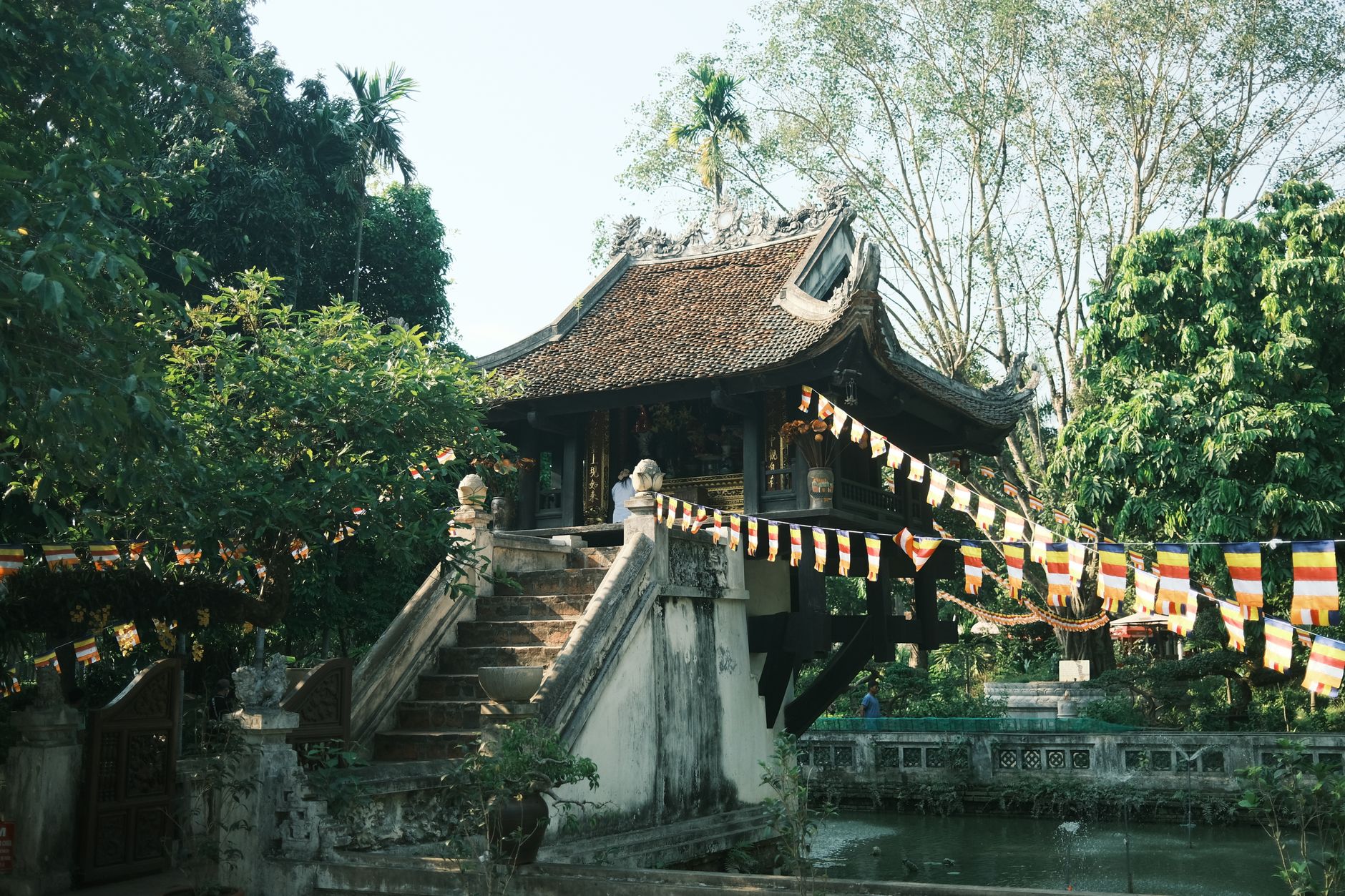
Ao Vua sits in Ba Vi district, a green corridor west of Hanoi where the flatlands start buckling into forested hills. It's one of those places Hanoians have been dragging their families to on weekends for decades — part water park, part picnic ground, part low-key nature escape. For travelers, it's a window into how Vietnamese families actually spend their days off, and a solid excuse to get out of the city.
What Ao Vua is — and a bit of backstory
The name Ao Vua translates roughly to "King's Pond," and the site leans into its loose connection to the Hung Kings, the semi-mythical founders of Vietnamese civilization honored each year during the Hung Kings Festival. The park sprawls across hilly terrain with artificial lakes, swimming pools, water slides, cave replicas, and walking paths through patches of forest. It opened as a public recreation area in the 1990s and has been a fixture of the Hanoi (하노이 / 河内 / ハノイ) day-trip circuit ever since.
It's not a luxury resort. It's not a theme park on an international scale. What it is: a Vietnamese-style outdoor recreation complex where the main currency is grilled corn, cold drinks, and hours of doing not much at all.
Why travelers go
Most foreign visitors end up at Ao Vua for one of three reasons. First, they're already headed to Ba Vi National Park and want to combine stops. Second, they're traveling with kids and need somewhere with pools and space to run. Third — and this is the underrated one — they want to see a side of Vietnamese leisure culture that doesn't involve Old Quarter coffee shops or Ha Long Bay cruise decks.
On weekends, especially in summer, the place fills with extended families hauling coolers, portable grills, and mats. Groups stake out shaded spots by 9 AM. There's a communal, unhurried energy that you won't find at more polished tourist sites. If you enjoy people-watching and don't need everything to be curated, it works.
Best time to visit
Ao Vua is best from April through September, when the heat justifies the pools and water slides. Peak season is June to August — school holidays — and weekends get genuinely crowded. If you prefer fewer people, aim for a weekday in May or September. The park is open year-round, but from November to February the pools feel pointless and the grey skies don't do the scenery any favors.
How to get there from Hanoi
Ao Vua is roughly 60 km west of central Hanoi, in Ba Vi district. There are a few ways to get there:
- Motorbike: The most flexible option. Take the route along Highway 32 through Son Tay town, then follow signs toward Ba Vi. Around 1.5–2 hours depending on traffic. Fuel cost is negligible — maybe 40,000–60,000 VND round trip.
- Car or taxi: A Grab car from central Hanoi runs approximately 350,000–500,000 VND one way. Negotiate a round trip with wait time if you don't want to gamble on finding a return ride.
- Bus: Bus 71 runs from My Dinh bus station toward Son Tay (about 20,000 VND). From Son Tay, you'll need a xe om (motorbike taxi) or local bus the remaining 15 km to Ao Vua — expect another 50,000–80,000 VND.
No direct tourist shuttle exists. If you're combining Ao Vua with Ba Vi National Park (only about 10 km further), renting a motorbike for the day makes the most sense.

Photo by Tran Tran on Pexels
What to do
Swim and use the water park
The main draw. There are multiple pool areas — some with slides, some calmer for younger kids. The infrastructure is aging but functional. Bring your own towel. Locker rental is available for around 20,000–30,000 VND.
Walk the hill trails
Behind the main pool area, paved and dirt paths wind through low hills with trees and the occasional shrine replica. None of it is strenuous — think 20–40 minutes of easy walking. It's a decent way to stretch your legs after lunch.
Explore the cave replicas
Ao Vua has a series of man-made caves and grottoes built into the hillside, loosely themed around folklore and Hung Kings legends. They're kitschy, dimly lit, and oddly entertaining. Kids love them. Adults will either find them charming or baffling — either way, they take about 15 minutes.
Picnic like a local
Rent a mat and a shaded pavilion (prices range from 100,000–300,000 VND depending on size and location). Bring food from outside or buy from vendors inside. This is the core Ao Vua experience — settling in, eating slowly, napping, swimming, repeating.
Combine with Ba Vi National Park
If you have a full day and transport, spend the morning at Ba Vi National Park hiking to the summit temple, then head to Ao Vua in the afternoon to cool off. The two sites complement each other well.
Where to eat nearby
Inside the park, food stalls sell standard Vietnamese fare — rice plates, grilled meats, instant noodles, sugarcane juice. It's fine but unremarkable.
For something better, stop in Son Tay town on the way back. Look for "com binh dan" (everyday rice) shops along the main road — a plate with pork, vegetables, and soup runs 35,000–50,000 VND. If you spot a place selling "banh cuon" — thin steamed rice rolls with minced pork and mushroom — that's worth a stop. The Ba Vi area is also known for its hill chicken ("ga doi") and "com lam" (bamboo-tube rice), sometimes available at roadside restaurants along the highway approaching the park.
Where to stay
Most people visit Ao Vua as a day trip from Hanoi. If you want to stay overnight in the area:
- Budget guesthouses around Son Tay or along the Ba Vi road: 250,000–400,000 VND/night. Basic rooms, fans or AC, hot water if you're lucky.
- Mid-range resorts near Ba Vi: 600,000–1,200,000 VND/night. A few eco-lodge-style places have pools and gardens. Look along the road between Son Tay and the national park entrance.
- Ao Vua's own accommodation: The park has basic bungalows for overnight stays, though quality varies. Book ahead on weekends.

Photo by Hồng Quang Official on Pexels
Practical tips locals would tell you
- Arrive early on weekends. By 10 AM, the good shaded spots are taken and parking fills up.
- Bring cash. Card payments aren't reliable here. Entry tickets are around 80,000–120,000 VND for adults (prices adjust seasonally), with separate fees for pools and activities.
- Pack sunscreen and a hat. Shade exists but isn't everywhere, especially around the pools.
- Wear water shoes. Pool edges and walking paths can be rough.
- Bring your own food if you're particular. The on-site options are limited and overpriced for what you get.
Common mistakes to avoid
- Expecting a polished resort experience. Ao Vua is a public recreation area, not a resort. Adjust expectations and you'll enjoy it more.
- Going on a rainy weekday in winter. There's genuinely nothing to do if the pools are empty and the weather is grey.
- Not combining it with Ba Vi. Ao Vua alone might not justify the 2-hour ride from Hanoi. Pair it with Ba Vi National Park or the nearby Tay Phuong Pagoda to make a proper day of it.
- Skipping Son Tay on the way back. The old citadel in Son Tay is a quick stop and adds some historical texture to the trip.
Practical notes
Ao Vua works best as part of a longer day out west of Hanoi rather than a standalone destination. Combine it with Ba Vi, eat well in Son Tay, and treat the whole thing as a slow day — the way Hanoians do. Entry fees, food, and transport for a day trip should run under 500,000 VND per person if you're on a motorbike.
Last updated · May 26, 2026 · independently researched, never sponsored.