Chua Mot Cot — the One Pillar Pagoda — is one of those Hanoi landmarks that looks deceptively simple. A small wooden pagoda perched on a single stone column in the middle of a lotus pond. The whole thing takes about five minutes to see. But it punches well above its weight in terms of historical significance, and knowing what you're looking at makes the visit worthwhile.
What It Is and Why It Matters
One Pillar Pagoda sits in the Ba Dinh district of Hanoi, just a short walk from the Ho Chi Minh (호치민 / 胡志明 / ホーチミン) Mausoleum complex. The original structure dates to 1049, built under Emperor Ly Thai Tong of the Ly Dynasty. The story goes that the emperor dreamed of the Bodhisattva Quan Am sitting on a lotus flower, offering him a baby son. When his queen later gave birth, he ordered the pagoda built in gratitude — designed to resemble a lotus blossom rising from water.
The pagoda you see today is a 1954 reconstruction. The original was destroyed by retreating French forces, and what stands now is a faithful rebuild on the same site. It's small — roughly three meters square — but the single-pillar-in-a-pond design remains unique in Vietnamese Buddhist architecture. The pillar is about 1.25 meters in diameter, and the whole structure sits maybe four meters above the water.
It was recognized as a national historical site decades ago, and for many Vietnamese, it's a symbol of Hanoi (하노이 / 河内 / ハノイ) itself.
Why Travelers Go
Honestly, nobody spends a full afternoon here. The pagoda is compact, and you can take it in quickly. But there are good reasons to include it on your route:
- It's architecturally unusual — you won't see this single-pillar design replicated anywhere else in Vietnam.
- It sits inside the larger Ba Dinh complex, so you're already in the neighborhood if you're visiting the mausoleum, the Presidential Palace grounds, or the Ho Chi Minh Museum.
- The lotus pond is genuinely pleasant in the right season, and it's one of the quieter corners of the complex.
- For anyone interested in Vietnamese Buddhism, the pagoda is still an active place of worship. Locals come to light incense and pray, especially on the 1st and 15th of the lunar month.
Best Time to Visit
The pagoda is open year-round, but timing matters more than you'd think for a site this small.
Best months: October through December. Hanoi's autumn is dry, cooler (mid-20s Celsius), and the light is soft. Early mornings in this season are ideal for photos without harsh shadows or crowds.
Lotus season: If you want the pond looking its best with lotus flowers in bloom, aim for June or July. It gets hot — easily 35°C and humid — but the visual payoff is real. The lotus is the whole design motif, so seeing actual flowers around the pillar completes the picture.
Avoid: Weekends and Vietnamese public holidays, especially around Tet and the Hung Kings Festival in the third lunar month. The entire Ba Dinh complex gets packed. Weekday mornings between 8:00 and 9:30 are your best window.
Opening hours are typically 7:30 AM to 6:00 PM daily. Entry to the pagoda itself is free.
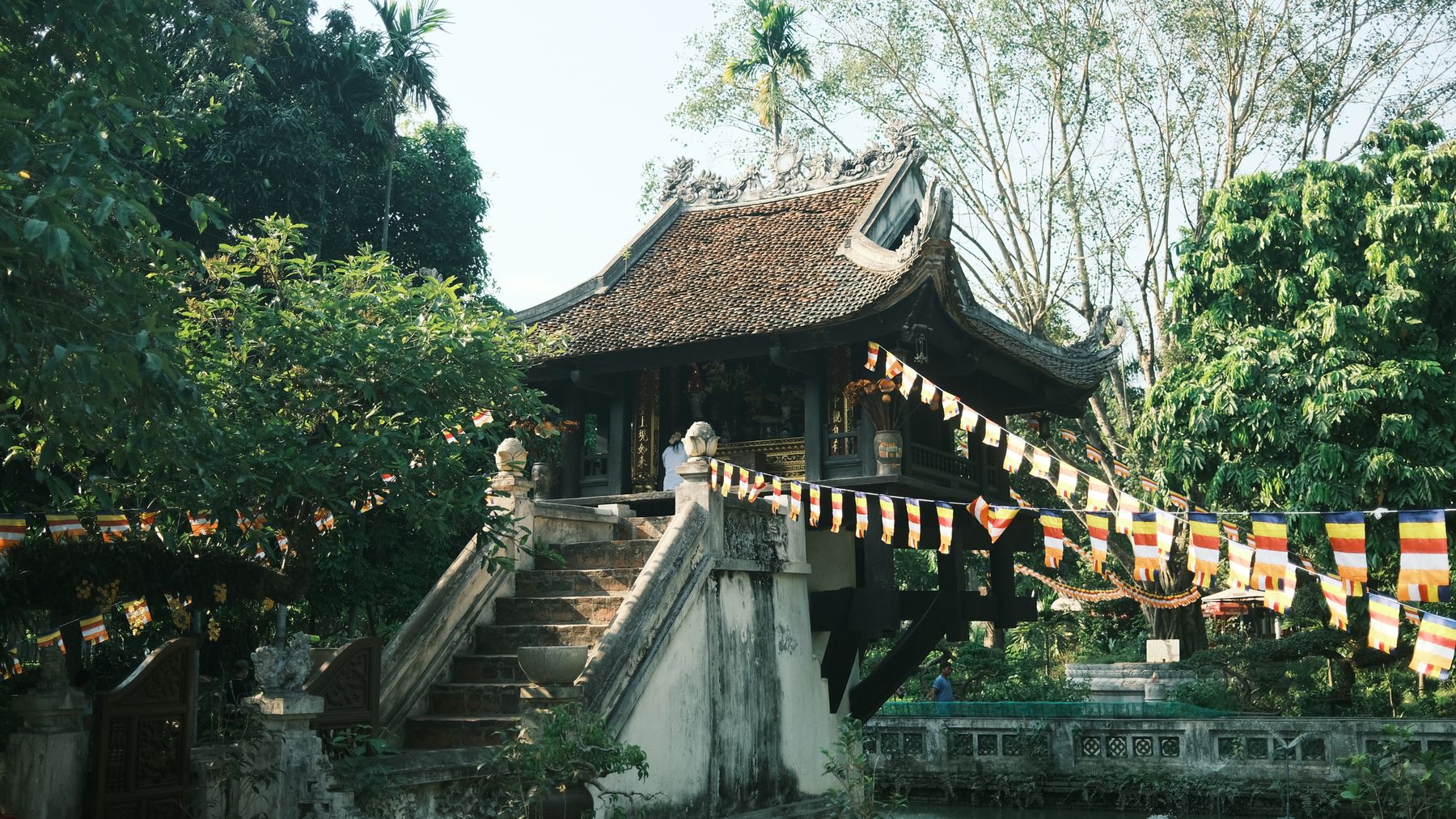
Photo by Quý Nguyễn on Pexels
How to Get There
Chua Mot Cot is on Chua Mot Cot Street (yes, it's that straightforward) in Ba Dinh district, about 2.5 km west of Hoan Kiem Lake and Hanoi's Old Quarter.
- Grab/taxi from the Old Quarter: 15-20 minutes depending on traffic, around 25,000-40,000 VND.
- Walking from Ho Chi Minh Mausoleum: About 300 meters. If you're already visiting the mausoleum, the pagoda is a two-minute walk south through the complex grounds.
- City bus: Route 09 stops near the mausoleum area. Fare is 7,000 VND. From the stop, it's a short walk.
- Cyclo: If you're near the Temple of Literature (about 1.5 km south), a cyclo ride takes 10 minutes. Negotiate beforehand — expect 50,000-80,000 VND.
What to Do
1. Look at the Pagoda Properly
Don't just snap a photo and leave. Walk around the pond to see how the pillar meets the water from different angles. The staircase leading up to the shrine is narrow and steep — go up if the line isn't long. Inside is a small gilded statue of Quan Am.
2. Watch the Incense Ritual
Locals burn incense at the base and leave offerings. If you want to participate, incense bundles are available from vendors just outside the complex for 5,000-10,000 VND. Light three sticks, hold them between your palms, bow three times facing the pagoda, then place them in the sand urn.
3. Walk the Bo De Tree Garden
Behind the pagoda, there's a small garden with mature "bo de" (bodhi) trees. It's shaded, quiet, and most tour groups skip it entirely.
4. Combine with the Mausoleum Complex
The logical pairing. Hit the Ho Chi Minh Mausoleum first (opens at 7:30 AM, closed Mondays and Fridays), then walk to the pagoda. The Presidential Palace stilt house and the Ho Chi Minh Museum are also within the same grounds.
5. Visit Dien Huu Pagoda Next Door
Dien Huu Pagoda shares the same courtyard and most visitors walk right past it. It's a functioning Buddhist temple with more architectural detail — carved dragons, a bell tower, and usually far fewer people.
Where to Eat Nearby
Ba Dinh district isn't Hanoi's street food epicenter, but you've got solid options within a 10-minute walk.
- "Bun cha" on Nguyen Tri Phuong Street: Several small shops serve the classic Hanoi lunch of grilled pork patties with rice noodles and dipping broth. A full portion runs 40,000-55,000 VND. This is the same district where Barack Obama and Anthony Bourdain famously ate "bun cha" at Bun Cha Huong Lien on Le Van Huu Street — a bit further east, but worth the detour if you're a fan.
- "Pho" on Nguyen Thai Hoc Street: Head south toward the Temple of Literature and you'll pass several pho shops. Morning bowls go for 35,000-50,000 VND. Nothing fancy, just proper Hanoi beef broth.
For "egg coffee", you'll want to head back toward the Old Quarter — Giang Cafe on Nguyen Huu Huan Street is the original.

Photo by David Tran on Pexels
Where to Stay
Most travelers base themselves in the Old Quarter or around Hoan Kiem Lake, which keeps you close to everything.
- Budget: Old Quarter hostels and guesthouses run 150,000-350,000 VND/night for dorms or basic private rooms.
- Mid-range: Hotels around Hoan Kiem Lake go for 800,000-1,500,000 VND/night. Clean, air-conditioned, usually with breakfast.
- Upper-range: Several international-brand hotels in Ba Dinh and Tay Ho districts start around 2,500,000 VND/night.
Staying in Ba Dinh itself puts you walking distance from the pagoda, but the neighborhood is quieter and more residential — less street food action than the Old Quarter.
Practical Tips
- Dress modestly. Shoulders and knees covered. This is still an active Buddhist site. You won't be turned away in shorts, but you'll get looks.
- The visit is short. Budget 20-30 minutes for the pagoda and Dien Huu combined. Don't build a half-day around this alone — pair it with other Ba Dinh sites.
- Shoes off if you climb the stairs to the shrine platform.
- Photography is fine outside. Be respectful inside the shrine — no flash, and wait if someone is praying.
Common Mistakes
- Arriving midday on a weekend. Tour buses unload between 10:00 AM and 2:00 PM. The site is tiny, so even 30 extra people makes it feel crowded.
- Skipping Dien Huu Pagoda. It's literally right there and more visually interesting than most visitors expect.
- Expecting something large. If you've seen Bai Dinh or Tran Quoc Pagoda, recalibrate. Chua Mot Cot is significant for its design and history, not its scale. Go in knowing that, and you won't be disappointed.
Last updated · May 29, 2026 · independently researched, never sponsored.