Ba Dinh Square sits at the center of Hanoi's political and ceremonial district, a massive open plaza ringed by gardens, government buildings, and some of the city's most visited landmarks. Whether you care about history or just want a morning walk under old trees, this area deserves a few hours.
What it is and why it matters
Ba Dinh Square (Quang Truong Ba Dinh) is a 320-meter by 100-meter rectangular plaza in the Ba Dinh district of Hanoi. It was here, on September 2, 1945, that Ho Chi Minh (호치민 / 胡志明 / ホーチミン) read the Declaration of Independence to a massive crowd — an event that's foundational to modern Vietnam. Today, the square is anchored by the Ho Chi Minh Mausoleum at its western end and flanked by manicured lawns, rows of old trees, and wide pedestrian paths.
The area around the square has evolved into a quiet, leafy district that feels distinctly different from the chaos of the Old Quarter. It's less about shopping and street food and more about slow mornings, colonial-era architecture, and open space.
Why travelers go
Most visitors come for the mausoleum complex, but the surrounding area holds enough to fill a solid half-day. The concentration of historical sites within walking distance is hard to beat anywhere in Hanoi (하노이 / 河内 / ハノイ). It's also one of the few parts of central Hanoi where you can actually breathe — wide sidewalks, shade trees, and far fewer motorbikes than the Old Quarter.
Best time to visit
The best months are October through December and March through April, when Hanoi's weather is dry and temperatures hover between 20-28°C. Avoid June through August if you dislike heat and humidity — the open square has limited shade, and midday visits become uncomfortable fast.
Time of day matters more than season, though. Arrive early — before 8:00 AM — if you want to see the flag-raising ceremony or visit the mausoleum without long queues. Weekend mornings draw local families, joggers, and tai chi groups, which gives the square a relaxed, lived-in feel.
How to get there
From Hanoi's Old Quarter (Hoan Kiem area), Ba Dinh Square is about 3 km west. A Grab car costs 25,000-40,000 VND and takes 10-15 minutes depending on traffic. By bus, route 09 runs from Hang Bai Street near Hoan Kiem Lake to the square area — fare is 8,000 VND. You can also walk it in about 35 minutes via Hang Dau Street and Phan Dinh Phung, one of Hanoi's prettiest tree-lined roads.
From Noi Bai Airport, expect a 45-60 minute taxi ride costing around 250,000-350,000 VND.

Photo by Hugo Heimendinger on Pexels
What to do
Visit the Ho Chi Minh Mausoleum
The granite mausoleum is open Tuesday through Thursday and Saturday through Sunday, typically from 7:30 to 10:30 AM (hours shift seasonally — check before going). Entry is free but the dress code is enforced: no shorts above the knee, no sleeveless tops, no hats inside. Expect airport-style security and a slow-moving queue. Photography is not allowed inside. The whole visit takes about 20-30 minutes.
Walk the Presidential Palace grounds and Ho Chi Minh's Stilt House
Behind the mausoleum, a 40,000 VND ticket gets you into the grounds of the Presidential Palace — a French colonial building from 1906 that you can view from outside — and Ho Chi Minh's famous stilt house, a modest wooden structure on stilts beside a carp pond. The contrast between the grand palace and the simple house is the whole point. Budget 45 minutes.
One Pillar Pagoda
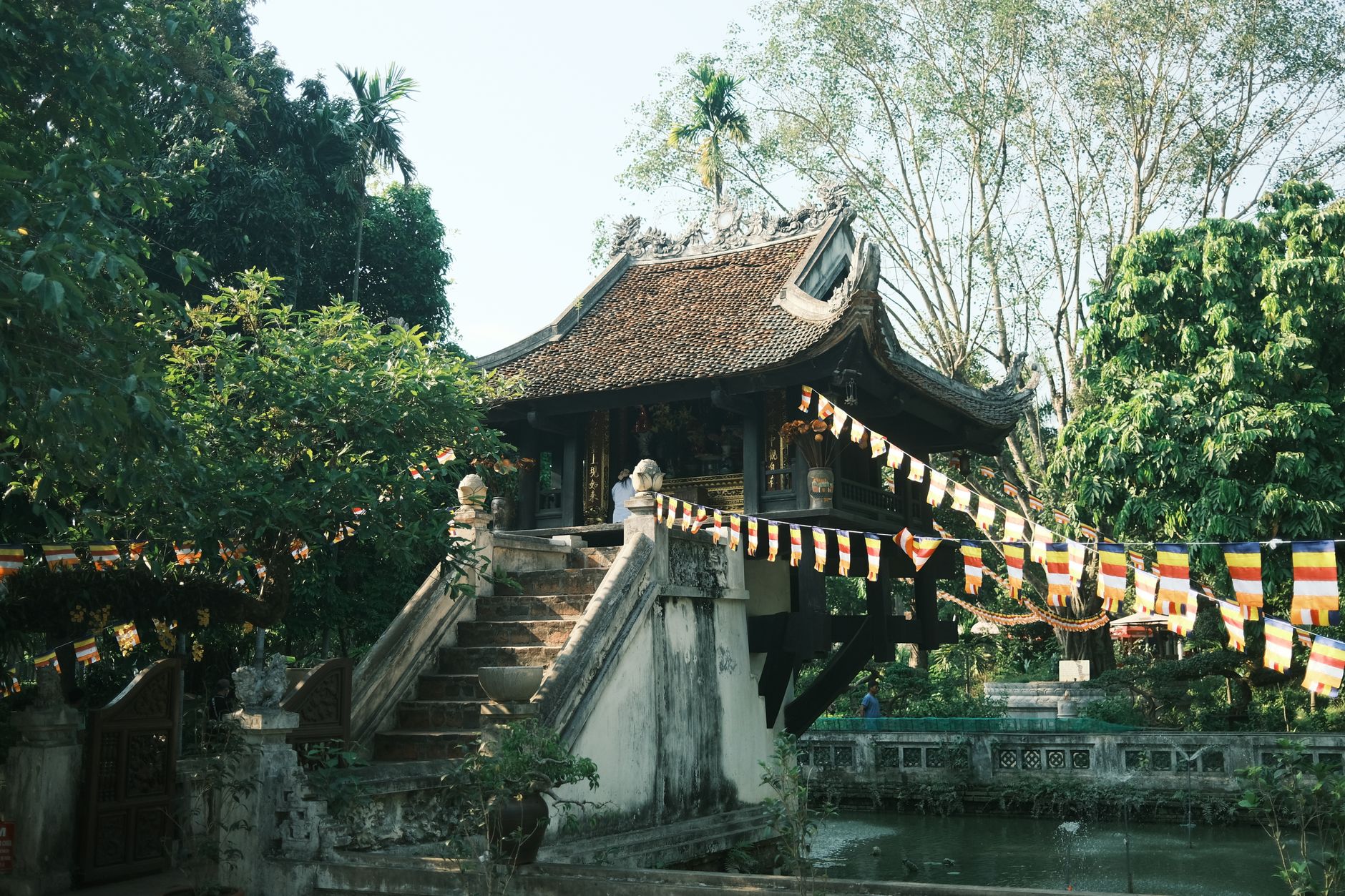
Just south of the mausoleum complex, One Pillar Pagoda is tiny — a single wooden structure perched on a stone pillar in a lotus pond. It dates to 1049 in origin, though the current structure is a 1954 reconstruction. It takes five minutes to see, but it's one of Hanoi's most iconic images. Free entry.
Ho Chi Minh Museum
Adjacent to the square, this museum (40,000 VND entry) covers Ho Chi Minh's life through photographs, documents, and somewhat abstract exhibits. It's more interesting for the Soviet-influenced architecture than the displays, honestly, but worth a quick pass if you're already in the area.
Morning walk along Hoang Dieu and Hung Vuong streets
The streets bordering the square are some of the most pleasant in Hanoi for walking. Hoang Dieu, along the western edge, is lined with massive old trees. On weekend mornings, the sidewalks fill with families and the pace slows to something almost un-Hanoian. If you continue south, you'll reach the Imperial Citadel Thang Long — a UNESCO site and worth a separate visit.
Where to eat nearby
The Ba Dinh district isn't a street food hotspot like the Old Quarter, but a couple of things are worth seeking out.
"Bun cha" — Hanoi's signature grilled pork and noodle dish — is solid at the small shops along Nguyen Tri Phuong Street, about a 10-minute walk southeast of the square. A full serving runs 40,000-55,000 VND. For breakfast, look for "banh cuon" (steamed rice rolls with pork and mushroom filling) on the side streets off Doi Can — locals eat here, and prices stay around 30,000-40,000 VND.
Afterward, grab an egg coffee at one of the quieter cafes along Nguyen Thai Hoc Street heading toward the Temple of Literature. Less crowded than the Old Quarter options, same drink.
Where to stay
Most travelers stay in the Old Quarter or around Hoan Kiem Lake and visit Ba Dinh as a day trip — that's the practical move. If you prefer a quieter base, the Ba Dinh district has a handful of options:
- Budget: Guesthouses on Doi Can or Nguyen Tri Phuong streets, 300,000-500,000 VND/night.
- Mid-range: Hotels along Kim Ma or Lieu Giai streets, 800,000-1,500,000 VND/night.
- Upscale: The Sheraton on Nghi Tam road (technically Tay Ho, but close), from around 2,500,000 VND/night.
The trade-off: you'll be closer to Ba Dinh's sights but farther from the Old Quarter's food and nightlife.
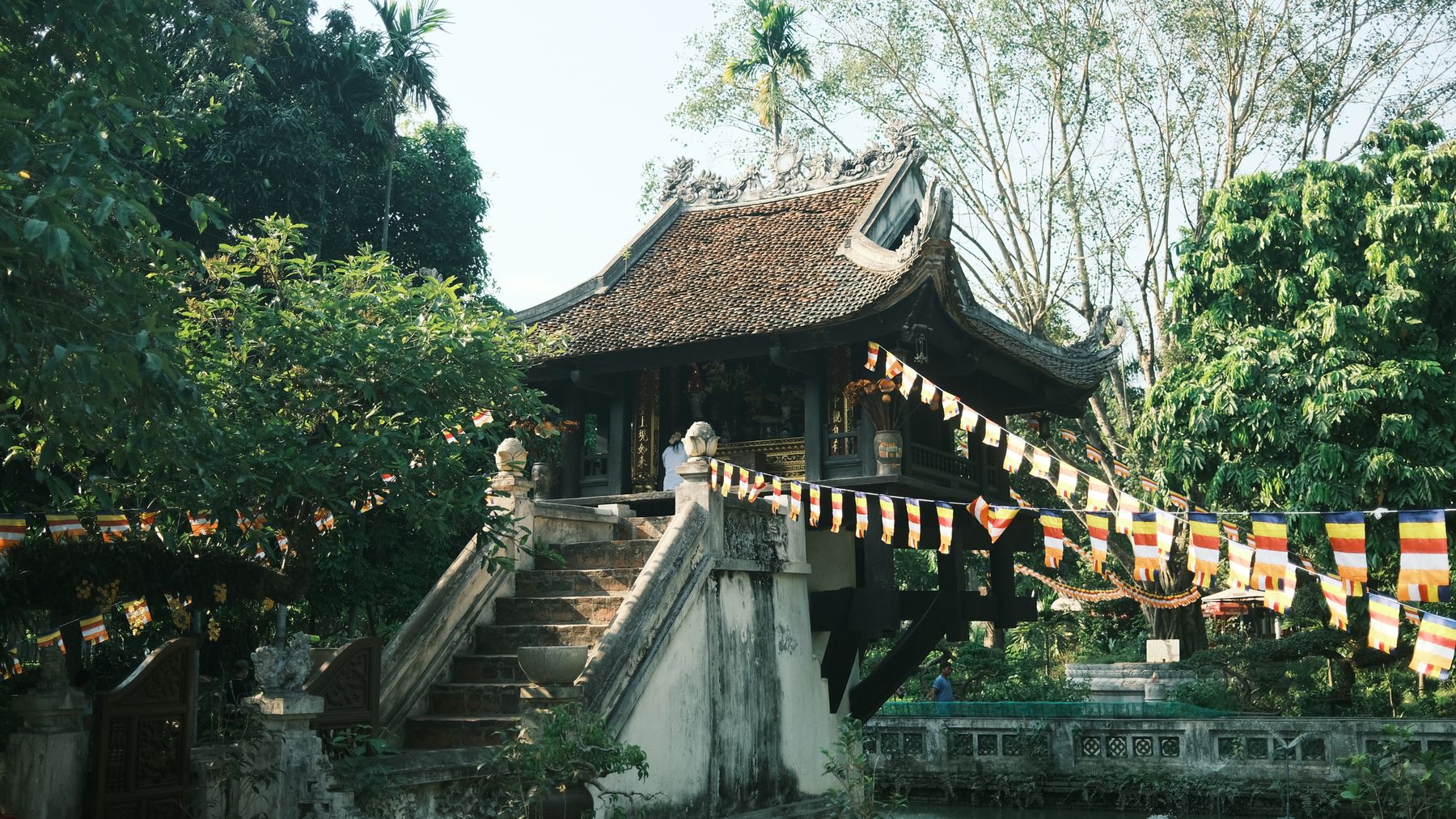
Photo by Quý Nguyễn on Pexels
Practical tips locals would tell you
- The mausoleum closes annually for maintenance, usually from mid-October to mid-December. Verify dates before planning around it.
- Bring your passport — you may be asked for ID at the mausoleum entrance.
- There are no cafes or food stalls directly on the square. Eat before you come or walk 10 minutes in any direction.
- Public restrooms are available inside the mausoleum complex but are basic. Use your hotel's before heading out.
- The flag-lowering ceremony at around 9:00 PM is less crowded than the morning ceremony and worth catching if you're nearby.
Common mistakes to avoid
- Showing up at noon: The mausoleum closes by 10:30 AM most days. The square itself is open, but without the complex, there's less to do and more sun to endure.
- Wearing inappropriate clothing: Shorts and tank tops mean you'll be turned away at the mausoleum. Carry a light long-sleeved shirt in your bag.
- Rushing through: People often treat Ba Dinh as a 30-minute checkbox. Give yourself two to three hours to walk the full complex, see the pagoda, and actually enjoy the space.
- Skipping the Citadel: The Imperial Citadel Thang Long is a 10-minute walk south and often overlooked. It's one of Hanoi's most important historical sites — don't miss it just because it's not on the square itself.
Practical notes
Ba Dinh Square works best as a morning activity paired with a walk to the Temple of Literature afterward — the two are about 1.5 km apart. Start early, dress appropriately, and leave the afternoon open for the Old Quarter or Dong Xuan Market. It's not the most exciting part of Hanoi, but it's one of the most grounding.
Last updated · May 26, 2026 · independently researched, never sponsored.