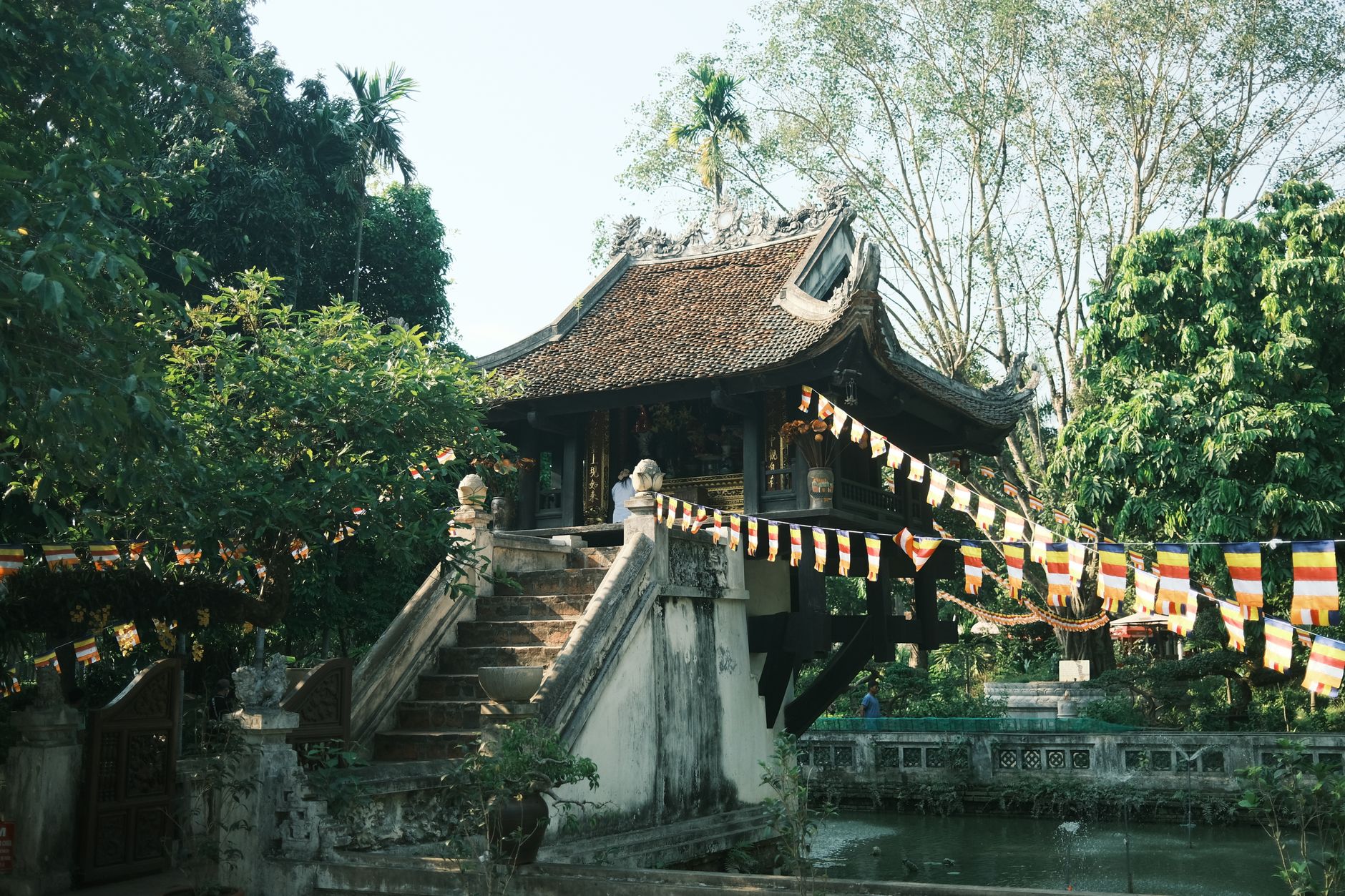
Ba Vi National Park sits about 60 km west of Hanoi, a mountain massif rising out of the Red River Delta flatlands with three peaks wrapped in cloud cover for most of the year. It's the closest thing Hanoi residents have to a proper mountain escape without committing to a long trip, and it works surprisingly well for travelers looking to break up a city-heavy itinerary.
What it is
Ba Vi is a national park covering roughly 10,800 hectares of subtropical and tropical forest across the Ba Vi mountain range. The highest peak, Dinh Vua (King's Peak), reaches 1,296 meters. The French colonial administration built hill stations and sanatoriums here in the early 1900s — you can still find their ruins scattered through the forest, slowly being consumed by roots and moss. The park was officially established in 1991, though the mountains have been significant to local Muong and Kinh communities for centuries. A temple dedicated to the mountain god Tan Vien sits near the summit, and it draws a steady stream of pilgrims alongside the hikers and weekenders.
Why travelers go
Ba Vi is not a wilderness epic. It's a half-day or full-day trip from Hanoi (하노이 / 河内 / ハノイ) that gives you forest, elevation, cooler air, and a reason to eat well on the way back. The French ruins add genuine atmosphere — crumbling stone buildings overtaken by fig trees, all of it photogenic without trying. The summit temple is worth the climb for the fog alone, and the park's lower elevations have easy walking trails through bamboo and old-growth forest. If you've been in Hanoi for several days and need a reset from traffic and concrete, Ba Vi does the job.
Best time to visit
The sweet spot is October through December and then March through April. You get cooler temperatures, less rain, and better visibility from the peaks. Summer months (June through August) bring heavy rain and leeches on the trails — manageable but not pleasant. January and February can be cold and foggy at the summit, which some people enjoy for the atmosphere, but you won't see much of the surrounding landscape. Weekdays are dramatically quieter than weekends; if you can go on a Tuesday or Wednesday, do it.
How to get there from Hanoi
Ba Vi is about 60 km from central Hanoi, heading west on the Thang Long highway toward Son Tay town.
By motorbike
The most common option for independent travelers. The ride takes 1.5 to 2 hours depending on traffic and where in Hanoi you start. Rental bikes run 120,000–180,000 VND per day from shops in the Old Quarter. The road is straightforward — mostly highway and then a well-signed turn-off toward the park entrance.
By car or taxi
A Grab car from central Hanoi costs roughly 350,000–500,000 VND one way. You can also book a private car through your hotel for a round trip, typically 1,200,000–1,500,000 VND for the day including waiting time.
By bus
Public bus 74 runs from My Dinh bus station toward Son Tay (about 15,000 VND). From Son Tay, you'll need a xe om (motorbike taxi) or Grab for the remaining 15 km to the park gate. It's doable but slow — plan three hours each way.
Park entrance fee is 60,000 VND per person. Motorbike parking is 10,000 VND.

Photo by Hồng Quang Official on Pexels
What to do
Hike to Dinh Vua and Tan Vien Temple
The main trail climbs from the upper parking area (accessible by motorbike or shuttle) to Tan Vien Son Thanh temple near the 1,227-meter peak. It's roughly 1,300 stone steps — steep but paved, taking 40 to 60 minutes at a normal pace. The temple is active and often smoky with incense. On clear mornings you can see the patchwork of rice paddies far below.
Explore the French ruins
Scattered across the mid-elevation zone, the old French buildings are the park's most distinctive feature. The most photogenic cluster sits near the Orchid Garden area around the 600-meter level. Concrete walls, empty window frames, tree roots splitting masonry — it's genuinely atmospheric, especially in fog.
Walk the forest trails at Cot Co (400m level)
The lower trails around the Cot Co area are flat, shaded, and good for anyone who doesn't want a serious climb. Bamboo groves, birdsong, and very few people on weekdays. A full loop takes about an hour.
Visit the Bird Garden and Orchid Garden
Both sit in the mid-level zone and are included in the entrance fee. The orchid garden peaks from March to May. The bird garden is modest but pleasant — more of a quiet walk than a wildlife spectacle.
Swim at Ao Vua or Khoang Xanh
Just outside the park boundary, these recreation areas have natural swimming pools and water features. They're popular with Vietnamese families on weekends. Entry runs 80,000–120,000 VND. Fine for cooling off after a hike but expect crowds on Saturdays.
Where to eat nearby
Don't eat inside the park — the food stalls at the upper lots are overpriced and forgettable. Instead, eat on the road between the park and Son Tay. The area is known for two things:
"Com lam" — sticky rice cooked inside bamboo tubes over charcoal. You'll see it sold at roadside stalls along the park access road. A tube costs 15,000–25,000 VND and tastes faintly smoky and sweet.
Hill chicken ("ga doi") — free-range chicken from the surrounding hills, typically grilled or steamed. Several restaurants along the road to Son Tay serve it family-style for 250,000–400,000 VND per bird. It's a proper meal after a morning hike. Pair it with "banh cuon" if the restaurant has it — some do.
Where to stay
Most travelers visit Ba Vi as a day trip from Hanoi, but there are options if you want to stay overnight.
- Budget: Homestays and guesthouses in the villages around the park base, 200,000–400,000 VND per night. Basic but clean.
- Mid-range: Ba Vi Resort and a handful of smaller eco-lodges sit within a few kilometers of the park gate. Expect 800,000–1,500,000 VND per night for an air-conditioned room with breakfast.
- Splurge: There are a few boutique retreats in the wider Ba Vi district marketing themselves as wellness escapes. Rooms run 2,000,000–4,000,000 VND per night.
Photo by DUYTRG TRUONG on Pexels
Practical tips locals would tell you
- Start early. Aim to reach the park gate by 7:30 AM. The summit is clearest in early morning, and you'll beat the weekend crowds and afternoon rain.
- Bring a light jacket. The summit is noticeably cooler than Hanoi, sometimes by 8–10 degrees Celsius. In winter, it can drop below 10°C up top.
- Wear proper shoes. The stone steps to the summit get slippery when wet, which is often. Sandals are a bad idea.
- Carry cash. There are no ATMs inside the park. Food stalls and parking attendants don't take cards.
- Leech socks in summer. If you're hiking the forest trails from June through September, tuck your pants into your socks or bring leech-proof socks. It's not dramatic, just annoying.
Common mistakes to avoid
- Going on a weekend without expecting crowds. Ba Vi is Hanoi's backyard mountain. Saturday and Sunday bring families, student groups, and traffic jams on the access road.
- Only doing the summit and leaving. The French ruins and lower forest trails are worth an hour or two. Budget a full morning, not a quick in-and-out.
- Skipping the food outside the park. The roadside restaurants are half the reason locals make the trip. Eating inside the park means missing the best part of the meal.
- Driving up in flip-flops on a rented scooter. The park road has some steep, winding sections. Actual shoes and some two-wheel confidence help.
Practical notes
Ba Vi works best as a morning trip from Hanoi — leave early, hike, eat a long lunch on the way back, and you're home by mid-afternoon. It pairs well with a stop in Son Tay's old citadel or the nearby Duong Lam ancient village if you want to fill a full day. Not every trip needs to be a multi-day expedition; sometimes a mountain, some fog, and grilled chicken is exactly the right amount.
Last updated · May 26, 2026 · independently researched, never sponsored.