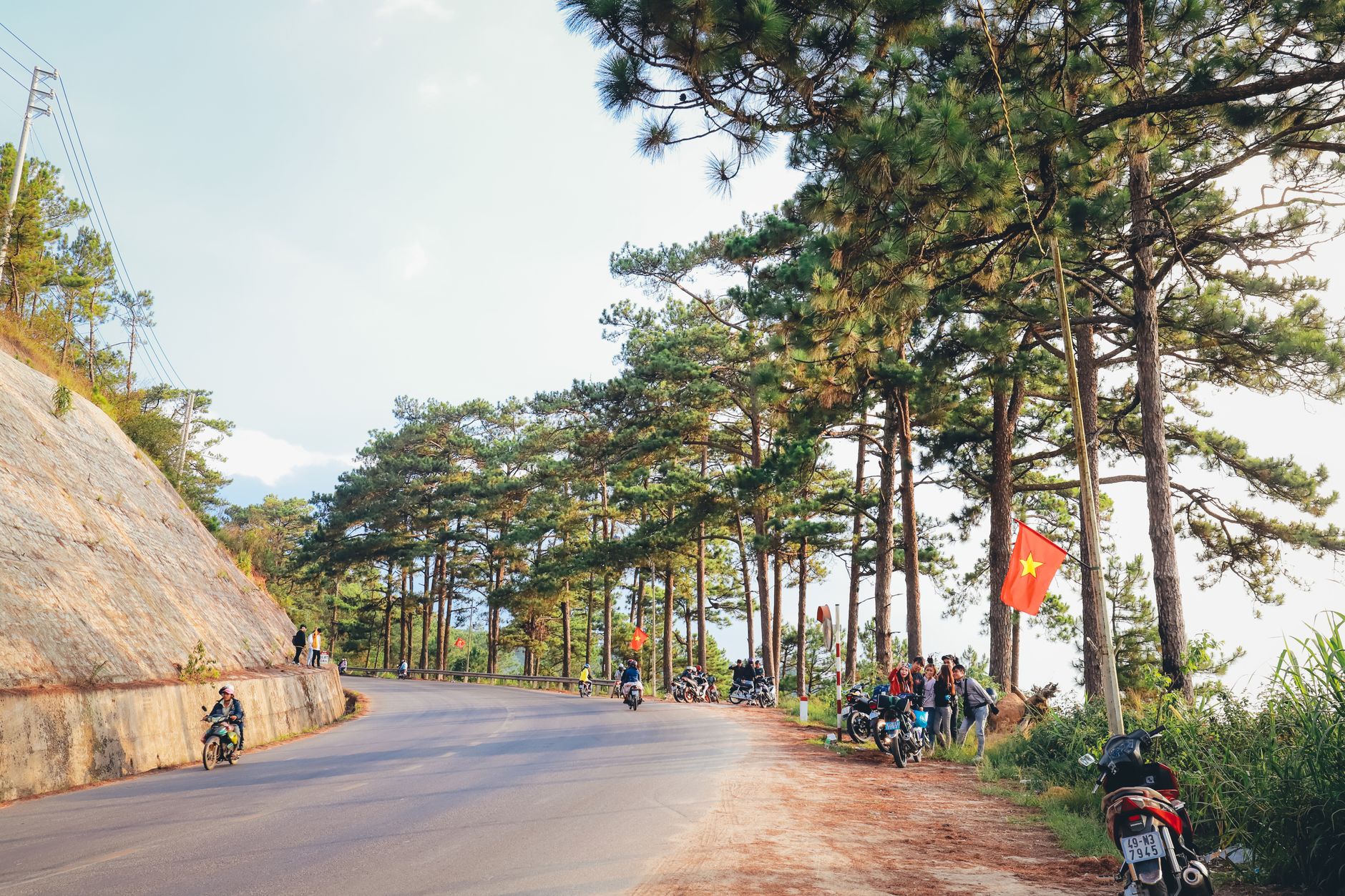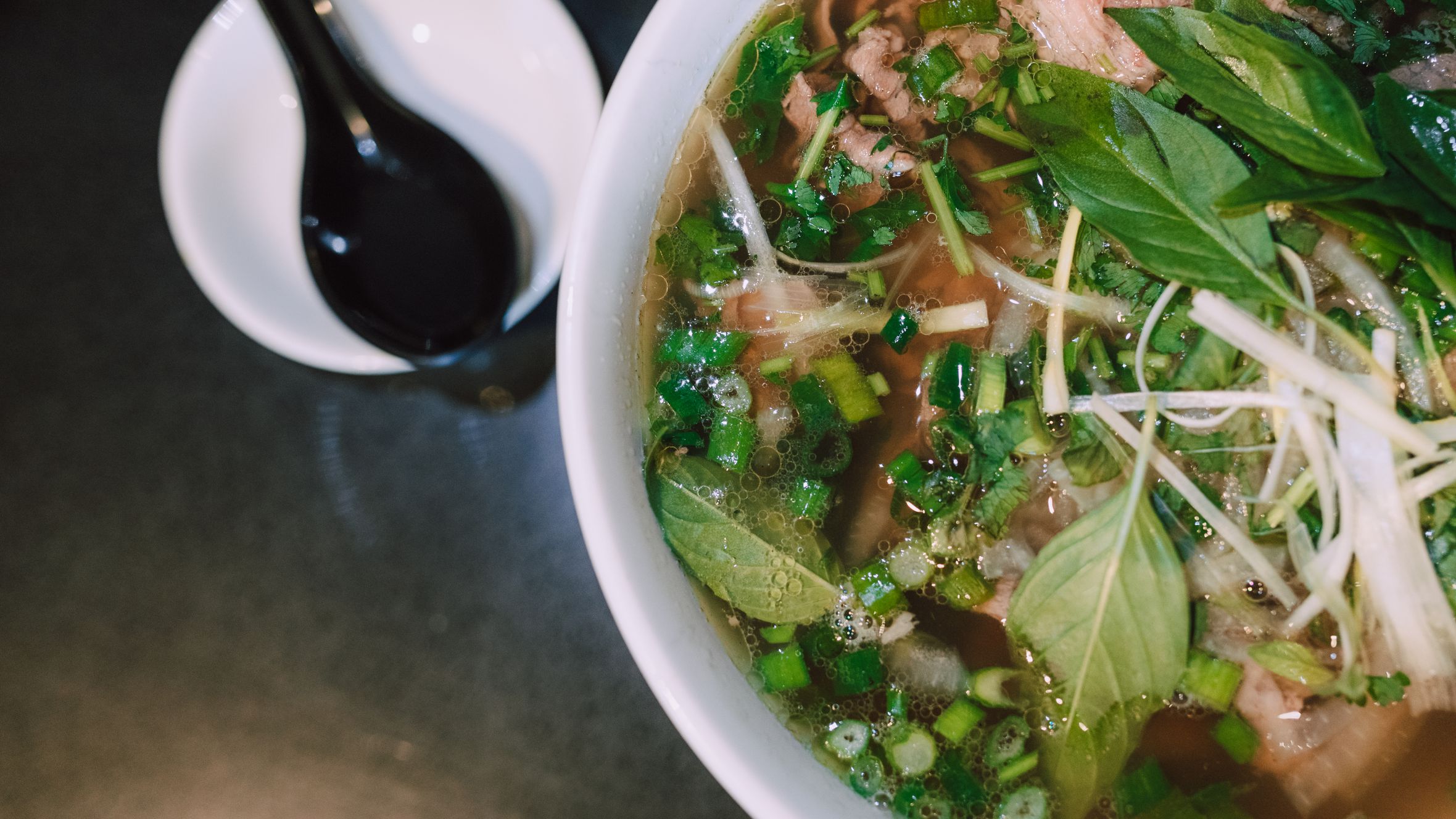
Da Lat's street food scene runs late, and one of the easiest ways to eat your way through it is via "banh trang" — crispy rice paper in three regional interpretations. Each style tastes completely different, costs between 15,000 and 35,000 VND, and hits different hunger moods. You'll find all three at Dalat Night Market and scattered through the town's backpacker zones; locals have their own corners.
Banh Trang Nuong: The Grilled Pizza
This is the showstopper. A sheet of thin rice paper gets brushed with egg and garlic oil, then grilled over charcoal or a gas flame until it's blistered, crispy, and almost translucent in parts. The cook tops it with a mix of sesame, crushed peanuts, dried shrimp, scallion, and sometimes a drizzle of chili oil. You tear off pieces and eat it like pizza.
The texture is the draw: parts shatter on your teeth, other bits stay chewy. The garlic oil carries the whole thing. A medium sheet runs 20,000–25,000 VND. At Da Lat (달랏 / 大叻 / ダラット) Night Market, head to the western corner where three or four stalls cluster near the main entrance. The busiest one (look for the charcoal grill smoking at 7 p.m.) is usually the steadiest bet.
Order it hot off the grill. Once it cools, the magic flattens.
Banh Trang Tron: The Salad-Snack Hybrid
"Tron" means mixed. A sheet of rice paper gets torn into bite-sized pieces, then tossed in a bowl with a light fish sauce vinaigrette, crushed roasted peanuts, dried shrimp, sesame, and a handful of herbs — cilantro, mint, sometimes dill. The cook stirs it all together, and you eat it with a small spoon or wooden stick.
It's less theatre than grilled, but more balanced. The rice paper softens slightly from the vinegar, becoming chewy rather than crispy. The dressing carries everything. You get a cleaner flavor profile than nuong, closer to a light salad. Cost is typically 15,000–18,000 VND for a decent portion.
Find this at the same night market, or at smaller stalls on Phan Boi Chau Street and around Thien Vuong Pagoda. It's often a one-person operation: someone with a cart, a bowl, and a ladle. Less crowded than the grilled version, so you can actually chat with the cook.

Photo by LUC PH@M on Pexels
Banh Trang Cuon: The Hand Roll
A single sheet of rice paper gets softened by quick dip in warm water, then laid flat. The cook spreads a thin layer of minced pork or shrimp paste down the center, adds greens (mint, cilantro, sometimes pickled daikon), and rolls it tight like a cigar. Some versions add a fried shallot or a smear of chili mayo inside.
It's the most hand-held of the three — you pick it up and bite. The texture is softer and chewier than nuong, closer to a spring roll but lighter. Cost runs 18,000–22,000 VND per roll, usually sold in sets of three or four.
Cuon shows up less frequently at the night market proper, but you'll spot dedicated cuon carts on quieter corners of Nguyen Chi Thanh Street and near the old French colonial villas. Some vendors offer a small dipping sauce (often a light fish sauce with lime), which makes a difference.
Where to Go, When
Da Lat Night Market (Cho Dem Da Lat) opens around 6 p.m. and runs until 10 p.m., fuller after 7. The banh trang section is on the western side, away from the produce. Stalls change slightly by season, so ask locals or your guesthouse which stall is "good this week."
If you're staying near the city center and don't want to trek to the market, Phan Boi Chau Street (a 10-minute walk from the Dalat Cathedral) has freelance vendors setting up carts after 5 p.m. Thien Vuong Pagoda's entrance usually has at least one tron stall in the late afternoon.
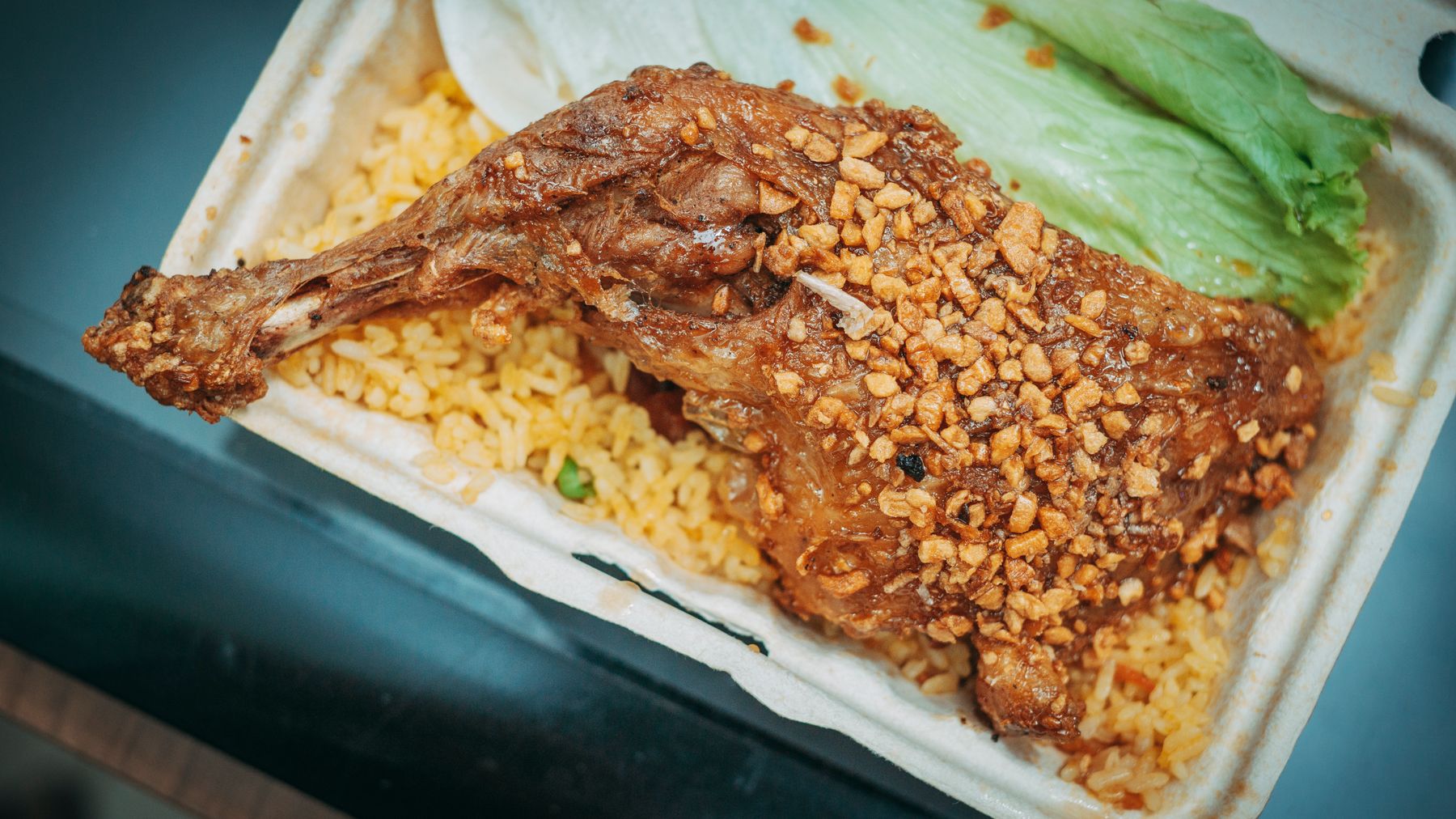
Photo by FOX ^.ᆽ.^= ∫ on Pexels
What to Order
Start with nuong if you want the full experience — the smoke, the char, the hot crispness. Order tron if you're queasy about grilled food or want something you can eat slowly. Cuon works best if you're walking and need a handheld snack. Many people get one of each and share, which is common at the night market.
Bring cash (the stalls don't take cards) and eat right there, standing at a communal table. The cook often watches you eat, reading your face to know if they nailed the seasoning.
Practical notes
Banh trang is best eaten within minutes of being made. Nuong loses its crispness fastest; tron stays good for 20–30 minutes; cuon can travel for an hour if wrapped in paper. Most stalls are cash-only, and 50,000 VND will buy you two full snacks with change left over. Ask for "it me" (a little spicy) or "khong cay" (not spicy) when ordering; the default can catch you off guard.
Last updated · May 26, 2026 · independently researched, never sponsored.