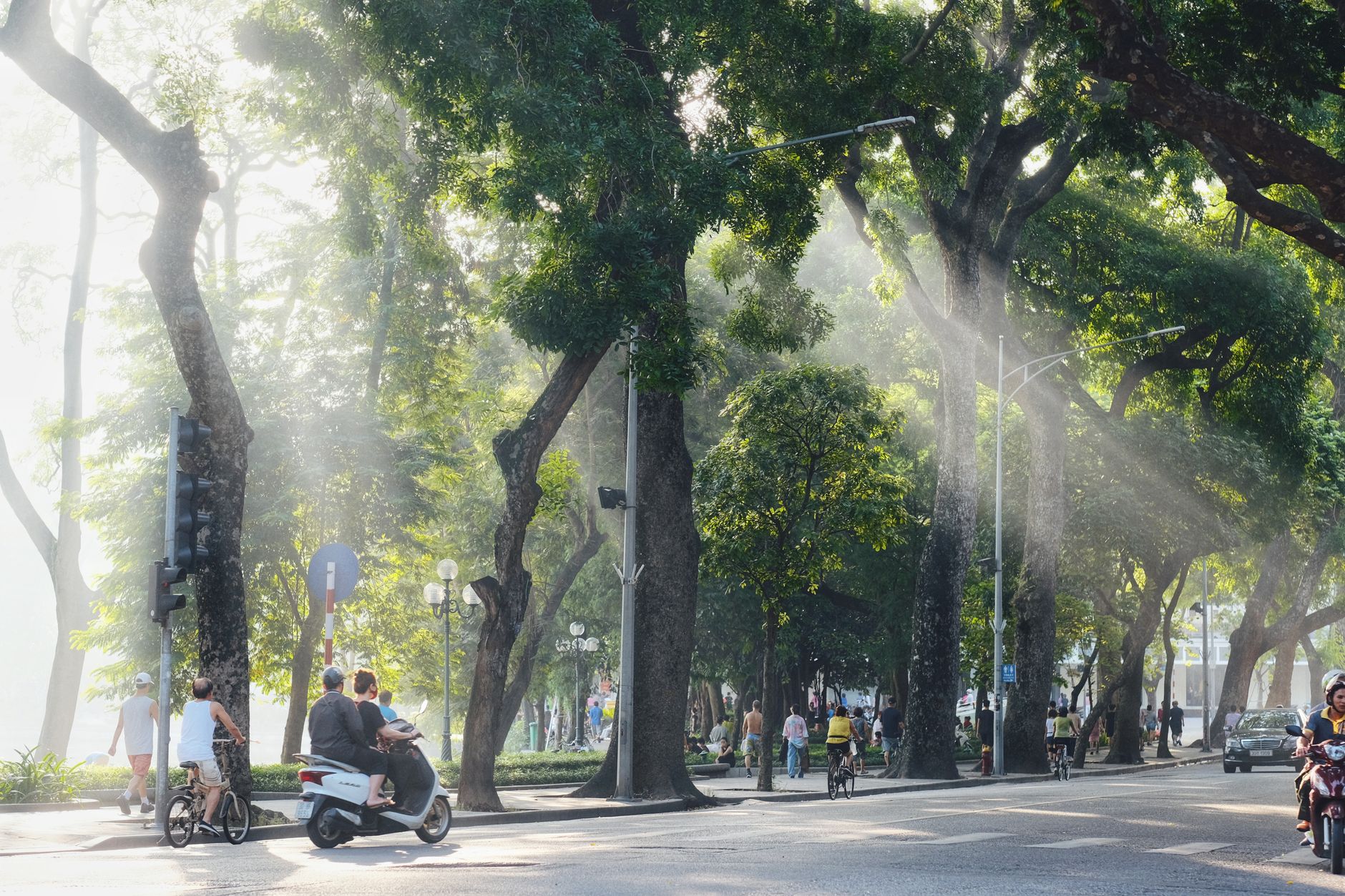
Sapa town center: walkable, touristy, perpetually cloudy
Stay in the grid of streets around Sapa Stone Church and Sapa Market — you'll find most guesthouses, restaurants, and tour operators here. It's the obvious choice if you want to roll out of bed and grab coffee without planning.
The trade-off is obvious: it's crowded, especially on weekends, and the fog sits thick most afternoons. Your room might get damp. Street noise picks up after 9 p.m. when bars fill. But if you're arriving late, leaving early, or just want to minimize logistics, the town center works.
For food, Cau May Street and the streets fanning out from the church square are where most tourist restaurants cluster. A bowl of "pho" runs 50,000–80,000 VND at a local shop, while sit-down tourist places charge 80,000–150,000 VND for mains. "Ca phe" culture is growing here — a few cafes now serve decent drip coffee and even Hanoi-style "egg coffee" for 35,000–50,000 VND. If you want something closer to what locals actually eat, look for the rice-and-meat stalls ("com binh dan") on Thach Son Street, where a full plate costs 30,000–45,000 VND.
For hotels, the strip along Muong Hoa Street and Fansipan Street has the densest options. Higher-floor rooms facing the valley occasionally break through the fog for a clear view, so ask before you book. Many mid-range places include a basic breakfast and will arrange a trekking tour for 500,000–800,000 VND per person per day, guide included.
Typical costs: $20–50 for a basic double; $50–100 for a mid-range hotel with heating and a real bathroom. Many places bundle a trekking tour. A meal at a tourist restaurant runs 80,000–150,000 VND. You'll walk to everything.
Best for: First-time visitors, short trips, people who don't want to think about transport.
Cat Cat village: 10-minute uphill, quieter, ethnic minority homestays
Climb the hill just southeast of town (or take a xe om for 50,000 VND) and you enter Cat Cat, a "Black H'mong" settlement where homestays have become the norm. The views of the valley are sharper here, and the air feels less clogged.
Homestays typically include a bedroom, communal meals, and the owner's knowledge of local trekking routes. Expect simple rooms with basic heating — this is not a hotel. But you'll eat fresh vegetables and meet other trekkers. The village has a few shops and a handful of restaurants; it's not isolated, but it feels separate from the town crowds.
Note that Cat Cat village itself charges an entrance fee of 70,000 VND if you walk in through the main gate to see the waterfall and old French-era hydroelectric station at the bottom of the valley. If you're staying at a homestay higher up, your host can usually point you to a path that avoids the ticket booth, but the waterfall trek is worth doing at least once.
Dinner at a homestay here is the highlight. Expect dishes like "thang co" (a hearty organ-meat hotpot that is an acquired taste) alongside stir-fried greens, steamed rice, and sometimes grilled stream fish. If "thang co" is too adventurous, just say "khong an noi tang" (I don't eat organs) and your host will substitute. Breakfast is usually eggs, bread, and fruit.
The morning walk back down to town for supplies or a restaurant meal is routine. If you want to trek into "X Trai" or up toward "Muong Hoa" valley, Cat Cat is a natural jumping-off point.
Typical costs: $25–80 for a double room with meals (breakfast and dinner). Without meals, $20–40. A bottle of water from the shop costs 10,000 VND (higher than town).
Best for: Trekkers, people who want a quieter base without sacrificing convenience, solo travelers looking to meet others.
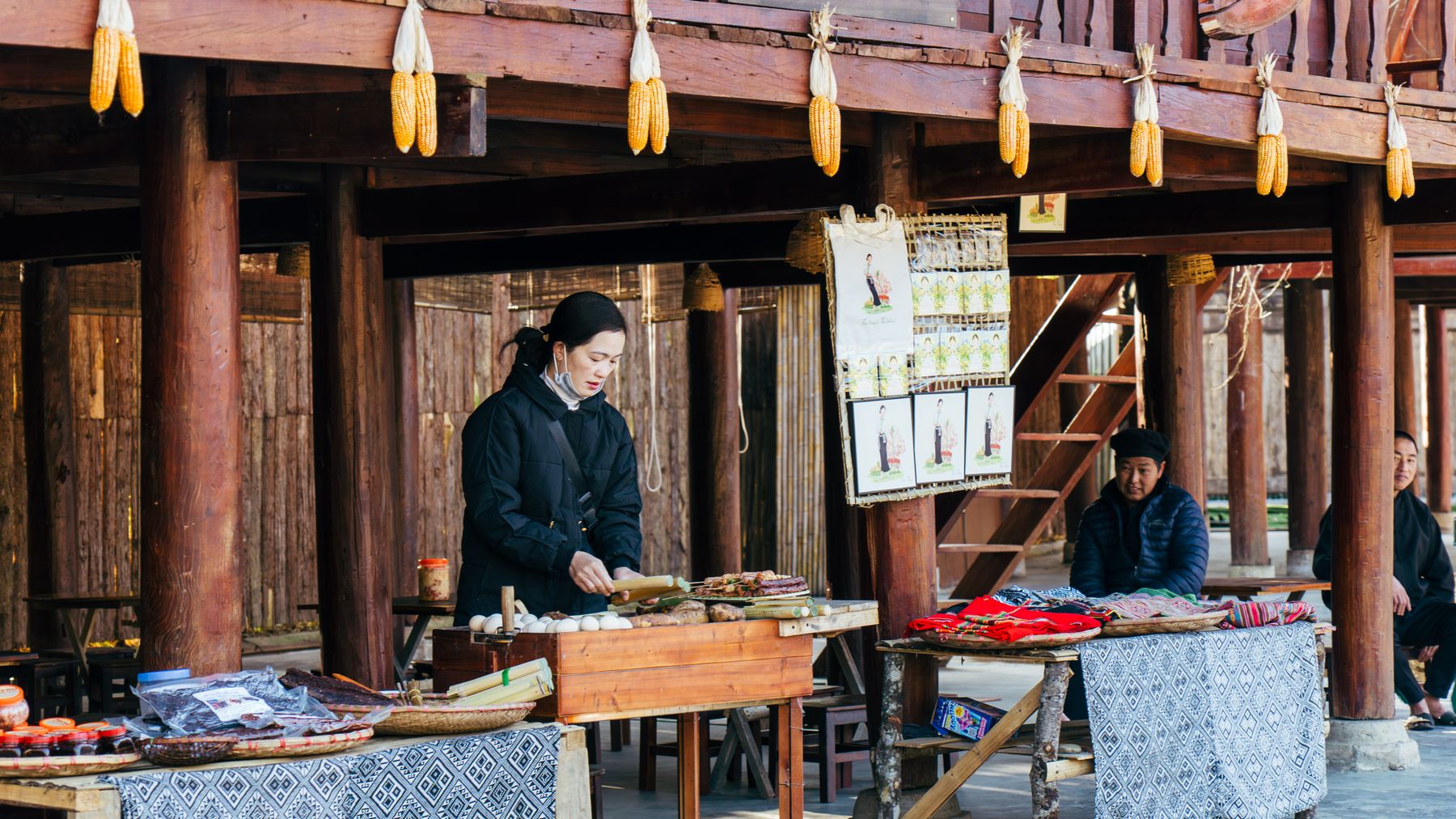
Photo by Gibson Chan on Pexels
Ta Van: the deep homestay experience, 45 minutes away
Ta Van is a small H'mong-Dao-Giay mixed village in the Muong Hoa valley, about 6 km southwest of town. You can walk there in 2–3 hours, but most people take a xe om or arrange a ride with their homestay.
Homestays here are genuinely rural: you sleep in a family home, eat at their table, help in the fields if you want, and meet tourists and locals on equal ground. Running water and heating are less certain than in Cat Cat. Internet is unreliable. This is where you go if you want to feel disconnected.
The upside is price and authenticity. Owners have fewer guests and less English, which forces engagement. The valley itself is striking — rice paddies, fruit orchards, and mountain walls. Many trekking loops begin or end here. A popular route is the Ta Van to Giang Ta Chai loop, roughly 5–7 km through terraced fields with a suspension bridge crossing. You don't need a guide for this one, but having one (200,000–300,000 VND for a half-day) means you'll actually learn what's growing in the paddies and who lives where.
Meals are communal and generous. Your host cooks whatever is seasonal — expect sticky rice, boiled greens, pork or chicken, and homemade "ruou" (rice wine). Politely declining "ruou" is fine; just say "khong uong ruou" (I don't drink alcohol). Vegetarians should mention this when booking — hosts are flexible but need advance notice.
Typical costs: $15–40 per night with meals. Food is what the family cooks; vegetarian options exist but are basic. A motorbike ride from town is 100,000–150,000 VND one-way.
Best for: Trekkers doing multi-day loops, people comfortable with minimal infrastructure, adventurers who want genuine homestay life rather than a "homestay experience."

Photo by Quang Nguyen Vinh on Pexels
Getting to Sapa and moving between bases
Most travelers reach Sapa from Hanoi, either by overnight sleeper train to Lao Cai (7–8 hours, 400,000–900,000 VND depending on berth class) followed by a 35 km minibus or taxi up the mountain (about 45 minutes, 100,000–150,000 VND per seat in a shared van), or by direct sleeper bus (5–6 hours, 250,000–400,000 VND). The train is more comfortable; the bus is faster and cheaper.
Once you're in Sapa (사파 / 沙坝 / サパ) town, getting to Cat Cat is a 15-minute walk or a quick xe om ride. Ta Van requires more planning. If your homestay doesn't arrange pickup, hire a xe om from the town center for 100,000–150,000 VND or book a seat in a shared van that some tour operators run in the mornings. Coming back is the same deal — arrange it with your host the night before.
If you want to split your stay — say, two nights in town and one night in Ta Van — leave your big bag at your town hotel (most will store luggage for free) and take a daypack to the village. This is the most common setup for people on a 3-night trip.
For travelers continuing onward, direct buses also run from Sapa to Ha Giang (about 6–7 hours) and to Ha Long Bay via Hanoi (하노이 / 河内 / ハノイ). Ask your hotel to book these a day ahead.
Quick comparison
| Factor | Town center | Cat Cat | Ta Van | |--------|---------|---------|--------| | Fog | Heavy | Lighter | Clearest | | Walk to cafes | 2 min | 10 min | 45 min | | Noise at night | High | Low | Very low | | Heating/comfort | Good | Fair | Basic | | English | High | Medium | Low | | Cost | $20–100 | $25–80 | $15–40 | | Best for trekking | Moderate | Good | Excellent |
What surprises foreigners
- The cold is real. Sapa sits at 1,600 m. From November to February, nighttime temperatures drop to 5–10 C, and some homestays in Cat Cat and Ta Van have no central heating — just a space heater or extra blankets. Pack a proper jacket, not just a hoodie. Some town-center hotels have heated rooms, but verify before booking.
- Fog is not a bug. Newcomers treat fog as bad weather. Locals treat it as the default. If your trip is only 2 days, there's a real chance you won't see Fansipan peak at all. Don't build your itinerary around a clear-sky photo. September and October tend to have the best visibility, especially in Ta Van.
- Weekend crowds change everything. Vietnamese domestic tourists flood Sapa on Friday and Saturday nights. Prices at town-center hotels can jump 30–50%, and the main square gets loud. If you have flexibility, arrive midweek.
- Homestay "authenticity" varies. Some Cat Cat homestays now look like boutique hotels with H'mong-pattern pillows. Others are genuinely a family's spare room. Neither is wrong, but read recent reviews if you care about the distinction.
- Food options narrow fast outside town. In the town center you can find pho, banh mi, bun cha, and even Western breakfasts. In Cat Cat, the menu shrinks to whatever your homestay cooks plus a couple of small restaurants. In Ta Van, you eat what the family prepares — and that's the point.
- Tipping at homestays. There's no obligation, but leaving 50,000–100,000 VND per person on top of the room rate is appreciated and goes directly to the family.
At a glance
- Location: Lao Cai Province, northwest Vietnam, 320 km from Hanoi
- Elevation: ~1,600 m
- Best months for clear skies: March–April, September–October
- Rainiest months: June–August
- Coldest months: December–February (can drop below 5 C)
- Currency: VND. ATMs available in town center only — withdraw cash before heading to Cat Cat or Ta Van
- Language: Vietnamese, H'mong, some English in town center and Cat Cat
- SIM/data: Works in town center; spotty in Cat Cat; unreliable in Ta Van
- Key nearby treks: Fansipan summit (2-day or cable car), Muong Hoa valley loop, Ta Van–Giang Ta Chai circuit, Y Linh Ho village trail
- Useful phrase for food: "An chay" = I eat vegetarian; "Khong cay" = not spicy
Frequently Asked Questions
Where should a first-time visitor stay in Sapa for easy access?
The town center, specifically around Sapa Stone Church and the streets along Muong Hoa and Fansipan, puts you within walking distance of restaurants, tour operators, and Sapa Market. Mid-range hotels here cost $50-100 per night and often include breakfast and trekking tours for 500,000-800,000 VND per person per day. The trade-off is weekend crowds, afternoon fog, and street noise after 9 p.m.
What does a homestay in Cat Cat village typically cost and include?
A double room with breakfast and dinner at a Cat Cat homestay runs $25-80 per night. Without meals, expect $20-40. Communal dinners typically include stir-fried greens, steamed rice, grilled stream fish, and sometimes thang co, a hearty organ-meat hotpot. Hosts generally know local trekking routes and can direct you to paths into Muong Hoa valley. Cat Cat sits about a 10-minute uphill walk from Sapa town center.
When is street food the cheapest option for eating in Sapa town?
Any time of day. On Thach Son Street, com binh dan (rice-and-meat) stalls serve a full plate for 30,000-45,000 VND, compared to 80,000-150,000 VND at sit-down tourist restaurants near the church square. A bowl of pho at a local shop costs 50,000-80,000 VND. Cafes around town serve drip coffee and egg coffee for 35,000-50,000 VND, making the town center walkable and affordable for budget meals.
Practical notes
Book homestays in Cat Cat and Ta Van in advance via Booking.com, Airbnb, or direct email — walk-ups work, but you might end up in a less-tidy room. Bring a warm layer even in summer; Sapa is 1,600 m high. If you hate fog, stay in Ta Van or visit March–April or September–October. Town center is fine for 1–2 nights; homestays reward longer stays. If you're doing a trekking guide, ask where they'll collect you from.
Carry enough cash for your entire homestay stay. There are no ATMs in Cat Cat or Ta Van, and card payments are rare outside the town center. A safe budget is 500,000 VND per day per person on top of your room rate, which covers snacks, water, small tips, and the occasional xe om ride.
Bottom line
Sapa's three bases each solve a different problem. The town center is logistics made easy — food, ATMs, transport, all within a few blocks. Cat Cat gives you a quieter sleep and better views without losing access to town. Ta Van strips away convenience entirely and replaces it with rice-paddy stillness and family-cooked dinners. Most travelers on a 3-night trip do best splitting time: start in town, finish in a village. The key is knowing what you're trading before you book.
Last updated · May 26, 2026 · independently researched, never sponsored.