What is Goi Du Du
"Goi du du" is a Vietnamese salad built on one simple ingredient: unripe papaya, shredded fine. The papaya is tossed with a dressing of fish sauce, lime, garlic, and chili, then topped with peanuts, herbs (usually mint, cilantro, and dill), and a protein—most often dried beef ("thit bo kho"), fresh shrimp, or both. It's light, sharp, and herbaceous; the texture is crisp and slightly chewy if the beef is tender. You eat it as a starter or side, often alongside grilled meats or spring rolls.
The salad exists across Vietnam (베트남 / 越南 / ベトナム), with regional tweaks. In the north and central regions, you'll find versions with more assertive aromatics—garlic and shallot raw in the dressing. In the south, sweetness creeps in; some stalls add a spoonful of sugar to the fish sauce base. The constant is the papaya itself: it must be young enough to shred, but firm enough not to collapse.
How It Differs From Thai Som Tam
"Goi du du" and Thailand's "som tam" (green papaya salad) are cousins, but the execution is distinct. Thai som tam typically uses a mortar and pestle to bruise the papaya slightly and mash the dressing into it—releasing juices and deepening flavor. The result is softer, more unified. Vietnamese "goi du du" keeps the papaya shreds separate from the dressing; you mix them gently in a bowl, so each strand stays crisp. Thai "som tam" leans hard into heat (dried chilies, fresh bird's-eye peppers, sometimes shrimp paste). Vietnamese "goi du du" is spicy but more restrained; the funk comes from fish sauce and dried beef, not raw chili bulk. Thai "som tam" often includes long beans and tomato; Vietnamese "goi du du" stays minimal—papaya, herbs, peanuts, protein.
Both are excellent. Thai "som tam" is a forceful hammer. Vietnamese "goi du du" is a sharper, quieter blade.

Photo by Change C.C on Pexels
The Essential Components
Green papaya: Buy them at Southeast Asian markets or Vietnamese grocers. They're pale green, rock-hard, and will not yield to thumb pressure. A 2 kg papaya yields roughly 200g shredded. You can buy them pre-shredded at some stalls, but fresh-shredded is superior—less oxidation, better texture.
Dried beef: Called "thit bo kho," this is beef jerky—salted, sun-dried, and finely sliced. A small bag (100g) costs 80,000–150,000 VND at markets. Quality matters; cheap versions are grisly and over-salted. Good jerky is tender, with a savory, slightly sweet undertone.
Fish sauce dressing: Equal parts fish sauce (about 3 tablespoons), lime juice (2–3 limes), and a touch of sugar (1 teaspoon). Mash 2–3 garlic cloves and 1–2 Thai bird's-eye chilies into a paste first, then whisk in the fish sauce, lime, and sugar. Taste before serving; balance is critical—too much fish sauce and it's funky; too much lime and it's thin and sour.
Peanuts: Roasted, unsalted, crushed coarsely. Salted peanuts work in a pinch, but unsalted lets the fish sauce dressing shine.
Herbs: Mint, cilantro, and dill are standard. Basil (Thai or Vietnamese) is common too. Use generous handfuls—this salad lives on herbaceousness.
Shrimp option: Fresh or cooked shrimp can replace (or join) dried beef. Boiled, peeled shrimp, halved lengthwise, is typical. It adds sweetness and a lighter note.
Where to Find Excellent Versions
In Hanoi, street vendors on the edges of the Old Quarter—around Bat Dan Street and Luong Ngoc Quyen—sell "goi du du" from small carts, usually alongside "banh cuon" and other light dishes. A bowl runs 30,000–40,000 VND. Quality is uneven; look for stalls with a line and a rapid turnover.
Restaurant chains like Com Tam Tam (a casual northern Vietnamese chain) often have respectable "goi du du" on the menu, though it's rarely their star dish. Better to order it at a dedicated street stall or a pho shop that also does summer rolls and salads.
In Saigon, the southern take is sweeter and more elaborate. Pho 2000 (a tourist-facing restaurant near Ben Thanh Market) serves a competent "goi du du" with shrimp and generous garnish; expect to pay 80,000 VND for a table version. For cheaper, better-made versions, hunt in neighborhoods like Binh Thanh or District 1's smaller alleys—night markets and com tam (껌땀 / 碎米饭 / コムタム) stalls often have it.
Hue and the central regions treat "goi du du" as a side to grilled meats. If you order a mixed grill ("thit nuong") at a hut restaurant, "goi du du" will often appear as part of the spread, unbilled. It's worth asking for a dedicated bowl.
Da Lat, where green produce thrives, has exceptional "goi du du"—the papaya is sweeter and firmer. Market stalls near the central market sell small portions for 25,000 VND.
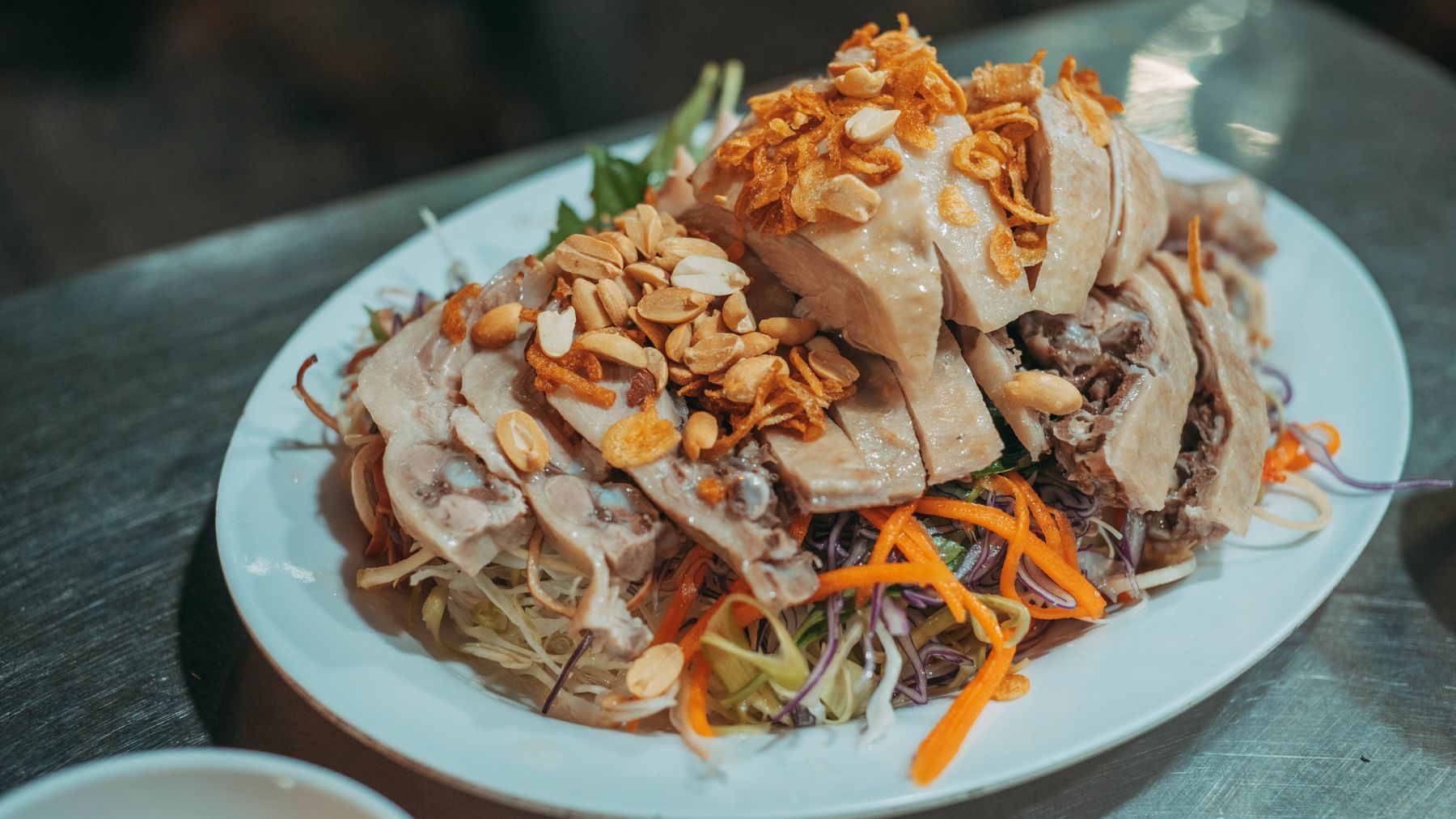
Photo by FOX ^.ᆽ.^= ∫ on Pexels
How to Make It at Home
If you can source green papaya (online, or from a Vietnamese or Southeast Asian grocer), "goi du du" is one of the easiest Vietnamese salads to assemble.
- Peel and shred the green papaya with a mandoline or box grater. Aim for thin, noodle-like strands (about 1/8 inch).
- Make the dressing: Pound garlic and chili into a paste in a mortar. Whisk in 3 Tbsp fish sauce, juice of 2–3 limes, and 1 tsp sugar. Taste. Adjust.
- Assemble: Place papaya in a bowl. Add torn herbs (mint, cilantro, dill), crushed peanuts, and sliced or shredded dried beef. Pour dressing over gently and toss.
- Finish: Add extra peanuts and a sprig of mint. Serve at room temperature.
The salad can be made 15 minutes ahead but will weep slightly; add dressing just before serving for best texture.
Practical Notes
Green papaya salad is a summer starter—light, refreshing, and a natural palate-cleanser before heavier mains. It pairs well with grilled meats, rice, or as part of a mixed vegetable-and-herb platter. If you can't find green papaya, shredded green mango or even julienned kohlrabi can substitute in a pinch, though the flavor won't be identical.
Last updated · May 29, 2026 · independently researched, never sponsored.